As individuals progress through their fifties and beyond, the cultivation of robust core strength transitions from a beneficial fitness goal into a fundamental pillar of overall health, functional independence, and sustained quality of life. The core musculature, encompassing more than just the abdominal "six-pack," acts as the central nexus of the body, dictating balance, posture, and the efficiency of nearly every physical movement. For many, the conventional plank exercise is often presented as the gold standard for core development. However, for a significant segment of the population embarking on their fitness journey after the age of 55, or those contending with age-related physiological shifts, the plank can present substantial barriers, making alternative, foundational approaches far more effective and accessible.
The physiological landscape undergoes considerable transformations with advancing age, profoundly impacting an individual’s capacity for movement and stability. One of the most critical changes is sarcopenia, a progressive and generalized skeletal muscle disorder characterized by accelerated muscle mass loss, strength decline, and impaired physical performance. This process typically initiates in the third decade of life but noticeably quickens after 50, leading to a cascade of effects. Reduced muscle mass translates directly into diminished strength, impacting everything from the ability to lift groceries to maintaining an upright posture. Furthermore, sarcopenia is intricately linked to decreased bone density, metabolic dysfunction, and a general reduction in overall longevity and vitality.
Beyond sarcopenia, other factors contribute to the escalating importance of core stability in later life. Balance, for instance, becomes increasingly precarious. The intricate interplay between the inner ear, vision, and proprioception (the body’s sense of its position in space) tends to diminish, while slower reaction times exacerbate the risk of falls. A strong core, comprising the deep abdominal muscles, the muscles of the back, and the pelvic floor, plays a pivotal role in stabilizing the trunk, thereby enhancing balance and reducing the likelihood of debilitating falls, which are a leading cause of injury and loss of independence among older adults. Moreover, many individuals in this age demographic contend with chronic conditions such as arthritis, which can limit range of motion and introduce pain, making targeted, joint-friendly exercise even more crucial. For women, the hormonal fluctuations surrounding menopause further complicate matters, contributing to accelerated bone and muscle loss, underscoring the necessity of proactive strength training to mitigate these effects.
While the plank is undeniably an effective exercise for those with established core strength and body awareness, its execution demands a confluence of physical attributes that might not be present in a beginner, particularly one over 55. A proper plank necessitates adequate upper body strength to support the body’s weight, robust shoulder and wrist stability, and a sophisticated level of integrated core activation to maintain a neutral spine. Attempting to hold this isometric position without the requisite foundational strength can lead to improper form, placing undue stress on the lower back, shoulders, or neck, and ultimately yielding minimal benefit while potentially increasing injury risk. Recognizing these challenges, fitness professionals often advocate for a progressive approach, utilizing exercises that systematically build the prerequisite strength and coordination needed to eventually master more complex movements like the plank, or to simply enhance functional core strength for daily living.
This article introduces a circuit of three carefully selected exercises designed to cultivate significant core strength and stability, specifically tailored for individuals over 55 who may find traditional planks daunting or unachievable at the outset. These movements are chosen for their efficacy in targeting key core muscles, their capacity to improve balance and coordination, and their adaptability to various fitness levels. They focus on establishing a solid foundation, ensuring that the core is engaged safely and effectively, paving the way for improved functional movement and a higher quality of life.
Foundational Core Building Blocks
The following three exercises are ideal for fostering a strong, stable core without the immediate demands of a traditional plank. They can be performed as a circuit, enhancing overall endurance and muscle activation.
1. High Knees with Overhead Dumbbell Hold
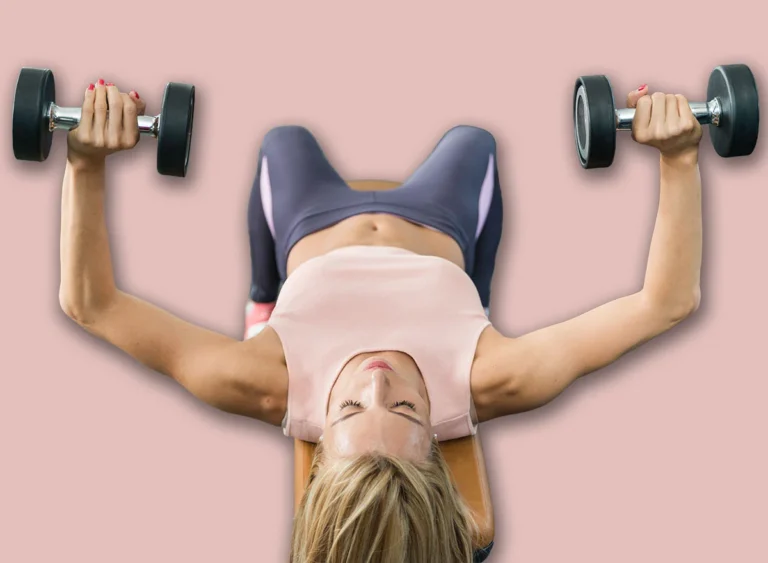
This dynamic exercise marries core stabilization with unilateral limb movement and overhead pressing, offering a multifaceted approach to strength development. It is particularly effective because it trains the body’s ability to resist spinal extension (preventing the lower back from arching backward), a crucial component for maintaining proper posture and protecting the spine. The overhead dumbbell hold introduces an asymmetrical load, challenging the core stabilizers to work harder to maintain equilibrium as one leg lifts. This mimics real-life scenarios where balance is tested, such as carrying a bag on one side while walking. Furthermore, it simultaneously engages the shoulder muscles and improves shoulder stability, which is often a limiting factor in exercises like the plank. Its standing nature also makes it highly accessible for individuals who prefer to avoid getting down and up from the floor.

- Muscles Engaged: Primarily targets the shoulders, deep core stabilizers (transverse abdominis, obliques), and hip flexors.
- Execution Guidance: Begin by standing tall with feet hip-width apart. Hold a light to moderate dumbbell in one hand, extending that arm directly overhead, keeping the elbow straight but not locked, and the shoulder packed down away from the ear. Ensure the rib cage is pulled down and the core is engaged to prevent the lower back from arching. From this position, slowly lift the knee on the opposite side towards the chest, aiming for a 90-degree angle at the hip. Hold briefly, then control the leg back down. Throughout the movement, concentrate on maintaining a stable torso and resisting any backward lean or rotation.
- Repetitions and Sets: Perform 10-12 knee lifts per side (20-24 total repetitions) before switching the dumbbell to the other hand. Complete 3 rounds as part of the full circuit.
- Key Form Cue: Actively pull your ribs towards your hips, maintaining a flat back, to counteract the tendency to arch as the weight is held overhead. This "anti-extension" focus is paramount.
2. Bird Dogs
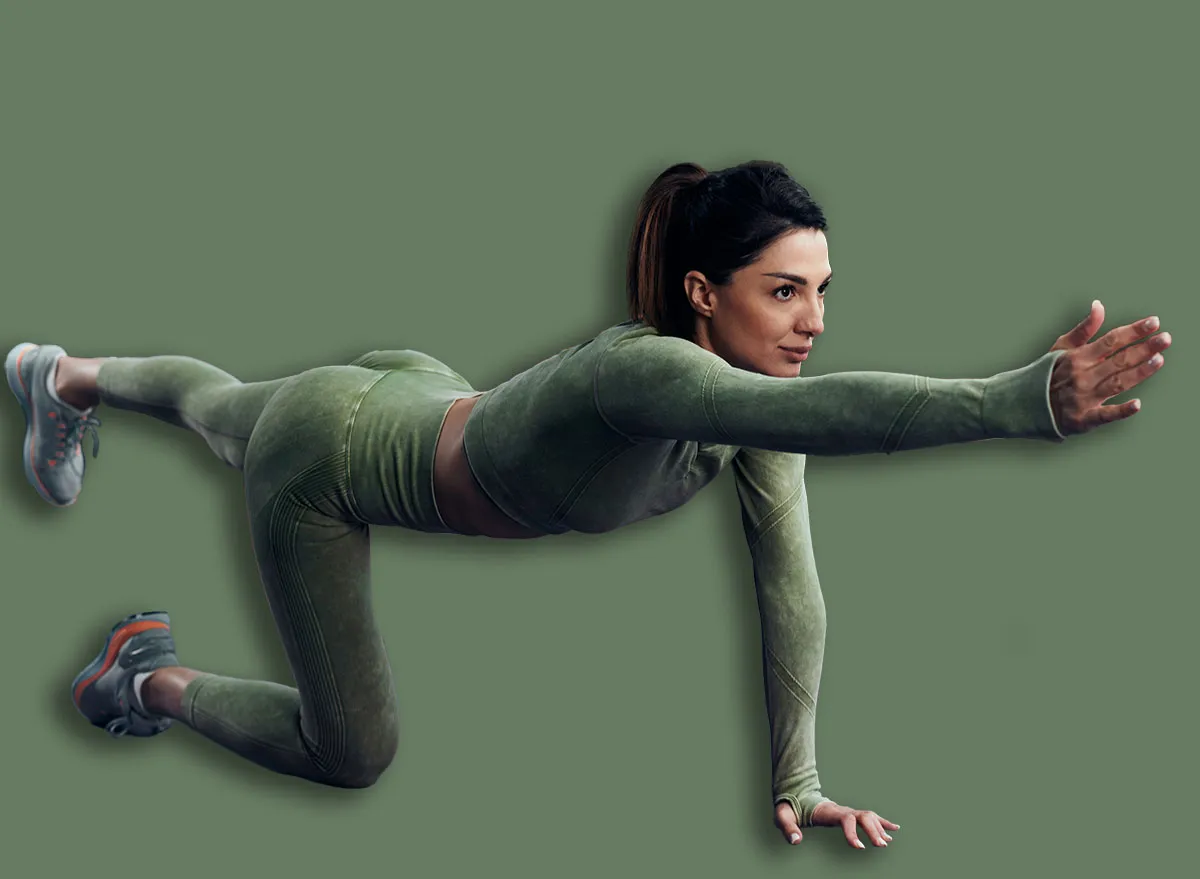
The Bird Dog is a classic exercise celebrated for its ability to enhance spinal stability and foster cross-body coordination. It requires the simultaneous extension of an arm and the opposite leg while maintaining a neutral spine, challenging the deep stabilizing muscles of the core and back. This movement pattern is fundamental to many daily activities, such as reaching for an object while shifting weight or simply walking with good posture. Mastering the Bird Dog significantly improves the body’s proprioceptive awareness and its capacity to control movement through the trunk, directly contributing to the foundational strength required for more advanced core work.
- Muscles Engaged: Engages the glutes, erector spinae (lower back muscles), transverse abdominis (deepest abdominal muscle), and shoulder stabilizers.
- Execution Guidance: Start on all fours in a tabletop position, with hands directly under shoulders and knees directly under hips. Your back should be flat, forming a straight line from head to tailbone. Brace your core as if preparing for a gentle punch to the stomach. Slowly extend one arm forward, keeping it in line with your ear, while simultaneously extending the opposite leg straight back, keeping it at hip height. Avoid letting your hips rotate or your lower back arch or sag. Imagine balancing a glass of water on your lower back. Hold for a moment at the peak of the extension, then slowly and deliberately return to the starting position.
- Repetitions and Sets: Aim for a controlled hold of 3-5 seconds per extension. Complete 8-10 repetitions per side, ensuring smooth, deliberate movements. Perform 3 rounds within the circuit.
- Key Form Cue: Prioritize a stable, neutral spine throughout the entire movement. The goal is to move the limbs without disturbing the trunk’s alignment. Slow, controlled motion is more valuable than speed.
3. Hollow Hold
Often underestimated, the Hollow Hold is an exceptionally potent isometric exercise that directly translates to the core rigidity demanded by a proper plank. It involves the sustained contraction of the entire anterior chain of the body, particularly the deep core muscles, to prevent the lower back from lifting off the mat. This emphasis on maintaining lumbar spine contact with the floor is the very essence of effective core engagement, teaching the lower abdominal muscles to stabilize the pelvis and spine. This exercise reveals weaknesses in core control quickly, as the abdominal muscles will often quiver under the isometric tension, indicating deep activation.
- Muscles Engaged: Primarily targets the deep core (transverse abdominis), lower abdominal muscles, and hip flexors, with secondary engagement of the shoulders.
- Execution Guidance: Lie flat on your back on a mat, pressing your lower back firmly into the floor. Extend your arms straight overhead, keeping them close to your ears, and your legs straight, pressing them together. Gently lift your head and shoulders off the mat, engaging your upper abs. Simultaneously, lift your legs a few inches off the floor. The key is to maintain constant pressure of your lower back against the mat. If your lower back arches, raise your legs higher or bring your arms closer to your body to reduce the lever. The further your limbs are from your center, the harder the exercise.
- Repetitions and Sets: Hold the position for as long as you can maintain perfect form, aiming for 15-30 seconds. Complete 3 rounds within the circuit, resting adequately between holds.
- Key Form Cue: The cardinal rule is to keep your lower back glued to the mat. If it lifts, adjust your limb positions by bringing your arms and/or legs closer to your body until you can maintain the lower back contact.
Integrating the Core Circuit into Your Routine
For individuals initiating or re-engaging with a fitness regimen, integrating this core circuit one to two times per week is an excellent starting point. It can be performed as a standalone session, a warm-up, or, most commonly, at the conclusion of your primary workout routine. The suggested format is to complete all three exercises consecutively, resting briefly between each, and then repeat the entire circuit for a total of three rounds. Remember, consistency is paramount. Regular engagement with these exercises will yield cumulative benefits over time.
It is imperative to always prioritize listening to your body’s signals. Any sharp pain or discomfort indicates a need to modify the exercise or cease immediately. Consulting with a healthcare provider or a certified fitness professional before embarking on any new exercise program is always recommended, especially when managing pre-existing health conditions or injuries. They can provide personalized advice and ensure the regimen is appropriate for your individual needs.
Anticipating Progress and Long-Term Benefits
Realistic expectations are crucial when embarking on any fitness journey. While aesthetic results like a visible "six-pack" are largely influenced by dietary habits and overall body composition, the functional improvements from consistent core training are profound and universally attainable. After diligently incorporating these exercises into your routine for four to six weeks, you can anticipate a range of tangible benefits that extend far beyond superficial changes:
- Enhanced Posture: A stronger core provides better support for the spine, leading to a more upright and confident posture, which can alleviate back pain and improve overall appearance.
- Improved Balance and Stability: The targeted engagement of stabilizing muscles will significantly boost your sense of balance, making you feel more secure on your feet and considerably reducing your fall risk.
- Reduced Back Pain: Many instances of lower back pain stem from a weak core. Strengthening these muscles provides a natural brace for the spine, offering relief and prevention.
- Increased Ease in Daily Activities: Everyday movements, from getting out of a chair, bending to pick something up, reaching overhead, or even just walking, will become noticeably easier and more efficient.
- Greater Confidence and Independence: The functional improvements translate into a greater sense of self-efficacy and the ability to perform daily tasks with less effort and more confidence, fostering prolonged independence.
- Foundation for Further Progress: This circuit lays a robust groundwork, preparing your body for more advanced core exercises, including planks, should you choose to progress to them.
The investment in foundational core strength for individuals over 55 is an investment in a richer, more active, and independent future. These targeted exercises, while seemingly subtle, exert a profound influence on bodily function and overall well-being. By embracing a strategic and progressive approach to core training, maturing adults can unlock enhanced mobility, stability, and confidence, ensuring that their later years are characterized by vitality and engagement rather than limitation.
About the Author