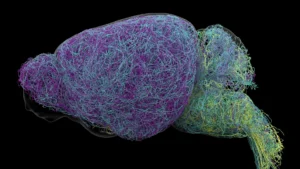
Neural Pathways Differentiate Sugar’s Impact on Satiety Signals.
New scientific inquiry has unveiled a fundamental divergence in how the human brain processes two prevalent sugars, fructose and glucose, despite their identical caloric content, offering novel insights into appetite regulation and food cravings. Researchers at the Monell Chemical Senses Center have pinpointed distinct gut-brain communication channels that mediate the neurological responses to these sugars, a discovery that could illuminate the pervasive appeal of certain sweetened consumables. This groundbreaking work, published in the esteemed journal Neuron, identifies a specific signaling cascade that fructose utilizes to engage with the brain, a pathway found to be considerably less potent than the one employed by glucose in dampening the activity of neurons intrinsically linked to hunger.
The implications of this research extend to our understanding of how contemporary dietary patterns, particularly those saturated with fructose or high-fructose corn syrup (HFCS), interact with the intricate neural architecture governing appetite. The study meticulously dissected the neurobiological mechanisms by which fructose and glucose influence the brain by meticulously monitoring neural activity in laboratory mice following their exposure to each sugar. A key finding was the observation that fructose effectively elevated levels of peptide YY (PYY), a gut hormone known to play a role in satiety. This hormone then transmitted signals via the vagus nerve, resulting in a subtle but measurable reduction in the firing rate of agouti-related peptide (AgRP) neurons. These specific neurons are recognized as central drivers of the sensation of hunger. Crucially, when researchers deliberately interfered with this PYY-mediated pathway, the capacity of fructose to modulate AgRP neuron activity was entirely abolished, underscoring the critical role of this specific signaling route.
In stark contrast, glucose elicited a profoundly different neurochemical response. The research team observed that glucose did not leverage the same PYY-Y2 vagus nerve conduit. Instead, glucose exerted a robust suppression of AgRP neuron activity, leading to a significantly more pronounced impact on the brain’s hunger-related signaling network. This differential impact on neuronal circuits suggests a more fundamental divergence in how these sugars are perceived and processed by the body than previously understood.
While the immediate effects of fructose and glucose on short-term food consumption appeared similar, a more protracted analysis revealed that the mice ultimately developed distinct food preferences. These preferences correlated directly with the degree of AgRP neuron inhibition elicited by each sugar. This behavioral outcome suggests that the brain registers not just the caloric load of a sugar, but also its qualitative metabolic signature and the specific neural pathways it activates.
Further investigation extended to high-fructose corn syrup (HFCS), a ubiquitous artificial sweetener composed of both fructose and glucose. Intriguingly, the mice demonstrated a marked preference for HFCS. Moreover, HFCS was found to suppress AgRP neuron activity more effectively than fructose when administered alone. The researchers posit that this amplified effect on hunger-regulating neurons may provide a compelling explanation for the exceptional palatability and potential for overconsumption associated with foods and beverages formulated with HFCS.
These findings challenge a long-standing physiological assumption that AgRP neurons primarily function as a gauge of overall caloric intake, irrespective of the source of those calories. The current research proposes a more nuanced model wherein these critical hunger-sensing neurons possess the capacity to differentiate between various types of sugars, responding through distinct biological pathways. The data unequivocally indicate that even though fructose and glucose deliver equivalent energy units, the brain processes them through fundamentally different neurobiological mechanisms. This intricate interplay between ingested nutrients and neural circuitry underscores the complexity of nutrient sensing within the human body. The study emphasizes that even seemingly simple sugars can trigger divergent effects on the gut, the brain, and subsequent behavioral responses, suggesting that the type of sugar consumed may be as significant as the quantity in influencing our eating habits and overall metabolic health. The ramifications of this research are far-reaching, potentially influencing dietary guidelines, food product development, and strategies for managing metabolic disorders such as obesity and type 2 diabetes by acknowledging the distinct physiological roles of different sugar molecules. Understanding these nuanced pathways opens new avenues for targeted interventions aimed at promoting healthier eating behaviors and improving metabolic outcomes in a society increasingly reliant on sweetened foods and beverages.
Related posts:

Related News