The biological clock of a mother demonstrably influences the developmental trajectory and observable characteristics of her progeny, a phenomenon observed across the diverse tapestry of life, from the simplest invertebrates to complex mammalian systems, including humans. These influential shifts, collectively termed maternal age effects, represent a significant area of scientific inquiry, as researchers endeavor to fully elucidate the underlying biological mechanisms and comprehend their enduring presence throughout evolutionary history. Kristin Gribble, an associate scientist at the Marine Biological Laboratory’s Bay Paul Center, emphasizes the pervasive nature of these effects, stating that "Nearly all forms of life show some level of maternal age effect, and most are negative effects caused by advanced maternal age." This widespread occurrence poses a compelling puzzle for evolutionary biologists.
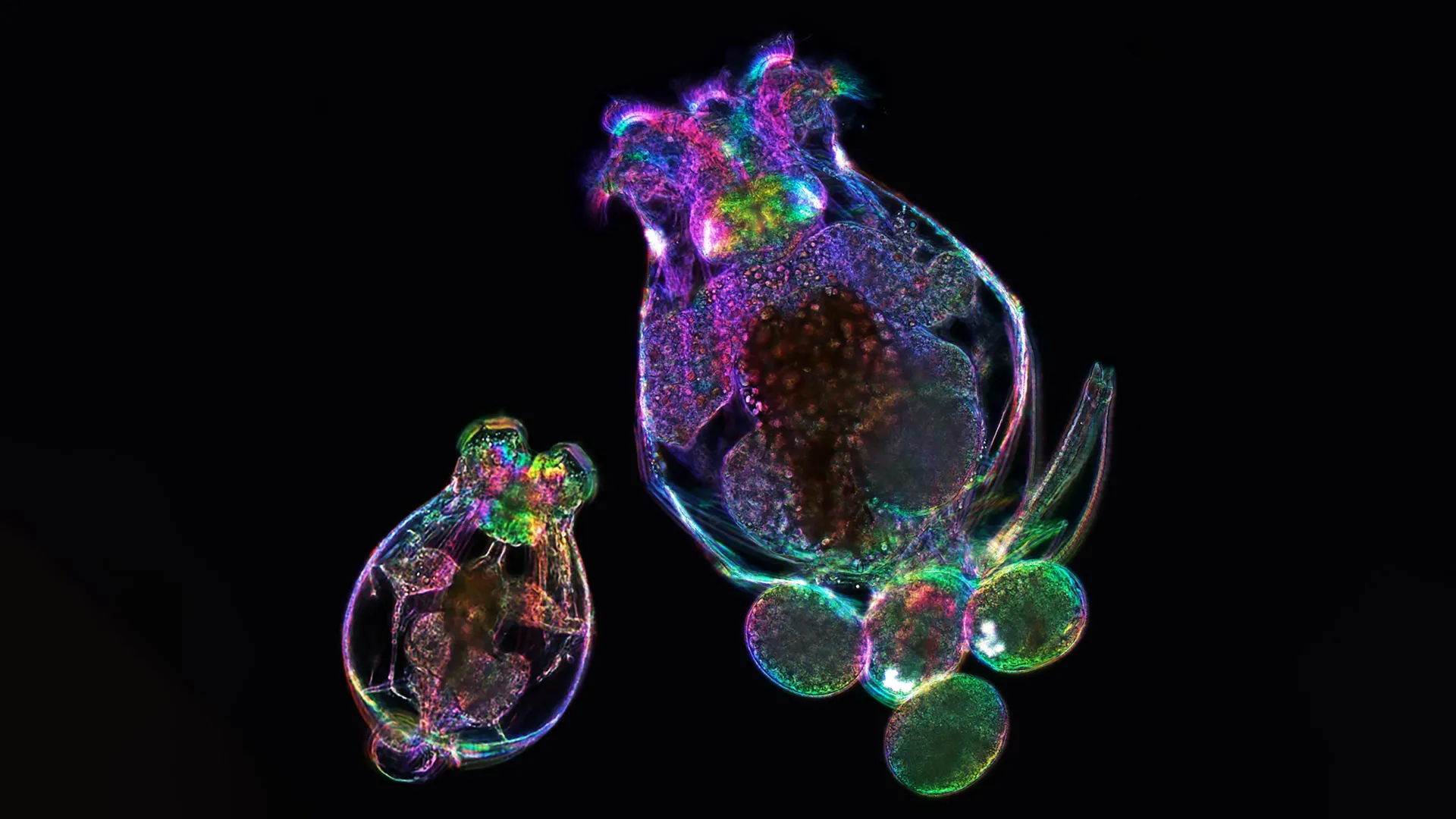
To gain deeper insights into how information pertaining to a mother’s age is transmitted to her offspring, Gribble’s research group has focused on rotifers, a class of microscopic aquatic invertebrates. These organisms are particularly amenable to laboratory investigation due to their rapid reproductive cycles, allowing for efficient observation of generational changes. The rationale behind studying these seemingly rudimentary creatures lies in the potential for their simpler biological systems to illuminate the more intricate processes at play in humans. "Understanding the mechanism in these simple invertebrates can help us understand how maternal age effects occur in people as well," Gribble explains, underscoring the principle of comparative biology.
Intriguing findings emerging from rotifer research have presented a compelling, and perhaps unexpected, hypothesis: maternal age effects may not stem from alterations in the fundamental DNA sequence but rather from epigenetic modifications. Epigenetics refers to changes in gene expression that occur without altering the underlying genetic code itself. These modifications can dictate whether genes are activated or silenced, thereby influencing cellular function and ultimately, an organism’s traits.
Further investigations within Gribble’s laboratory, spearheaded by postdoctoral scientist Alyssa Liguori (now an assistant professor at SUNY-New Paltz), examined two distinct genetic strains of the same rotifer species. The results of this study revealed a crucial nuance: the impacts associated with maternal age did not exhibit a cumulative intensification across successive generations. Instead, these effects demonstrated a remarkable capacity for reversal within a single generation. This rapid reversibility presents a significant challenge to the long-held assumption that maternal age effects are primarily the consequence of accumulated cellular damage or DNA mutations that naturally occur with aging. The data, therefore, strongly suggest an alternative explanation rooted in epigenetic mechanisms, specifically involving modifications to histone proteins. Histones are crucial proteins around which DNA is wrapped, and their modification status can profoundly influence gene accessibility and activity.
The ongoing research endeavors by Gribble’s team are actively exploring the potential role of these histone modifications in mediating the maternal age effects observed in rotifers. Concurrently, the team is investigating another potential avenue for the transmission of maternal age-related information: mitochondrial DNA. As mitochondrial DNA is predominantly inherited from the maternal line, it represents a plausible candidate for carrying signals about the mother’s age and physiological state to her offspring.
Beyond these epigenetic and cytoplasmic influences, genetic predispositions within the offspring themselves are also being considered as a factor that could modulate the extent to which they are impacted by their mother’s age. Gribble posits that "There are likely gene variants out there that are protective of negative effects of advanced maternal age." This idea is supported by observations within their experimental strains, where offspring born to older mothers exhibited an extended lifespan, a finding that hints at the involvement of genetic mechanisms in conferring beneficial outcomes. This observation serves to highlight a critical complexity in the study of maternal age effects: while advanced maternal age is frequently linked to adverse outcomes, the inherent genetic makeup of the offspring can sometimes mitigate these negative impacts or, in certain instances, even confer advantages.
The persistence of maternal age effects across such a vast array of species presents a significant evolutionary enigma. If offspring born to older mothers often experience reduced lifespans, diminished reproductive capacity, and consequently, lower overall evolutionary fitness, one might logically anticipate that natural selection would act to weed out such disadvantageous traits. However, the continued prevalence of maternal age effects suggests a more nuanced interplay of evolutionary forces. Gribble proposes that a partial explanation may lie in the diminishing strength of selective pressures later in an organism’s life. She elaborates, "Selective pressure is much lower at advanced ages, particularly in rotifers which are really geared to do most of their living and reproducing very young." By the time female rotifers reach older ages, they have typically completed the majority of their reproductive output. Consequently, the evolutionary imperative to favor traits that enable these older females to produce exceptionally fit offspring may be considerably weakened.
One of the most compelling frontiers in this research for Gribble lies in understanding the mechanisms by which biological information can transcend a single generation, influencing not only direct offspring but also subsequent generations. "I want to know how it happens that information about a grandmother or great-grandmother’s environment can affect the phenotype of her grandchild or great-grandchild," she articulates. Unraveling the intricate pathways through which maternal effects are propagated across multiple generations holds the potential to profoundly enhance our comprehension of human health. This knowledge could pave the way for novel approaches in precision medicine, where treatments and preventative strategies are tailored to an individual’s unique biological profile. The research suggests a paradigm shift in our understanding of biology, moving beyond the concept that an individual’s health is solely determined by the DNA inherited at conception. It implies that the environmental conditions and physiological states experienced by preceding generations may also leave an indelible mark on our own well-being. As Gribble eloquently summarizes, "It’s not just about what’s in your genome as an individual," because "your health potentially depends on the health and environment of your mom and grandmother and great-grandmother." This perspective underscores the interconnectedness of biological legacies across familial lines.
About the Author