Maintaining robust physical health and a strong, defined physique often becomes a priority as individuals progress beyond their sixth decade, with particular attention frequently given to the upper body. The natural physiological process of aging can lead to a gradual decline in muscle mass and strength, a condition medically known as sarcopenia. While a comprehensive approach to fitness is vital, focusing on specific muscle groups like the biceps and triceps can significantly enhance both aesthetic appeal and functional capability. Many dedicated gym attendees typically gravitate towards specialized strength training equipment for their upper limb routines, frequently incorporating movements such as the shoulder press, lat pulldown, or triceps pushdown into their regimens. While these apparatus-based exercises certainly offer merit, an equally, if not more, potent alternative exists, particularly beneficial for older adults seeking to optimize their fitness journey: free-weight, standing exercises performed in a home setting.
Domenic Angelino, a highly credentialed Chief Exercise Scientist at FitCraft, holding both MS and MPH degrees alongside CSCS and CPT certifications, advocates for this approach. He suggests that individuals can achieve remarkable outcomes through a well-structured at-home workout program, provided they possess the appropriate free weights and foundational knowledge. Angelino highlights five specific standing exercises that he believes can contribute to more effective upper arm development and sculpting than relying solely on gym machines, especially for those aged 60 and above.
The fundamental advantage of incorporating standing exercises into a strength training routine lies in their inherent ability to engage multiple muscle groups simultaneously. When performing movements while standing, the primary muscles targeted for development are indeed working, but crucially, a host of other supportive muscles are also activated to maintain balance and stability throughout the movement. This integrated muscle engagement closely mirrors the demands placed on the body during everyday activities, thereby fostering functional strength that translates directly into improved quality of life. For instance, the act of reaching for an item on a high shelf and then carefully lowering it requires not only the strength of the arm and shoulder muscles but also the stabilizing power of the core musculature to keep the torso steady and supported. This holistic recruitment of muscle fibers is a hallmark of standing, free-weight movements.
It is important to clarify that the utility of gym machines is not being dismissed entirely. Machine-based workouts play a valuable role in strengthening specific muscle groups in isolation, which can be particularly advantageous for individuals aiming to correct muscular imbalances, recover from injuries, or target particular areas for enhanced definition. However, for those seeking to maximize overall functional strength, improve balance, and stimulate a broader range of muscles, standing exercises offer a compelling and often superior pathway. These movements are readily accessible and represent an excellent starting point for anyone looking to invigorate their upper arm training.
Let us delve into the specific exercises recommended by Angelino, exploring their unique benefits and proper execution.
Barbell Curl
The barbell curl stands as a foundational exercise for developing the biceps brachii, the primary muscle responsible for flexing the elbow and supinating the forearm. What distinguishes the barbell curl is its capacity for direct isolation of the biceps while simultaneously placing substantial demands on the body’s stabilizing muscles. Unlike exercises where each arm works independently, the use of a barbell allows both arms to cooperate in lifting the weight. This bilateral engagement typically enables individuals to handle heavier loads than they might with individual dumbbells, thereby facilitating progressive overload—a critical principle for muscle growth. By challenging the biceps with greater resistance, the muscle fibers are stimulated more intensely, leading to increased strength and hypertrophy. The standing position further activates the core and lower back to maintain an upright posture throughout the lift, enhancing overall bodily control.
Hammer Curl
Beyond targeting the biceps, the hammer curl offers a unique advantage by engaging the brachialis muscle, a significant muscle that lies deeper beneath the biceps. When the brachialis grows in size, it effectively pushes the overlying biceps outward, contributing to a more voluminous and powerful appearance of the upper arm. This exercise also heavily involves the brachioradialis, a prominent muscle in the forearm, thus contributing to overall arm thickness and grip strength. The neutral grip (palms facing each another) employed in the hammer curl places less stress on the wrist and elbow joints compared to a traditional supinated (palms up) curl, making it a more comfortable and accessible option for many, particularly those with joint sensitivities. This varied grip also recruits muscle fibers in a slightly different manner, ensuring comprehensive arm development.
Overhead Triceps Extensions
The triceps brachii, comprising three distinct heads (long, lateral, and medial), is crucial for extending the elbow joint and constitutes a significant portion of the upper arm’s mass. Overhead triceps extensions are particularly effective at targeting the long head of the triceps, which originates from the scapula and is fully engaged when the arm is raised overhead. This exercise encourages a full range of motion, stretching the triceps at the bottom of the movement and contracting it powerfully at the top. Performing this movement while standing adds a layer of complexity, requiring active engagement of the core and spinal stabilizers to maintain an erect posture and control the weight throughout the eccentric and concentric phases. This compound engagement fosters not just isolated triceps strength but also integrated upper body stability.
Triceps Kickbacks
While overhead extensions emphasize the long head of the triceps, triceps kickbacks offer a superb method for isolating and developing the lateral and medial heads. Angelino notes that maintaining the upper arms close to the sides of the torso during this exercise effectively shifts the emphasis to these two heads. Although these specific heads might not contribute as dramatically to the sheer volumetric increase of the upper arm as the long head, their development is instrumental in shaping the triceps and contributing to its distinctive, sculpted appearance. Proper execution of the triceps kickback involves a controlled, deliberate extension of the forearm, ensuring that the movement originates from the elbow joint rather than the shoulder. The standing, bent-over position again necessitates core engagement to stabilize the torso, reinforcing functional strength.
Narrow-Grip Curl-to-Press
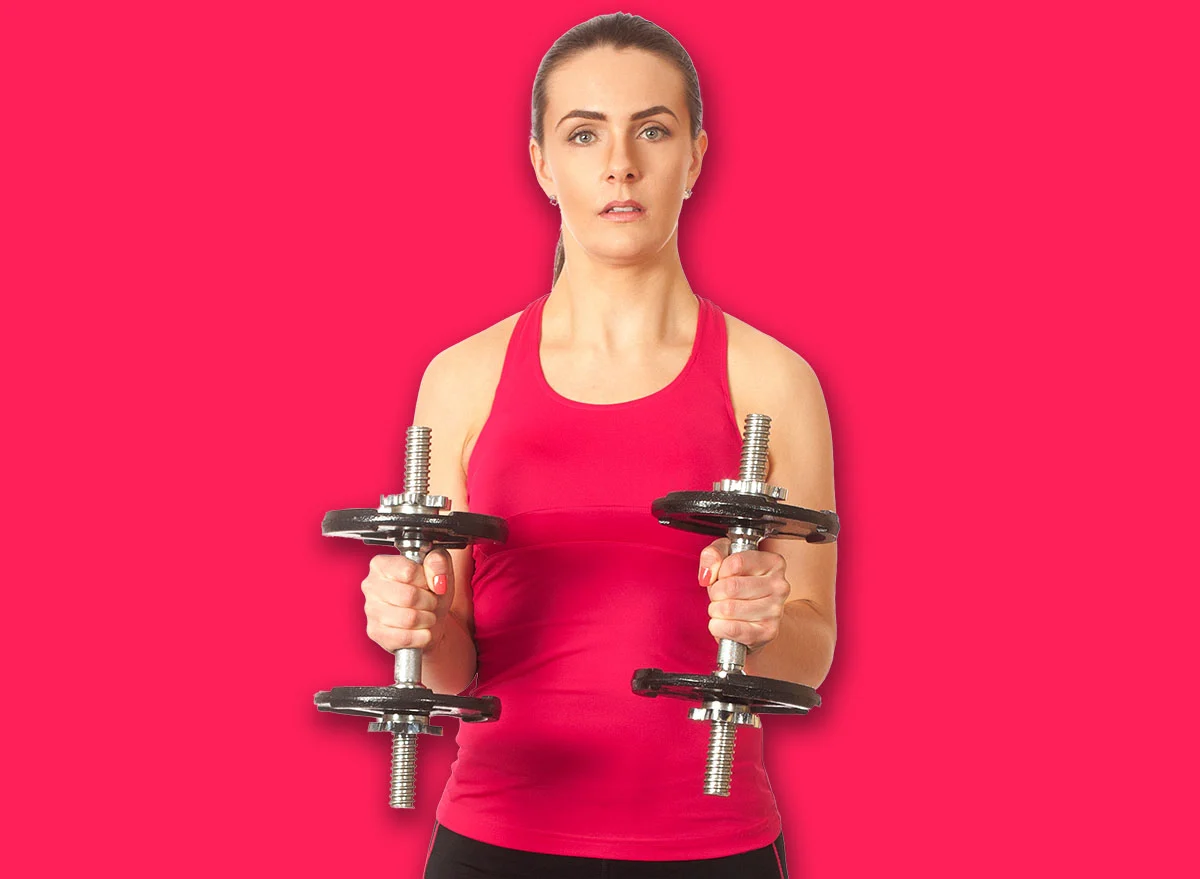
The narrow-grip curl-to-press is a dynamic, compound movement that offers exceptional efficiency by training both the biceps and triceps in a consecutive, fluid motion within a single repetition. This exercise commences with a narrow-grip bicep curl, effectively engaging the biceps, followed immediately by an overhead press, which powerfully recruits the triceps and deltoids. This integrated sequence allows for the simultaneous stimulation of the primary muscles of the upper arm, maximizing the benefits of each repetition. The transition between the curl and the press also demands significant coordination, balance, and core stability, making it a highly functional exercise that improves overall athletic capacity. Angelino underscores its unique setup, allowing for comprehensive upper arm training in a streamlined fashion, which is particularly advantageous for time-efficient workouts.
Integrating these standing free-weight exercises into a regular fitness regimen offers a multifaceted approach to enhancing upper arm strength and definition for individuals over 60. Beyond the direct muscular benefits, the emphasis on functional movement fosters improved balance, coordination, and proprioception—the body’s sense of its position in space. These attributes are invaluable for maintaining independence and reducing the risk of falls in later life.
For optimal results, consistency is paramount. It is recommended to perform these exercises 2-3 times per week, allowing adequate rest for muscle recovery and growth. Proper form should always take precedence over lifting heavy weights; starting with lighter free weights and gradually increasing the resistance as strength improves is a safe and effective strategy for progressive overload. Hydration, a balanced diet rich in protein, and sufficient sleep are also crucial components that support muscle repair and development. Before embarking on any new exercise program, especially for those over 60 or with pre-existing health conditions, consulting with a healthcare provider or a certified fitness professional is always advisable to ensure the routine is safe and appropriate for individual needs. By embracing these functional, standing exercises, older adults can proactively work towards stronger, more defined upper arms, contributing significantly to a more active and vibrant lifestyle.
About the Author