As individuals navigate the landscape of life beyond their sixth decade, the preservation of physical capabilities, particularly lower body strength, emerges as a cornerstone of independent living and overall well-being. The natural physiological processes associated with aging often lead to a gradual reduction in muscle mass and power, a phenomenon scientifically termed sarcopenia. This age-related muscular decline can significantly impede the execution of everyday tasks, from rising out of a chair to traversing uneven terrain, and critically, it elevates the risk of falls, which can have severe, life-altering consequences for older adults. While various fitness regimens and specialized gym equipment promise to counteract these effects, an often-overlooked, highly effective, and remarkably accessible solution lies within the familiar confines of one’s own home: a set of stairs.
The imperative to maintain robust lower body strength is not merely about physical prowess; it profoundly impacts quality of life, autonomy, and psychological well-being. Strong legs provide the foundation for balance, agility, and the necessary propulsive force to navigate daily obstacles. Without adequate leg power, simple actions like ascending a flight of stairs, getting up from a seated position, or recovering from a momentary stumble become increasingly challenging, fostering a dependency that many older adults strive to avoid. Regular engagement in strength-building activities can significantly mitigate these risks, ensuring a sustained capacity for active participation in life.
Within this context, stair training presents itself as an exceptionally potent and pragmatic approach to cultivating and preserving essential leg strength. Unlike sophisticated gym apparatus, which may be intimidating, costly, or geographically inconvenient, a sturdy staircase is a readily available tool for functional fitness. The inherent design of stair-based exercises closely mimics movements performed in daily life, thereby enhancing functional strength – the ability to perform real-world tasks with greater ease and safety. This functional relevance distinguishes stair workouts, making the strength gained directly transferable to improved mobility and reduced fall risk in everyday scenarios. Moreover, the act of stair climbing inherently engages multiple muscle groups simultaneously, offering a comprehensive lower body workout that also provides cardiovascular benefits, contributing to overall health.
Before embarking on any new exercise program, especially for those over the age of 60, it is always prudent to consult with a healthcare professional to ensure the activities are appropriate for individual health conditions. Once cleared, the emphasis must shift to safety and proper technique. A clear, well-lit staircase with a stable handrail is paramount. Participants should wear supportive, non-slip footwear and ensure the area is free from obstructions. The guiding principle for initial engagement should be to prioritize precise form over intensity or speed. Beginning with a lower step height and performing movements slowly and deliberately allows the body to adapt and strengthens the neuromuscular pathways, reducing the risk of injury. As strength and confidence grow, the intensity can be gradually increased through various modifications, embodying the principle of progressive overload, which is fundamental to muscle development.
One critical aspect of effective strength training, particularly beneficial for older adults, is focusing on the eccentric phase of muscle contraction – the controlled lengthening of the muscle under tension. For many stair exercises, this translates to the "lowering" portion of the movement. Executing this phase slowly and with deliberate control not only maximizes muscle engagement and promotes hypertrophy but also significantly enhances joint stability and helps prevent injuries. This controlled descent is particularly important for movements like stepping down, which inherently demand greater muscular control to counteract gravity and maintain balance.
Here are four foundational stair exercises, recommended by fitness professionals, designed to rebuild and sustain leg power, balance, and coordination for individuals aged 60 and beyond, without the need for gym equipment:
1. Ascending Step-Ups: Building Foundational Power
The ascending step-up stands as a cornerstone exercise for developing unilateral (single-leg) leg strength, targeting the quadriceps, glutes, and hamstrings effectively. Its elegance lies in its simplicity and inherent safety. Unlike traditional lunges, where the trailing leg can sometimes place undue stress on the knee joint, the step-up primarily focuses on the lead leg, allowing for greater control and reduced torque on the posterior knee.
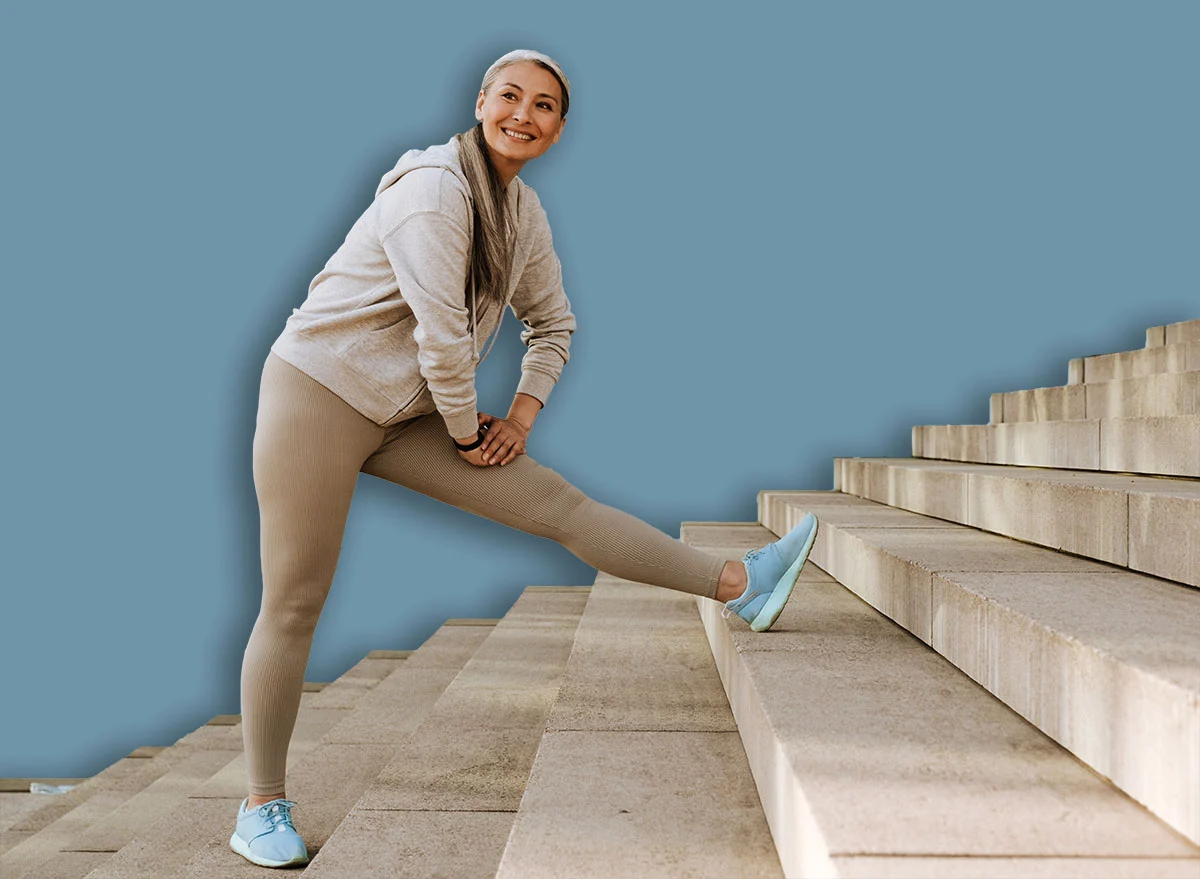
- Execution: Begin by standing facing the bottom step of a staircase. Place one entire foot flat onto the first step, ensuring your heel is firmly planted. Keeping your core engaged and your posture upright, drive through the heel of your elevated foot to lift your body onto the step, bringing your trailing leg to meet it or hovering it slightly. The movement should be controlled and initiated by the muscles of the front leg, not by pushing off with the back foot. Slowly and deliberately lower the same leg back to the starting position, controlling the descent with the muscles of the stepping leg. Repeat for the desired number of repetitions on one side before switching to the other leg.
- Benefits: This exercise profoundly strengthens the major muscle groups responsible for walking, climbing stairs, and standing up. It also significantly challenges and improves balance, as the body must stabilize on a single leg during the ascent and descent.
- Progression: As strength improves, increase the number of repetitions, sets, or consider stepping onto a higher stair (e.g., the second or third step, if safely possible). Adding a slight pause at the top of the movement can also increase muscular time under tension. For enhanced stability, one hand can lightly hold the handrail.
2. Controlled Descending Steps: Mastering Eccentric Strength
While stepping up builds power, stepping down demands superior control and eccentric strength – the muscle’s ability to lengthen under tension. This exercise is critical for fall prevention, as many falls occur during descent or when navigating uneven surfaces. The controlled descending step specifically targets the quadriceps, glutes, and stabilizer muscles around the knee and ankle, training them to absorb impact and maintain balance.
- Execution: Stand on the first step, facing down the stairs. Place your entire foot on the edge of the step. Slowly and with utmost control, allow one leg to lower towards the step below, aiming for a three to five-second descent. The goal is to touch the heel of the descending foot lightly to the lower step or floor without fully transferring weight. Keep your upper body upright and your core engaged. Push back up to the starting position on the top step, taking about two seconds for the ascent, focusing on the muscles of the standing leg. Perform all repetitions on one leg before switching.
- Benefits: This movement specifically trains the muscles to decelerate the body, a vital function for preventing stumbles and falls. It builds remarkable knee stability and proprioception (the body’s awareness of its position in space).
- Progression: Increase the duration of the eccentric (lowering) phase. As balance improves, gradually reduce reliance on the handrail. Focus on maintaining perfect form throughout the entire range of motion.
3. Elevated Calf Raises: Enhancing Ankle Stability and Propulsion
The calf muscles (gastrocnemius and soleus) are essential for ankle stability, balance, and the powerful push-off required for walking and running. Performing calf raises on a stair edge offers a greater range of motion compared to flat ground, allowing for a deeper stretch and more intense contraction, leading to superior muscle development.
- Execution: Stand on the edge of a step, with the balls of your feet firmly planted and your heels hanging off the edge. Hold onto a handrail or wall for balance. Slowly lower your heels as far as comfortably possible, feeling a stretch in your calves. Then, powerfully push up onto the balls of your feet, lifting your heels as high as you can. Hold the peak contraction for a second or two before slowly lowering back down.
- Benefits: This exercise directly strengthens the muscles vital for propulsion during walking and significantly enhances ankle stability, which is crucial for preventing trips and maintaining balance on various terrains.
- Progression: Increase the number of repetitions or sets. To further challenge the muscles, perform the exercise on one leg at a time (single-leg calf raises), maintaining a firm grip on the handrail. Adding a slight pause at the top of the movement will maximize the muscle engagement.
4. Dynamic Stair Marches: Integrating Mobility, Balance, and Coordination
The dynamic stair march is a comprehensive exercise that integrates hip mobility, dynamic balance, coordination, and leg strength into a single fluid movement. It closely simulates the reciprocal action of walking and stair climbing, making it highly functional.
- Execution: Stand at the bottom of a staircase, facing up. Begin by driving one knee upward as if marching, lifting your foot to step onto the first or second stair. As you do this, the opposite arm should naturally swing forward, mimicking a natural walking pattern. As one knee rises, the standing leg must actively stabilize the body. Then, carefully lower the foot back down, or step up fully and immediately drive the other knee upward to step onto the next stair. The key is to maintain a controlled, rhythmic march, focusing on lifting the knees high and engaging the core for stability. Keep one hand lightly hovering near the handrail for support if needed.
- Benefits: This exercise is a powerhouse for improving overall lower body function. It enhances hip flexor strength and mobility, develops dynamic balance, and refines the coordination between the upper and lower body, which is fundamental for efficient gait and fall prevention.
- Progression: As coordination and strength improve, gradually increase the tempo of the marches, making the movement more fluid and continuous. For an added challenge, try lifting the knee higher or reaching for a slightly higher step, always prioritizing controlled movement over speed.
Integrating these stair-based exercises into a regular fitness routine can yield profound benefits for older adults. A recommended frequency might include two to three sessions per week, allowing adequate time for muscle recovery. Each session could involve 2-3 sets of 8-15 repetitions for each exercise, adjusted based on individual fitness levels and comfort. Complementing these strength exercises with other forms of physical activity, such as brisk walking, gentle stretching, and balance drills, will create a holistic approach to maintaining physical vitality.
Ultimately, the journey to sustain lower body strength and functional mobility after 60 is an empowering one. It does not necessarily require expensive gym memberships or complex equipment. By leveraging the humble staircase, individuals can proactively invest in their long-term health, independence, and quality of life. Consistent effort with these accessible and effective exercises can indeed unlock a renewed sense of strength, balance, and confidence, enabling older adults to navigate the world with greater ease and embrace their later years with vigor and autonomy.
About the Author