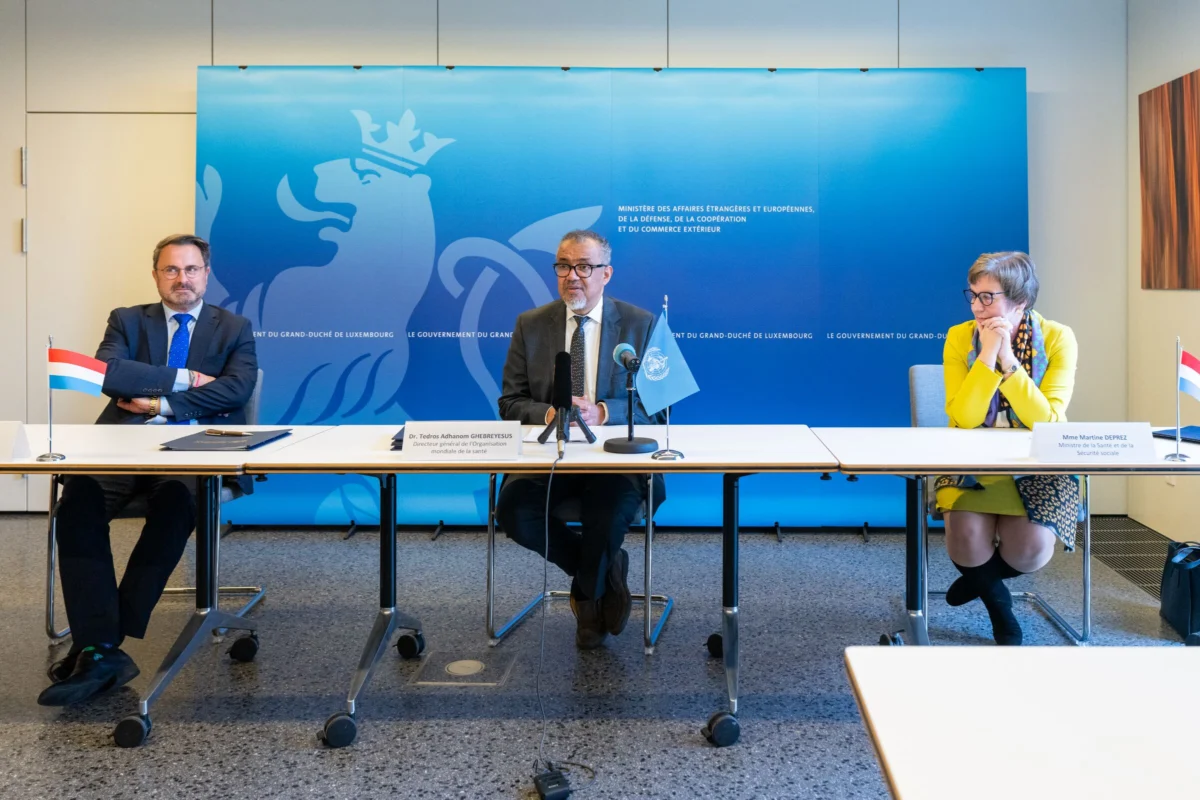
In a pivotal demonstration of its unwavering dedication to global public health and international solidarity, the Grand Duchy of Luxembourg formalized two significant agreements with the World Health Organization (WHO) on December 20, 2024. These unprecedented accords, totaling €47.5 million, represent a substantial boost to the WHO’s efforts to advance the Sustainable Development Goals (SDGs) from 2025 through 2028, marking a new chapter in the nation’s strategic collaboration with the leading global health authority.
At the core of this enhanced partnership is a Strategic Partnership Framework (SPF) signed with Luxembourg’s Ministry of Development Cooperation and Humanitarian Affairs, committing a record-setting €46.5 million. This financial pledge stands as the largest-ever agreement of its kind between Luxembourg and the WHO, underscoring the Grand Duchy’s deep-seated commitment to multilateralism and its recognition of the interconnectedness of global well-being. A critical feature of this framework is its allocation of both fully flexible and thematic funding. The inclusion of flexible funding is particularly valued by the WHO, as it empowers the organization to direct resources to areas of most pressing need and respond agilely to unforeseen health emergencies and evolving global priorities. This adaptability is crucial in an increasingly dynamic global health landscape, allowing for strategic deployment of aid where it can have the greatest impact.
Beyond flexible support, the €46.5 million also earmarks dedicated resources for several critical thematic areas. These include bolstering the Universal Health Coverage (UHC) Partnership, accelerating research into tropical diseases, and supporting the ongoing global campaign for polio eradication. Universal Health Coverage remains a cornerstone of SDG 3, aiming to ensure that all people have access to the health services they need, when and where they need them, without financial hardship. Luxembourg’s contribution will help strengthen health systems in developing nations, improve access to essential medicines and vaccines, and reduce disparities in health outcomes. Simultaneously, the commitment to tropical disease research acknowledges the persistent burden of neglected tropical diseases (NTDs) on vulnerable populations, often in low-income countries. These diseases, ranging from malaria and dengue to leprosy and lymphatic filariasis, disproportionately affect the poorest communities, trapping them in cycles of poverty and ill-health. Investing in research is vital for developing new diagnostics, treatments, and prevention strategies. Furthermore, support for polio eradication reflects a shared vision for a world free from this debilitating disease, building on decades of concerted global efforts that have brought eradication within reach.

In a complementary move, the Ministry of Health and Social Safety initiated its first-ever multi-year agreement with the WHO, pledging €1 million. This constitutes Luxembourg’s inaugural voluntary contribution from its health ministry to the global body, signaling a direct alignment of national health priorities with international efforts. This specific funding stream is strategically directed towards bolstering sanitary crisis preparedness and response mechanisms, alongside an intensified fight against health inequalities, with a pronounced focus on gender considerations. The recent global health crises have unequivocally highlighted the imperative for robust preparedness and rapid response capabilities. This contribution will support the development of resilient health systems, early warning networks, and rapid deployment of resources to mitigate the impact of future pandemics and outbreaks. The emphasis on health inequalities, particularly gender-based disparities, recognizes that health outcomes are often shaped by social, economic, and cultural factors, with women and girls frequently facing unique challenges in accessing healthcare and experiencing higher burdens of certain diseases. Addressing these systemic inequities is fundamental to achieving truly inclusive health for all.
Martine Deprez, Luxembourg’s Minister of Health and Social Safety, articulated the significance of this multi-year commitment during a bilateral meeting. She emphasized that the funding, extending through 2028, would strategically finance priority areas within Luxembourg’s collaborative agenda with the WHO. Her remarks specifically highlighted the importance of strengthening global capacities for health crisis readiness and response, alongside concerted efforts to diminish health disparities, paying particular attention to gender-specific challenges. This targeted approach reflects a sophisticated understanding of the multifaceted nature of global health challenges and a commitment to addressing root causes.
Xavier Bettel, Luxembourg’s Deputy Prime Minister and Minister of Foreign and European Affairs, Cooperation and Foreign Trade, underscored the broader philosophy underpinning these agreements. He stated that the dual partnership accords unequivocally reaffirm Luxembourg’s enduring support for the WHO and its overarching mission. Minister Bettel emphasized that these actions are a testament to the Grand Duchy’s profound commitment to championing global health initiatives and reinforcing multilateral frameworks. He articulated the nation’s proactive stance, stating, "We launch these agreements with WHO because we believe the best way to avoid is to prevent." This sentiment encapsulates Luxembourg’s foreign policy doctrine, which consistently advocates for proactive engagement and preventative measures in addressing complex global issues, from conflict resolution to public health. The commitment to multilateralism further highlights Luxembourg’s belief in collective action and shared responsibility as the most effective means to tackle challenges that transcend national borders.
Dr. Tedros Adhanom Ghebreyesus, the Director-General of the WHO, reflected on the profound symbolism of the agreements being signed on the International Day of Solidarity. He characterized the accords as a powerful declaration of solidarity from Luxembourg, extending not only to the WHO but, more importantly, to the global populace. This symbolic timing underscores the essence of international cooperation in health – a collective endeavor rooted in mutual support and shared humanity, particularly for those most vulnerable.

Luxembourg’s enhanced support directly contributes to the WHO’s fundamental mandate: to develop, deliver, and implement high-quality technical products. This encompasses the creation of evidence-based guidelines, norms, and standards that serve as foundational frameworks for health policies and practices adopted by numerous countries worldwide. These tools are indispensable for guiding public health interventions, ensuring quality of care, and fostering harmonized approaches to global health challenges. By strengthening the WHO’s core functions, Luxembourg is helping to empower the organization to fulfill its role as the world’s leading normative and standard-setting health body.
This latest development continues a rich history of strategic partnership between the WHO and Luxembourg. For decades, the two entities have collaborated with a shared vision: to promote health, provide essential health services, and protect populations from health threats. As a small, prosperous nation with a strong commitment to international development aid (often exceeding the UN target of 0.7% of GNI), Luxembourg has consistently been a reliable and significant contributor to global humanitarian and development efforts. Its consistent engagement with the WHO reflects a principled foreign policy that prioritizes human well-being and equitable access to health as fundamental rights.
The strategic investments from Luxembourg, particularly the unprecedented scale of the development cooperation agreement and the pioneering multi-year commitment from its health ministry, are poised to significantly bolster the WHO’s capacity to address a spectrum of global health challenges. From strengthening health systems and battling infectious diseases to promoting health equity and preparing for future crises, these partnerships exemplify how sustained international cooperation and generous financial backing are indispensable in the collective pursuit of a healthier, more secure world for everyone. The agreements are a clear affirmation that in an increasingly interconnected world, investing in global health is an investment in shared prosperity and collective security.
About the Author