
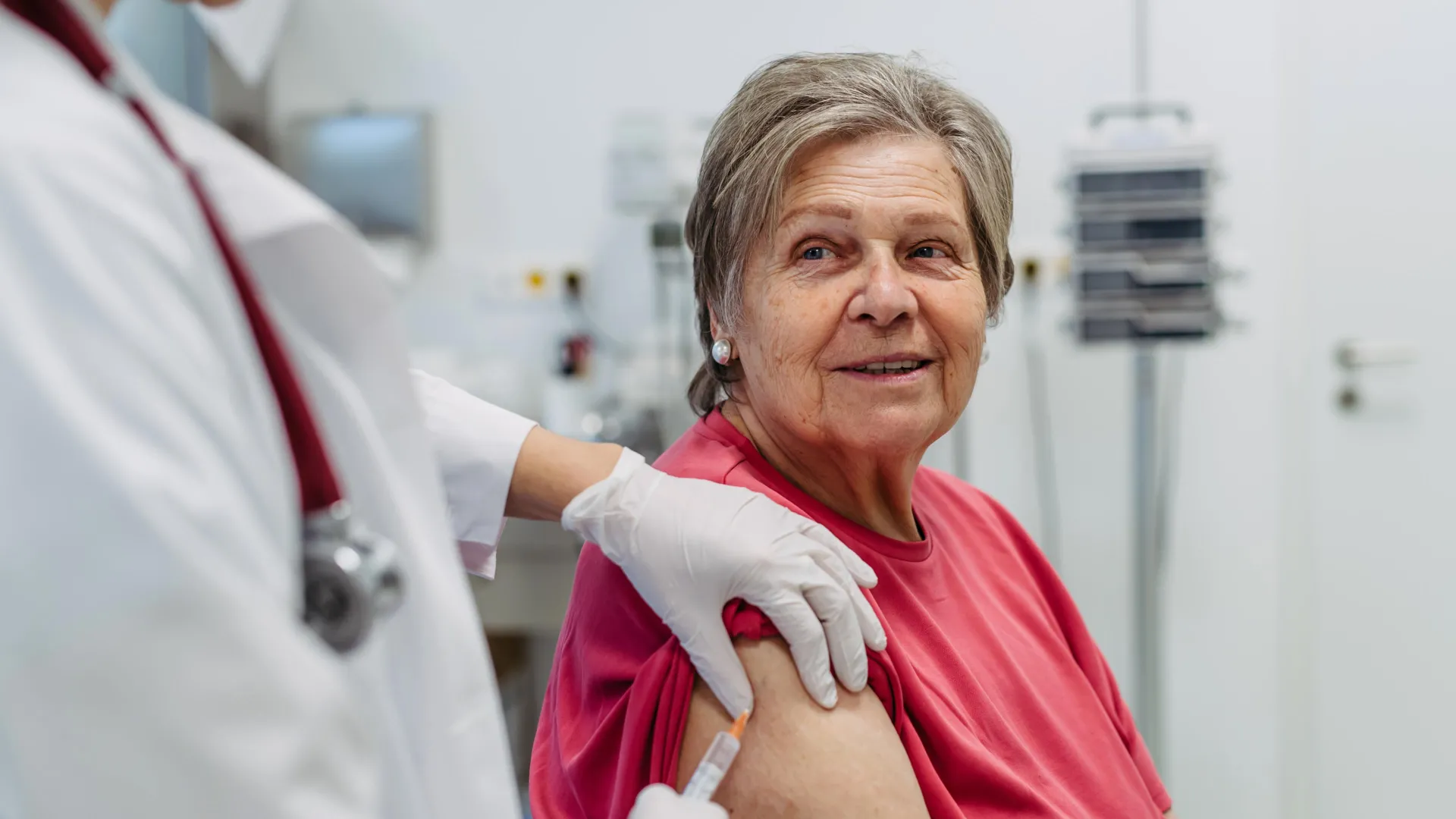
A recent investigation drawing upon extensive Medicare data has illuminated a compelling statistical correlation between the administration of the newer shingles vaccine and a diminished likelihood of dementia diagnoses among older adults transitioning into skilled nursing facilities. Specifically, the analysis revealed that individuals who received at least one dose of the recombinant zoster vaccine (RZV), marketed as Shingrix, exhibited a 24% lower incidence of dementia over a four-year follow-up period when contrasted with their unvaccinated counterparts. This finding is particularly noteworthy as it focuses on the contemporary vaccine in a population segment often facing heightened health vulnerabilities and potentially delayed vaccination schedules.
The comprehensive study, meticulously detailed in the Annals of Internal Medicine, meticulously examined the health trajectories of over half a million adults aged 66 and older. These individuals were admitted to skilled nursing facilities for either short-term rehabilitation or extended residential care between 2017 and 2022. The research team, a collaborative effort involving institutions such as Brown University’s School of Public Health, the University of Delaware, and the Providence Veterans Affairs Medical Center, employed a sophisticated analytical methodology known as target trial emulation. This approach is designed to approximate the rigorous conditions of a randomized controlled trial in observational data sets where direct experimental manipulation is not feasible or ethical.
The cohort under scrutiny comprised 509,926 Medicare beneficiaries who had no prior diagnosis of dementia and were eligible for shingles vaccination. Within this large group, a subset of 8,843 individuals received at least one dose of the Shingrix vaccine, which has been the sole shingles vaccine available in the United States since its introduction in 2017. The study’s design meticulously controlled for a variety of demographic and health-related variables, aiming to isolate the potential impact of the vaccine.
Upon analyzing the health records for four years post-admission, the researchers observed a significant divergence in dementia diagnoses. Among the vaccinated group, 18.8% were diagnosed with dementia, a figure substantially lower than the 24.6% recorded for the unvaccinated cohort. This observed difference suggests that, on average, approximately one in seventeen cases of dementia might be preventable through this vaccination strategy within this specific demographic.
The study’s lead author, Kaley Hayes, an assistant professor at Brown University and associate director of pharmacoepidemiology for the university’s Center for Gerontology and Healthcare Research, emphasized the study’s unique contribution. "A lot of previous studies with similar results focused on an older vaccine," Hayes stated, highlighting that the current investigation specifically targets the newer RZV formulation. "This study looks at the newest vaccine only in an older, vulnerable adult population who were not up to date with shingles vaccination and are at a very clear clinical point in care: entering a skilled nursing facility." This focus on a critical juncture in elder care delivery provides a valuable window into the vaccine’s potential impact in a high-risk environment.
Hayes further contextualized the findings within a broader scientific narrative, noting their consistency with earlier research. "It fits into this large puzzle that’s just starting to come together that the vaccines are effective at preventing shingles and also appear to have neuroprotective benefits as well," she explained. This observation aligns with a growing body of evidence suggesting that vaccines, beyond their primary infectious disease prevention roles, may confer broader immunological and physiological advantages, potentially extending to neurological health. The neurological underpinnings of shingles, caused by the reactivation of the varicella-zoster virus, which also causes chickenpox, have long been known to involve nerve pathways and can, in some instances, lead to postherpetic neuralgia and other neurological complications. The hypothesis emerging from these studies is that the immune response stimulated by the shingles vaccine might not only combat the virus directly but also exert a beneficial influence on the central nervous system’s overall health and resilience.
However, the researchers were careful to underscore the observational nature of their study and its inherent limitations. While the statistical association is robust, the analysis cannot definitively establish a direct cause-and-effect relationship between Shingrix vaccination and reduced dementia risk. The study’s methodology, while employing advanced statistical techniques to mitigate bias, acknowledged that individuals who opted for vaccination might have differed from their unvaccinated peers in ways not fully captured by the data. For instance, vaccinated individuals tended to be slightly younger and, on average, healthier at the time of admission, factors that independently contribute to a lower risk of cognitive decline. Although the researchers meticulously adjusted their models to account for these known confounding variables, they conceded that these adjustments might not entirely explain the observed disparity.
Therefore, further rigorous investigation is warranted to solidify these findings. The authors explicitly called for prospective clinical trials, the gold standard for establishing causality, to definitively ascertain whether the shingles vaccine directly modulates dementia risk. Such trials would involve randomly assigning eligible individuals to receive either the vaccine or a placebo, allowing for a direct comparison of outcomes under controlled conditions.
Despite these methodological caveats, the research offers significant implications for public health policy and clinical practice. The findings suggest that a widely available preventive intervention, already recommended for older adults to ward off the painful and debilitating effects of shingles, may also offer a valuable ancillary benefit in safeguarding cognitive function. "Our cognition is so tied to our overall health and what happens to us physically," Hayes remarked, emphasizing the interconnectedness of bodily and mental well-being. "It’s really amazing to see that something that’s supposed to prevent a physical ailment can also help keep our brain healthy, too." This perspective underscores the potential of a holistic approach to elder care, where interventions addressing physical health may have profound and unexpected positive consequences for cognitive preservation.
It is also important to note the financial disclosures associated with the study. The authors reported receiving research funding from GlaxoSmithKline, the pharmaceutical company that manufactures Shingrix. They were transparent in stating that the funding entity had no oversight or influence over the study’s design, data analysis, or the ultimate decision to publish the results, thereby maintaining the integrity and independence of the scientific process. This transparency is crucial for building trust in research findings and ensuring that scientific discoveries are not unduly influenced by commercial interests. The continued exploration of the multifaceted benefits of vaccination remains a critical frontier in promoting healthy aging and mitigating the burden of age-related diseases.
About the Author












