Intestinal Antibody IgA Identified as Crucial Regulator of Colon Cell Growth, Potentially Halting Cancer Genesis
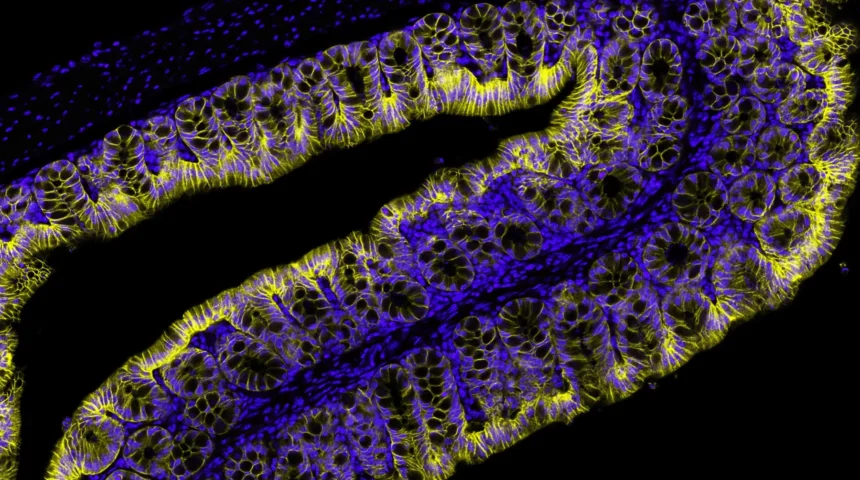
A foundational component of the digestive system’s immune defenses, a ubiquitous antibody known as immunoglobulin A (IgA), has been revealed by researchers to play a critical role in modulating the proliferation of intestinal lining cells, thereby offering a potential mechanism for averting the onset of colon cancer. This discovery, originating from investigations at Rockefeller University, posits that IgA acts as a natural governor on cellular division, preventing the uncontrolled growth that ultimately gives rise to malignant tumors.
In a landmark study published in the esteemed journal Nature, scientists observed a significant disparity in tumor development between experimental animal models. Mice genetically engineered to lack immunoglobulin A exhibited more than double the incidence of colon tumors when compared to their counterparts possessing normal IgA levels. The research team meticulously elucidated the protective mechanism at play: IgA molecules actively engage with the cells that constitute the intestinal epithelium, exerting a regulatory influence that curbs excessive multiplication. This finding suggests that IgA is not merely a passive bystander but an active participant in maintaining intestinal homeostasis.
Further bolstering the significance of these findings, the researchers demonstrated a direct therapeutic implication. When IgA was administered orally to mice that were deficient in the antibody, their heightened predisposition to developing colon tumors was effectively neutralized, returning to baseline levels observed in healthy animals. This oral administration strategy underscores the localized and direct action of IgA within the gastrointestinal tract.
Senior author Daniel Mucida, who presides over Rockefeller’s Laboratory of Mucosal Immunology, highlighted the paradigm-shifting potential of this research. "What is particularly compelling about this investigation is its revelation of how an intrinsic defensive system within the gut actively restrains the very cellular proliferation that can pave the way for cancer," he stated. He contrasted this preventative approach with conventional cancer research, which predominantly focuses on eradicating existing tumors. "Our work prompts a crucial question: what if we could intervene effectively before tumors even begin to form?"
The implications of this research extend to human health, offering a potential explanation for the increased risk of colorectal cancer observed in individuals diagnosed with IgA deficiency, a condition characterized by significantly reduced or absent production of this antibody. Moreover, these findings provide novel insights into the intricate interplay between the gut microbiome, the immune system, and the epithelial cells lining the intestine, a complex dance that profoundly influences cancer pathogenesis, even in individuals with otherwise robust immune systems.
The Abundant Presence of IgA in the Gut: A Long-Standing Enigma
Immunoglobulin A stands as one of the most prevalent antibodies within the digestive tract, serving as a frontline defense against a diverse array of potentially pathogenic microorganisms. Unlike antibodies that target specific molecular structures, IgA possesses a remarkable capacity to interact with a broad spectrum of gut bacteria and even certain endogenous cellular components.
For decades, the unusually high concentration of IgA in the intestines has been a subject of scientific inquiry. However, the precise reasons for this abundance, and the full spectrum of its functional roles, have remained incompletely understood.
Dr. Mucida’s laboratory has dedicated itself to unraveling how the intestine manages the delicate balance between two essential, and at times competing, imperatives: defending the body against harmful pathogens while simultaneously facilitating the absorption of vital nutrients from ingested food. Previous research emanating from his team has shed light on the contributions of intestinal immune cells to the development of food intolerances and allergic reactions.
Driven by a desire to deepen the understanding of IgA’s interactions with the intestinal microbiome and their potential link to colon cancer development, Gregory Donaldson, a former postdoctoral researcher at Rockefeller and now an assistant professor at UCLA, embarked on the current study. "We are aware that these antibodies bind to bacteria, and in doing so, they can shape the composition of the microbiome," Donaldson explained. "Given that IgA deficiency, which affects approximately 1 in 500 individuals in the United States, has been correlated with an increased risk of colorectal cancer, I began to question whether these bacterial interactions might hold relevance to the disease."
The microbiome, a vast and complex ecosystem, comprises the myriad microorganisms residing within and upon the human body. In the intestines, these microbes perform critical functions related to digestion and immune health. However, under specific circumstances, certain bacterial species can contribute to disease processes.
The Striking Impact of IgA Deficiency on Colon Tumor Formation
To rigorously assess the protective effects of IgA, Donaldson and his colleagues conducted a comparative analysis using mouse models. They contrasted the tumor development patterns in mice engineered to be incapable of producing IgA with those that maintained normal IgA production. To ensure the validity of the comparison and control for environmental variables, both groups of mice were raised under identical conditions, thereby standardizing their dietary intake and exposure to microorganisms.
The outcomes revealed a dramatic divergence. Animals devoid of IgA exhibited a substantially elevated number of colorectal tumors compared to their IgA-sufficient counterparts. This finding directly mirrored the increased colorectal cancer risk observed in human populations diagnosed with IgA deficiency. The robustness of this association was further validated across multiple experimental models of colon cancer, reinforcing the evidence that IgA plays a pivotal protective role in this context.
"We observed this pattern consistently across several different models of colon cancer, which made the effect particularly convincing," Donaldson remarked.
The research team then proceeded to investigate whether the restoration of IgA levels could reverse this heightened susceptibility. Upon oral administration of IgA to IgA-deficient mice, their predisposition to developing colon tumors was eradicated, indicating that the antibody’s presence directly counteracted the tumor-promoting environment. This observation suggested that IgA’s function extends beyond mere passive accompaniment of other protective mechanisms; its presence appears to actively influence the conditions that govern tumor initiation.
Unveiling a Natural Inhibitor of Cancer Cell Proliferation
To unravel the molecular underpinnings of IgA-mediated protection, the researchers focused their attention on the epithelial cells, the cellular building blocks of the intestinal lining. These cells are of paramount importance, as colon cancer originates from aberrations in their normal growth and division processes.
The intestinal lining is a dynamic tissue that undergoes continuous renewal, with older or damaged cells being systematically replaced by newly generated ones. This essential process of cell division must be tightly regulated to maintain the integrity and health of the digestive tract. When the intricate signaling pathways that govern this cellular turnover become dysregulated, uncontrolled proliferation can create fertile ground for cancer to emerge.
In mice lacking IgA, the researchers identified significant alterations in gene expression patterns associated with cellular proliferation, the fundamental process by which cells divide and increase in number. Crucially, these molecular changes were detectable before the visible manifestation of tumors, strongly suggesting that IgA intervenes at an early stage of cancer development.
"We hypothesized that there must be some form of receptor on the epithelial cells that was mediating this interaction," Donaldson explained.
The researchers posited that IgA might be interacting with a specific molecular structure on the surface of intestinal cells, thereby influencing their behavior. Gabriella Lima dos Reis, the study’s second author and a graduate student in Gabriel Victora’s laboratory, focused her investigations on a promising candidate molecule known as DMBT1.
DMBT1 is a cell surface receptor found on intestinal epithelial cells that has the capacity to bind to IgA. While prior research had implicated DMBT1 in various types of cancer, its precise role in the development of colon tumors remained unclear.
The Collaborative Control of Tumorigenesis by Gut Bacteria and IgA
Further experimental investigations revealed that DMBT1 exhibits distinct functional roles depending on the presence or absence of IgA. In the context of the intestinal microbiome, DMBT1 activates signaling pathways that promote the division of epithelial cells. This response is a normal physiological mechanism essential for the continuous renewal of the intestinal lining, which must maintain a robust barrier against external threats.
However, IgA plays a crucial role in tempering this growth. When IgA binds to DMBT1, it effectively dampens the receptor’s signaling activity, acting as a crucial brake on excessive cell proliferation.
In the absence of IgA, DMBT1 signaling can proceed unchecked, leading to an accelerated rate of epithelial cell division. This heightened proliferation increases the probability that cancerous transformations will occur. The researchers confirmed that this uncontrolled growth is contingent upon the interplay of several factors. When gut bacteria were absent, or when DMBT1 signaling was inhibited, or when normal levels of IgA were present, epithelial cell division remained within healthy, regulated parameters.
Collectively, these findings illuminate how a common immune molecule contributes to the maintenance of a critical equilibrium between necessary tissue repair and potentially detrimental overgrowth. "If IgA is absent, epithelial cells, in the course of their normal function – responding to bacteria by generating new cells – can continue to divide without restraint, ultimately leading to cancer," Mucida elaborated. "We believe this homeostatic function is the primary role of IgA. This was a significant and unexpected revelation."
Homeostasis refers to the body’s inherent capacity to maintain stable internal conditions despite constant external fluctuations. In this instance, IgA appears to support this vital balance by preventing the natural process of intestinal cell renewal from escalating into potentially cancerous overgrowth.
A Novel Avenue for Colon Cancer Prevention Strategies
By identifying the specific role of DMBT1 in intestinal cells, the Rockefeller University team has uncovered a potential therapeutic target for future colon cancer prevention interventions. Rather than focusing solely on eradicating established tumors, future strategies may involve modulating the biological signals that predispose cells to malignant transformation.
"Based on the mechanism we have elucidated, it is conceivable that we could influence epithelial cells to be less likely to develop into tumors," Mucida suggested. He further elaborated, "For example, we know that the presence of polyps increases an individual’s risk of developing colon cancer. Therefore, we envision an opportunity to target this pathway after polyps have been surgically removed, an intervention currently unavailable at that stage."
Colon polyps are abnormal growths that can form on the inner lining of the large intestine. While many are benign, a subset can eventually progress to malignancy. Their removal during colonoscopies is a standard procedure for reducing cancer risk, but researchers are actively seeking additional methods to prevent the recurrence or formation of new tumors. The newly identified pathway involving IgA and DMBT1 could represent such an avenue, although extensive further research is imperative to ascertain its safety and efficacy in human clinical applications.
The Potential Role of Beneficial Gut Bacteria in Cancer Prevention
This groundbreaking discovery also opens up another intriguing possibility: that specific species of intestinal bacteria might actively contribute to cancer prevention. These beneficial microbes could potentially exert their protective effects by influencing the behavior of epithelial cells or by stimulating the production of cancer-fighting antibodies like IgA.
While a significant portion of research concerning the gut microbiome and cancer has centered on pathogenic bacteria that promote tumor initiation or accelerate cancer progression, emerging evidence suggests that some microbes may possess the opposite effect. "What is perhaps even more exciting is the indication that individual bacterial species can exert very specific effects on epithelial cells," Donaldson noted. "Much research has focused on bacteria that induce tumors or exacerbate their growth, but we have some evidence suggesting the existence of bacteria that could have the opposite effect, much like IgA. In that regard, perhaps we could develop a probiotic supplement that stimulates a protective IgA response. This is all highly speculative at this point, but it represents a promising direction for future investigation."
Such an approach would aim to leverage beneficial microorganisms to bolster the body’s inherent protective mechanisms, rather than directly confronting cancer cells. Nevertheless, this concept remains largely theoretical, and the current mouse experiments do not definitively establish that IgA supplementation or probiotic interventions can prevent colon cancer in humans. For the present, these findings offer a significantly clearer understanding of how the immune system and the gut microbiome collaborate to maintain healthy intestinal tissue. They also strongly suggest that some of the body’s most critical defenses against cancer may operate long before the disease becomes clinically detectable. "Ultimately, there remains a great deal to learn about the intricate dance between bacteria, antibodies, and epithelial cells in the gut that underpins the maintenance of health," concluded Mucida.
Related posts:

Related News