As individuals advance into their later decades, maintaining physical strength and mobility becomes a cornerstone of independent living and overall well-being. A common aspiration among many older adults is to cultivate firmer, more capable arms. However, the pursuit of this goal often involves misconceptions, particularly the overreliance on isolated exercises like bicep curls. While bicep curls certainly contribute to arm strength, a truly effective strategy for improving upper limb definition and functional capacity after the age of sixty necessitates a far more comprehensive approach, targeting the intricate network of muscles across the shoulders, chest, back, and the entire arm. This holistic methodology not only sculpts the arms but also fortifies the entire upper body, enhancing posture, balance, and the ability to perform daily activities with greater ease and confidence.
The physiological changes associated with aging, notably sarcopenia—the progressive loss of muscle mass and strength—underscore the importance of targeted resistance training. After 60, muscle fibers can diminish in both size and quantity, impacting everything from lifting groceries to maintaining balance. Focusing solely on the biceps, which primarily handle pulling and curling movements, overlooks the substantial contribution of other major muscle groups that collectively define the shape and strength of the upper arm and torso. The triceps, for instance, comprise a significant portion of the upper arm’s mass and are crucial for pushing motions. Meanwhile, the shoulders (deltoids), chest (pectorals), and upper back muscles (latissimus dorsi, rhomboids, trapezius) provide the foundational strength and stability upon which arm movements are built. Neglecting these areas can lead to muscular imbalances, increased risk of injury, and an inability to achieve desired aesthetic and functional outcomes.
Moreover, integrating standing exercises into a fitness regimen offers unique advantages, particularly for older adults. Unlike seated movements that often isolate muscle groups and minimize core involvement, standing exercises demand greater engagement from the core musculature to maintain stability and balance. This dynamic stabilization not only strengthens the abdominal and back muscles but also improves proprioception—the body’s awareness of its position in space—which is vital for preventing falls and enhancing overall coordination. Executing movements while standing more closely mimics real-world activities, translating into practical functional strength that directly supports independence in daily living, from reaching overhead to pushing open a heavy door. The continuous demand on postural muscles throughout these exercises cultivates better alignment and reduces the sedentary impact of prolonged sitting.
A well-rounded program for upper body revitalization in senior years prioritizes compound movements and exercises that engage multiple joints and muscle groups simultaneously. Here, we delve into five pivotal standing exercises that offer superior benefits for developing resilient, well-defined arms and a stronger upper torso.
1. Resistance Band Supported Back Rows
This exercise stands as a cornerstone for developing robust pulling strength and improving postural alignment, two critical elements for senior health. The resistance band offers a progressive and joint-friendly alternative to free weights, making it ideal for those managing shoulder discomfort or seeking a gentler introduction to resistance training. By pulling the band towards the torso, individuals activate the upper back muscles (rhomboids, middle and lower trapezius), the large muscles of the lats, and the posterior deltoids, all of which are essential for maintaining an upright posture and counteracting the forward-slumped posture often associated with prolonged sitting. The concurrent engagement of the biceps during the pulling action ensures comprehensive arm development.
- Execution: Stand with feet shoulder-width apart, anchoring a resistance band securely around a stable object at chest height or beneath your feet. Hold an end of the band in each hand, palms facing each other. Initiate the movement by drawing your shoulder blades together and pulling the band towards your chest, keeping elbows close to the body. Pause briefly as your elbows reach your sides, then slowly control the return to the starting position. Maintain a slight bend in the knees and a strong, neutral spine throughout the motion.
- Benefits for Seniors: Enhances back strength, improves posture, supports the spine, strengthens biceps, and balances pushing movements.
- Form Focus: Prevent shrugging shoulders towards the ears; instead, focus on retracting the shoulder blades. Keep the core lightly braced to avoid leaning back.
- Progression/Regression: Adjust band thickness for varying resistance. Perform single-arm rows for unilateral strength or seated rows for added stability.
2. Standing Overhead Triceps Extensions
Often referred to as the "long head" triceps exercise, the overhead triceps extension directly targets the largest muscle group of the upper arm, significantly contributing to arm firmness and strength. Performing this movement in a standing position further challenges core stability, demanding active engagement from the abdominals and lower back to prevent excessive arching. This exercise is fundamental for improving the ability to reach overhead and to perform pushing movements effectively.
- Execution: Hold a single dumbbell vertically with both hands, cupping one end with your palms. Raise the dumbbell overhead, extending your arms fully but with a slight bend in the elbows. Keep your elbows pointing forward and close to your head. Slowly lower the dumbbell behind your head by bending your elbows, feeling the stretch in your triceps. Extend your arms back to the starting position, focusing on squeezing the triceps at the top. Keep the ribs "down" and avoid flaring them out, which indicates over-arching the lower back.
- Benefits for Seniors: Directly strengthens triceps for improved pushing power, enhances overhead mobility, and develops core stability.
- Form Focus: Maintain a stable torso, preventing the lower back from arching. Use a weight that allows for full control without momentum.
- Progression/Regression: Use a resistance band for a gentler load, perform with a lighter dumbbell, or execute seated for increased stability.
3. Wall-Assisted Chest Presses (Wall Push-ups)
This accessible variation of the traditional push-up is an excellent way for older adults to build pressing strength in the chest, shoulders, and triceps without the challenge of working against gravity on the floor. It offers a scalable entry point for developing upper body pushing power, which is essential for tasks like pushing doors, getting up from a chair, or stabilizing oneself. The standing position also reduces pressure on wrists and allows for easy adjustment of intensity.
- Execution: Stand facing a wall, about arm’s length away. Place your hands slightly wider than shoulder-width apart on the wall, at chest height. Keep your body straight from head to heels. Inhale as you bend your elbows, lowering your chest towards the wall. Your elbows should point slightly backward and downwards, not directly out to the sides. Exhale as you push back to the starting position, fully extending your arms.
- Benefits for Seniors: Builds strength in chest, shoulders, and triceps; improves functional pushing capacity; highly customizable for different fitness levels.
- Form Focus: Keep the body in a straight line, avoiding hip sagging or piking. Control the movement both down and up.
- Progression/Regression: Increase difficulty by stepping further away from the wall; decrease by moving closer. Perform against a countertop or railing for a steeper angle and greater challenge.
4. Resistance Band Shoulder Retractions (Pull-Aparts)
This often-overlooked exercise is incredibly effective for strengthening the posterior deltoids and the upper and mid-back muscles that retract and stabilize the shoulder blades. For many older adults who may spend significant time seated or with rounded shoulders, band pull-aparts are crucial for improving posture, opening the chest, and promoting overall shoulder health. Strong rear deltoids contribute to the sculpted appearance of the shoulders and ensure balanced arm development.
- Execution: Hold a light resistance band with both hands, palms facing down, hands shoulder-width apart, arms extended straight out in front of you at chest height. Keep a slight bend in your elbows. Initiate the movement by pulling the band apart, driving your hands outwards and away from each other, focusing on squeezing your shoulder blades together. Your arms should move horizontally, not upwards or downwards. Control the band as you slowly return to the starting position.
- Benefits for Seniors: Strengthens posterior shoulders and upper back, corrects posture, improves shoulder stability, and counteracts rounded shoulders.
- Form Focus: Avoid shrugging the shoulders up. Keep them down and back. Resist the urge to lean backward; the movement should come from the upper back and shoulders.
- Progression/Regression: Vary band thickness. Perform with a wider or narrower grip to slightly shift muscle emphasis.
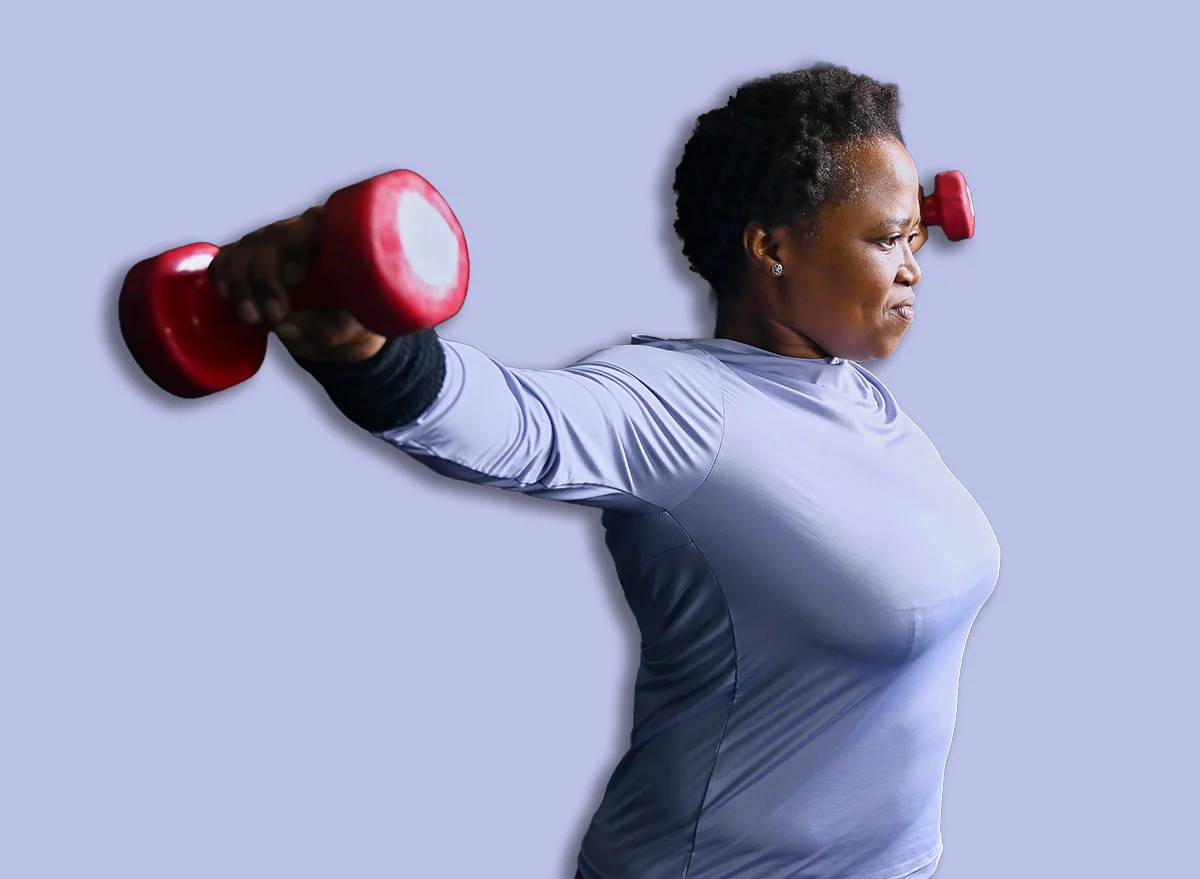
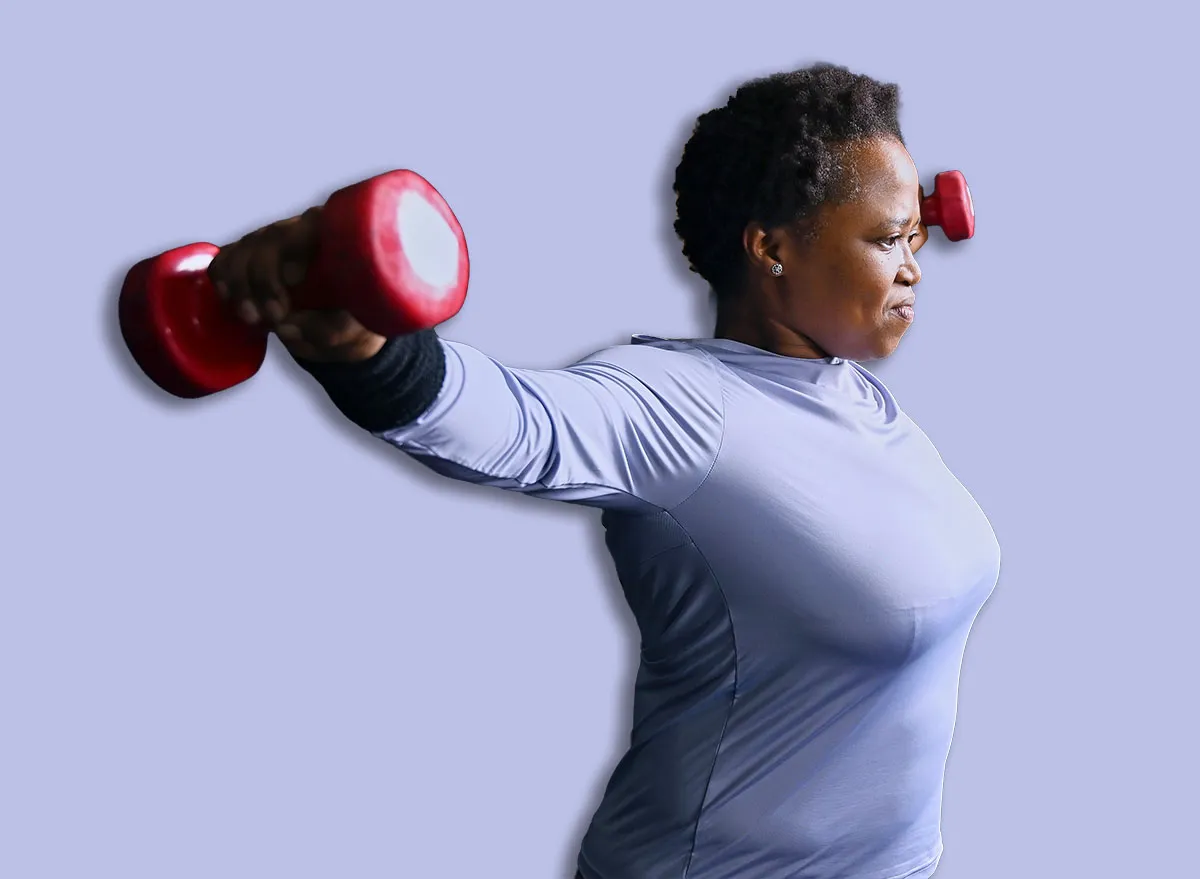
5. Standing Lateral Dumbbell Raises
Lateral raises are highly effective for targeting the medial (side) head of the deltoid muscle, which is crucial for creating broader, more defined shoulders that contribute significantly to the overall aesthetic and strength of the upper arm complex. This movement is also vital for functional tasks requiring arm abduction, such as reaching to the side or lifting objects. Emphasizing control over heavy weight is paramount to protect the delicate shoulder joint.
- Execution: Stand tall with a light dumbbell in each hand, palms facing your body. Let the dumbbells rest by your sides, maintaining a slight bend in your elbows. Engage your core. Slowly raise the dumbbells out to the sides, leading with your elbows, until your arms are roughly parallel to the floor, forming a "T" shape with your body. Avoid lifting higher than shoulder height to prevent impingement. Control the descent, slowly lowering the dumbbells back to the starting position.
- Benefits for Seniors: Builds strength and definition in the side deltoids, improves shoulder stability, and enhances functional lateral lifting.
- Form Focus: Use light weights to prevent swinging and maintain strict form. Avoid shrugging the shoulders. The movement should be slow and controlled, especially during the lowering phase.
- Progression/Regression: Perform one arm at a time for increased focus. Reduce the range of motion if shoulder discomfort arises.
To effectively integrate these movements, consider structuring them into an upper body circuit performed two to four times per week. Execute one set of each exercise consecutively, then rest for 60 to 90 seconds before beginning the next round. Aim for two to three total rounds. For each exercise, focus on controlled repetitions within a comfortable range of motion, prioritizing proper form over lifting heavy weights. Recommended ranges are typically 10-15 repetitions for band exercises and wall push-ups, and 8-12 repetitions for dumbbell movements, adjusted based on individual strength and comfort. Consistency is key, allowing the body to adapt and grow stronger over time.
Beyond the specific exercises, supporting muscle health in later life also involves crucial lifestyle factors. Adequate protein intake, sufficient hydration, quality sleep, and managing stress are all integral to muscle repair and growth. Consulting with a healthcare provider or a certified fitness professional before embarking on any new exercise regimen is always advisable, particularly for individuals with pre-existing conditions.
By embracing this integrated approach to upper body strength training, older adults can move beyond the limitations of isolated bicep work to develop not just aesthetically firmer arms, but a robust and functional upper body that supports a vibrant, active, and independent lifestyle for years to come. The goal transcends mere appearance; it’s about fostering enduring strength, enhancing mobility, and preserving the autonomy that contributes profoundly to quality of life.
About the Author