
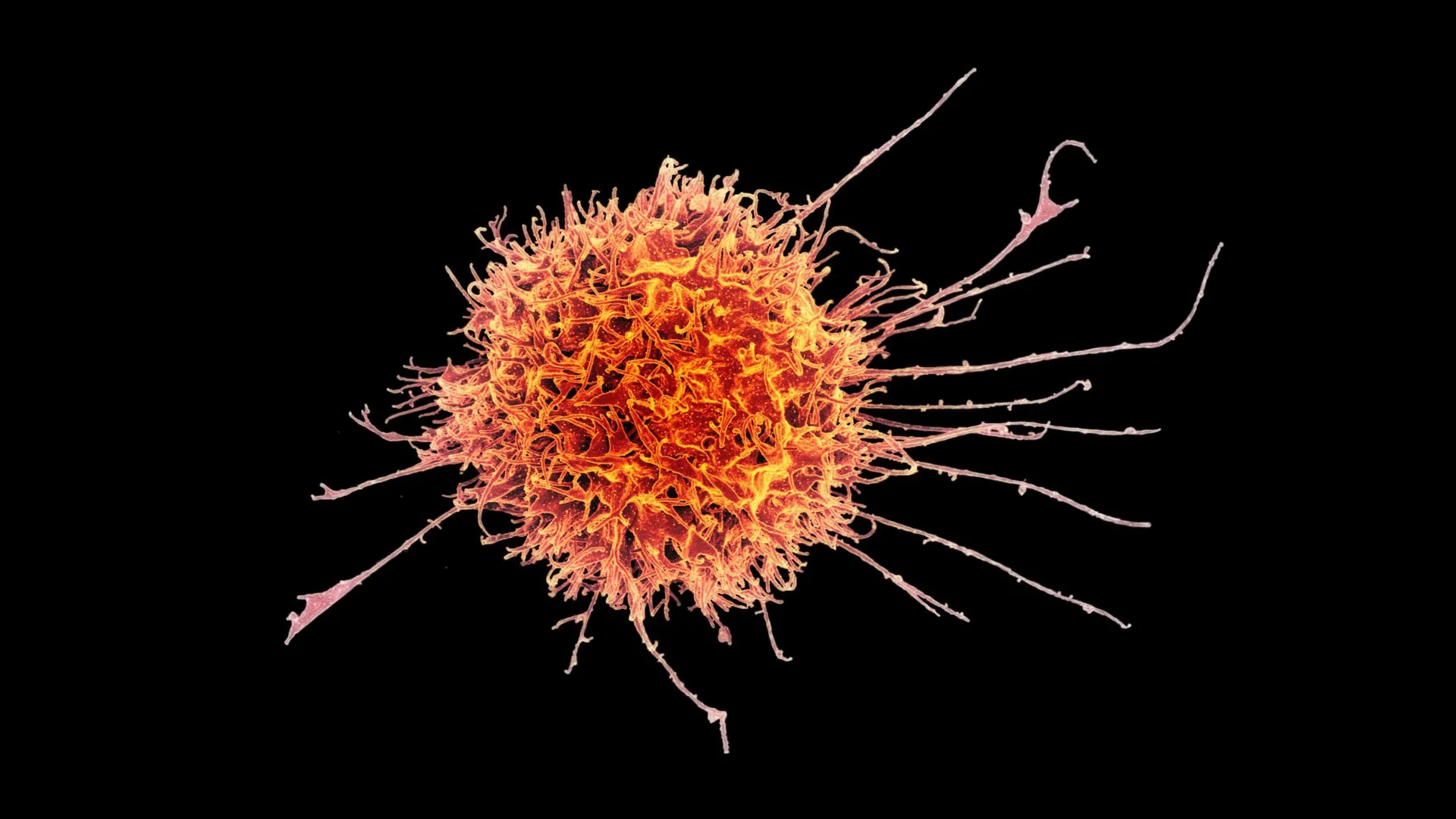
The landscape of cancer therapeutics has been dramatically reshaped by cell-based interventions that leverage the body’s own immune system, particularly for hematological malignancies and lymphatic cancers. However, the formidable challenge of solid tumors persists, largely due to their inherent ability to shield themselves from immune surveillance and actively suppress immune cell infiltration. Researchers at Stanford Medicine, in collaboration with other institutions, have unveiled a groundbreaking approach that re-engineers a critical component of the innate immune system, natural killer (NK) cells, to specifically target and eradicate these resilient tumors.
This innovative strategy focuses on transforming conventional NK cells into a specialized, tissue-resident phenotype. This modified form exhibits a remarkable capacity to penetrate solid tumor masses and exert cytotoxic effects on malignant cells, a significant advancement over their naturally circulating counterparts. Dr. John Sunwoo, a senior author of the study and a distinguished professor at the School of Medicine, highlighted the reproducibility and clarity of the findings, stating, "We demonstrate that these tissue-resident natural killer cells infiltrate solid tumors with superior efficacy compared to conventional natural killer cells. The results were consistently striking and unambiguous." The study, detailing these transformative findings, was published in the prestigious journal Science Translational Medicine. The research was co-led by Dr. Nina Horowitz, a former doctoral candidate; Dr. Imran Mohammad, a postdoctoral fellow within the Sunwoo laboratory; and Dr. June Ho Shin, a senior scientist in the same lab.
Preclinical investigations in murine models have yielded compelling evidence of the experimental therapy’s potential. The engineered NK cells demonstrated a notable ability to impede the growth of various solid tumor types. This anti-tumor effect was further amplified when the modified NK cells were administered in conjunction with an antibody-based treatment. This therapeutic pairing enhances the precision of NK cell targeting by facilitating their guidance towards cancer cells, effectively creating a synergistic attack.
Beyond their enhanced tumor-killing capabilities, these modified NK cells hold the promise of significant logistical advantages for widespread clinical application. Unlike many current immunotherapies that necessitate the extraction and personalized manufacturing of a patient’s own cells, NK cells generally elicit minimal immune rejection when transplanted between individuals. This characteristic opens the door for the development of an "off-the-shelf" therapeutic. Such an approach would allow for the mass production, cryopreservation, and subsequent distribution of these engineered cells, making advanced cell therapy more accessible to a broader patient population and potentially eliminating critical delays in treatment initiation.
Natural killer cells, first identified in the 1970s, are integral to the innate immune system, distinguished by their rapid and non-specific ability to identify and eliminate abnormal cells, including those affected by viral infections or undergoing malignant transformation. This immediacy sets them apart from adaptive immune cells like B and T lymphocytes, which require prior sensitization to specific antigens before mounting a response. Historically, immunological research has predominantly focused on immune cells circulating within the bloodstream. However, recent advancements in technology and bioinformatics have spurred a deeper exploration into the crucial roles of immune cells residing within tissues. "For a considerable period, the study of immunology and disease in humans was concentrated on blood-borne immune cells," Dr. Sunwoo elaborated. "With the evolution of our tools and analytical capabilities, we are now increasingly examining the dynamics within tissues, recognizing that for many immune cells, the tissue microenvironment is where the primary immune activity occurs."
Tissue-resident NK cells are found in various anatomical sites, including the skin, mucosal linings, lungs, and liver, each harboring specialized functions tailored to their local environment. The precise roles and behaviors of these resident NK cells have been a subject of scientific debate, with some studies suggesting a more regulatory or even suppressive function, while others have indicated potent cytotoxic activity. Dr. Sunwoo theorized that these varied observations might be attributed to the cells’ adaptability, stating, "They may adopt distinct functions based on specific cues within their microenvironment, leading to differentiation into specialized subpopulations." While certain tissue-resident NK cell phenotypes are beneficial, such as those found in the uterine lining during early pregnancy to prevent maternal immune rejection of the fetus, cancer therapy necessitates a more aggressively cytotoxic profile.
The research team’s investigation into the developmental pathways of tissue-resident NK cells revealed the existence of at least two distinct functional subsets. Their efforts aimed to elucidate the factors governing their differentiation and functional divergence. By isolating circulating NK cells from human donors and exposing them to various signaling molecules, the researchers sought to identify the critical components that dictate their fate. A key factor identified was transforming growth factor beta (TGF-β), a signaling protein ubiquitously produced by various cell types, including tumor cells, which plays a pivotal role in cellular development. The study underscored the nuanced importance of TGF-β’s presentation, emphasizing a "Goldilocks" principle: "It’s a Goldilocks kind of thing where if you give just enough of a TGF-b signal, then the natural killer cells become tissue resident with strong toxic activity against malignant cells. If you give too much TGF-b, they’re still tissue resident, but they’re inhibited and dysfunctional, and they don’t kill," Dr. Sunwoo explained. "You need it to be presented to the natural killer cells in just the right amount and in just the right manner."
Prolonged exposure to TGF-β resulted in tissue-resident NK cells that exhibited diminished cytotoxic capabilities. In contrast, a more effective differentiation pathway involved a transient exposure to TGF-β, delivered through brief co-culture with human epithelial tumor cells. This short-lived, yet potent, burst of TGF-β, coupled with direct physical contact between the NK cells and tumor cells, which likely provided additional activating signals, was instrumental in generating tissue-resident NK cells with potent anti-tumor activity. This finding highlighted the critical interplay between signaling molecules and direct cellular interactions in shaping immune cell function.
A detailed comparative analysis of the two tissue-resident NK cell subsets revealed distinct molecular signatures. While both populations expressed surface proteins CD49a and CD103, the highly effective cancer-killing subset was uniquely characterized by the expression of CD39. Furthermore, these potent effector cells harbored a greater abundance of the molecular machinery essential for target cell lysis, including perforin, a protein that forms pores in target cell membranes, and granzyme A, a cytotoxic enzyme delivered through these pores to induce apoptosis.
Having established a reliable method for generating these potent cytotoxic tissue-resident NK cells, the researchers proceeded to evaluate their ability to infiltrate and combat solid tumors in vivo. In vitro experiments using tumor organoids demonstrated successful penetration by the modified NK cells. Subsequent in vivo studies in mice injected with human melanoma and head and neck squamous cell carcinoma cell lines showed that the engineered NK cells significantly retarded tumor growth over weeks. The most impactful therapeutic outcomes were observed when the engineered NK cells were administered concurrently with cetuximab, a monoclonal antibody that targets specific cancer cell surface markers, thereby enhancing their visibility to immune cells. Cetuximab is an FDA-approved therapeutic for certain metastatic colorectal and advanced head and neck cancers, although its efficacy as a monotherapy is often limited.
The combination of the engineered NK cells and cetuximab demonstrated a profound and sustained suppression of tumor growth in mice, far exceeding the effects of either treatment administered alone. Importantly, this combinatorial therapy was well-tolerated, with no apparent adverse effects observed. Dr. Sunwoo noted the striking health of the mice receiving the combination therapy, stating, "Even at day 30, when the other mice were sick, the mice that received the combination seemed very healthy," while also cautioning that these results are preliminary and serve as a proof of concept.
The promising preclinical data has paved the way for human clinical trials. Dr. Sunwoo and his team are actively preparing for a Phase I clinical trial to assess the safety and efficacy of this combination therapy in patients with advanced squamous cell carcinoma. This trial is anticipated to commence by the end of the year, pending regulatory approval from the Food and Drug Administration. Furthermore, a patent application has been filed for a proprietary method developed by Dr. Sunwoo for the large-scale production and expansion of these modified cytotoxic tissue-resident NK cells. This scalable manufacturing process is projected to yield approximately 20 therapeutic doses from a single donor’s NK cell collection within a two-week timeframe. "They’ll be cryopreserved, so we can make a bunch of doses and give it to different patients," Dr. Sunwoo articulated, emphasizing the potential for immediate availability. "There would be no delay." This development marks a significant step towards realizing an accessible, off-the-shelf cell therapy for solid tumors. Collaborative contributions to this research were provided by investigators from Ohio State University and Washington University School of Medicine, and the study was supported by grants from the National Institutes of Health, the Tai Tsun Wu Research Fund for Natural Killer Cell Immunotherapy, and the Stanford Bio-X Fellowship.
About the Author












