Advanced Artificial Intelligence Uncovers Pre-Symptomatic Pancreatic Cancer Signatures Years Ahead of Conventional Detection.
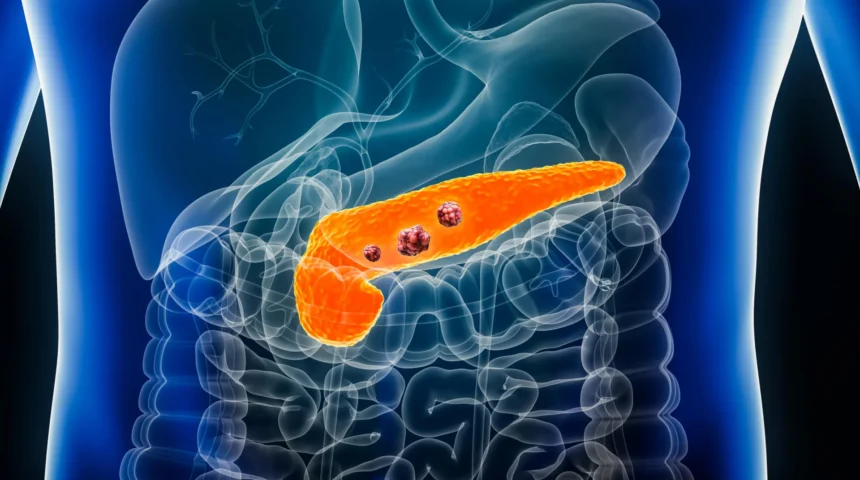
A sophisticated artificial intelligence system, designated REDMOD, has demonstrated an extraordinary capability to discern minute, previously imperceptible alterations within pancreatic tissues, which may serve as precursors to pancreatic cancer. This groundbreaking research, detailed in an online publication within the esteemed journal Gut, reveals that REDMOD can identify the earliest indicators of pancreatic ductal adenocarcinoma, the predominant form of pancreatic malignancy, long before it becomes clinically apparent through standard medical examinations or conventional imaging modalities. The implications of this technological advancement are profound, holding the potential to revolutionize the landscape of pancreatic cancer diagnosis by enabling the detection of the disease at its nascent, Stage 0 phase. At this critical juncture, treatment interventions are considerably more likely to yield successful outcomes, offering patients a far more optimistic prognosis than is typically afforded by diagnoses made at advanced, often life-limiting stages.
The development of REDMOD addresses a long-standing and formidable challenge in oncology: the inherent difficulty in detecting pancreatic cancer at its earliest, most treatable stages. Pancreatic ductal adenocarcinoma is notoriously insidious, characterized by a dismal survival rate, a consequence primarily attributed to its late-stage discovery. In its initial phases, the cancer seldom manifests with overt symptoms, and the subtle physiological changes it induces within the pancreatic tissue are frequently beyond the resolution of conventional computed tomography (CT) scans and other standard imaging techniques. Compounding this challenge, the disease possesses a propensity for rapid progression, underscoring the paramount importance of timely and accurate diagnosis.
To surmount these diagnostic hurdles, the research team engineered REDMOD, an artificial intelligence framework built upon the principles of radiomics. Radiomics involves the extraction and analysis of quantitative features from medical images, revealing patterns and textures that are imperceptible to the human eye. REDMOD specifically delves into the intricate textural nuances of pancreatic tissue, identifying subtle signatures that are not readily discernible on conventional CT scans. Furthermore, the AI system is equipped with an automated capability to precisely delineate and isolate the pancreas from surrounding anatomical structures. This automated segmentation process obviates the need for manual tracing by medical specialists, thereby mitigating the inherent variability and potential for error that can arise from subjective human interpretation.
The efficacy of REDMOD was rigorously evaluated through an extensive analysis of abdominal CT scans from a cohort of 219 patients who had received treatment across multiple healthcare institutions. Critically, at the time these scans were initially acquired, experienced radiologists had found no discernible evidence of pancreatic cancer. Nevertheless, every individual within this study group subsequently received a formal diagnosis of the disease. The scans had been obtained at varying temporal intervals preceding their clinical diagnoses. A substantial segment of the cohort, comprising 87 patients (40%), had their images captured between three and twelve months prior to diagnosis. An additional 76 patients (35%) underwent imaging between twelve and twenty-four months before their diagnosis, while a further 56 patients (25%) had imaging performed more than twenty-four months in advance, extending up to approximately three years. The anatomical distribution of the developing cancer revealed that in nearly two-thirds (64%) of these patients, the malignancy originated in the head of the pancreas.
For comparative purposes, these pre-diagnostic scans were meticulously contrasted with CT images from a control group of 1,243 individuals who remained entirely free of pancreatic cancer for a period of up to three years following their imaging. This control group was carefully matched to the patient cohort in terms of age, sex, and the dates of their respective scans, ensuring a robust and reliable comparison. The demographic profiles revealed that patients who eventually developed pancreatic cancer had a mean age of 69 years, with an age range spanning from 34 to 88 years. The control group exhibited a comparable mean age of 64 years, with the same broad age range of 34 to 88 years.
The results of REDMOD’s analysis were striking: the AI system successfully identified subtle imaging signatures indicative of pancreatic cancer an average of 475 days prior to the patients receiving their clinical diagnoses. These nascent warning signs had, in routine radiological assessments, gone completely undetected. The research team emphasized the profound significance of this temporal window, stating that achieving such an early detection would substantially enhance the probability of cure and improve long-term survival. Indeed, modeling studies suggest that a hypothetical increase in the proportion of localized pancreatic ductal carcinomas from 10% to 50% could more than double survival rates, unequivocally demonstrating that the timing of diagnosis is the single most critical determinant of survival outcomes.
In a direct comparison of diagnostic capabilities, REDMOD exhibited a demonstrably superior performance over experienced human radiologists in identifying these early cancer signals. The AI achieved a sensitivity rate of 73%, a metric that quantifies the proportion of true positive cases correctly identified by the diagnostic method. In contrast, radiologists in the study recorded a sensitivity of 39%. The disparity in performance became even more pronounced when the researchers focused on scans obtained more than two years before the patients were diagnosed. In this challenging subset, REDMOD attained a detection rate of 68%, a figure nearly threefold that of the 23% recorded by radiologists.
Beyond its capacity for early detection, the research also assessed REDMOD’s ability to accurately classify scans from individuals who did not develop pancreatic cancer. In an independent cohort of 539 patients from various hospitals, REDMOD correctly classified just over 81% of scans as cancer-free. Its performance was even more robust on the publicly accessible US National Institutes of Health NIH-PCT dataset, comprising 80 patients, where it correctly identified 87.5% of scans as being free of pancreatic cancer. Further testing provided additional validation for REDMOD’s findings, suggesting that the early warning signs it detected were consistent over time. When the researchers analyzed scans from the same patients taken several months apart, the system produced concordant results in 90% to 92% of cases, a high degree of consistency that strengthens the evidence that the AI was indeed identifying meaningful, disease-associated changes.
Despite these highly encouraging findings, the researchers underscore the need for further investigation and caution that several critical questions remain to be addressed before REDMOD can be integrated into routine clinical practice. A notable limitation of the current study population is its lack of sufficient ethnic diversity, which could potentially influence the technology’s performance across different demographic groups. The system’s efficacy and reliability must also be rigorously tested through prospective studies, particularly among individuals identified as being at an elevated risk for pancreatic cancer, to ascertain its practical utility in everyday clinical settings.
Nevertheless, the results presented offer compelling evidence that artificial intelligence, exemplified by REDMOD, holds significant promise for transforming the early detection of pancreatic cancer. By identifying the disease at a far more treatable stage, this technology could potentially lead to substantially improved survival rates for patients who would otherwise face a late and often grim prognosis. The researchers conclude that their study validates REDMOD as a fully automated AI framework capable of identifying the imaging signatures of Stage 0 pancreatic ductal adenocarcinoma within what appears to be a normal pancreas, achieving this with substantial lead times and performance metrics superior to those of expert radiologists. They further posit that while prospective validation is paramount to confirm clinical utility, the REDMOD framework represents a significant advancement toward a paradigm shift in the management of sporadic pancreatic ductal adenocarcinoma, moving from a late-stage symptomatic diagnosis to proactive pre-clinical interception, thereby offering tangible hope for improving outcomes in this notoriously challenging disease.
Related posts:

Related News