Functional Leg Strength and Cardiovascular Fitness: A Comprehensive Guide to Step-Up Assessments for Lifelong Mobility.
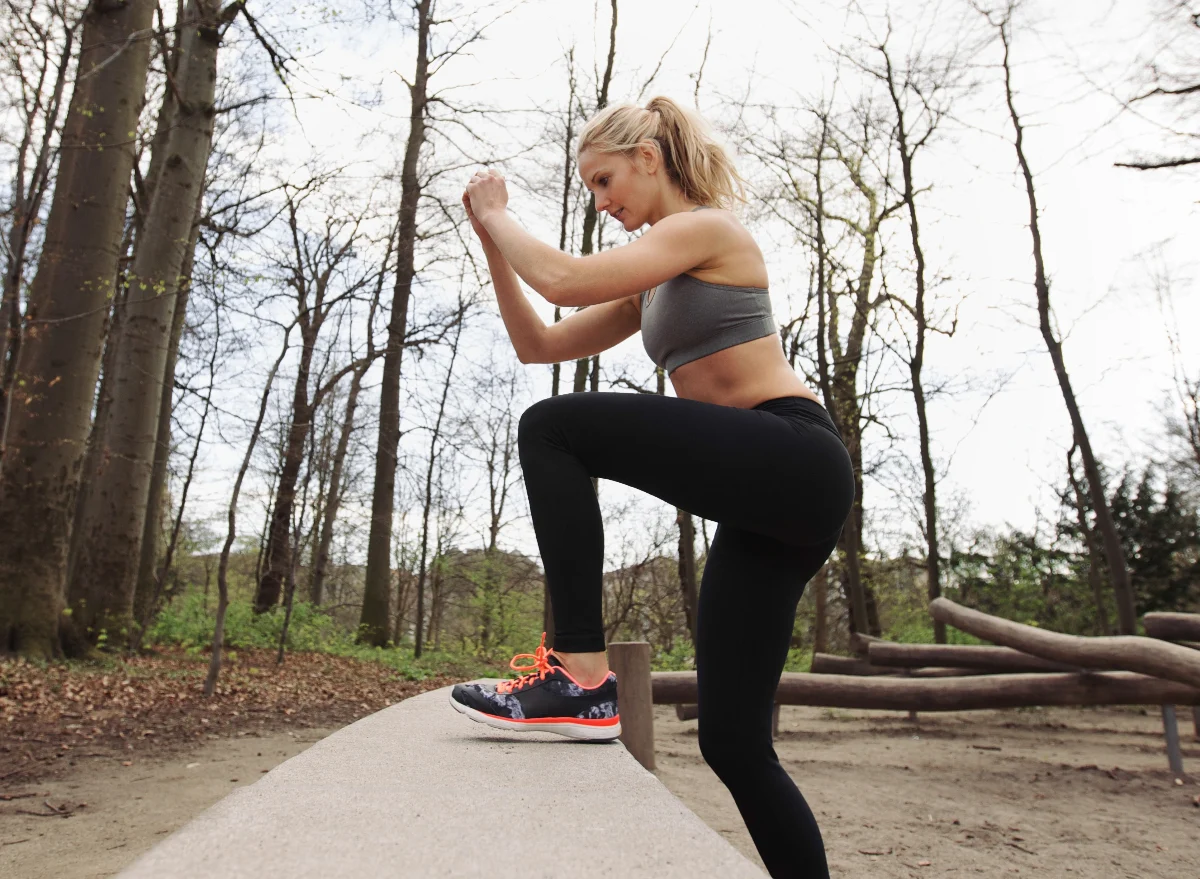
As individuals progress through their lifespan, maintaining physical independence and vitality becomes increasingly paramount. The simple act of stepping, often taken for granted in youth, transforms into a crucial marker of overall health, mobility, and the capacity to navigate daily challenges. Among the most accessible yet profoundly effective exercises and diagnostic tools is the step-up, a fundamental movement that offers a holistic assessment of lower-body power and cardiorespiratory resilience. This seemingly unassuming exercise, requiring minimal equipment, holds significant implications for longevity and quality of life, particularly for adults in their later years.
The step-up, at its core, is a unilateral exercise, meaning it engages one leg at a time. This singular focus on each limb is exceptionally valuable for developing balanced strength, rectifying muscular asymmetries, and enhancing stability – critical components often overlooked in bilateral movements. By compelling one leg to bear the full load of the body’s ascent, step-ups meticulously target the quadriceps, hamstrings, glutes, and calf muscles, building robust lower-body musculature. Beyond sheer strength, this exercise concurrently refines several other vital physiological attributes. It sharpens balance, a skill that naturally diminishes with age and significantly contributes to fall prevention. Furthermore, it fosters proprioception, the body’s inherent awareness of its position and movement in space, which is indispensable for confidently traversing uneven terrain, ascending stairs, or simply avoiding obstacles. The consistent engagement required also contributes to maintaining bone density, a crucial factor in mitigating the risks associated with osteoporosis as one ages.
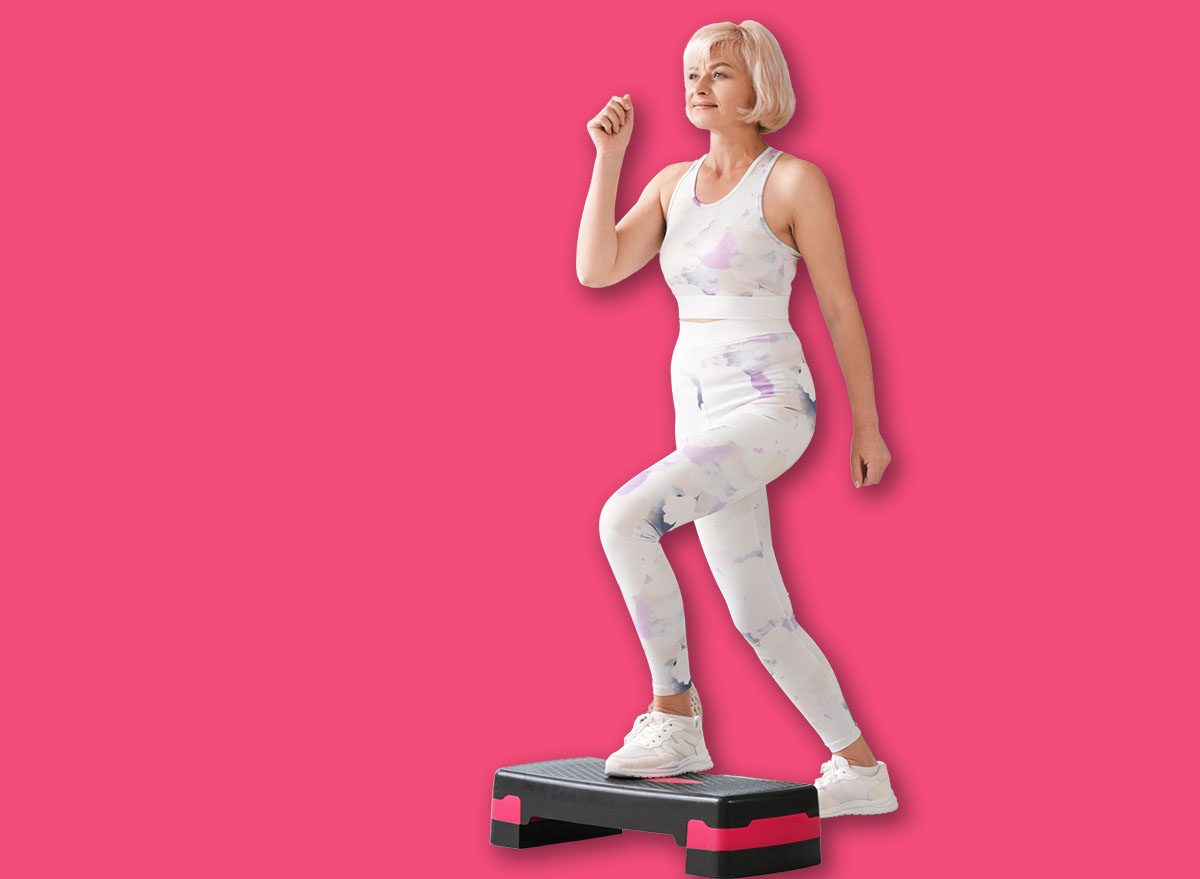
The utility of step-ups extends beyond muscular development; they serve as a powerful gauge of cardiovascular health. Historically, variations of step tests have been integral to fitness assessments worldwide, providing a straightforward yet reliable indicator of an individual’s cardiorespiratory capacity. Chris Anderson, an esteemed Learning Facilitator in Health Sciences at Torrens University Australia and an expert Exercise Physiologist and Scientist, highlights the profound diagnostic value of these tests. "A key characteristic of step-up tests is that they are not necessarily about the number of steps you can endure, but how your heart rate responds to the endurance challenge," Anderson explains. This distinction is crucial: while the ability to perform many repetitions signifies muscular endurance, the speed and efficiency with which the heart and lungs adapt and recover reveal the true state of one’s cardiorespiratory system. Because these tests directly measure the adaptive capabilities of the heart and lungs under exertion, they offer an invaluable snapshot of overall physiological fitness, serving as an early indicator for potential health risks and contributing to a proactive approach to well-being.
For older adults, the correlation between step-up performance and functional independence is particularly pronounced. As the body ages, daily activities increasingly rely on single-leg strength, dynamic balance, and the coordinated power of hip and knee extensors to control vertical movement. Simple actions such as rising from a chair, stepping onto a bus, or navigating household stairs become increasingly challenging without adequate strength and stability. Step-ups directly address these real-world functional demands. The primary muscle groups engaged—quadriceps, glutes, hamstrings, and calves—are among the largest in the human body. Their repeated activation during step-ups places a significant, yet beneficial, demand on the cardiorespiratory system. This integrated challenge makes step-up tests a highly dependable method for evaluating physical function across all age groups and, by extension, assessing an individual’s overall health trajectory. The ability to perform this exercise effectively reflects a strong foundation for maintaining an active and independent lifestyle into advanced age.
While various step-up protocols exist, understanding common benchmarks can provide a clear objective for training and assessment. While no single "gold standard" universally dictates peak performance, a widely accepted and challenging goal for sustained lower-body power and cardiorespiratory endurance involves completing the equivalent of five flights of stairs, which translates to approximately 50 to 60 continuous step-ups, without pause. This benchmark indicates a commendable level of fitness, particularly for individuals aged 60 and above.
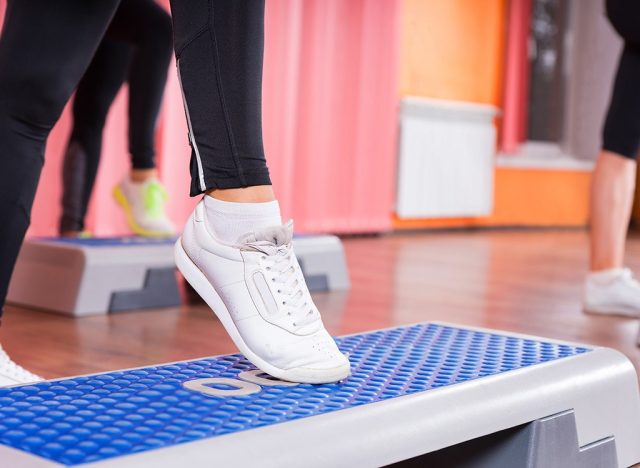
A specific, widely recognized protocol for assessing cardiorespiratory fitness through step-ups involves a standardized approach. Participants utilize a sturdy step, typically 30 centimeters (or 12 inches) in height. The exercise is performed at a consistent pace of 24 steps per minute for a continuous duration of three minutes. To maintain this rhythm, a metronome set to 96 beats per minute can be used, with each "up, up, down, down" sequence counting as one complete step. Following the three-minute exertion period, the individual immediately sits down in a chair. Their pulse is then measured for exactly one minute, beginning at the three-minute mark and concluding at the four-minute mark. The number of beats recorded during this recovery minute provides a crucial insight into the heart’s efficiency and recovery rate, offering a more nuanced understanding of cardiorespiratory fitness than mere step count alone. Lower heart rates during recovery generally indicate superior cardiovascular conditioning.
Achieving these benchmarks and maximizing the benefits of step-ups hinges significantly on executing the movement with correct form. Prioritizing proper technique over a high repetition count is paramount to ensure efficacy and prevent injury. When performing a step-up, begin by placing one entire foot firmly on the elevated surface, ensuring the heel is down. Initiate the movement by driving through the heel of the lead leg, engaging the glutes and quadriceps to lift the body vertically. The ascent should be controlled and deliberate, avoiding any pushing off from the trailing leg. At the top of the movement, the lead leg should be fully extended, and the core should remain engaged to maintain stability. The descent should be equally controlled, slowly lowering the trailing leg back to the starting position before switching sides. Alternating lead legs with each repetition or after a set number of repetitions helps ensure balanced development.
Conversely, several common mistakes can diminish the effectiveness of step-ups and increase the risk of injury. A prevalent error is relying on momentum to propel the body upward, rather than engaging the leg muscles. Similarly, excessively pushing off the ground with the trailing leg indicates insufficient strength in the lead leg. Allowing the knee of the lead leg to collapse inward during the ascent, often due to weak hip abductors, is another common fault that can strain the knee joint. Placing only the toes on the step, rather than the entire foot, compromises stability and reduces muscle activation. Leaning heavily on a rail or external support suggests a lack of balance and core strength that needs addressing. Finally, rushing the lowering phase can lead to a loss of control and increase impact on the joints.
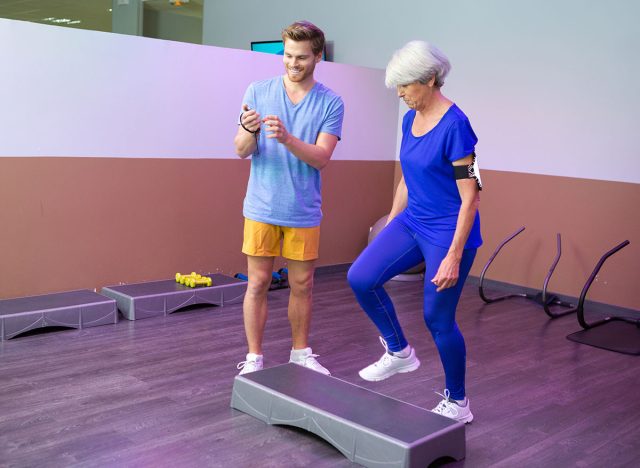
For many adults, especially those over 60 who are new to step-up exercises or using them for assessment, a 6-inch step provides an ideal starting height. This elevation is sufficient to challenge the lower body without compromising form or safety. As fitness levels improve, individuals may progress to a higher step, such as the 12-inch standard. Another effective method for increasing the intensity and building lower-limb strength and power, without significantly increasing step height, is to add external resistance. This can be achieved by wearing a weighted vest, holding dumbbells, or simply carrying a backpack filled with water bottles or heavy books against the chest while performing the steps. This progressive overload strategy allows for continuous improvement while maintaining safe and effective movement patterns.
In conclusion, the step-up is far more than a simple exercise; it is a foundational movement with profound implications for physical health, functional independence, and overall well-being. By diligently practicing proper form and progressively challenging oneself, individuals can significantly enhance their lower-body strength, balance, and cardiorespiratory fitness. Regular engagement with step-up routines, and periodic self-assessment using established protocols, offers a practical and accessible pathway to maintaining vitality and enjoying a robust, active lifestyle throughout all stages of life.

Related News