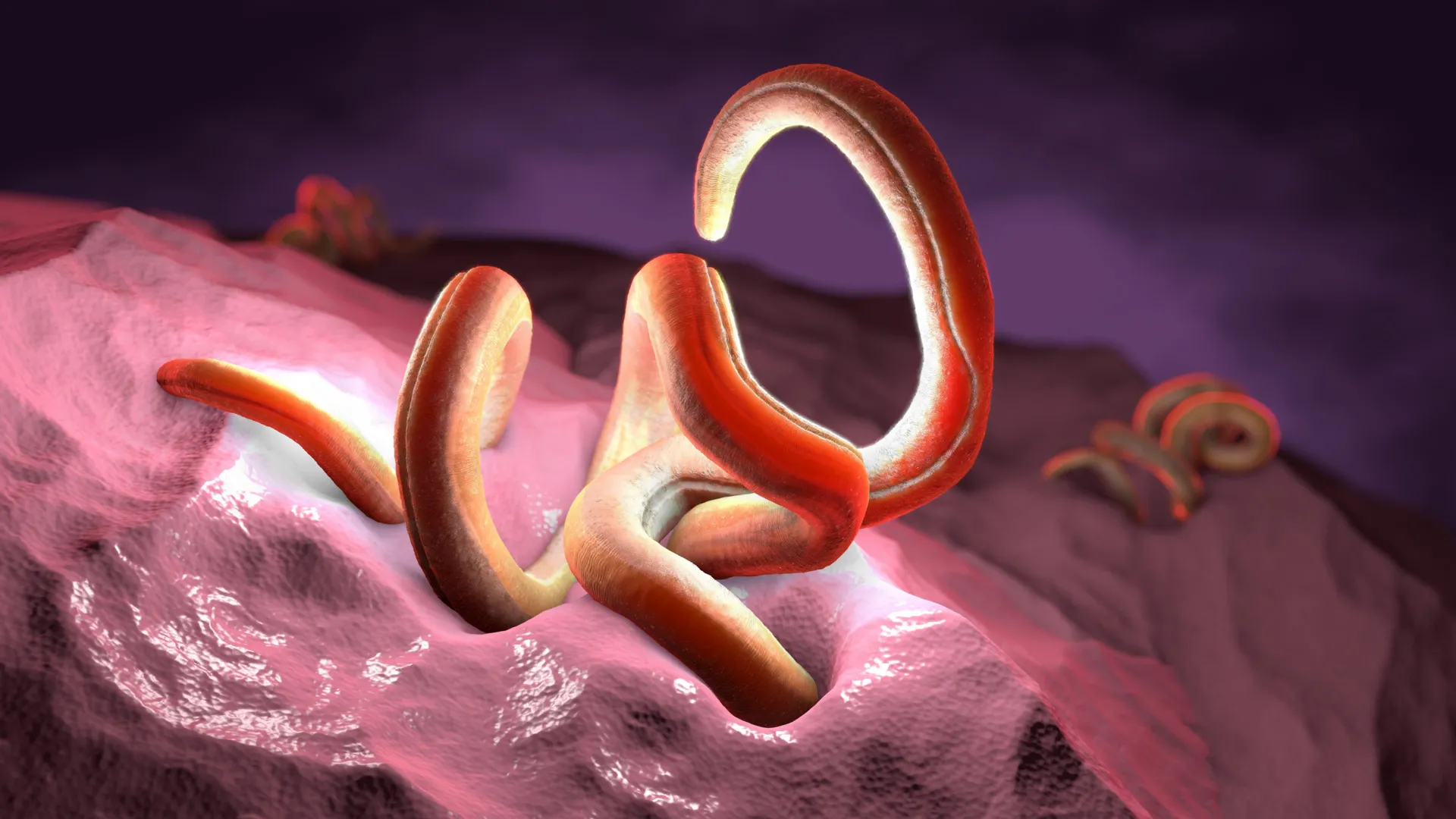
A groundbreaking study has illuminated a previously unrecognized, yet critical, dependency for certain beneficial intestinal worms to exert their anti-inflammatory effects within a host: sufficient dietary fiber. This pivotal research indicates that without adequate fiber, these symbiotic helminths enter a dormant, energy-conserving state, effectively losing their capacity to modulate the host’s immune response and mitigate inflammation. The findings, published in the esteemed journal Nature Communications, stem from the diligent work of parasitologists at the Biology Centre of the Czech Academy of Sciences, offering profound implications for understanding gut health and refining therapeutic strategies for inflammatory conditions.
For the vast majority of human evolutionary history, co-existence with a diverse array of intestinal parasites was not an anomaly but rather a standard component of the human digestive ecosystem. This long-standing relationship fostered a delicate balance within the immune system, which evolved to tolerate and even benefit from the presence of these internal inhabitants. However, the advent of modern sanitation, enhanced hygiene practices, and widespread access to pharmaceuticals in industrialized nations has drastically reduced the prevalence of these traditional microbial and parasitic co-travelers. Coincidentally, over the past few decades, these same societies have witnessed an alarming surge in the incidence of autoimmune disorders, allergic reactions, and chronic inflammatory bowel diseases (IBDs), such as Crohn’s disease and ulcerative colitis.
This compelling epidemiological trend sparked the "hygiene hypothesis" approximately two decades ago, positing that a lack of early-life exposure to microbes and parasites may impair the immune system’s development, leading it to overreact to harmless substances or even attack the body’s own tissues. In response to this hypothesis, scientific inquiry turned to the potential therapeutic utility of specific intestinal helminths. This innovative approach, known as helminth therapy, involves the controlled introduction of non-pathogenic parasitic worms into the digestive tract of individuals suffering from inflammatory conditions, with the aim of re-educating or dampening an overactive immune system. While early trials demonstrated considerable promise, the clinical outcomes of helminth therapy have frequently been inconsistent, presenting a significant hurdle to its broader acceptance and application. Sometimes patients experienced notable symptom relief and reduction in inflammatory markers, while at other times, the worms appeared to have minimal or no effect.
It was this variability in therapeutic efficacy that prompted researchers, including Dr. Kateřina Jirků from the Institute of Parasitology at the Biology Centre CAS, to delve deeper into the factors influencing the worms’ activity within the gut environment. "The inconsistent outcomes of helminth therapy have been a puzzle," Jirků noted. "We recognized the need to investigate the underlying elements that might dictate their immunomodulatory capabilities within the host’s intestinal tract." Their focused investigation ultimately converged on one overarching and surprisingly fundamental factor: the dietary fiber intake of the host organism.
To meticulously unravel the intricate interplay between diet and parasite function, the research team designed a series of experiments using Hymenolepis diminuta, a well-established model organism in parasitology. This particular species of rat tapeworm is non-pathogenic in humans and other mammals, making it an ideal candidate for studying the complex interactions among parasites, the resident gut microbiota, and the host’s immune system, primarily due to its documented anti-inflammatory properties. The scientists subjected animal models to diets varying significantly in their fiber content, meticulously observing the physiological responses of the tapeworms and their subsequent impact on the host.
The experimental results unveiled a stark contrast in tapeworm behavior and efficacy contingent upon the host’s dietary fiber intake. In animals consuming a diet rich in structural fiber, the Hymenolepis diminuta flourished. These worms were found to be in optimal physiological condition, exhibiting robust growth, reaching full sexual maturity, and successfully producing eggs. Crucially, in this fiber-rich environment, the tapeworms actively induced a pronounced anti-inflammatory response within their hosts, effectively mitigating inflammatory markers and symptoms. Conversely, when the animals were fed a diet deficient in fiber, the tapeworms displayed a dramatically altered state. They were several times smaller than their counterparts in the fiber-rich group, failed to achieve sexual maturity, and consequently did not produce any eggs. Genetic analyses further corroborated these morphological and reproductive changes, revealing widespread shifts in gene expression profiles related to the worms’ development, metabolic processes, and reproductive functions. "Our observations clearly demonstrated that when dietary fiber is abundant, the tapeworm is not only thriving but also fully capable of eliciting a beneficial anti-inflammatory effect," explained Dr. Jirků. "However, in the absence of sufficient fiber, the worm essentially enters an energy-saving state, akin to hibernation in mammals, and its anti-inflammatory capacity completely disappears." This state of dormancy renders the parasite ineffective as a therapeutic agent, explaining the inconsistencies previously observed in helminth therapy.
Beyond its direct impact on the helminths, the researchers also uncovered a profound influence of dietary fiber on the host’s gut microbiome—the complex community of microorganisms residing in the digestive tract. A diet abundant in fiber was shown to foster a thriving and diverse microbial ecosystem, promoting the proliferation of beneficial bacterial species associated with a healthy intestinal environment. These beneficial microbes ferment dietary fiber, producing short-chain fatty acids (SCFAs) like butyrate, which are crucial for maintaining gut barrier integrity, modulating immune responses, and providing energy to colonocytes. In stark contrast, animals consuming a "Western-style" diet—typically characterized by high fat, high sugar, and low fiber content—exhibited a significant reduction in microbial diversity. This dietary pattern favored the growth of bacteria linked to dysbiosis, an imbalance in the gut microbial community often associated with various health issues. These dietary-induced microbial shifts were not isolated events; they were intricately mirrored by discernible differences in the host’s systemic and local immune responses, underscoring the deep interconnectedness of diet, microbiota, helminths, and host immunity.
The study unequivocally highlights the profound extent to which dietary choices shape the entire gut ecosystem, encompassing not only resident microorganisms and beneficial parasites but also the host’s intricate immune system. This holistic perspective challenges conventional views that often consider these components in isolation. Public health recommendations generally advise adults to consume approximately 25 to 30 grams of dietary fiber daily for optimal health. However, data from numerous Western countries indicate that average fiber intake frequently falls significantly below this recommended threshold. For example, in the United States, the average adult consumes closer to 15 grams of fiber per day. This contrasts sharply with estimated fiber consumption rates in traditional, non-industrialized populations, which can range from 80 to an astonishing 120 grams daily, reflecting diets rich in whole grains, legumes, fruits, and vegetables.
Previous scientific investigations have already established that insufficient dietary fiber can significantly compromise the integrity and resilience of the gut microbiome. A robust and balanced gut microbiota is now recognized as a cornerstone of overall health, playing indispensable roles not only in efficient digestion and nutrient absorption but also in the maturation and regulation of the immune system, cognitive function, and mental well-being. A dysbiotic microbial balance has been implicated in an elevated risk of developing a wide spectrum of conditions, including various allergies, mood disorders such as depression and anxiety, and even neurodegenerative diseases like Alzheimer’s disease. The current research adds another critical layer to this understanding, demonstrating that fiber’s influence extends to enabling the therapeutic potential of intestinal helminths.
The implications of this research are far-reaching, particularly for the advancement of helminth therapy. The discovery that dietary fiber is a critical determinant of a parasite’s anti-inflammatory efficacy provides a concrete explanation for the previously perplexing inconsistencies observed in clinical applications. It suggests that future helminth therapy protocols may need to integrate specific dietary interventions to ensure the success and predictability of treatment. Tailoring a patient’s diet to be rich in fiber could potentially activate the administered helminths, maximizing their therapeutic benefits and leading to more consistent and robust anti-inflammatory responses.
Furthermore, this study opens new avenues for personalized medicine, where therapeutic strategies could be refined based on an individual’s unique gut microbiome composition and dietary habits. It also underscores the importance of a holistic approach to managing inflammatory and autoimmune conditions, emphasizing that pharmaceutical interventions alone may not be sufficient without addressing fundamental aspects of diet and lifestyle. Future research will likely explore the effects of different types of dietary fibers on various helminth species, investigate the precise molecular mechanisms by which fiber influences parasite metabolism and gene expression, and conduct human clinical trials integrating dietary fiber supplementation with helminth administration.
Ultimately, this pivotal research from the Czech Academy of Sciences serves as a powerful reminder of the profound and intricate connections that bind our diet, the myriad inhabitants of our gut, and our overall health. It pushes the scientific community to look beyond simplistic cause-and-effect relationships, embracing the complexity of the gut ecosystem to unlock novel and more effective therapeutic strategies against the rising tide of inflammatory diseases.
About the Author