Daily Vitality: How a Brief Morning Bodyweight Regimen Boosts Muscle Health for Individuals Over Sixty
As individuals navigate the landscape of life beyond their sixtieth year, maintaining robust physical health, particularly muscle strength and resilience, becomes increasingly paramount. The natural process of aging often brings with it a gradual decline in muscle mass and function, a condition scientifically termed sarcopenia. This age-related muscular atrophy is not merely a cosmetic concern; it significantly impacts balance, mobility, bone density, and overall functional independence, elevating the risk of falls and diminishing the capacity to perform daily activities with ease. While conventional wisdom frequently points towards intensive gym sessions and heavy weightlifting as the primary solution for combating muscle loss, an emerging perspective championed by fitness experts suggests that highly effective, time-efficient, and equipment-free routines can offer substantial benefits, particularly when integrated into a consistent morning ritual.
Many older adults find traditional strength training daunting due to various factors, including time commitments, perceived risk of injury, or lack of access to specialized equipment and facilities. This can lead to a sedentary lifestyle, further accelerating muscle degradation. However, the human body possesses an remarkable capacity for adaptation, responding to consistent and appropriate stimulus regardless of the external load. Bodyweight exercises, utilizing one’s own mass as resistance, present an accessible and potent alternative. These movements can be performed virtually anywhere, eliminating barriers and fostering a greater likelihood of adherence—a critical component for long-term success in any fitness endeavor. The strategy centers on providing muscles with a sustained, meaningful reason to engage and adapt, thereby enhancing their capacity and tone.
A structured, brief exercise protocol, ideally undertaken at the start of the day, capitalizes on the benefits of consistency and habit formation. A ten-minute regimen, for instance, is sufficiently short to integrate into even the busiest mornings, yet robust enough to elicit significant physiological responses when executed with precision and focus. Such a routine aims to generate adequate muscular tension, promote controlled movement, and demand sufficient effort to cultivate a palpable sense of strength and readiness for the day ahead. This approach contrasts with isolated movements by prioritizing compound exercises that activate multiple muscle groups simultaneously, yielding a more comprehensive and efficient workout.
The physiological rationale underpinning the efficacy of bodyweight training for older adults is compelling. Muscle tone, often mistaken for muscle size, refers to the continuous passive partial contraction of the muscles, or their readiness to respond to stimulation. Consistent resistance, even from bodyweight, triggers a process known as muscle protein synthesis, essential for repairing and rebuilding muscle fibers stronger than before. Furthermore, compound movements—those involving multiple joints and muscle groups—mimic everyday functional patterns, directly translating to improved real-world capabilities such as standing up, reaching overhead, or climbing stairs. The concept of "time under tension," where muscles are actively engaged for a prolonged period during each repetition, is particularly relevant here. By performing repetitions slowly and deliberately, without momentum, the muscles are forced to work harder throughout the entire range of motion, maximizing the stimulus for growth and adaptation.
Incorporating an early morning exercise routine extends its benefits beyond the purely physical. Starting the day with intentional movement can significantly boost energy levels, enhance mental clarity, and improve mood, setting a positive tone for subsequent activities. Regular physical activity has been linked to better sleep patterns and reduced stress, contributing to a holistic improvement in overall well-being. From a metabolic standpoint, a morning workout can gently elevate the body’s metabolic rate, promoting more efficient calorie utilization throughout the day. Moreover, it addresses morning stiffness, preparing the joints and muscles for daily demands.

The proposed morning regimen typically involves a circuit of three key exercises, performed for three consecutive rounds. Each exercise is executed for 45 seconds, followed by a 15-second recovery period to allow for transition to the next movement and a brief rest. This specific timing configuration, echoing principles often found in high-intensity interval training (HIIT), ensures that muscles are adequately challenged without excessive fatigue, while the short recovery periods keep the heart rate gently elevated, adding a mild cardiovascular benefit. The cumulative nine minutes of active work, plus a minute for transitions, perfectly fits the ten-minute window, making it highly achievable. The emphasis throughout should be on maintaining impeccable form, controlling the tempo of each movement, and exerting a steady, focused effort. As familiarity with the routine grows, individuals can gradually intensify their effort, provided their technique remains sound.
The Foundational Movements for Enhanced Muscle Health:
-
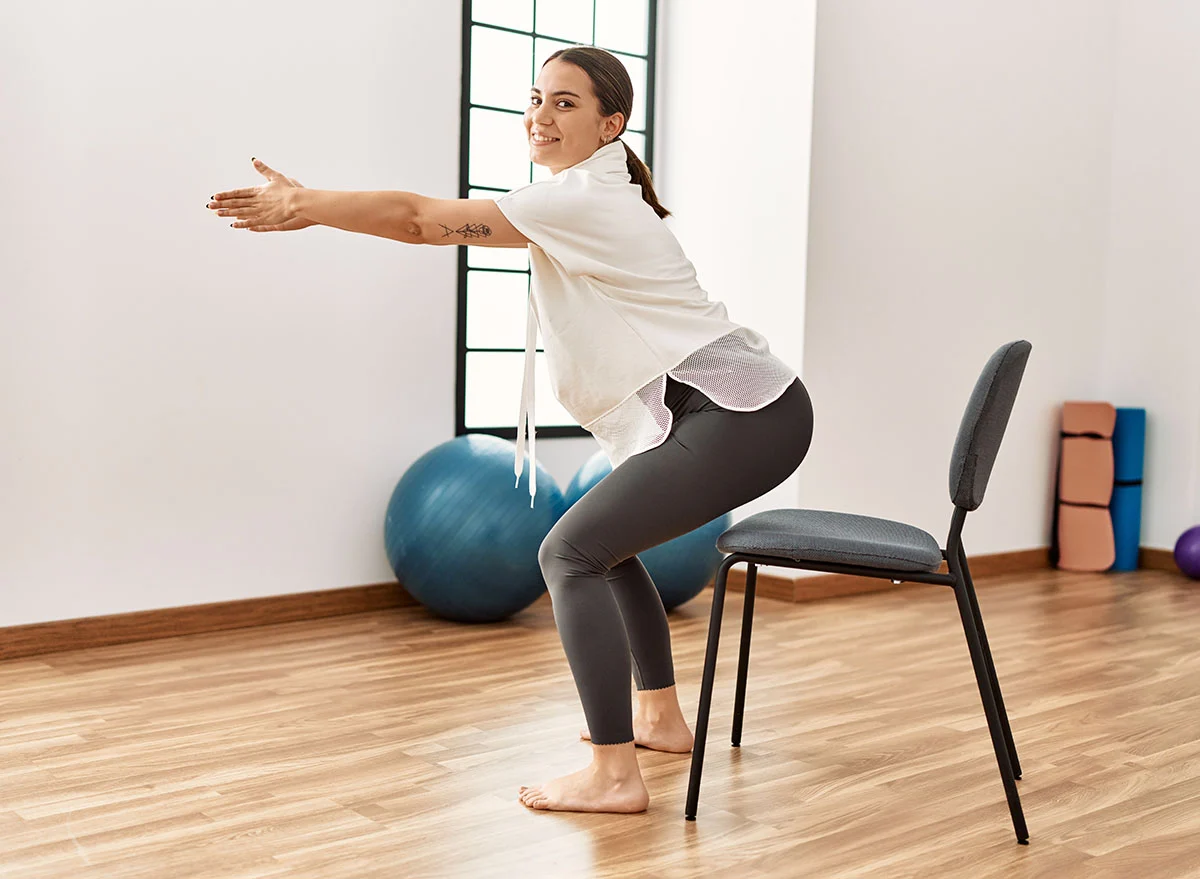
Chair Squats (Sit-to-Stands):
This exercise is profoundly functional, directly improving the strength and endurance required for daily activities like rising from a chair, toilet, or car seat. It primarily targets the large muscle groups of the lower body.- Muscles Engaged: The quadriceps (front of thighs), glutes (buttocks), and hamstrings (back of thighs) are the primary movers, while the core muscles work to stabilize the torso.
- Execution: Begin by positioning a sturdy chair behind you. Stand with feet hip-width apart, toes pointing slightly outward, a comfortable distance from the chair. Initiate the movement by hinging at the hips and bending the knees as if to sit down. Maintain an upright chest and a neutral spine throughout. Lower your body until your glutes lightly tap the chair’s seat, avoiding fully relaxing into the chair. Then, drive through your heels and push yourself back up to a standing position, fully extending your hips and knees without locking them.
- Form Focus: Ensure your knees track in line with your toes, preventing them from caving inward. Keep your weight evenly distributed across your feet. Control both the lowering and rising phases to maximize muscle engagement.
- Progression/Regression: To make it easier, use a higher chair or a slightly quicker tempo. To increase difficulty, use a lower chair, incorporate a pause at the bottom, slow down the tempo, or progress to single-leg chair squats as strength improves.
-
Incline Push-Ups:
A cornerstone for developing upper body pushing strength, this exercise is crucial for activities such as pushing open doors, lifting objects, and improving posture. Performing it at an incline makes it more accessible than traditional floor push-ups.- Muscles Engaged: This movement strengthens the chest (pectorals), shoulders (anterior deltoids), and the back of the arms (triceps). The core and glutes are also actively engaged to maintain a rigid plank position.
- Execution: Find a stable elevated surface such as a counter, sturdy bench, or a secured chair. Place your hands slightly wider than shoulder-width apart on the surface, fingers pointing forward. Step your feet back until your body forms a straight line from your head to your heels, engaging your core and glutes to prevent your hips from sagging or arching your lower back. Lower your chest towards the surface by bending your elbows, keeping them angled slightly backward rather than flaring straight out to the sides. Once your chest is close to the surface, push back up to the starting position, fully extending your arms.
- Form Focus: Maintain the straight-body plank throughout the movement. Control the descent and ascent, avoiding jerky motions. The higher the incline, the easier the exercise; lowering the incline increases the challenge.
- Progression/Regression: Begin with a higher surface (e.g., a wall) if needed, gradually progressing to lower surfaces (e.g., a sturdy kitchen counter, then a robust coffee table). Varying the tempo, such as a slower descent, can also increase difficulty.
-
Elevated Mountain Climbers:
This dynamic exercise combines core stabilization with a cardiovascular element and hip mobility, offering a full-body activation that energizes the system.- Muscles Engaged: Primarily targets the abdominal muscles (rectus abdominis, obliques), shoulders (for plank stability), hip flexors, and quadriceps.
- Execution: Adopt an elevated plank position similar to the start of an incline push-up, with hands on a stable surface and body in a straight line. Ensure your core is braced and hips are level. From this stable plank, alternately bring one knee towards your chest in a controlled, brisk manner, then return it to the starting position before bringing the other knee forward. Maintain a steady pace that allows you to control your core and prevent your hips from rocking excessively.
- Form Focus: The key is to keep your core engaged and your back flat, avoiding any arching in the lower spine. Shorten the range of the knee drive if maintaining spinal neutrality becomes challenging. Focus on controlled movement rather than speed initially.
- Progression/Regression: To simplify, slow down the pace of the knee drives or bring the knees only partway. To increase intensity, quicken the pace while maintaining form, or try cross-body knee drives where the knee moves towards the opposite elbow.
Sustaining Progress: Adapting the Routine Over Time

To maximize the long-term benefits of this morning regimen, consistency is paramount. Aim to perform this circuit three to five mornings per week, allowing for adequate rest and recovery on non-training days. Initially, concentrate on mastering the form for each exercise at a moderate effort level. Once the three rounds feel controlled and you can complete them with confidence, you can begin to introduce elements of progressive overload—the principle of gradually increasing the demands on your muscles to continue stimulating adaptation.
Progression in bodyweight exercises can be achieved in several ways:
- Increase Repetitions/Duration: Within the 45-second work interval, strive to perform more repetitions with good form.
- Decrease Rest Time: Gradually reduce the 15-second rest period between exercises, or increase the work interval slightly.
- Slow the Tempo: Deliberately slow down the eccentric (lowering) phase of movements like the chair squat or incline push-up to increase time under tension.
- Introduce Advanced Variations: As strength improves, transition to harder variations of each exercise (e.g., lower incline for push-ups, lower chair for squats, or more dynamic mountain climber variations).
- Add Rounds: If time permits, consider adding a fourth round once the existing three become too easy.
Crucially, always prioritize proper form over speed or increased difficulty. Listening to your body is essential; some days may require a slightly reduced effort, while others allow for greater intensity. If any pain occurs, stop the exercise and consult with a healthcare professional or physical therapist.
A Holistic Approach to Lifelong Vitality
While this targeted morning routine offers a powerful tool for enhancing muscle health, it is most effective when integrated into a broader lifestyle that supports overall wellness. Adequate nutrition, particularly sufficient protein intake, is critical for muscle repair and growth. Staying well-hydrated, ensuring quality sleep, and effectively managing stress are also foundational pillars that profoundly influence physical performance and recovery.
In conclusion, a brief, consistent morning bodyweight routine represents an accessible and highly effective strategy for individuals over sixty to actively combat age-related muscle decline. By committing just ten minutes each day to these fundamental, multi-joint movements, one can significantly improve muscle tone, strength, balance, and functional capacity, fostering greater independence and an enhanced quality of life for years to come. The power to cultivate lasting vitality lies in these simple, repeatable actions, turning consistent effort into tangible, life-affirming results.
Related posts:

Related News