Comprehensive Lower Body Assessment: Squatting as a Predictor of Senior Functional Independence and Health.
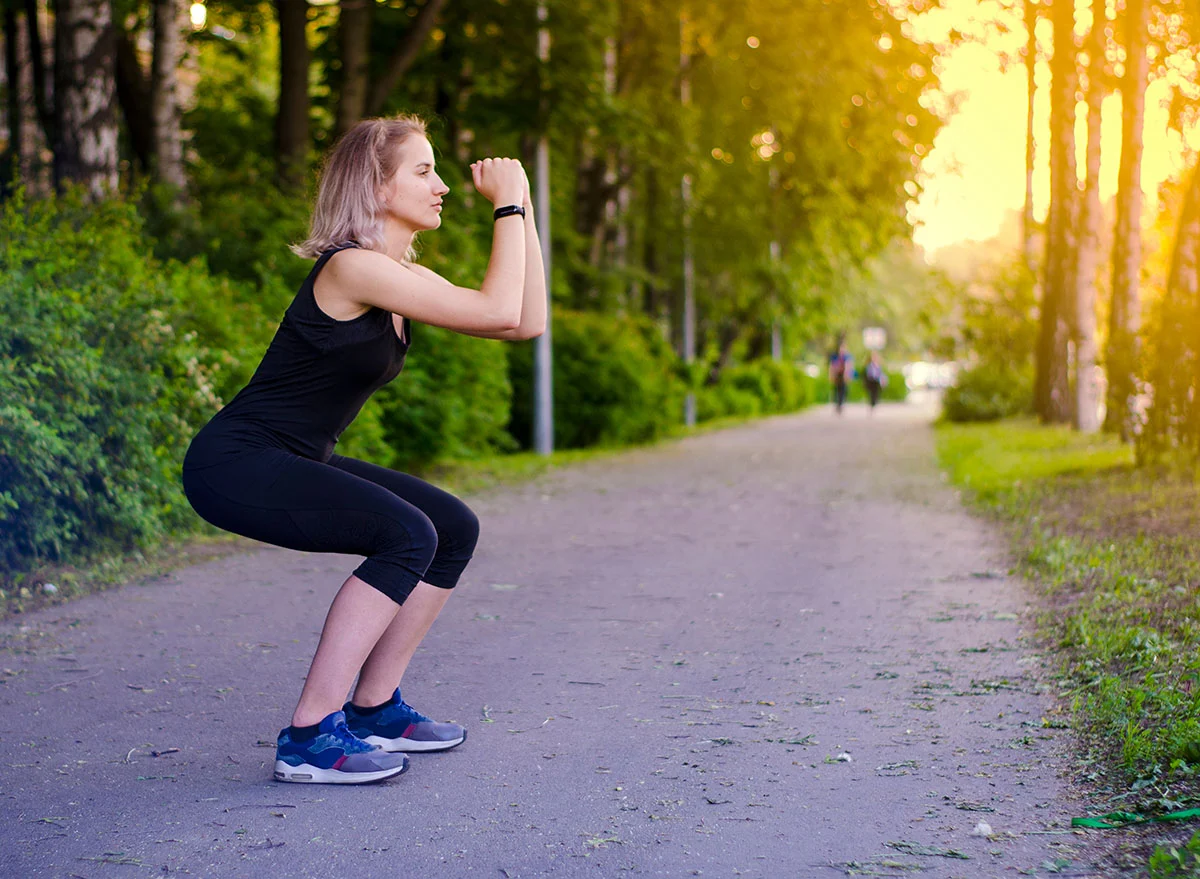
As individuals navigate the later stages of life, the maintenance of physical prowess, particularly in the lower body, emerges as a critical determinant of sustained independence and overall well-being. The capacity to execute fundamental movements, often taken for granted in youth, becomes increasingly significant for daily activities. Among the myriad exercises and assessments available, the squat stands out as a singularly effective indicator of an older adult’s functional fitness, offering profound insights into their current physical state and potential future trajectory.
The physiological changes associated with aging frequently manifest as a gradual decline in muscle mass and strength, a condition scientifically termed sarcopenia. This age-related muscular atrophy can significantly impair an individual’s ability to perform everyday tasks, such as rising from a chair, ascending stairs, or simply maintaining balance, thereby increasing the risk of falls and reducing the quality of life. Counteracting this decline necessitates a proactive approach to physical activity, with resistance training playing a pivotal role. Incorporating compound movements like squats into a regular exercise regimen is instrumental in preserving muscle integrity, enhancing bone density, and bolstering overall physical resilience, all of which are vital for thriving independently in one’s golden years.
Squats are a foundational human movement pattern, engaging a complex synergy of major muscle groups. This exercise recruits the quadriceps (front of thighs), hamstrings (back of thighs), gluteal muscles (buttocks), calves, and the core musculature, including the abdominal and lower back muscles. The coordinated effort of these muscle groups is indispensable for maintaining an upright posture, facilitating ambulation, ensuring stability during movement, and enabling activities like stepping up or climbing. By regularly challenging these components, individuals can cultivate the robust lower-body strength necessary for a dynamic and autonomous lifestyle.
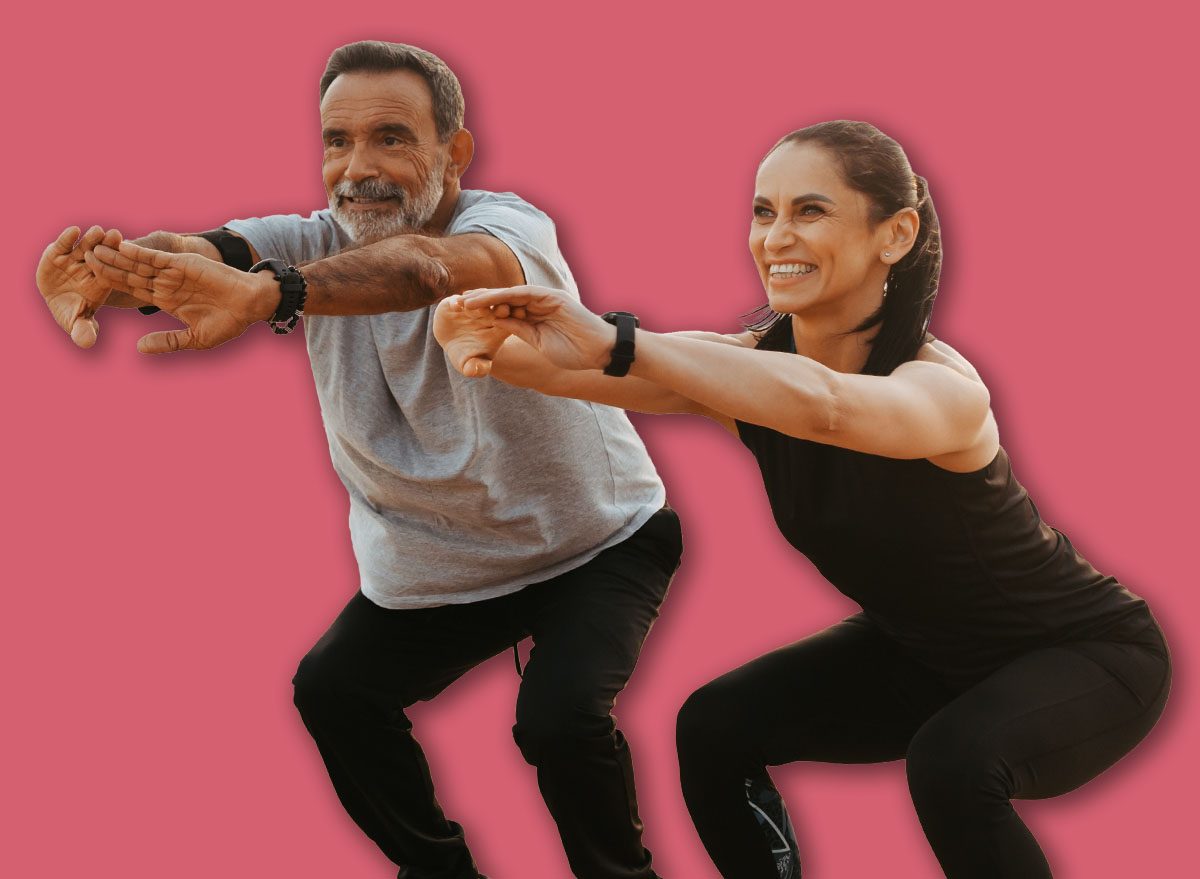
While the number of squats an individual can perform might seem like a straightforward measure of "strength," experts emphasize that its value lies in assessing a broader spectrum of physical capabilities rather than isolated muscular power. Dr. Andrew Gorecki, a prominent physical therapist and co-founder of MovementRx, a remote therapeutic monitoring platform, highlights that squat performance is not merely a gauge of pure muscular strength. Instead, it serves as a comprehensive diagnostic tool, simultaneously evaluating endurance, coordination, balance, overall strength, cardiovascular efficiency, and the mobility of crucial joints such as the ankles and hips.
Dr. Gorecki posits that this holistic assessment is precisely why the squat count, particularly in standardized tests, holds such clinical utility. It captures the intricate interplay of various physiological systems that collectively underpin an individual’s ability to function effectively in daily life. This integrated perspective is often more informative than isolating individual metrics. When an individual’s performance in squat-based tests declines markedly, it signals a potential compromise within this interconnected system, bearing strong correlations with heightened risks of falls, increased likelihood of hospitalization, and a concerning reduction in personal independence. Therefore, the ability to execute multiple squats with proper form is indicative of a robust functional lower body, translating directly into real-world mobility and stability. Conversely, a diminished squat capacity prompts further investigation into underlying issues, which could range from insufficient strength, restricted joint mobility, impaired balance, reduced cardiovascular stamina, or even pain stemming from improper technique. Identifying the root cause is paramount for devising an effective intervention strategy.
The profound relevance of the squat pattern to daily function in older adults cannot be overstated. The mechanics of a squat are inherently integrated into countless activities that are fundamental to independent living. For instance, the simple act of rising from a toilet or getting out of a chair or car is, at its core, a squat. Even bending down to retrieve an object from the floor involves a squatting motion, often combined with a hip hinge. If any element of this complex movement pattern falters—be it ankle flexibility, knee stability, hip power, or core control—these routine actions become progressively more challenging and precarious.
Furthermore, the squat is a compound exercise that simultaneously loads the entire kinetic chain of the lower body. This comprehensive engagement of the glutes, quadriceps, hamstrings, core, hips, knees, calves, spine, and ankles makes it an unparalleled functional test of the body’s integrated system. This integrated assessment is significantly more predictive of critical outcomes, such as fall risk and the preservation of independence, than isolated strength evaluations like a single leg extension maximum.
While a universally accepted, single "squat number" for individuals over 60 remains an area of ongoing research and discussion, reliable benchmarks do exist through validated functional assessments. Dr. Gorecki points to the 30-Second Chair Stand Test (30CST) as the most legitimate and widely used benchmark. Developed by Drs. Roberta Rikli and Jessie Jones as part of their comprehensive Senior Fitness Test battery, the 30CST provides normative data across various age groups, offering a practical framework for evaluating lower body functional strength and endurance.
The 30CST protocol is straightforward: participants sit in the middle of a chair, with their feet flat on the floor and hands crossed over their chest. Upon command, they stand up completely and then sit back down, repeating this motion as many times as possible within a 30-second period. The number of complete stands is recorded. The "top range" of performance, as indicated by these norms, provides valuable insights into an individual’s functional capacity:
- Ages 60-64: Men typically achieve 15-18 repetitions; Women, 13-16 repetitions.
- Ages 65-69: Men average 14-17 repetitions; Women, 12-15 repetitions.
- Ages 70-74: Men generally perform 12-16 repetitions; Women, 11-14 repetitions.
- Ages 75-79: Men show 11-15 repetitions; Women, 10-13 repetitions.
- Ages 80-84: Men often manage 10-14 repetitions; Women, 9-12 repetitions.
- Ages 85-89: Men typically record 8-12 repetitions; Women, 8-11 repetitions.
- Ages 90-94: Men demonstrate 7-11 repetitions; Women, 4-10 repetitions.
Achieving or exceeding these "top range" figures indicates a commendable level of lower-body functional fitness for one’s age group. Falling significantly below these benchmarks, however, should prompt a consultation with a healthcare professional or physical therapist to identify and address potential underlying deficits.
For individuals demonstrating exceptional physical conditioning, an "elite" standard is also recognized. Dr. Gorecki notes that performing 20 or more chair stands within 30 seconds, regardless of age over 60, signifies an elite level of functional fitness. This performance level is often comparable to that of physically active adults in their 40s, underscoring a remarkable preservation of strength and endurance.
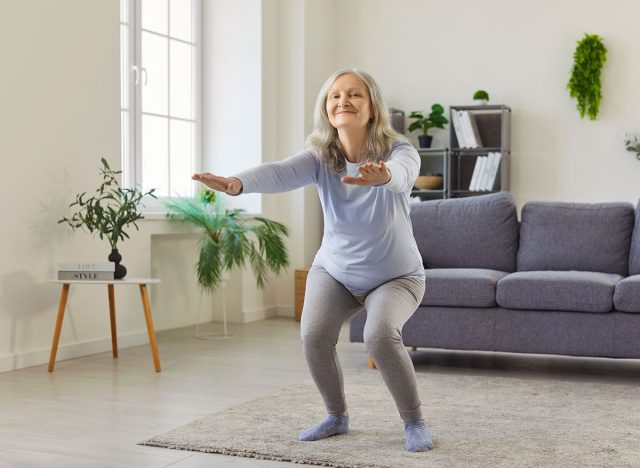
Beyond the specific parameters of the 30-second chair stand, the discussion also extends to traditional deep bodyweight squats, performed with the thighs parallel to the floor and without assistance. While less formally validated with normative data for older adults, Dr. Gorecki offers a rough estimation for top-tier performance in a 60-second period: approximately 25 to 30 repetitions for men and 20 to 25 for women. It is crucial to acknowledge, however, that these figures are extrapolations and not derived from extensive, validated research specific to this demographic and squat depth. The increased range of motion and muscular demand in deep bodyweight squats inherently lead to lower repetition counts compared to chair stands.
Ultimately, the primary objective should not be fixated solely on achieving a particular numerical benchmark. Far more critical is the effectiveness and efficiency of the squat pattern itself. An individual who can rise from a seated position without relying on their hands for support, perform 10 to 15 consecutive squats with stable and controlled movement, and maintain their balance throughout demonstrates a well-functioning lower body. This functional competence is a strong indicator of preserved independence. Conversely, if an individual struggles with these basic movements, requiring assistance or exhibiting instability, it represents more than just a fitness concern; it signals a potential threat to their autonomy. Addressing such deficits proactively, before they exacerbate, is paramount for maintaining long-term quality of life.
Incorporating squat training into one’s routine can begin with modifications to suit individual capabilities. Assisted squats, using a chair for support, or performing partial squats can serve as stepping stones. As strength and mobility improve, individuals can progress to full bodyweight squats and, under professional guidance, even weighted squats. Emphasizing correct form—maintaining a neutral spine, keeping knees aligned over feet, and initiating the movement from the hips—is crucial to prevent injury and maximize efficacy. Regular engagement in these functional movements not only builds physical capacity but also fosters a sense of empowerment and confidence, allowing older adults to navigate their world with greater ease and self-reliance. The squat, therefore, is more than an exercise; it is a fundamental pillar of active and independent aging.
Related posts:

Related News