
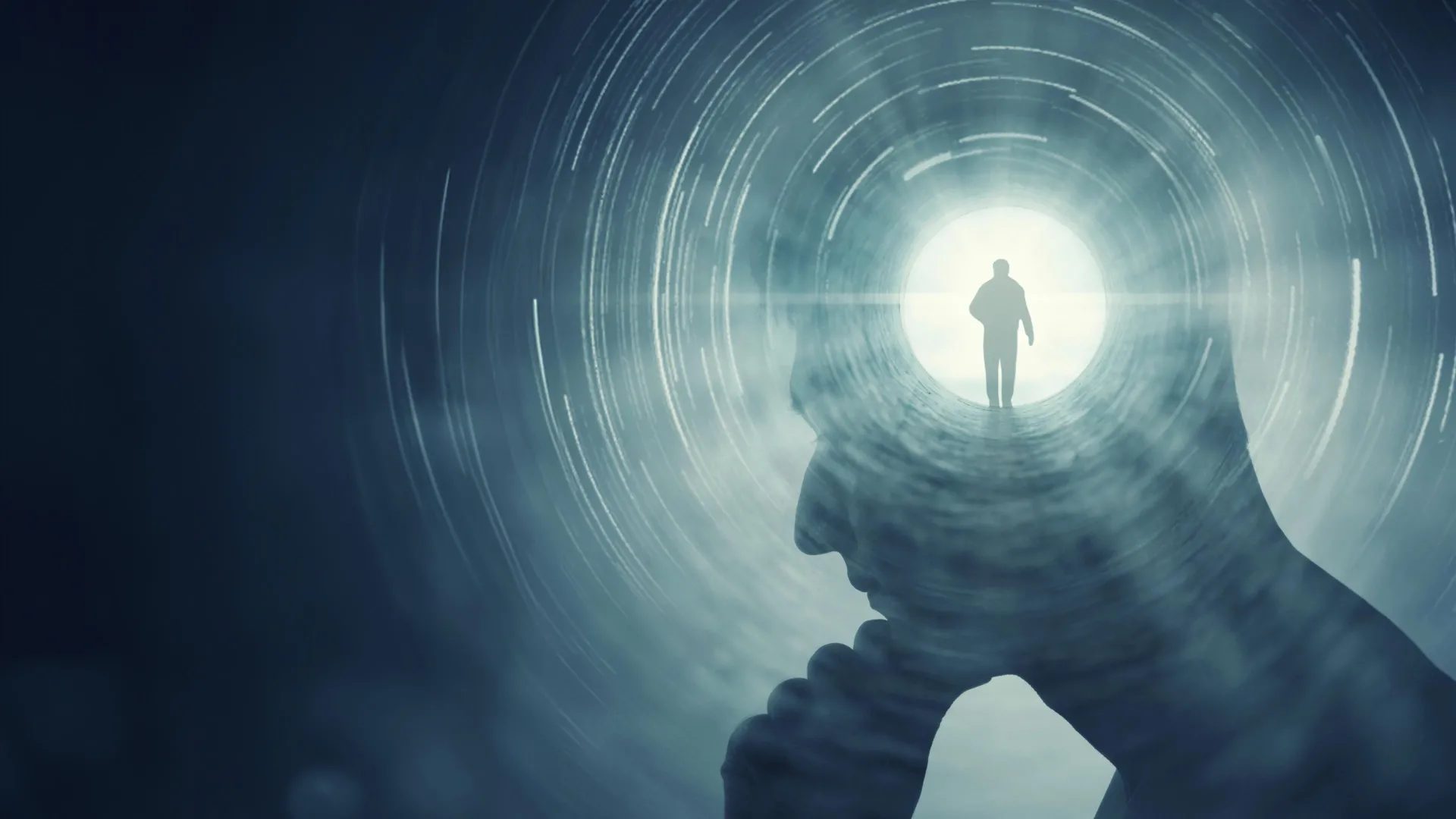
The very nature of subjective awareness, long considered an emergent property of complex biological machinery, is being re-examined by prominent figures in the scientific community, prompting a potential paradigm shift in our understanding of reality itself. At the 15th "Behind and Beyond the Brain" Symposium, an event hosted by the Bial Foundation in Porto from April 8th to 11th, neuroscientist Dr. Christof Koch delivered a compelling presentation that diverged from the prevailing materialistic worldview, suggesting that consciousness might not be exclusively a product of neural activity but rather a more fundamental aspect of the cosmos. This exploration delves into the persistent enigmas surrounding the genesis of subjective experience and considers alternative theoretical frameworks that could offer more comprehensive explanations.
The dominant paradigm in contemporary scientific inquiry, known as materialism or physicalism, posits that all phenomena, including consciousness, can ultimately be explained in terms of physical matter and its interactions. While this approach has yielded immense progress in fields like neuroscience, enabling us to map brain structures and understand neural communication with unprecedented detail, it has conspicuously failed to bridge the explanatory gap concerning subjective experience. The profound mystery of how electrochemical signals within the brain coalesce to generate the rich tapestry of our inner lives – our feelings, perceptions, thoughts, and qualia – remains a significant intellectual hurdle. This fundamental challenge, often referred to as the "hard problem of consciousness," continues to elude definitive scientific resolution, prompting a re-evaluation of the underlying assumptions of materialism.
Dr. Koch’s discourse at the symposium meticulously outlined three critical areas where current neuroscientific explanations falter when confronted with the phenomenon of consciousness. The first area of contention lies in the inherent difficulty of fully reducing the qualitative essence of conscious experience to purely mechanistic descriptions of brain function. While we can identify the neural correlates of various mental states, understanding why these specific physical processes should give rise to subjective feeling, rather than simply occurring without any accompanying awareness, remains elusive. The subjective "what it is like" to see the color red, for instance, cannot be fully captured by detailing the firing patterns of retinal cells or the activation of specific cortical areas.
Secondly, Dr. Koch underscored the profound implications of recent developments in quantum physics and cosmology, which have begun to question the very definition of what constitutes "real" in the universe. Theories exploring the observer effect in quantum mechanics and the possibility of a participatory universe suggest that consciousness, or at least an information-processing capacity, might play a more active role in shaping reality than previously assumed by classical physics. These insights from the frontier of theoretical physics provide a fertile ground for reconsidering the place of consciousness in the grand scheme of existence, potentially moving beyond a purely mechanistic, observer-independent view of the cosmos.
The third significant challenge highlighted by Dr. Koch pertains to the persistent and often perplexing array of human experiences that resist easy categorization within conventional scientific frameworks. These include phenomena such as near-death experiences (NDEs), profound mystical states, and instances of terminal lucidity – moments of remarkable clarity and awareness in individuals with severe cognitive impairment, often shortly before death. While some researchers attempt to explain these experiences through physiological or psychological mechanisms, their consistent occurrence and the profound subjective transformations they often engender suggest that our current understanding of consciousness may be incomplete, failing to account for these extraordinary facets of human awareness.
In light of these profound challenges, Dr. Koch articulated a compelling argument for revisiting and re-evaluating older philosophical traditions that posited consciousness as a fundamental, rather than emergent, characteristic of reality. Concepts such as idealism, which suggests that reality is fundamentally mental or consciousness-based, and panpsychism, the view that consciousness is a universal and fundamental feature of all matter, are being re-examined with renewed scientific interest. These perspectives offer a conceptual framework wherein consciousness is not an anomaly to be explained away by material processes but rather an intrinsic property woven into the fabric of existence, much like mass or energy.
To provide a scientifically tractable approach to these philosophical considerations, Dr. Koch expressed his continued support for Integrated Information Theory (IIT). Developed by Giulio Tononi and colleagues, IIT offers a quantitative framework for understanding consciousness. The theory posits that consciousness arises from the capacity of a system to integrate information. Specifically, it proposes that any system exhibiting a sufficiently high degree of integrated information, meaning that its components are causally interconnected in a way that the whole is greater than the sum of its parts, possesses some degree of subjective experience. IIT thus provides a mathematical and conceptual tool for exploring the possibility of consciousness in a wide range of systems, from biological brains to potentially even non-biological entities, thereby offering a scientific interpretation of panpsychist ideas.
Dr. Christof Koch’s own trajectory in the field of consciousness research underscores his deep commitment to unraveling its mysteries. With a distinguished career that includes professorships at prestigious institutions such as MIT and Caltech, he has been instrumental in developing innovative methodologies for detecting and quantifying signs of awareness. His current work at the Allen Institute for Brain Science focuses on advancing our ability to identify conscious states in individuals who are unable to communicate conventionally, such as patients in vegetative or minimally conscious states. These efforts are crucial for refining diagnostic tools and ethical considerations surrounding the care of such individuals, pushing the boundaries of what we can scientifically ascertain about the presence and nature of consciousness.
The implications of Dr. Koch’s re-evaluation of consciousness extend far beyond the academic realm. Should consciousness indeed prove to be a fundamental property of the universe, it would necessitate a radical rethinking of our relationship with the natural world, potentially influencing fields ranging from artificial intelligence and robotics to environmental ethics and our understanding of life itself. It challenges the anthropocentric view that consciousness is a unique human attribute, opening up the possibility of its presence in diverse forms across the cosmos. This intellectual endeavor, at the intersection of neuroscience, physics, and philosophy, represents one of the most profound scientific quests of our time, promising to reshape our perception of ourselves and our place in the universe. The ongoing dialogue, spurred by such insightful presentations, is vital for navigating these complex questions and fostering a more complete and nuanced understanding of the enigmatic phenomenon of consciousness.
About the Author












