As individuals advance beyond their fifth decade, the maintenance of robust lower body strength becomes increasingly crucial for preserving independence, enhancing mobility, and safeguarding against age-related decline. The natural physiological process known as sarcopenia, characterized by the gradual loss of muscle mass and strength, typically commences around age 30 and accelerates significantly after 50. This reduction in muscular capacity can compromise balance, elevate the risk of falls, and make everyday activities such as climbing stairs, walking, or rising from a chair feel progressively more challenging. While traditional strength training regimens, prominently featuring exercises like squats, are widely recognized for their efficacy in developing leg power, they may not always represent the most suitable or accessible starting point for everyone in this demographic. Concerns regarding stiff joints, diminished hip mobility, or discomfort under load can transform squats from a beneficial movement into a potential impediment, hindering progress rather than fostering it.
Recognizing these common limitations, a strategic shift towards supported, controlled exercise modalities offers a highly effective pathway to muscle re-establishment. Chair-based training emerges as a particularly valuable methodology, providing essential stability and leverage that allows individuals to concentrate intently on activating the target muscle groups without the concurrent demand for complex balance or the stress of heavy weights. This foundational support system enables a more deliberate engagement of the musculature, facilitating quicker gains in strength by minimizing compensatory movements and reducing strain on vulnerable joints. When the pressure of managing stability is alleviated, the body’s primary movers can perform their intended function more efficiently, setting the stage for accelerated muscle rebuilding and improved functional capacity.
The scientific underpinning for supported exercise emphasizes its role in fostering neuromuscular control and enhancing proprioception within a safe environment. By isolating muscle groups and guiding movements through a defined range of motion, chair exercises empower individuals to develop a stronger mind-muscle connection. This focused contraction is vital for stimulating muscle protein synthesis, the biological process responsible for muscle growth and repair. Moreover, the inherent adaptability of chair-assisted workouts allows for progressive overload—gradually increasing resistance or repetitions—which is a fundamental principle of strength training, all while maintaining a low-impact profile. This systematic approach not only builds physical strength but also instills confidence in movement, encouraging greater participation in daily activities and a more active lifestyle.
To maximize the benefits of any leg strengthening program, especially after 50, several core principles should guide the training regimen. Consistency is paramount; regular engagement with exercises, even for short durations, yields far superior results than sporadic, intense sessions. Prioritizing correct form over sheer quantity of repetitions or resistance is critical to prevent injury and ensure the intended muscles are being worked. Listening attentively to the body’s signals, respecting discomfort, and allowing adequate rest and recovery periods are also non-negotiable elements of a sustainable fitness journey. Furthermore, a holistic approach that incorporates proper nutrition, particularly sufficient protein intake, and hydration, will significantly support muscle repair and growth.
Let us explore five distinct chair-based exercises, recommended by strength coaching experts, that systematically target various muscle groups within the lower body, fostering comprehensive strength, flexibility, and functional mobility. These movements are designed to be performed with intention and control, laying a robust foundation for enhanced physical well-being.
1. Seated Band Leg Curl
The hamstrings, a powerful group of muscles located at the back of the thigh, are instrumental in knee flexion and hip extension, playing a pivotal role in walking, running, and maintaining knee stability. Despite their importance, they are frequently under-emphasized in general fitness routines. The seated band leg curl offers a direct and controlled method to engage these muscles. By utilizing a resistance band, constant tension is applied throughout the entire range of motion, from the initial contraction to the full extension, ensuring maximal muscle fiber recruitment. This not only builds raw strength but also refines the coordination between the hamstrings and calves, leading to smoother, more controlled leg movements. Over time, consistent practice translates into greater ease when navigating stairs, walking longer distances, and performing other essential daily tasks.
To execute this exercise, position yourself upright on a sturdy chair with both feet flat on the floor. Loop a resistance band around one ankle, anchoring the other end to the leg of the chair or a stable object in front of you. Keeping your upper thigh stable against the chair, slowly bend your knee, pulling your heel backward towards the chair leg against the band’s resistance, consciously squeezing your hamstring. Control the return phase, allowing your leg to extend slowly back to the starting position. Aim for three sets of 12 to 15 repetitions on each leg, pausing for 45 to 60 seconds between sets. A crucial form tip is to isolate the movement to the knee joint, preventing any rocking of the torso or hip involvement, ensuring the hamstrings bear the primary load. For added challenge, variations like a double-leg curl (if two bands are available), a slow tempo curl (extending the time under tension), or a pause curl (holding the peak contraction for a few seconds) can be incorporated.
2. Seated Band Abduction
Strong hip musculature is foundational for overall lower body stability, balance, and powerful movement, yet the muscles responsible for abduction—moving the leg away from the body’s midline—are often overlooked. The gluteus medius and minimus, located on the outer hip, are critical for stabilizing the pelvis during walking and preventing the knees from collapsing inward. The seated band abduction directly targets these external hip rotators and abductors. As you push your knees outward against the resistance of a band placed around your thighs, you’ll immediately feel the engagement of your glutes. This increased tension throughout the movement amplifies its effectiveness, cultivating strength that supports better overall body mechanics and alleviates undue stress on the knee and ankle joints.
To perform this exercise, sit tall on a chair with your feet firmly planted on the floor, roughly hip-width apart. Place a resistance band just above your knees. Initiate the movement by gently pushing your knees outwards against the band, without allowing your feet to lift or slide. Focus on the sensation of your outer hips and glutes contracting. Hold the outward position briefly, then slowly and with control, bring your knees back towards the starting position, maintaining tension on the band. Complete three sets of 12 to 15 repetitions, resting for 45 to 60 seconds between each set. The primary form cue here is to keep your feet grounded and avoid any swaying or rocking of your upper body, ensuring the work remains localized to the hips. Advanced variations include pulse abductions, where you make small, rapid outward movements at the end range, or staggered stance abduction, where one foot is slightly forward.
3. Seated Adduction Squeeze
The adductor muscles, located along the inner thigh, play an indispensable role in stabilizing the hips, controlling leg movements, and contributing to overall lower body balance. Often less emphasized in conventional exercise programs, strengthening these muscles is vital for symmetrical leg strength and preventing instability. The seated adduction squeeze directly engages these inner thigh muscles by requiring them to actively compress an object between the knees. This constant isometric or dynamic tension helps to build strength and coordination, while simultaneously promoting proper alignment of the pelvis and legs. This seemingly simple movement addresses a crucial functional gap, contributing significantly to improved gait and reduced strain on the hip and knee joints.
For this exercise, sit upright on a chair with your feet flat on the floor, hip-width apart. Place a soft ball, pillow, or rolled-up towel between your knees. Gently but firmly squeeze the object, activating your inner thigh muscles. Hold the squeeze for a count of two to three seconds, feeling the deep contraction in your adductors. Release the pressure slowly and with control, but do not completely relax, maintaining a slight tension. Repeat this for three sets of 12 to 15 repetitions, allowing 45 to 60 seconds of rest between sets. A key form pointer is to maintain a tall posture throughout the exercise, avoiding any tendency to lean forward or round your back, ensuring the effort is concentrated solely on the inner thighs. Isometric holds (squeezing for a longer duration, e.g., 10-15 seconds) or pulse squeezes (small, rapid squeezes) offer effective ways to intensify the exercise.
4. Sit-to-Stand
Few exercises mirror daily functional movement as closely as the sit-to-stand. This fundamental action, performed countless times throughout the day, directly translates into real-world strength and independence. It is an exceptionally effective compound exercise that simultaneously activates the quadriceps, glutes, and hamstrings, all while reinforcing proper biomechanics for transitioning between sitting and standing positions. By utilizing a chair, individuals can meticulously control the depth of the movement and ensure optimal body positioning, building robust strength without imposing undue stress on the joints. This practice not only enhances muscular power but also significantly boosts confidence in navigating everyday environments, reducing the apprehension associated with moving from a seated position.
To perform the sit-to-stand, begin by sitting on a sturdy chair with your feet positioned shoulder-width apart, directly beneath your knees. Lean slightly forward, engaging your core, and drive through your heels and the mid-foot to stand up in a controlled manner, aiming to fully extend your hips and knees without locking them. Once standing tall, slowly and deliberately reverse the movement, guiding yourself back down to the chair, allowing your glutes to gently tap the seat before rising again. Complete three to four sets of 8 to 12 repetitions, resting for 60 to 90 seconds between sets. A vital form tip is to initiate the movement by driving through your heels, ensuring your knees track in line with your toes, preventing them from collapsing inward or flaring excessively outward. To progress, consider variations like a tempo sit-to-stand (slowing down the ascent and descent), using an elevated seat for reduced range of motion initially, or even progressing to a single-leg sit-to-stand once sufficient unilateral strength is developed.
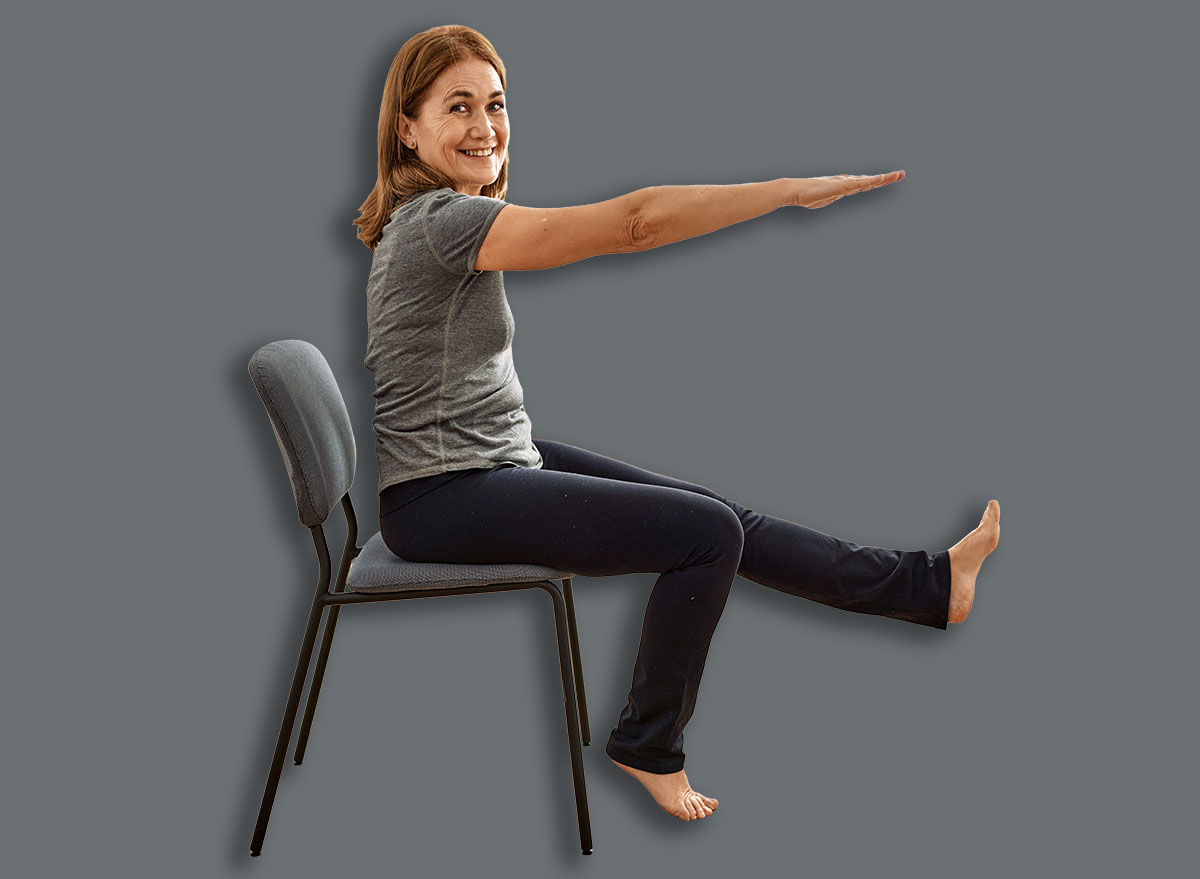
5. Seated Leg Extension
The quadriceps, the large muscle group at the front of the thigh, are essential for knee extension, walking, and climbing. When traditional compound movements like squats feel uncomfortable or restricted due to joint issues, the seated leg extension offers a targeted and highly effective way to rebuild quadriceps strength directly around the knee joint. Executing this exercise from a seated position eliminates the need for balance, allowing for singular focus on the powerful contraction of the quadriceps. This focused effort not only increases muscle mass and strength but also significantly improves knee control and joint stability, which are critical for preventing falls and managing conditions like osteoarthritis. Over time, dedicated practice of this movement contributes substantially to restoring full function and power in the lower extremities.
To perform the seated leg extension, sit tall on a chair with your feet flat on the floor. Slowly extend one leg straight out in front of you until your knee is fully straightened, or as far as comfortable, consciously squeezing your quadriceps at the top of the movement. Hold this peak contraction for a moment, then slowly and with complete control, lower your foot back to the starting position. Avoid any sudden dropping or swinging of the leg. Complete three sets of 10 to 12 repetitions on each leg, resting for 45 to 60 seconds between sets. The crucial form tip is to control both the lifting and lowering phases of the movement, resisting the urge to use momentum. Adding a resistance band looped around the ankle and chair leg can provide progressive overload. Other variations include a pause extension (holding the top position longer) or alternating leg extensions to maintain continuous muscle engagement.
In conclusion, embarking on a regimen of chair-assisted leg strengthening offers an accessible, safe, and profoundly effective strategy for individuals over 50 to counteract muscle loss and rejuvenate lower body function. By providing external support, these exercises empower individuals to engage deeply with their muscles, fostering precise control, reducing joint strain, and accelerating strength gains. This mindful approach to fitness not only rebuilds physical capacity but also cultivates a renewed sense of confidence and independence in daily life. Embracing these supported movements consistently can lead to stronger, more stable legs, ultimately enhancing overall well-being and promoting a vibrant, active lifestyle for years to come.
About the Author