Optimizing Active Aging: A Comprehensive 30-Day Fitness Protocol for Seniors
As individuals navigate the landscape of life beyond 65, maintaining robust physical health becomes an increasingly critical factor in preserving independence, enhancing quality of life, and mitigating the natural physiological shifts associated with aging. While a common perception might suggest an inevitable decline in physical capabilities, contemporary understanding and research firmly establish that a carefully structured and consistent exercise regimen can significantly counteract these effects. This article outlines a targeted 30-day program designed to empower older adults to rebuild strength, improve mobility, and boost overall physical confidence, thereby fostering a more vibrant and active lifestyle.
The aging process, while universal, manifests uniquely in each individual. However, certain physiological changes are broadly observed after the age of 60 or 65. These often include sarcopenia, the progressive loss of muscle mass and strength; decreased bone density, increasing the risk of osteoporosis; reduced joint flexibility and range of motion, contributing to stiffness; and a decline in balance and coordination, elevating the risk of falls. Furthermore, cardiovascular efficiency may diminish, leading to quicker fatigue during daily activities. The cumulative effect of these changes, particularly when coupled with periods of inactivity, can manifest as a feeling of diminished capability and a reluctance to engage in activities that once came effortlessly. Scientific literature consistently highlights the profound benefits of regular physical activity in ameliorating these age-related challenges, promoting not just physical well-being but also cognitive function and emotional health.
The objective of this 30-day fitness protocol is not to reverse the calendar entirely, but rather to establish a foundation for sustained physical improvement and functional resilience. Instead of aiming for an unrealistic "anti-aging" outcome, the focus is on enhancing fundamental qualities that are essential for daily living. This includes restoring muscular strength, improving joint articulation and flexibility, and boosting cardiovascular endurance to enable individuals to perform tasks with greater ease and less fatigue. By consistently engaging the body through a mix of movement and resistance exercises, participants can expect to notice tangible improvements in how their bodies feel and function within a month. The routine is intentionally designed for simplicity and accessibility, requiring minimal equipment and allowing for modifications to suit varying fitness levels. It encompasses a holistic approach, integrating exercises that enhance mobility, build strength across major muscle groups, and challenge the body’s stabilizing systems.
The program integrates five key exercises, each selected for its multi-faceted benefits and adaptability for the senior population. These movements work synergistically to address common areas of age-related decline, building a comprehensive base of functional fitness.
Dynamic Mobility: Downward-Facing Dog to Cobra Transition
This initial exercise serves as an excellent warm-up, gently guiding the body through a broader range of motion, particularly focusing on the shoulders, spinal column, and hips. It’s an ideal way to prepare the body for more demanding strength work by improving joint lubrication and muscle elasticity. Engaging the upper body to support a portion of one’s weight also introduces a foundational element of strength.
- Functional Significance: This flowing movement helps improve spinal flexibility crucial for bending, twisting, and reaching, while also enhancing shoulder and hip mobility needed for everyday tasks like dressing or getting in and out of a car.
- Muscles Engaged: Primarily targets the shoulders, chest, abdominal muscles, and hamstrings, with secondary engagement of the back muscles and glutes.
- Execution Guidance: Begin in a plank position or on all fours. Gently lift your hips towards the ceiling, pressing your hands and feet into the floor to form an inverted V-shape, characteristic of Downward-Facing Dog. Ensure your spine is long and heels reach towards the floor (a slight knee bend is acceptable). From here, gracefully lower your hips towards the floor, arching your back slightly and lifting your chest to transition into a Cobra pose, keeping your core engaged to protect the lower back. Reverse the movement smoothly.
- Progression & Regression Strategies: For beginners, focus on a shorter range of motion and a slower, more deliberate transition between positions. If discomfort arises, performing the Downward-Facing Dog with hands elevated on a stable surface (like a chair) can reduce the intensity. Advanced individuals can focus on deeper stretches and controlled, fluid movements.
- Key Form Cues: Prioritize comfort over extreme range. Breathe deeply throughout the movement. Maintain a neutral neck alignment. Avoid forcing any position that causes sharp pain.
- Recommended Parameters: Complete 2 to 3 sets of 6 to 8 repetitions, allowing for a brief 30-second rest period between sets.
Lower Body Strength and Balance: Walking Lunge
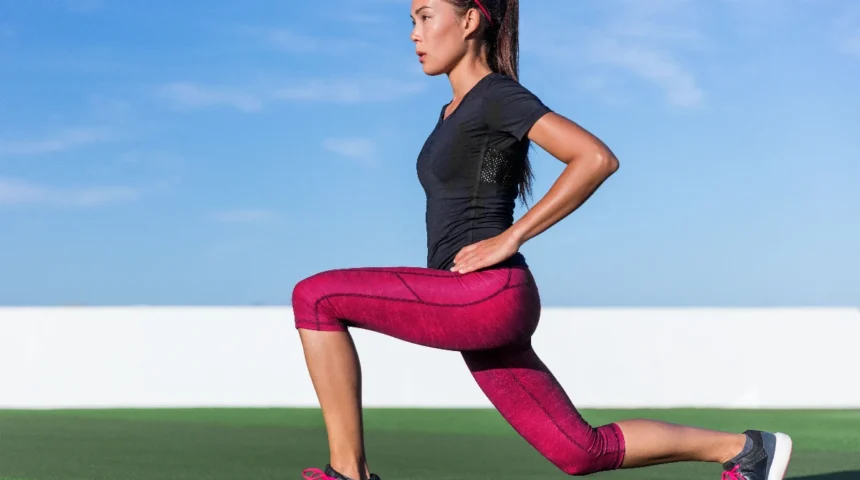
The walking lunge is a powerful unilateral (single-leg) exercise that directly translates to improved functional strength and balance, both critical for navigating daily life safely and confidently. It simulates the natural gait pattern, enhancing the ability of each leg to bear weight and propel the body forward.

- Functional Significance: This exercise directly strengthens the muscles used in walking, climbing stairs, and standing up from a seated position. The single-leg focus also significantly improves balance and proprioception, reducing fall risk.
- Muscles Engaged: Primarily targets the quadriceps, glutes, hamstrings, and calves.
- Execution Guidance: Stand tall with feet hip-width apart. Step forward with one leg, lowering your hips until both knees are bent at approximately a 90-degree angle. Ensure your front knee is directly above your ankle and your back knee hovers just above the floor. Push off with your front foot, bringing your back leg forward to immediately step into the next lunge with the opposite leg. Maintain an upright torso throughout.
- Progression & Regression Strategies: Beginners can start with a shorter stride length or utilize a nearby wall or sturdy furniture for balance support. As strength and confidence grow, the stride can be lengthened, and support can be gradually removed. Alternating reverse lunges offer a slightly different challenge and can be a good starting point for those with balance concerns.
- Key Form Cues: Maintain a controlled descent and ascent. Keep your core engaged to stabilize the torso. Choose a stride that allows for stability and proper form without overstretching.
- Recommended Parameters: Perform 2 to 3 sets of 6 to 10 repetitions on each side, with a rest interval of 45 to 60 seconds between sets.
Upper Body Pushing Power: Incline Push-Up
Rebuilding upper body strength is vital for tasks like pushing open heavy doors, lifting objects, or even pushing oneself up from a chair. The incline push-up offers a scalable solution, allowing individuals to gradually build pressing strength without the immediate challenge of a floor-based push-up.
- Functional Significance: This movement strengthens the chest, shoulders, and triceps, muscles essential for pushing, reaching overhead, and maintaining posture. The adjustable incline makes it suitable for various strength levels.
- Muscles Engaged: Primarily targets the chest (pectorals), shoulders (deltoids), triceps, and abdominal muscles for stabilization.
- Execution Guidance: Stand facing a sturdy elevated surface, such as a counter, table, or wall. Place your hands slightly wider than shoulder-width apart on the surface. Step your feet back until your body forms a straight line from head to heels. Keeping your elbows tucked slightly towards your body, lower your chest towards the surface. Push back up to the starting position, extending your arms fully.
- Progression & Regression Strategies: Begin with a higher incline (e.g., a wall) if needed. As strength improves, gradually lower the incline of the surface (e.g., a sturdy table, then a lower bench) to increase the challenge. Performing the movement at a slower tempo can also increase muscle engagement.
- Key Form Cues: Maintain a rigid, straight line from your head to your heels throughout the exercise. Avoid letting your hips sag or pike upwards.
- Recommended Parameters: Complete 2 to 3 sets of 8 to 12 repetitions, resting for 30 to 45 seconds between sets.
Upper Body Pulling Power and Core Stability: Single-Arm Band Row
Strengthening the upper back is crucial for posture, shoulder health, and counteracting the forward-slumped posture often associated with prolonged sitting. The single-arm band row uniquely challenges each side of the upper back independently while simultaneously engaging the core to resist rotation.
- Functional Significance: This exercise strengthens the muscles responsible for pulling, which are essential for tasks like opening doors, pulling garden hoses, or carrying groceries. The unilateral nature also enhances core stability and anti-rotational strength, beneficial for everyday movements and injury prevention.
- Muscles Engaged: Primarily targets the upper back (rhomboids, trapezius), latissimus dorsi (lats), rear shoulders, and biceps. The core muscles are also heavily engaged for stabilization.
- Execution Guidance: Secure a resistance band to a stable anchor point at chest height. Stand facing the anchor, holding one end of the band with one hand. Step back until there is tension in the band, with your arm extended forward. Keeping your chest facing forward and core engaged, pull the band towards your torso, squeezing your shoulder blade. Slowly return your arm to the starting position.
- Progression & Regression Strategies: Begin with a lighter resistance band. As strength increases, progress to a stronger band or increase the distance from the anchor point to increase tension. Performing two-arm band rows can be a gentler introduction if single-arm stability is a concern. Slower, more controlled repetitions can also heighten the challenge.
- Key Form Cues: Focus on initiating the pull with your back muscles, not just your arm. Keep your torso stable and resist the urge to rotate as you pull.
- Recommended Parameters: Perform 2 to 3 sets of 10 to 15 repetitions per side, with a rest period of 30 to 45 seconds between sets.
Full-Body Endurance and Grip Strength: Farmer’s Carry
Often overlooked, the farmer’s carry is a remarkably effective full-body exercise that develops grip strength, core stability, and overall muscular endurance, all of which are profoundly beneficial for older adults. It simulates the real-world act of carrying heavy objects, engaging numerous muscle groups simultaneously.
- Functional Significance: This exercise directly improves the ability to carry groceries, luggage, or grandchildren with greater ease and less strain. It builds incredible grip strength, which is a strong indicator of overall health and longevity, while also strengthening the core, shoulders, and upper back for postural support.
- Muscles Engaged: Engages a vast array of muscles including grip muscles (forearms), shoulders, upper back, core (abdominals, obliques, lower back), and legs for stabilization during locomotion.
- Execution Guidance: Select two appropriately weighted dumbbells, kettlebells, or sturdy bags. Stand tall, with the weights held firmly at your sides, shoulders pulled back and down, and core engaged. Walk a designated distance or for a set time, maintaining an upright posture without letting the weights pull your shoulders forward or cause you to lean.
- Progression & Regression Strategies: Start with lighter weights and shorter distances or durations. As strength improves, gradually increase the weight or the time/distance of the carry. A suitcase carry (carrying one weight at a time) provides a different challenge, further engaging the core to resist lateral flexion.
- Key Form Cues: Maintain a tall, upright posture throughout the carry. Keep your gaze forward. Avoid shrugging your shoulders or letting the weights swing excessively.
- Recommended Parameters: Complete 2 to 3 carries, each lasting 30 to 45 seconds, with a rest interval of 45 to 60 seconds between carries.
Successfully navigating a 30-day fitness program is a commendable achievement, but the real power lies in establishing a sustainable habit. Integrating this routine two to four times per week will allow for sufficient recovery and consistent progress. The key to long-term success is to listen to your body, make small, incremental progressions as the exercises become more comfortable, and celebrate every improvement, no matter how minor. This could mean adding an extra repetition, slightly increasing resistance, or simply maintaining perfect form for the duration.
In conclusion, the pursuit of physical well-being after the age of 65 is not merely about extending life, but about enriching it. A structured, consistent fitness regimen, such as the 30-day protocol outlined here, offers a powerful pathway to reclaiming physical capabilities, fostering greater independence, and enjoying a more active and fulfilling lifestyle. The commitment of one month can lay the groundwork for years of enhanced vitality and confidence, proving that age is indeed just a number when it comes to embracing a healthier, stronger self.
Related posts:

Related News