As individuals progress through their sixties and beyond, maintaining robust lower body strength becomes an increasingly vital component of overall health, independence, and quality of life. The natural physiological process of aging often brings with it sarcopenia, a progressive and generalized loss of skeletal muscle mass and strength, which can significantly impact mobility, balance, and the ability to perform everyday activities. While traditional resistance training methods, such as free weights and gym machines, are widely recognized for their efficacy in muscle building, an alternative, highly accessible, and surprisingly potent approach is gaining traction: chair-assisted exercises. These routines offer a unique combination of stability and targeted muscle activation, proving exceptionally beneficial for seniors seeking to fortify their legs and improve functional movement.
The implications of diminished leg strength for older adults extend far beyond simple inconvenience. Weakened lower extremities are a primary contributor to an increased risk of falls, which can lead to serious injuries, prolonged recovery periods, and a substantial reduction in independence. Basic daily tasks, from rising out of a low chair or car to navigating stairs or simply walking confidently, rely heavily on the strength and endurance of the leg muscles. Proactive engagement in exercises that specifically target the quadriceps, hamstrings, glutes, and calves can dramatically mitigate these risks, enhancing balance, improving gait, and empowering individuals to sustain an active and self-sufficient lifestyle well into their later years.
One of the most compelling advantages of integrating a sturdy chair into a leg workout regimen for the over-60 demographic lies in the inherent support and stability it provides. Jose Guevara, a distinguished Fitness Expert, Chiropractor, and Home Gym Equipment Tester at ShreddedDad.com, highlights this critical benefit. He explains that for individuals aged 60 and above, the chair acts as a reliable anchor, minimizing the risk of losing balance and potential injury during movements that might otherwise be challenging. For instance, attempting a deep squat without adequate strength or balance can result in a fall if one cannot maintain stability at the bottom of the movement or generate sufficient power to return to a standing position. The chair effectively eliminates this apprehension, offering a "safety net" that allows participants to focus intently on muscle engagement and proper form rather than diverting mental and physical energy to maintaining equilibrium.
This enhanced sense of security is precisely what can make chair-based exercises remarkably efficient, even potentially leading to faster functional strength gains compared to some traditional weightlifting scenarios for this population. When the fear of falling is removed, individuals can push their muscles closer to their limits with greater confidence and consistency. This focused exertion, free from the compensatory movements often employed to maintain balance, allows for more direct and effective targeting of the intended muscle groups. Furthermore, the accessibility of a chair-based workout means it can be performed consistently at home, removing common barriers such as travel to a gym, the intimidation of complex equipment, or the need for a spotter. Regularity is a cornerstone of effective strength building, and the ease of incorporating these exercises into a daily or weekly routine significantly contributes to accelerated progress. While external weights are often associated with progressive overload, chair exercises allow for progression through increased repetitions, sets, slower tempos, longer isometric holds, or by gradually decreasing reliance on the chair for support, proving that effective resistance can be generated using bodyweight and strategic positioning.
Before embarking on any new exercise program, particularly for those over sixty, consulting with a healthcare provider is always recommended to ensure the chosen activities are appropriate for individual health conditions and fitness levels. Once cleared, the fundamental principles of proper posture, controlled movements, and mindful breathing should guide every exercise. A robust, stable chair without wheels is essential for safety.
Here are four expert-recommended chair-assisted exercises designed to build formidable leg strength:
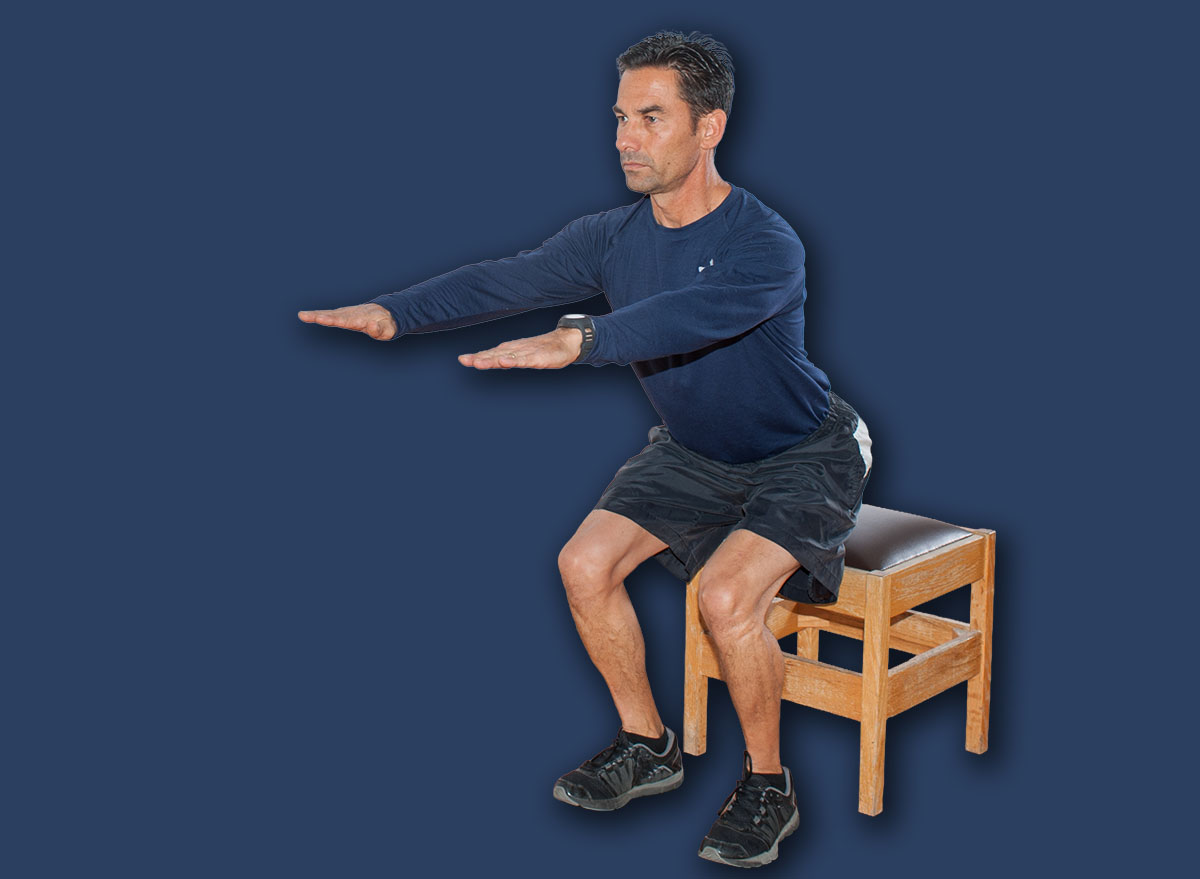
1. Chair Squats (or Sit-to-Stands):
This foundational movement directly translates to crucial daily functions. To perform a chair squat, begin by standing directly in front of a sturdy chair, with your feet hip-width apart and toes pointed slightly outward. Slowly lower your body as if you are going to sit down, extending your arms forward for balance if needed. Control the descent until your glutes lightly touch or hover just above the chair’s seat. Ensure your knees track in line with your toes and do not collapse inward. Once you’ve reached the bottom, push through your heels and mid-foot to stand back up to the starting position, squeezing your glutes at the top. Jose Guevara emphasizes that "Squats are a good all-around quads, hamstrings, and glute builder that carry over to everyday activities like getting in and out of a chair, getting in and out of a car, when using the toilet, etc." This exercise primarily targets the quadriceps (front of thighs), hamstrings (back of thighs), and glutes (buttocks). For progression, try lowering more slowly, pausing briefly at the bottom, or eventually performing the movement without fully touching the chair.
2. Standing Calf Raises (Chair-Supported):
Calf strength is paramount for balance, ankle stability, and the propulsive force needed for walking. To execute this exercise, stand behind your chair, gently holding onto its backrest for support. Position your feet hip-width apart. Slowly lift your heels off the ground, rising onto the balls of your feet and toes as high as comfortably possible. Hold this peak contraction for a second, then slowly and deliberately lower your heels back to the floor. The controlled descent is just as important as the ascent for muscle engagement. This exercise primarily engages the gastrocnemius and soleus muscles in the calves. To increase the challenge, perform single-leg calf raises while still holding the chair for balance, or hold the top position for a longer duration.
3. Chair-Assisted Lunges:
Lunges are excellent for developing unilateral (single-leg) strength and improving balance, both vital for navigating uneven surfaces and maintaining stability during walking. Stand behind your chair, holding the backrest for support. Take a significant step forward with one leg, keeping your torso upright. Lower your back knee towards the floor until both knees form approximately 90-degree angles. Ensure your front knee remains aligned over your ankle and does not extend past your toes. Your back heel will lift off the ground. Push off your front foot to return to the starting position. Repeat on the other leg. The chair provides balance assistance, allowing you to focus on the movement pattern and muscle activation without fear of toppling over. This exercise effectively works the quadriceps, hamstrings, and glutes of both legs, along with engaging the hip flexors and core for stability. Begin with a smaller step if balance is a concern, gradually increasing the stride length as strength and confidence grow.
4. Squat Holds (Isometric Chair Squats):
Isometric exercises, where muscles are contracted without changing length, are highly effective for building static strength and endurance. For squat holds, stand in front of your chair as you would for a chair squat. Slowly lower your body until your glutes are just hovering an inch or two above the chair’s seat, or until your thighs are roughly parallel to the floor. Maintain this position, engaging your core and keeping your back straight. Hold for a predetermined duration, focusing on deep, controlled breathing. The chair behind you acts as a reassuring presence, preventing an uncontrolled descent if your muscles fatigue. This exercise intensely targets the quadriceps, hamstrings, and glutes, enhancing the endurance required for sustained standing or walking. Start with shorter holds (e.g., 10-15 seconds) and gradually increase the duration as your strength improves, aiming for up to 30-60 seconds.
Incorporating these chair-assisted leg exercises into a consistent fitness regimen, ideally three to four times per week, can yield profound benefits for older adults. While these routines are powerful on their own, they can also be harmoniously integrated with other forms of physical activity, such as cardiovascular exercises (walking, swimming), flexibility training, and upper body strength work, to create a holistic approach to wellness. Adequate hydration, a nutrient-rich diet, and sufficient rest are equally crucial elements supporting muscle recovery and growth.
In conclusion, chair-supported exercises represent an accessible, safe, and exceptionally effective pathway to enhanced lower body strength and stability for individuals over the age of 60. By leveraging the inherent support of a chair, seniors can overcome common barriers to traditional training, engage muscles with greater focus, and achieve significant improvements in their functional capacity. This strategic approach to fitness not only bolsters physical prowess but also cultivates a greater sense of confidence and independence, ultimately enriching the journey of healthy aging.
About the Author