Tumor Cells Hijack Cellular Signaling Pathways to Evade Immune Surveillance, New Study Reveals.
A paradigm shift is occurring in our understanding of cancer’s intricate relationship with the body’s defense mechanisms, moving beyond the traditional view of antioxidants as solely protective agents. Groundbreaking research has illuminated a sophisticated strategy employed by malignant growths: they strategically leverage the very cellular signals that normally empower the immune system to recognize and eliminate aberrant cells, effectively disarming their own attackers. This revelation, stemming from collaborative efforts between scientists at the University of Cambridge and Oregon Health & Science University, challenges long-held assumptions about reactive oxygen species (ROS) and unveils a critical vulnerability within the tumor microenvironment.
For decades, the scientific community has predominantly associated free radicals, a subset of ROS, with cellular damage and their potential role in the genesis of diseases like cancer. This perception fueled widespread enthusiasm for antioxidants, molecules believed to neutralize these harmful entities and thus confer protection. However, this latest investigation, published in the esteemed journal Science, introduces a nuanced perspective, demonstrating that controlled levels of ROS are not only innocuous but actively indispensable for certain immune functions, particularly in the crucial task of identifying and eradicating cancerous cells. The research posits that tumors have evolved to exploit this biological imperative, deploying natural antioxidants to create an environment that stifles immune responses.
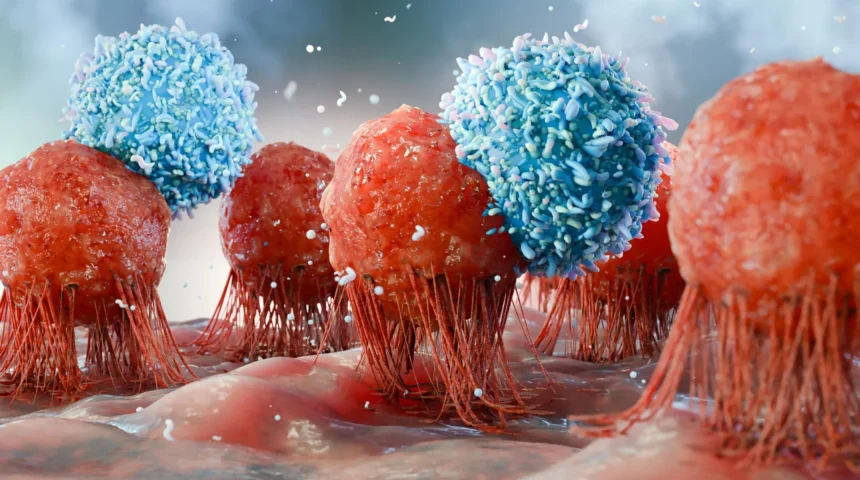
The immune system, a complex network of cells and processes, acts as the body’s vigilant guardian, constantly scanning for and neutralizing threats, from microscopic pathogens to the insidious emergence of cancerous cells. A linchpin of this defense architecture involves specialized lymphocytes, known as T cells, which possess the remarkable ability to detect and eliminate tumor cells. This potent destructive capability, however, is not inherent but requires precise activation signals to transition from a quiescent state to an aggressive mode of attack. The findings indicate that minute quantities of ROS play a vital, previously unrecognized role in initiating these critical T cell activation signals.
Delving into the cellular milieu surrounding tumors, the research team observed how cancer cells actively manipulate their immediate surroundings to subvert immune action. By meticulously analyzing the biochemical composition of the fluid within tumors in experimental models, scientists identified that malignant cells actively engineer a chemical climate that actively impedes the activation of nearby T cells. This chemical manipulation hinges on the overproduction and release of a specific endogenous antioxidant protein, Peroxiredoxin 1 (PRDX1).
PRDX1, a naturally occurring protein, functions by scavenging ROS. In the context of a tumor, the excessive secretion of PRDX1 into the extracellular space effectively depletes the ROS that T cells critically require for their activation. Consequently, without these essential signaling molecules, the T cells are rendered less potent, their capacity to recognize and destroy cancer cells significantly diminished. This sophisticated tactic effectively transforms antioxidants from potential protectors into potent enablers of immune evasion, allowing tumors to persist and proliferate by cloaking themselves in a biochemical shield.
To rigorously test the hypothesis that disrupting this antioxidant shield could restore immune function, the researchers employed advanced CRISPR gene-editing technology to modify cancer cells in their experimental subjects. By genetically engineering these cells to cease PRDX1 production, the scientists effectively removed the tumor’s primary antioxidant defense. The ensuing observations were highly encouraging: immune cells demonstrated heightened activity, and the growth of the tumors was noticeably curtailed. This outcome strongly suggested that interfering with the tumor’s antioxidant mechanism could indeed reawaken the immune system’s latent capacity to combat cancer.
The study’s scope then broadened to ascertain whether this mechanism was specific to the experimental models or if it represented a conserved strategy employed by human cancers. This involved a multifaceted examination of existing datasets pertaining to proteins secreted by human cancer cell lines, analysis of gene expression patterns across thousands of human tumors, and direct biochemical assessment of fluids obtained from surgically excised human tumors. Across all three lines of inquiry, a consistent pattern emerged: human cancers, much like their experimental counterparts, secrete PRDX1 into their surrounding environment, thereby neutralizing the ROS essential for the optimal function of anti-cancer T cells.
Dr. Xan Wesolowski, a senior author on the study from the University of Cambridge’s Department of Pathology, elaborated on the significance of these findings, emphasizing how they challenge conventional wisdom regarding ROS. "Our perception has long been that reactive oxygen species are solely detrimental byproducts of metabolic processes," Dr. Wesolowski stated. "However, we are increasingly recognizing their crucial functional roles within cells, and it is now clear that T cells depend on them for activation. Our research significantly advances this understanding by revealing how tumors can exploit this very dependence to escape immune elimination."
This discovery holds profound implications for the burgeoning field of cancer immunotherapy, a therapeutic modality designed to harness and amplify the patient’s own immune system to fight cancer. While immunotherapies have revolutionized cancer treatment for some, a substantial proportion of patients experience limited or no benefit, often due to tumor resistance mechanisms. The identification of PRDX1-mediated ROS depletion as a key immunosuppressive factor offers a compelling explanation for this treatment resistance. By secreting PRDX1, cancer cells may effectively dampen the very T cell responses that immunotherapies aim to stimulate.
Crucially, preclinical experiments demonstrated that when cancer cells were prevented from producing PRDX1, their susceptibility to immunotherapy significantly improved. Tumors that had previously been refractory to certain immunotherapies began to respond when this antioxidant defense was neutralized. Professor Rahul Roychoudhuri, also from Cambridge’s Department of Pathology and a lead author, highlighted the therapeutic potential: "We have uncovered a novel mechanism by which cancers subvert the immune system. By blocking this pathway, we observed tumors that were unresponsive to some immunotherapies becoming responsive. This strongly suggests that targeting this pathway therapeutically holds great promise, and there are multiple avenues we could explore to achieve this."
Furthermore, the research opens the door to exploring complementary strategies that could bolster immune responses. Dr. Robert Eil from Oregon Health & Science University’s School of Medicine proposed an intriguing counterpoint: "Our study suggests a potential avenue for enhancing T cell immunotherapies. Rather than employing antioxidants, it is conceivable that prooxidants could serve to invigorate T cells, propelling them into action against tumor cells."
Beyond the direct clinical applications in cancer treatment, these findings may shed light on a persistent enigma surrounding the efficacy of antioxidant supplements. For years, these supplements have been widely marketed for their purported ability to neutralize ROS and safeguard cells from oxidative damage, leading to investigations into their potential to reduce cancer risk. However, numerous large-scale, randomized clinical trials have failed to substantiate these claims, and in some instances, antioxidant supplementation has been linked to adverse outcomes.
The current research offers a plausible biological rationale for these perplexing results. While ROS can indeed cause cellular damage, they also play a vital role in activating the immune defenses crucial for cancer suppression. The indiscriminate removal of these molecules through antioxidant supplementation could inadvertently compromise the immune system’s ability to detect and eliminate nascent tumors. This does not definitively conclude that antioxidant supplements promote cancer in general, but it underscores the critical importance of understanding the context-dependent functions of these molecules within complex biological systems.
The researchers are keen to emphasize that their findings, while compelling, are preclinical in nature. Although they have identified robust evidence of this antioxidant evasion mechanism in human cancers, the proposed therapeutic strategies require rigorous validation through clinical trials to establish their safety and efficacy in patients. Therefore, individuals currently undergoing cancer treatment or those concerned about their health are strongly advised against making any changes to their diet, supplement regimen, or medical treatments based solely on these preliminary findings, without first consulting with a qualified healthcare professional. The foundational support for this transformative research was generously provided by organizations including the Medical Research Council, the European Research Council, Wellcome, and the National Institutes of Health/National Cancer Institute.
Related posts:

Related News