Ancient Parchment Yields Millennia-Old Viral Genetic Blueprints, Rewriting Livestock Disease History.
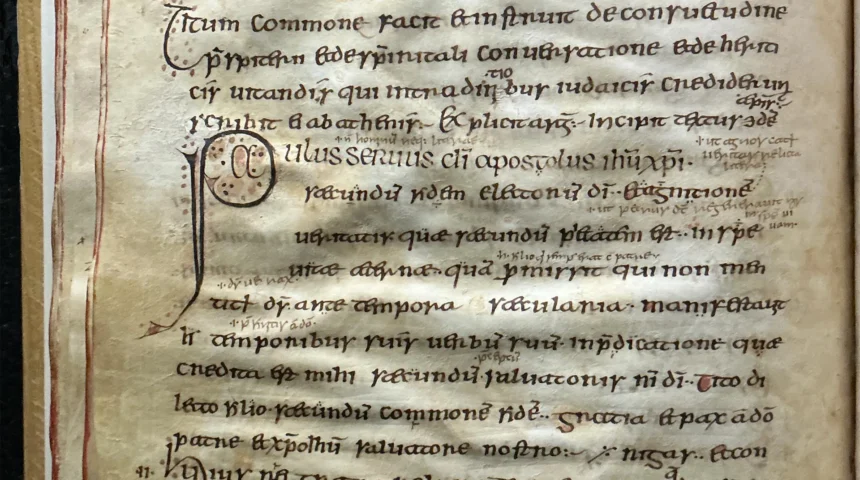
A groundbreaking scientific endeavor has unveiled a hidden legacy within some of Europe’s most cherished medieval manuscripts, revealing not only the artistry of scribes but also the enduring genetic signature of a persistent viral pathogen. Researchers, through meticulous analysis of animal-derived parchment, have unearthed ancient viral DNA, offering an unprecedented 3,500-year chronicle of the sheeppox virus (SPPV). This discovery, spearheaded by an international consortium coordinated by University College Dublin (UCD), pushes the boundaries of historical biological inquiry, demonstrating that cultural artifacts can serve as unexpected yet invaluable archives of past epidemics.
The significance of this finding lies in its ability to reconstruct the evolutionary trajectory of SPPV with remarkable detail, as detailed in a recent publication in Science Advances. By examining parchment drawn from centuries-old documents, the team has established the earliest direct genetic evidence of this debilitating disease circulating among European sheep populations well before the advent of modern virology. The implications extend beyond mere historical curiosity, providing crucial insights into the long-term adaptation and resilience of pathogens that continue to pose a threat to global agriculture.
Sheeppox, a highly contagious ailment, possesses the capacity to decimate entire flocks with alarming swiftness. Its impact is particularly devastating on young animals, leading to substantial mortality rates. Beyond the direct loss of livestock, the disease inflicts significant economic hardship through diminished yields of essential products such as wool, meat, and milk. The study’s findings underscore the protracted struggle against this economically damaging pathogen, a battle that has spanned millennia.
Among the meticulously studied artifacts were iconic historical texts, including the York Gospels, a thousand-year-old masterpiece of Anglo-Saxon illumination, recognized as one of the finest surviving examples of its kind. The scientific team also delved into even older works, such as the Corpus Glossary, an early English dictionary housed at Corpus Christi College, Cambridge, alongside other medieval manuscripts originating from both the British Isles and continental Europe. The very material from which these documents were crafted—animal skins prepared into parchment—proved to be the key to unlocking this ancient biological record.
Prior to the widespread adoption of paper, parchment, meticulously fashioned from prepared animal hides, predominantly sheep, goats, and cattle, was the medium of choice for extensive written works. These durable materials possess a remarkable capacity to preserve biological traces from the animals they once belonged to, including evidence of infections present at the time of their death. The detection of sheeppox virus DNA across multiple pages of several examined manuscripts strongly suggests that some of the animals whose skins were utilized for these cultural treasures had been infected with the virus.
A particularly intriguing aspect of the research emerged from the discovery of viral DNA on parchment derived from calfskin and goatskin. Given that sheeppox is primarily a sheep-specific pathogen, this finding presents a compelling duality: either the virus exhibited a broader host range than previously understood, occasionally infecting other domestic ruminants, or the viral genetic material may have been inadvertently transferred to these skins during the intricate process of parchment production. This ambiguity highlights the complex interplay between pathogen transmission and historical material culture.
The identification of ancient viral DNA from pathogens has fundamentally reshaped our comprehension of historical infectious diseases. This research extends that paradigm to animal pathogens, asserting that archival materials like parchment can indeed act as repositories of ancient biological evidence. The possibility exists that libraries and museums worldwide may harbor similar genetic remnants of past animal disease outbreaks, waiting to be uncovered.
The genomes recovered from these ancient sources offer an invaluable window into the evolutionary history and societal impact of pathogens. The sheeppox virus, as demonstrated by this study, has been a persistent presence within Eurasian sheep herds for at least three and a half millennia. This suggests that libraries and archives could potentially hold a wealth of untapped information regarding historical livestock epidemics, providing genetic evidence where other forms of documentation are scarce or entirely absent.
The craft of parchment making, often perceived as a dying art, is now revealing its profound capacity to preserve not only human cultural heritage but also the historical epidemiological landscape of livestock. This project vividly illustrates that parchments serve as enduring records of our past, safeguarding both written knowledge and the prevalence of diseases that affected crucial agricultural resources during the medieval period. Such remarkable and unexpected discoveries are a testament to the power of interdisciplinary collaboration, where specialists from diverse fields converge, sharing expertise and data in a spirit of scientific generosity and mutual trust.
This ambitious undertaking brought together a multidisciplinary team comprising experts in genetics, history, virology, protein chemistry, and conservation science. This synergistic approach enabled a holistic investigation of the manuscripts, bridging historical context with detailed biological analysis.
To extend the temporal reach of the investigation beyond the medieval period, the scientists also analyzed DNA extracted from ancient sheep teeth dating back to the Bronze Age. Teeth are exceptionally well-suited for the study of ancient infections, as their dense structure offers significant protection to genetic material, often preserving evidence that has long since degraded in other skeletal remains. Through this analysis of ancient dentition, researchers identified the oldest known genetic traces of the sheeppox virus within sheep remains recovered from pastoralist settlements in the Eurasian steppe. When correlated with the findings from the manuscripts, this combined evidence firmly establishes the disease’s presence and impact on livestock for over 3,700 years.
Furthering the understanding of the virus’s development, the research team compared the ancient viral DNA with genetic sequences from contemporary viruses. This comparative analysis indicates that the principal lineages within the capripoxvirus family—encompassing sheeppox virus, goatpox virus, and lumpy skin disease virus—diverged from each other between 11,500 and 3,700 years ago. This timeframe aligns remarkably with pivotal epochs in human history, notably the domestication of livestock and the large-scale migrations of sheep populations from the Eurasian steppe into Europe. These demographic shifts likely played a significant role in the virus’s protracted history of transmission and geographical dissemination.
One of the study’s most compelling revelations is the extraordinary genetic stability of the sheeppox virus over several millennia. In contrast to the rapid evolutionary changes observed in many other viruses, the genome of SPPV appears to have remained remarkably consistent despite its extensive history of infecting livestock. Understanding this evolutionary stasis could offer critical clues regarding the initial genetic adaptations that enabled the virus to effectively establish itself as a significant sheep pathogen.
The findings of this research possess immediate practical relevance, as sheeppox continues to represent a significant threat to modern livestock farming. Ongoing outbreaks, such as the recent incidence in Greece, continue to inflict substantial economic damage. Ancient genomic data can illuminate the evolutionary pathways of pathogens that affect us today. The study’s observation of SPPV’s genomic stability over millennia, unlike the more dynamic smallpox virus, suggests that pre-existing genetic factors may have been crucial in its initial adaptation to its host. This knowledge could potentially inform future strategies for combating the pathogen.
By successfully recovering viral DNA from both medieval manuscripts and prehistoric animal remains, the researchers have pioneered a powerful new methodology for investigating the historical epidemiology of infectious diseases. Their work strongly suggests that materials preserved for purposes entirely distinct from biological documentation may hold invaluable genetic keys to understanding the emergence, spread, and evolution of pathogens that continue to impact the global landscape today. This research was generously supported by grants from Taighde Éireann-Research Ireland and the European Research Council. The collaborative effort, orchestrated by UCD, involved the participation of over 30 institutions across Ireland and internationally, including esteemed bodies such as Trinity College Dublin, the Helmholtz Institute for One Health, Université Paris 1 Panthéon-Sorbonne, the University of Leicester, Cambridge University, and the University of Copenhagen, underscoring the global reach and impact of this pioneering study.

Related News