Global Food Systems Under Strain: UN Agencies Detail Worsening Hunger and Malnutrition, Imperiling Sustainable Development Goals
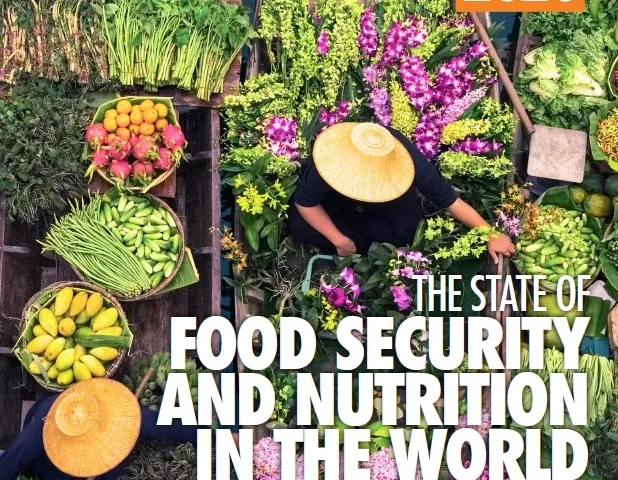
ROME – A comprehensive annual assessment by leading United Nations agencies has unveiled a stark deterioration in global food security, revealing a disturbing rise in the number of chronically undernourished individuals worldwide and casting significant doubt on the international community’s ability to achieve its ambitious "Zero Hunger" objective by 2030. The joint report, titled "The State of Food Security and Nutrition in the World," underscores a multifaceted crisis, where escalating hunger intertwines with persistent forms of malnutrition, exacerbated by the prohibitive cost of nutritious sustenance for billions.
The 2020 edition of this authoritative study, a collaborative effort by the Food and Agriculture Organization of the United Nations (FAO), the International Fund for Agricultural Development (IFAD), the UN Children’s Fund (UNICEF), the World Food Programme (WFP), and the World Health Organization (WHO), paints a grim picture. It estimates that approximately 690 million people experienced chronic undernourishment in 2019, marking an increase of 10 million from the preceding year and nearly 60 million over the past half-decade. This upward trajectory signals a concerning reversal of previous gains in the fight against food insecurity, with the absolute number of hungry individuals consistently climbing since 2014, even as the global prevalence rate has stabilized around 8.9 percent. This indicates that hunger is growing at roughly the same pace as the world’s population.
While recent updates to critical data, particularly from populous nations like China, Bangladesh, and Nigeria, have led to a downward recalibration of the total global hunger figures compared to earlier projections, the underlying trend remains unambiguously negative. The report’s historical analysis, tracing back to the year 2000, confirms that after decades of steady decline, the persistent challenge of chronic hunger has slowly but inexorably been on the rise for the past five years. This alarming trend suggests that systemic issues are driving the crisis, requiring urgent and fundamental shifts in approach.
Geographically, the burden of hunger is disproportionately distributed. Asia continues to host the largest absolute number of undernourished individuals, with an estimated 381 million people struggling with insufficient food intake. However, Africa is experiencing the most rapid escalation, registering 250 million chronically hungry people, making it the second-highest region globally. Latin America and the Caribbean account for 48 million. Critically, Africa also bears the highest prevalence rate of undernourishment, with 19.1 percent of its population affected – more than double the rates observed in Asia (8.3 percent) and Latin America and the Caribbean (7.4 percent). If current patterns persist, projections indicate that by 2030, Africa will be home to over half of the world’s chronically hungry population, highlighting the urgent need for targeted interventions and resilient food systems across the continent.
The ongoing COVID-19 pandemic has dramatically intensified existing vulnerabilities within global food systems, presenting an unprecedented challenge to food security. While the full ramifications of lockdowns, economic disruptions, and containment measures are still unfolding, the report forecasts a severe impact. It estimates that the global economic recession triggered by the pandemic could push an additional 83 million to 132 million people into chronic hunger by the close of 2020. This stark projection, reflecting potential drops in global GDP ranging from 4.9 to 10 percent, underscores how deeply intertwined public health crises, economic stability, and food security truly are. The pandemic’s ripple effects on supply chains, livelihoods, and purchasing power are threatening to erase years of painstaking progress, throwing the achievement of Sustainable Development Goal 2 into profound jeopardy.
Beyond mere caloric intake, the report meticulously details the complex landscape of malnutrition in all its forms, emphasizing that securing enough food is not synonymous with securing nutritious food. A crucial barrier to overcoming these challenges is the exorbitant cost of healthy diets, rendering them unattainable for a vast segment of the global population. The study reveals that even the most affordable healthy diet costs significantly more than the international poverty threshold of US$1.90 per day – in fact, it is estimated to be five times more expensive than a diet that merely provides sufficient calories through starches. Nutrient-dense foods such as dairy products, fresh fruits, vegetables, and protein-rich sources (both plant and animal-based) are identified as the most expensive food groups globally.
Consequently, an astonishing 3 billion individuals or more are unable to afford a healthy diet. This challenge is particularly acute in Sub-Saharan Africa and Southern Asia, where 57 percent of the population faces this affordability gap. However, the issue transcends regional boundaries, affecting populations in every part of the world, including North America and Europe. This widespread inability to access nutritious food has severe repercussions for health and development. In 2019, a significant proportion of children under five years old – between a quarter and a third, totaling 191 million – suffered from stunting (being too short for their age) or wasting (being too thin for their height). Compounding this, another 38 million children in the same age group were overweight, illustrating the complex dual burden of malnutrition. Among adults, the prevalence of obesity has also escalated to pandemic levels, further highlighting the systemic failures in promoting healthy eating patterns.
The report also sheds light on the substantial "hidden costs" embedded within current food systems and dietary patterns, which extend far beyond direct expenses. It calculates that the health-related costs associated with unhealthy diets could reach an alarming US$1.3 trillion annually by 2030. Simultaneously, the social cost linked to diet-related greenhouse gas emissions is estimated at US$1.7 trillion. The study presents a compelling argument that a global transition towards healthier, more sustainable dietary practices could yield enormous economic and environmental dividends. Such a shift, which includes modeling alternative diets like flexitarian, pescatarian, vegetarian, and vegan options, has the potential to almost entirely offset the health costs and reduce diet-related greenhouse gas emissions by up to three-quarters, while acknowledging that some poorer nations may initially see increased emissions as they strive to meet nutritional targets.
In light of these pressing findings, the United Nations agencies issue an urgent call for a profound transformation of food systems worldwide. The overarching goal is to reduce the cost of nutritious foods and enhance the affordability of healthy diets for everyone. While tailored solutions will be necessary for different countries and even within regions, the report outlines a comprehensive framework for action. Governments are urged to integrate nutrition considerations into their agricultural policies; implement strategies to minimize cost-escalating factors across the entire food supply chain, including production, storage, transport, distribution, and marketing, through efficiency improvements and reductions in food loss and waste. Furthermore, supporting local small-scale producers to cultivate and market more nutritious foods, alongside securing their access to markets, is deemed crucial. Prioritizing children’s nutrition as the most vulnerable category, fostering behavioral change through educational and communication initiatives, and embedding nutrition within national social protection programs and investment strategies are also essential components of this transformative agenda.
The heads of the five collaborating UN agencies, including Qu Dongyu (FAO), Gilbert F. Houngbo (IFAD), Henrietta H. Fore (UNICEF), David Beasley (WFP), and Tedros Adhanom Ghebreyesus (WHO), collectively affirm their steadfast commitment to facilitating this momentous paradigm shift. They pledge to ensure that these necessary changes unfold in a manner that is both sustainable and equitable, benefiting both humanity and the planet. The report serves as a critical wake-up call, emphasizing that without immediate and coordinated action, the vision of a world free from hunger and malnutrition will remain an elusive dream.
Related posts:

Related News