Global Partnership Mobilizes €10 Million to Fortify Lebanon’s Public Health Infrastructure Amidst Protracted Crisis
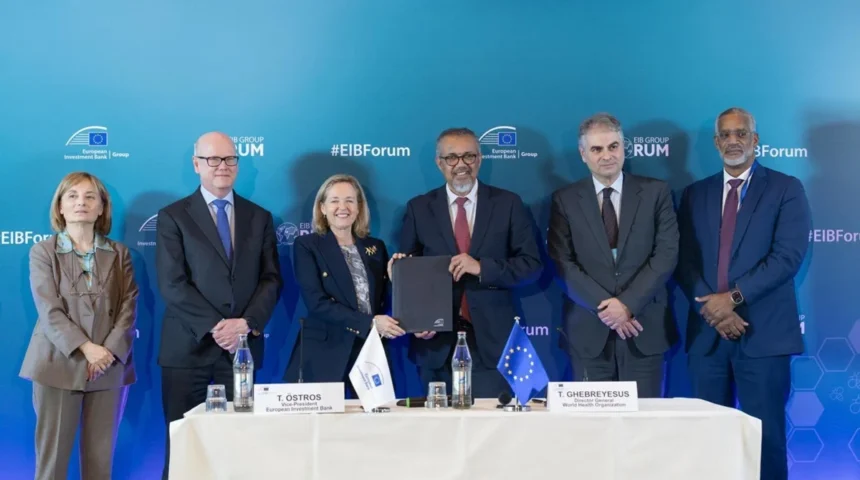
In a pivotal demonstration of international solidarity, the World Health Organization (WHO) and EIB Global, the arm of the European Investment Bank dedicated to operations outside the European Union, have formalized a €10 million grant designed to significantly reinforce Lebanon’s public health system. The agreement, inked on March 6, 2025, during the EIB Group Forum in Luxembourg by Dr. Tedros Adhanom Ghebreyesus, WHO Director-General, and Thomas Östros, Vice-President of the EIB, signals a concerted effort to address the profound challenges besieging the nation’s healthcare sector. This substantial financial commitment targets two critical areas: the complete re-establishment of Lebanon’s Central Public Health Laboratory (CPHL) and the urgent provision of essential medications and healthcare support for over 50,000 individuals living with chronic conditions such as diabetes, cardiovascular diseases, and various forms of cancer.
Lebanon’s healthcare landscape has been ravaged by a confluence of crises over recent years, transforming what was once a regional beacon of medical excellence into a system struggling to provide basic services. A devastating economic collapse, compounded by profound political instability, the catastrophic Beirut port explosion in 2020, and the enduring impacts of the COVID-19 pandemic, have collectively pushed the nation’s health infrastructure to the brink. The Lebanese pound’s dramatic devaluation has crippled the capacity to import vital medicines and medical supplies, while a severe brain drain has seen thousands of highly skilled doctors, nurses, and medical technicians leave the country in search of better opportunities, further depleting an already strained workforce. Public hospitals, long underfunded, now contend with critical shortages of equipment, staff, and consumables, while private institutions, once a robust alternative, have become increasingly inaccessible to a populace facing unprecedented poverty levels. Against this backdrop, the €10 million grant represents a crucial lifeline, aiming to inject much-needed resources and strategic support into a system teetering on the precipice.
The re-establishment of the Central Public Health Laboratory stands as a cornerstone of this ambitious initiative. A functional and robust CPHL is not merely an administrative convenience but the bedrock of national health security. Its capabilities extend far beyond routine testing, encompassing critical functions such as disease surveillance, outbreak detection and response, quality control for pharmaceutical products and foodstuffs, and the monitoring of environmental health hazards. For a country grappling with recurrent health crises and a vulnerable population, a revitalized CPHL will be instrumental in identifying emerging pathogens, tracking the spread of infectious diseases, and providing timely and accurate diagnostic services. This in turn empowers health authorities to implement targeted public health interventions, develop evidence-based policies, and build public trust through reliable data. The scope of "re-establishment" is expected to cover infrastructure refurbishment, procurement of modern analytical equipment, capacity building through specialized training for laboratory personnel, and the implementation of international best practices for quality assurance and biosafety. Such an investment not only addresses immediate diagnostic needs but also lays the groundwork for long-term epidemiological resilience and research capabilities within Lebanon.
Equally pressing is the initiative’s focus on supporting over 50,000 individuals suffering from chronic diseases. Conditions like diabetes, cardiovascular ailments, and cancer require continuous management, often involving a strict regimen of medication, regular medical consultations, and specialized care. In Lebanon’s current environment, many patients face an agonizing choice between affording food and purchasing life-sustaining drugs. The scarcity of certain medications, coupled with their exorbitant costs due to currency fluctuations and disrupted supply chains, has led to interrupted treatments, severe health deterioration, and tragically, preventable deaths. The grant’s commitment to "prioritize medication provision and healthcare support" will aim to mitigate these dire circumstances. This could involve direct procurement and distribution of essential medicines, subsidies to make treatments more affordable, strengthening primary healthcare centers to manage chronic conditions more effectively, and implementing patient support programs that ensure continuity of care. By targeting this vulnerable demographic, the initiative seeks to alleviate immense suffering, prevent the exacerbation of existing conditions, and improve the overall quality of life for tens of thousands of Lebanese citizens who have been disproportionately affected by the country’s crises.
EIB Global, as the financial architect of this grant, operates as a critical component of the European Union’s external action, deploying the EIB Group’s resources and expertise to support projects outside the EU. Its mandate is to foster sustainable development, promote economic resilience, and advance EU policy objectives globally. In recent years, EIB Global has intensified its focus on health sector investments, recognizing that robust health systems are fundamental to economic stability and human dignity. Their involvement in Lebanon underscores a broader commitment to supporting partner countries navigating complex humanitarian and development challenges. The EIB brings not only financial capital but also rigorous project appraisal, technical assistance, and a commitment to transparency and accountability, ensuring that funds are deployed effectively and sustainably. This partnership aligns with EIB Global’s strategy to strengthen social infrastructure and enhance access to essential services in regions facing significant socio-economic pressures.
The World Health Organization, as the leading global authority on health, brings unparalleled technical expertise, normative guidance, and extensive experience in health system strengthening, particularly in fragile and conflict-affected settings. WHO’s role in this partnership transcends mere endorsement; it will likely involve providing technical oversight for the CPHL re-establishment, assisting in the procurement and distribution of medications, developing clinical guidelines for chronic disease management, and implementing monitoring and evaluation frameworks to track the initiative’s impact. Dr. Tedros Adhanom Ghebreyesus’s personal involvement in signing the agreement underscores the WHO’s deep concern for Lebanon’s public health crisis and its unwavering commitment to supporting member states in achieving universal health coverage. The WHO’s presence ensures that interventions are evidence-based, aligned with global health standards, and tailored to the specific needs and context of the Lebanese population.
The collaborative signing at the EIB Group Forum, an annual high-level event bringing together policymakers, financiers, and civil society representatives, provided a significant platform to highlight the urgency of Lebanon’s health crisis and the power of multilateral partnerships. Such forums serve not only as venues for formal agreements but also as crucial opportunities to galvanize political will and mobilize further international support for pressing global challenges. The presence of both the WHO Director-General and the EIB Vice-President at this event amplified the message that sustained, coordinated action is indispensable for addressing complex humanitarian and development needs.
Looking ahead, the long-term implications of this €10 million grant extend beyond immediate relief. By rebuilding the Central Public Health Laboratory, Lebanon will regain a vital asset for disease prevention, detection, and response, fostering greater national autonomy in managing its public health destiny. The sustained provision of medication for chronic diseases will not only save lives and improve health outcomes but also alleviate the immense financial burden on families and reduce the strain on a fragile healthcare system. This initiative represents a critical step towards re-establishing confidence in public institutions and demonstrating that international cooperation can yield tangible, life-changing results even amidst profound adversity. It serves as a model for how global partners can strategically intervene to buttress national health systems, protect vulnerable populations, and contribute to the broader goals of recovery and resilience in countries facing protracted crises. The success of this collaboration will undoubtedly offer valuable lessons for future endeavors aimed at strengthening global health security and ensuring equitable access to healthcare for all.

Related News