Strengthening Knees and Enhancing Mobility: A Comprehensive Chair Squat Regimen for Individuals Over 60
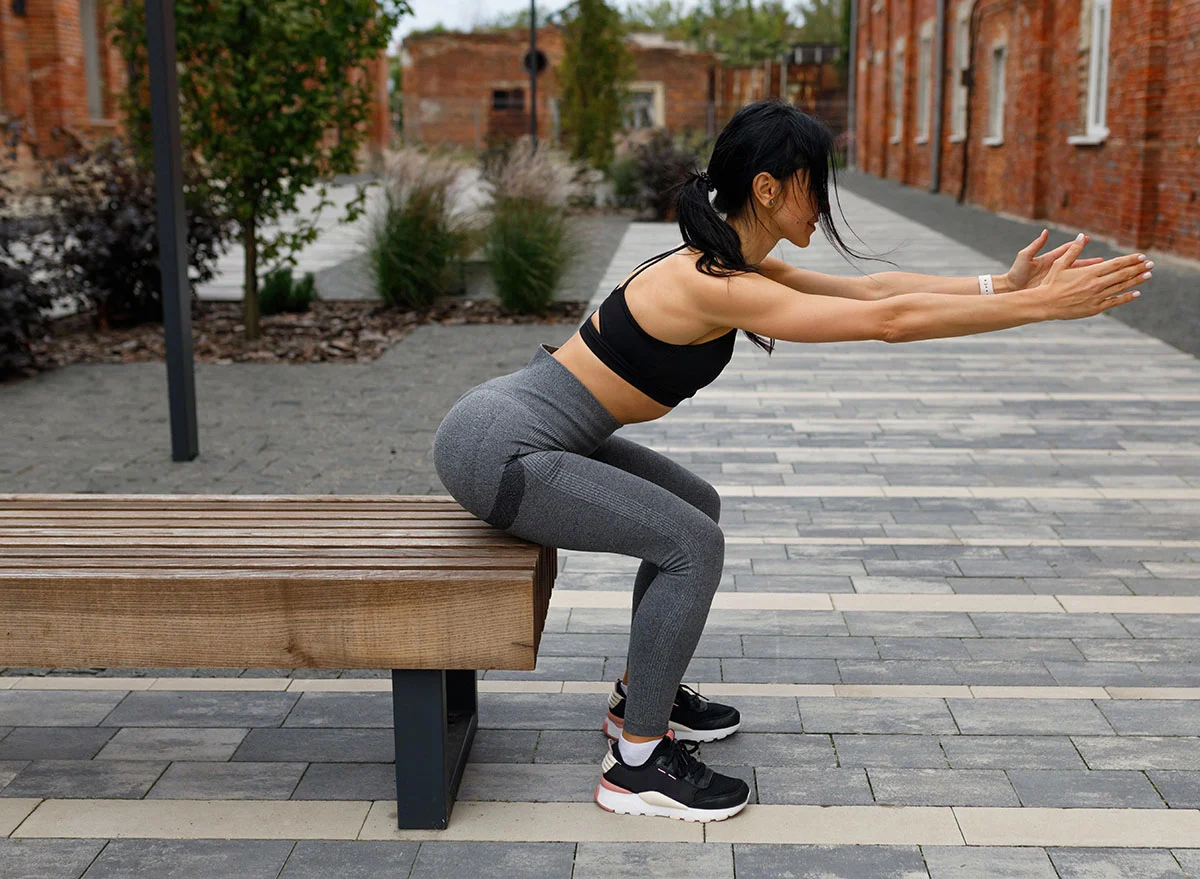
Maintaining robust lower body strength and flexibility becomes increasingly critical as individuals advance past their sixth decade of life. The knee joints, pivotal for movement, balance, and overall independence, often bear the brunt of age-related physiological changes. Neglecting these vital structures can significantly diminish one’s quality of life, leading to reduced mobility, an elevated risk of falls, and a general decline in physical autonomy. Fortunately, accessible and highly effective exercise strategies exist to counteract these natural processes, with the chair squat emerging as a foundational movement for enhancing knee health and functional strength in older adults.
The human body undergoes several transformations as it ages, which directly impact knee function. Sarcopenia, the gradual loss of muscle mass and strength, is a primary concern, particularly affecting the quadriceps and gluteal muscles essential for knee support. Concurrently, the protective cartilage within joints experiences natural wear and tear, and the production of lubricating synovial fluid can decrease, leading to stiffness and discomfort. An increase in body weight, often observed with aging, further exacerbates stress on the knee joints. Addressing these challenges through targeted exercise is not merely beneficial; it is indispensable for sustaining an active and independent lifestyle.
Among the myriad of exercises available, the chair squat stands out for its simplicity, safety, and profound functional relevance. This exercise directly mimics the everyday action of sitting down and standing up, a movement pattern fundamental to daily living. Its low-impact nature makes it suitable for individuals of varying fitness levels, while its adaptability allows for progressive challenges that continuously build strength and coordination. Josh York, Founder and CEO of GYMGUYZ, a nationwide network specializing in customized fitness programs, particularly for adults over 50, underscores the immense value of chair squats. He states that these movements are among the most effective foundational exercises for older adults because they simultaneously fortify the musculature supporting the knees and reinforce a crucial daily motor pattern. York emphasizes that while sitting and standing might appear trivial, proficiency in these actions serves as a key indicator of lower-body strength, mobility, and the capacity for independent living—areas where many seniors often encounter difficulties.
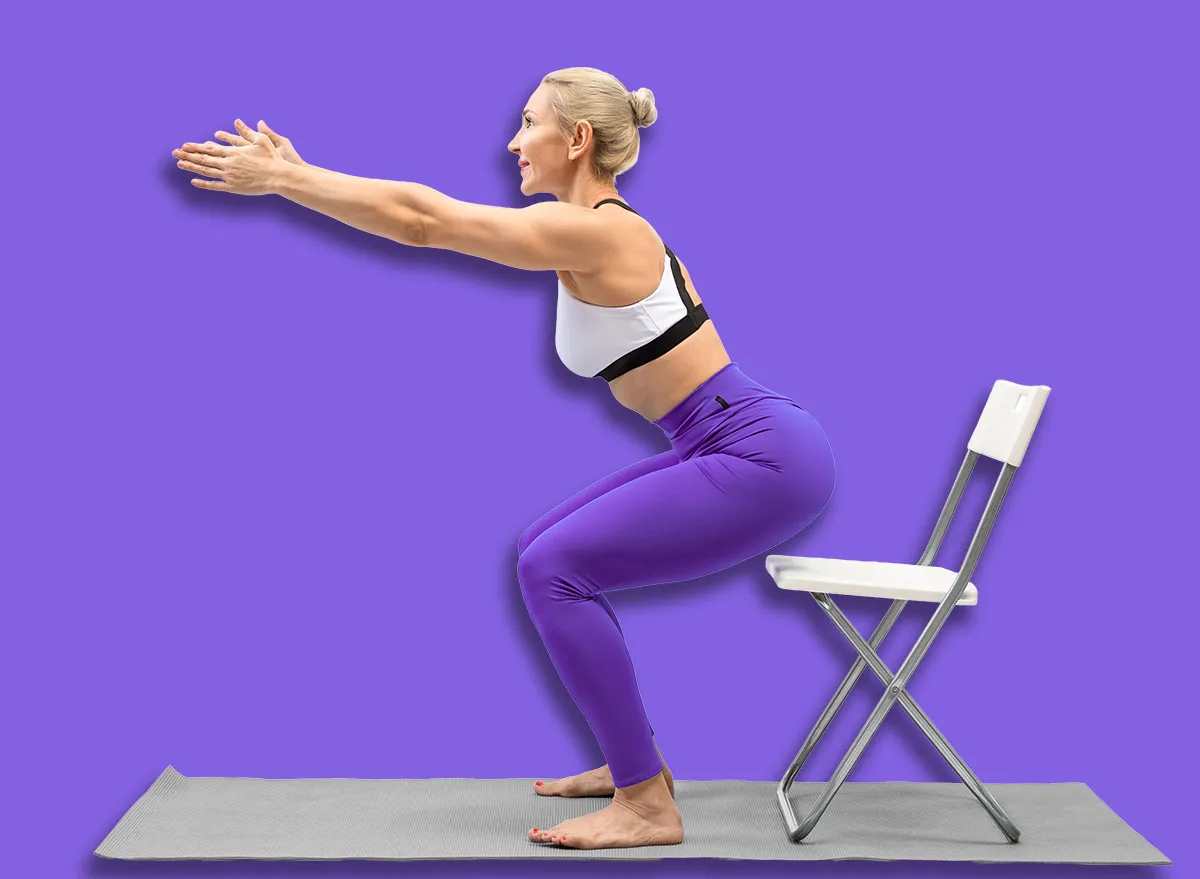
Inspired by this philosophy, a structured seven-day progressive chair squat program offers a pathway to enhance knee strength and overall lower-body function. This regimen is designed to incrementally introduce variations that challenge different aspects of strength, balance, and coordination, moving beyond the basic squat to foster comprehensive physical development.
Day 1: Foundational Chair Squats
The program commences with the fundamental chair squat, focusing on mastering the correct form and building initial strength.
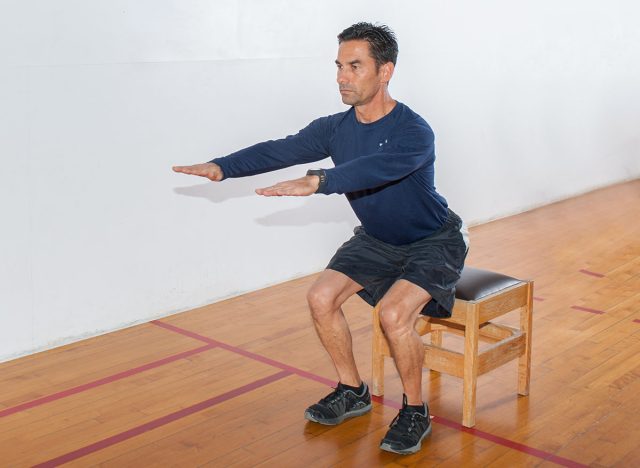
- Execution: Begin by positioning yourself directly in front of a sturdy chair, with your feet shoulder-width apart and toes pointing slightly outward. Initiate the movement by slowly bending your knees and hips, as if you are about to sit down, extending your arms forward for balance. Control the descent until your glutes lightly touch the chair, then, without fully resting, drive through your heels to return to a standing position, squeezing your glutes at the top.
- Benefits: This introductory exercise primarily targets the quadriceps, glutes, and hamstrings, establishing the core strength necessary for knee stability. It also refines proprioception, your body’s awareness of its position in space, which is vital for balance.
- Functional Relevance: Reinforces the basic mechanics of sitting and standing, critical for navigating daily tasks such as getting out of bed, rising from a sofa, or using the toilet, all while minimizing strain on the knee joints.
Day 2: Tempo Chair Squats
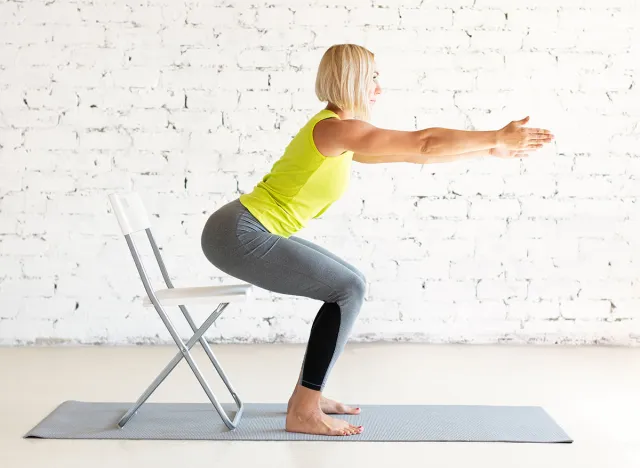
Introducing tempo to the chair squat significantly amplifies its effectiveness by increasing the "time under tension" for the muscles.
- Execution: Follow the same setup as Day 1. This time, focus on a controlled, slow descent (e.g., counting to three or four seconds) to touch the chair, pausing briefly at the bottom, and then a controlled, moderate ascent (e.g., counting to two seconds).
- Benefits: This variation builds muscular endurance and control throughout the entire range of motion. The extended eccentric (lowering) phase challenges muscle fibers more deeply, promoting greater strength gains and enhancing joint stability through improved muscle activation.
- Functional Relevance: The enhanced control developed here translates directly to smoother, more stable movements in daily life, reducing the jerky motions that can put undue stress on the knees. It improves the ability to control descents, such as walking down stairs or hills.
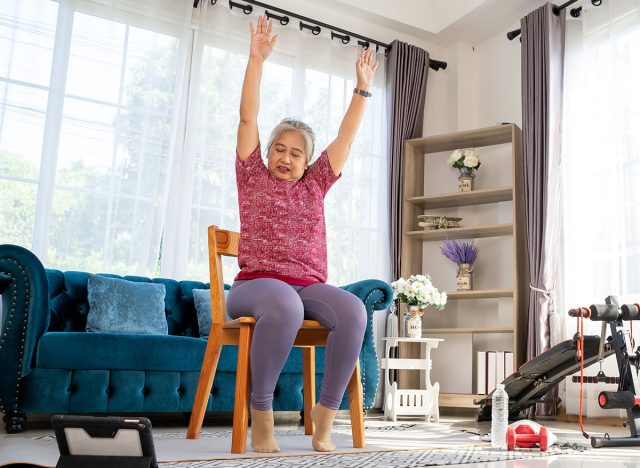
Day 3: Chair Squat With Overhead Reach
Integrating an upper body movement adds a new dimension, promoting full-body coordination and postural strength.
- Execution: As you stand up from the chair squat, simultaneously extend both arms directly overhead, reaching towards the ceiling. Ensure your core remains engaged and your shoulders stay relaxed, avoiding shrugging. Lower your arms as you descend back into the squat.
- Benefits: This exercise not only strengthens the lower body but also engages the core muscles and improves shoulder mobility. The overhead reach promotes better posture and spinal alignment, which can alleviate compensatory strain on the knees and hips. It enhances overall body coordination, an essential component of balance.
- Functional Relevance: This movement mimics actions like reaching for items on a high shelf or hanging laundry, integrating lower body power with upper body mobility and core stability, thereby improving the efficiency and safety of everyday tasks.
Day 4: Chair Squat With Lateral Step Reset
This variation introduces lateral movement, crucial for dynamic stability and preventing falls.
- Execution: Perform a standard chair squat. Upon standing, take a small step to the side with one foot, bringing the other foot to meet it. This constitutes one "reset." Then, perform another chair squat from this new position. Alternate the leading foot for the lateral step with each set.
- Benefits: This exercise strengthens the hip abductor muscles (outer thighs and glutes) which are vital for lateral stability and preventing the knees from collapsing inward. It also improves dynamic balance and agility, which are critical for navigating uneven terrain or quickly shifting weight.
- Functional Relevance: Enhances the ability to recover from a stumble, step around obstacles, or move efficiently in crowded spaces, directly contributing to fall prevention and maintaining active participation in social and recreational activities.
Day 5: Chair Squat With Stand-And-Balance
Focusing on single-leg stability and proprioception, this exercise elevates the challenge to balance.
- Execution: Complete a chair squat and stand up fully. Instead of immediately going into the next squat, lift one foot slightly off the ground, holding a balanced position for a few seconds (e.g., 3-5 seconds). Maintain a strong core and keep your gaze steady. Lower the foot and then proceed to the next squat, alternating the lifted leg each time.
- Benefits: This advanced variation significantly improves static and dynamic balance, strengthens the stabilizing muscles around the ankle and knee, and enhances proprioceptive awareness. The ability to balance on one leg is a strong indicator of overall lower-body stability.
- Functional Relevance: Directly correlates to activities requiring single-leg support, such as walking, climbing stairs, stepping over curbs, or getting dressed, thereby bolstering confidence and reducing the risk of falls during these common movements.
Day 6: Chair Squat to Calf Raise

This exercise targets the often-overlooked calf muscles, which play a significant role in gait and ankle stability.
- Execution: After standing up from a chair squat, immediately transition into a calf raise. Lift your heels off the ground, rising onto the balls of your feet, and hold briefly at the top before slowly lowering your heels. Then, descend back into the chair squat.
- Benefits: This combination strengthens the gastrocnemius and soleus muscles (calves) and improves ankle mobility and endurance. Strong calves are essential for pushing off the ground during walking and running, as well as for maintaining balance.
- Functional Relevance: Enhances the power and efficiency of walking, running, and climbing stairs, which are fundamental for maintaining an active lifestyle and navigating diverse environments with ease and confidence.
Day 7: Chair Squat With Rotation
The final day introduces rotational movement, fostering core strength and dynamic stability across multiple planes.
- Execution: As you stand up from the chair squat, rotate your torso to one side, reaching your opposite hand across your body as if reaching for something behind you. Keep your hips relatively stable, allowing the rotation to occur primarily in your upper back and core. Return to the center as you descend back into the squat, alternating the direction of rotation with each repetition.
- Benefits: This exercise strengthens the oblique muscles, improves spinal mobility, and enhances dynamic stability, which is the ability to maintain balance while moving. Rotational movements are integral to many daily activities and sports.
- Functional Relevance: Improves the ability to turn to look behind you, reach for objects at an angle, or perform tasks that involve twisting, such as getting in and out of a car or gardening, all while maintaining good form and protecting the spine and knees.
Beyond the Seven Days: Sustaining Long-Term Mobility
While this seven-day program provides an excellent foundation, consistent adherence to a well-rounded fitness routine is paramount for sustained knee health and overall well-being. Individuals are encouraged to continue incorporating these and other functional exercises into their weekly schedule, gradually increasing repetitions, sets, or the difficulty of variations as their strength improves.
Several critical considerations should guide older adults in their fitness journey. Prioritizing safety is paramount; always ensure a proper warm-up before exercising and a cool-down afterward. Hydration and proper nutrition also play supporting roles in muscle recovery and joint health. Listening to one’s body and recognizing the difference between muscle fatigue and joint pain is crucial. If any discomfort or pain arises, it is advisable to consult a healthcare professional or a certified fitness trainer to ensure exercises are performed safely and effectively. Modifications, such as using a higher chair or holding onto a stable support for balance, can be implemented to accommodate individual needs and progression levels.
Ultimately, investing in knee strength through accessible, functional exercises like the chair squat is a proactive step toward preserving independence, enhancing quality of life, and fostering a more vibrant and active experience in the later stages of life. The benefits extend far beyond physical capability, contributing significantly to mental well-being and the confidence to engage fully with the world.
Related posts:

Related News