Empowering Mobility: Essential Counter-Assisted Leg Strengthening for Individuals Over 60
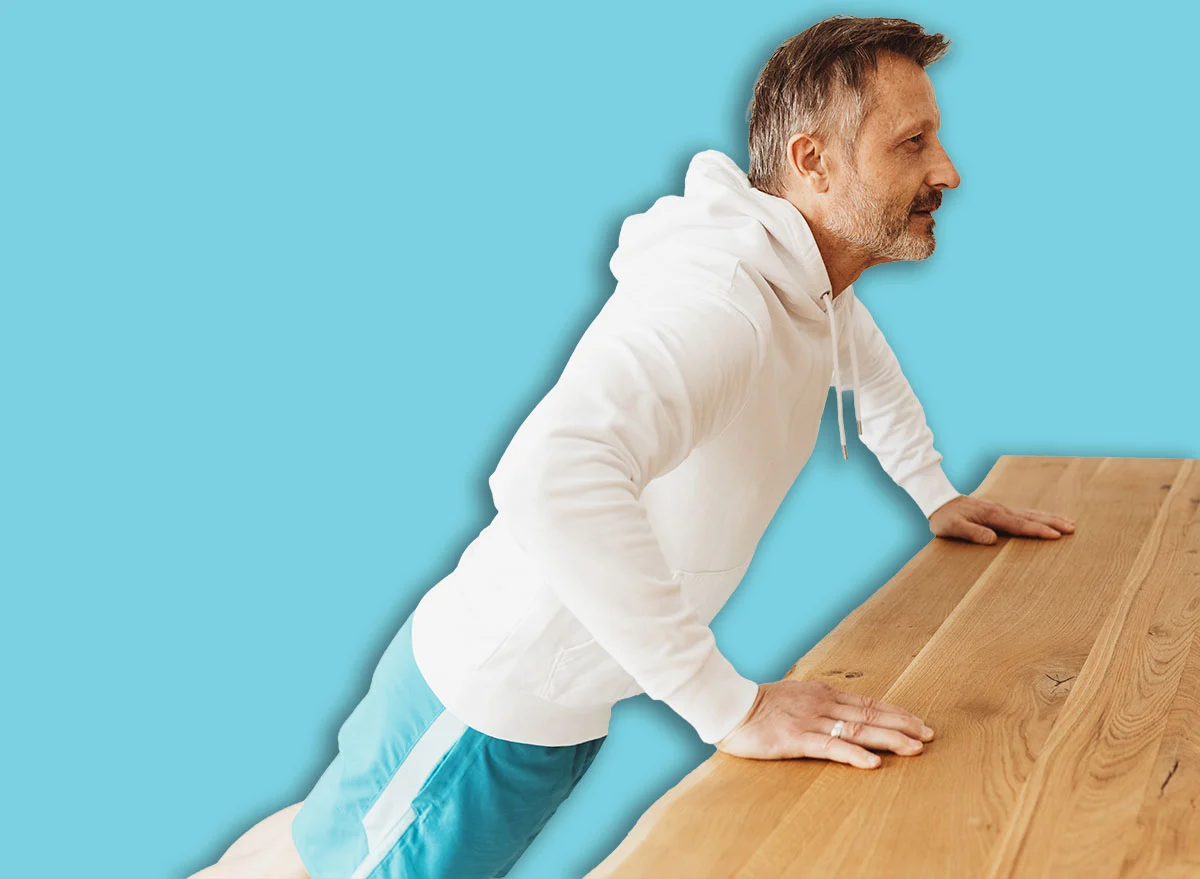
As individuals advance in age, maintaining robust physical independence often becomes a paramount concern. A natural physiological process known as sarcopenia, characterized by the progressive loss of muscle mass and strength, typically accelerates after the sixth decade of life. This decline can significantly impact daily activities, from the simple act of rising from a chair to navigating stairs or uneven terrain, thereby elevating the risk of falls and diminishing overall quality of life. While many associate strength training with specialized gym equipment, a surprisingly effective and highly accessible solution for rebuilding lower body vitality can be found within the familiar confines of one’s own home: the kitchen counter. This everyday fixture offers a stable, supportive anchor for a series of functional exercises designed to enhance leg strength, balance, and confidence in older adults, often proving more beneficial than traditional gym machines for specific needs.
For many older adults, the prospect of navigating a gym environment can be intimidating. Concerns about proper machine usage, potential injury, or simply the logistical challenges of travel and time can act as significant barriers to consistent physical activity. Furthermore, while gym machines can effectively isolate and load specific muscle groups, their fixed planes of motion sometimes limit the development of functional strength – the kind of strength directly transferable to real-world movements. This is where a sturdy kitchen counter provides a unique advantage. Its inherent stability and convenient height offer a secure point of contact, allowing exercisers to concentrate on engaging the correct muscles and perfecting movement patterns without the added anxiety of maintaining perfect balance independently. This guided support enables a deeper range of motion, improved alignment, and a more intentional focus on muscle activation, fostering confidence that is crucial for sustained adherence to an exercise regimen.
Expert fitness professionals frequently advocate for supported exercises in clients over the age of 60 precisely because they allow the primary muscle groups in the legs to perform their work effectively, while the hands remain lightly engaged for stability. This fundamental shift in approach can profoundly alter the perceived difficulty and effectiveness of a workout session. Individuals can push their physical boundaries safely, achieve better postural alignment, and build foundational strength, all without the overwhelming distraction of constantly fighting for equilibrium. This method directly addresses the dual challenge of strength degradation and balance concerns that commonly arise with aging.
Below are four foundational, counter-supported exercises that form a comprehensive routine for developing lower body resilience, each offering distinct functional benefits.
1. Counter-Supported Squat: Reclaiming Fundamental Movement
The squat is widely recognized as a cornerstone of functional fitness, directly mimicking the motion of sitting down and standing up – an action performed countless times throughout the day. For older adults, mastering the squat is vital for maintaining independence in tasks such as getting out of a chair, using the toilet, or entering and exiting a vehicle. The counter-supported squat trains the quadriceps (front of the thighs), glutes (buttocks), hamstrings (back of the thighs), and core musculature through this essential movement pattern. The counter acts as a reliable guide and support system, enabling the exerciser to focus on achieving an appropriate depth, controlling the descent and ascent, and maintaining even pressure through the feet. This initial exercise builds crucial confidence by reinforcing a natural, everyday motion.
- Muscles Engaged: Primarily targets the quadriceps, glutes, and hamstrings, with significant core involvement for spinal stability.
- Execution Guidance: Begin by standing a comfortable distance from your kitchen counter, placing your hands lightly on its surface for support. Initiate the movement by pushing your hips back as if sitting into an imaginary chair, simultaneously bending your knees. Maintain a long spine and keep your chest lifted. Lower yourself to a comfortable depth, ensuring your heels remain grounded. Use your leg muscles to push back up to the starting position, maintaining light counter contact for assistance. The emphasis should be on the legs driving the movement, not pulling yourself up with your arms.
- Progression and Volume: Aim for three sets of 10 to 12 repetitions. Allow for 45 to 60 seconds of rest between each set. To increase challenge over time, consider variations such as "pause squats" where you hold the lowest position for a few seconds, or "slow-tempo squats" where the descent and ascent are performed deliberately over several seconds, enhancing muscle time under tension.
2. Counter-Supported Reverse Lunge: Navigating Uneven Terrains
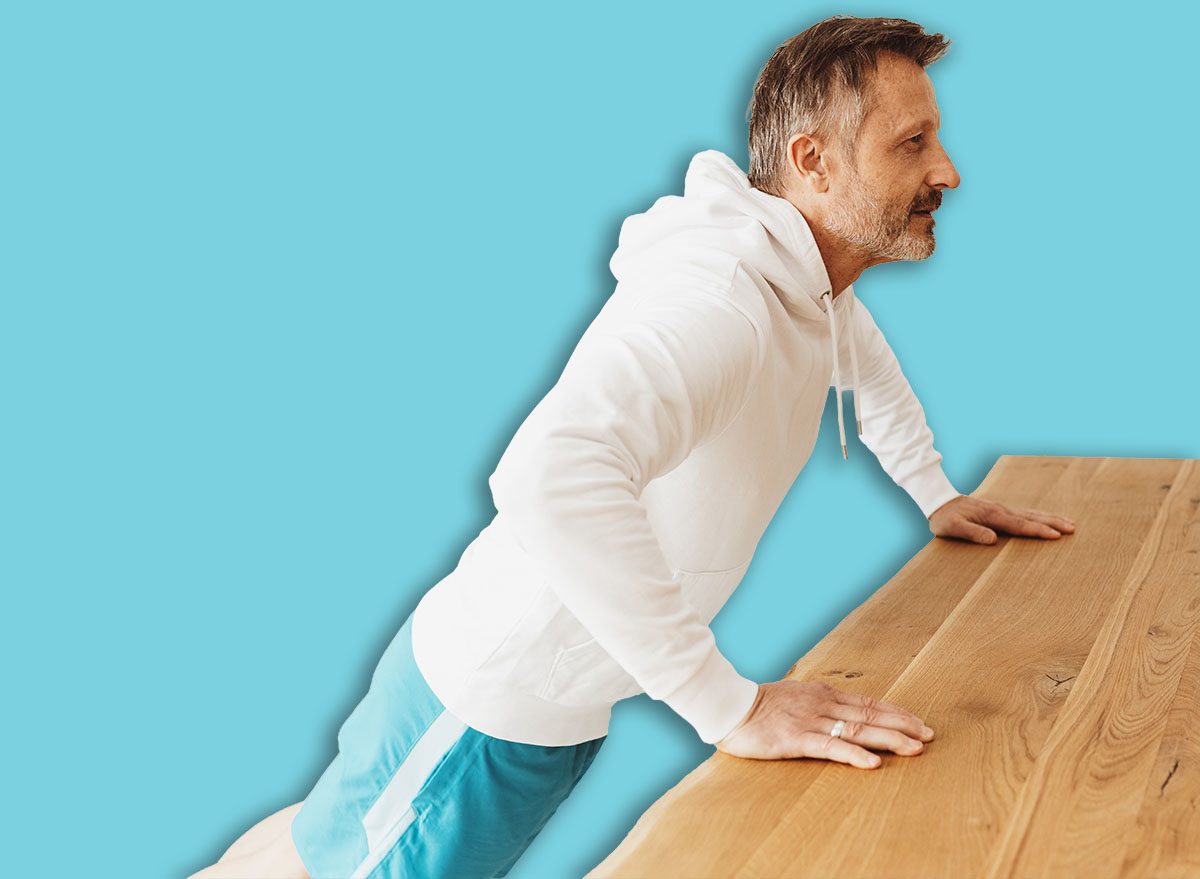
The reverse lunge is an exceptional exercise for developing single-leg strength and stability, skills critical for navigating challenges like climbing stairs, stepping over curbs, or walking on uneven ground. As we age, maintaining robust single-leg balance becomes increasingly important for fall prevention. With the counter providing steady assistance, this exercise allows individuals to safely isolate and strengthen one leg at a time. The front leg bears the majority of the workload during both the lowering and rising phases, while the counter prevents unwanted sway and instability, fostering a controlled and effective movement.
- Muscles Engaged: Primarily strengthens the quadriceps, glutes, and hamstrings of the front leg, with secondary engagement of the calves and core for stability.
- Execution Guidance: Stand facing the counter, hands lightly placed for support. Step one leg backward, allowing the knee of the trailing leg to descend towards the floor, forming roughly 90-degree angles at both knees. Keep your torso upright and avoid leaning excessively. The majority of your weight should remain on the heel and midfoot of your front leg. Drive through the front heel to push back to the starting position, maintaining balance with the counter’s help. Alternate legs or complete all repetitions on one side before switching.
- Progression and Volume: Perform three sets of 8 to 10 repetitions per leg. Rest for 45 to 60 seconds between sets. To modify, use a shorter range of motion for beginners. More advanced individuals can experiment with "split squats," where the feet remain stationary, or "slow-tempo reverse lunges" to maximize muscle engagement.
3. Counter-Supported Hip Hinge: Protecting the Spine and Strengthening the Posterior Chain
Often overlooked, the hip hinge is a fundamental movement pattern that strengthens the glutes and hamstrings, the powerful muscles comprising the posterior chain. This pattern is essential for safely bending over to pick up objects, maintaining good posture, and reducing strain on the lower back. Many people mistakenly bend from their lower back when reaching down, which can lead to injury. The counter-supported hip hinge provides a stable reference point, allowing exercisers to learn and practice pushing their hips backward with a neutral spine, rather than rounding their back. This ensures the powerful hip muscles are recruited correctly.
- Muscles Engaged: Primarily targets the glutes and hamstrings, with significant contribution from the lower back and core muscles for spinal stabilization.
- Execution Guidance: Stand a short distance from the counter with hands lightly on its surface. Maintain a slight bend in your knees throughout the movement. Initiate the hinge by pushing your hips directly backward, as if reaching for a wall behind you with your buttocks. Allow your torso to tilt forward, keeping your back straight and your core engaged. You should feel a stretch in your hamstrings. Lower to a comfortable depth where you can maintain a neutral spine. Reverse the movement by squeezing your glutes to bring your hips forward, returning to an upright standing position.
- Progression and Volume: Complete three sets of 10 to 12 repetitions. Rest for approximately 45 seconds between sets. For variation, try "staggered-stance hip hinges" where one foot is slightly behind the other, or "slow-tempo hip hinges" to enhance control and muscle awareness.
4. Counter-Supported Calf Raise: Propelling Movement and Preventing Falls
The calf raise specifically targets the muscles of the lower legs, which are critical for the "push-off" phase of walking, stair climbing, and maintaining ankle stability. Strong calves contribute significantly to a more powerful and efficient gait, and improved ankle support is a key factor in reducing the risk of stumbles and falls. The counter provides the necessary stability, allowing the individual to concentrate fully on the mechanics of the movement: a controlled rise onto the balls of the feet, a brief pause at the peak contraction, and a smooth, controlled descent.
- Muscles Engaged: Primarily targets the gastrocnemius and soleus muscles (calves), enhancing strength in the ankles and lower legs.
- Execution Guidance: Stand facing the counter with hands lightly resting on its surface for balance. Keeping your body upright, slowly rise onto the balls of your feet, lifting your heels as high as comfortably possible. Hold this peak contraction for a second, then slowly lower your heels back to the floor in a controlled manner. Ensure your ankles remain straight and avoid rolling them outward or inward during the movement.
- Progression and Volume: Aim for three sets of 12 to 15 repetitions. Allow for 30 to 45 seconds of rest between sets. Advanced variations include "pause calf raises" at the top of the movement, or "single-leg assisted calf raises" for an increased challenge, using the counter for minimal support.
Integrating the Routine into Your Lifestyle
To maximize the benefits of these counter-supported exercises, consistency is key. Incorporate this routine into your weekly schedule two to four times, allowing for a day of rest or active recovery between sessions. A practical approach is to perform one set of each exercise in sequence, then rest for 60 to 90 seconds before beginning the next round. Complete two to three full rounds of the circuit. Always prioritize proper form over the number of repetitions, and listen to your body, adjusting the range of motion and intensity as needed. Over time, as strength and confidence improve, you can gradually increase repetitions, sets, or introduce the suggested variations.
The kitchen counter, an unassuming fixture in every home, transforms into a powerful tool for promoting longevity and functional independence. By leveraging its inherent stability, older adults can effectively rebuild leg strength, improve balance, and cultivate a sense of physical empowerment. This simple, accessible, and highly effective home-based program offers a pathway to not just stronger legs, but a more confident, active, and independent life beyond 60.
Related posts:

Related News