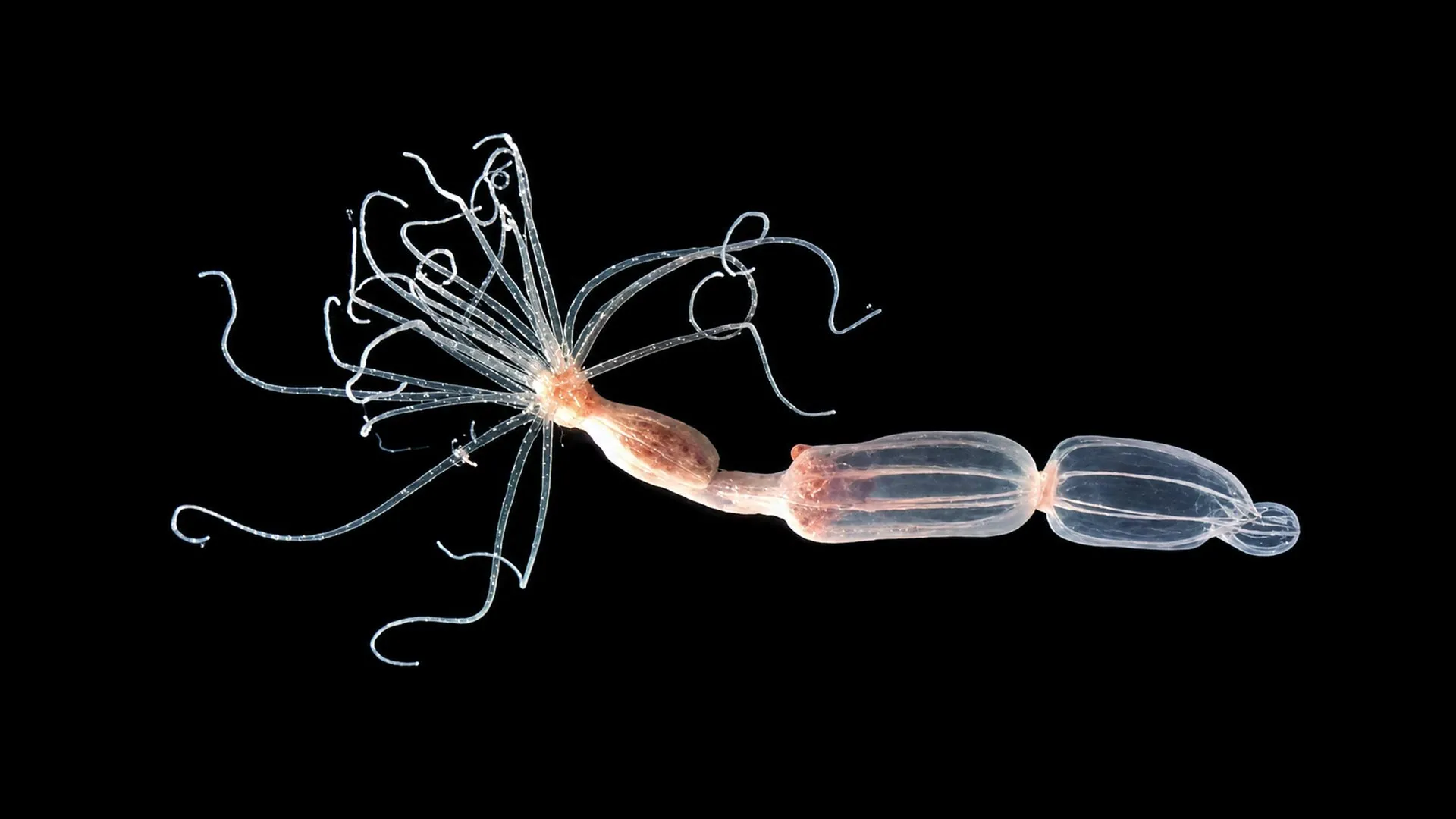
A groundbreaking discovery in the realm of immunology has revealed that sea anemones, ancient inhabitants of our oceans, employ a remarkably distinct strategy to fend off viral incursions, a finding that significantly broadens our comprehension of how animal immune systems have evolved. This newly identified defense mechanism hinges on a protein that bears a striking resemblance to a critical human antiviral agent, yet paradoxically, it operates by inhibiting rather than activating the immune response, a crucial function nonetheless for safeguarding the organism against viral proliferation. The implications of this research suggest that the evolutionary trajectory of antiviral defenses within the animal kingdom is far more varied and ingenious than previously theorized, with multiple successful strategies emerging independently across disparate lineages.
The pivotal research, spearheaded by PhD candidate Ton Sharoni and Professor Yehu Moran from the Hebrew University of Jerusalem, in close collaboration with a team of scientists from the University of North Carolina at Charlotte, has been published in the esteemed journal Nature Ecology & Evolution. This extensive investigation directly challenges a long-held scientific tenet: the notion that all animals inherited a singular, foundational antiviral system from a common evolutionary ancestor. Instead, the findings strongly advocate for a paradigm shift, pointing towards the independent development of multiple, sophisticated evolutionary solutions for combating viral infections across the vast tapestry of animal life.
An Ancient Organism Illuminates the Complexities of Immunity
Viruses have posed an existential threat to life forms throughout the entirety of evolutionary history, compelling organisms to develop robust defense mechanisms. In humans and other vertebrate species, a cornerstone of the body’s antiviral arsenal is a protein known as MAVS (Mitochondrial Antiviral Signaling protein). Upon the detection of a viral invasion, MAVS plays a critical role in initiating a cascade of immune responses, thereby mobilizing the body’s defenses to neutralize the threat.
With the objective of probing the antiquity of such defense systems, the research team turned their attention to sea anemones. These remarkably ancient marine invertebrates represent a crucial evolutionary branch that diverged from the lineage leading to humans over 600 million years ago. As close relatives of corals and jellyfish, sea anemones offer scientists an invaluable window into the formative stages of animal immunity, providing insights into mechanisms that may have been present in early metazoans.
During the course of their meticulous study, the researchers identified a hitherto unknown protein, which they christened CARDIB (CARD Inhibitor Binding protein). Initially, the molecular architecture of CARDIB presented a striking resemblance to MAVS, leading the scientific team to hypothesize that it might fulfill a comparable antiviral function to its human counterpart.
However, this initial assumption was rapidly and decisively disproven. Professor Yehu Moran, who also heads the Department of Ecology, Evolution and Behavior at the Hebrew University, elaborated on the unexpected findings. "Everything about CARDIB suggested it should function like MAVS," he stated, "Instead, we discovered that it does the exact opposite. Rather than activating antiviral defenses, CARDIB normally suppresses them." This counterintuitive revelation immediately sparked a profound question: why would an organism deliberately dampen its own immune response, a process seemingly at odds with survival?
A Paradoxical Protein: Protection Through Immune Restraint
To unravel the enigma of CARDIB’s suppressive function, the researchers employed advanced CRISPR gene-editing technology to precisely excise the CARDIB gene from sea anemone specimens. These genetically modified anemones, now devoid of CARDIB, were subsequently exposed to various viral challenges. The ensuing results proved to be astonishingly unexpected. Sea anemones lacking CARDIB exhibited a significantly heightened susceptibility to viral infection. The study observed a more rapid proliferation of viruses within these organisms, a marked failure to properly activate their innate antiviral defenses, and a dramatic reduction in their overall capacity to combat infection.
"The results were completely counterintuitive," admitted Ton Sharoni, a lead author on the study. "Although CARDIB acts as a brake on the immune system under normal conditions, that brake turns out to be essential for mounting an effective antiviral response." This implies that in the sea anemone, a controlled suppression of certain immune pathways under basal conditions is a prerequisite for a robust and appropriate activation of antiviral defenses when a threat is detected. Essentially, CARDIB acts as a regulatory mechanism, preventing overactive or inappropriate immune responses that could be detrimental, thereby ensuring that when a viral attack occurs, the system is primed for an effective countermeasure.
In essence, the extensive experimental work demonstrated that sea anemones utilize an antiviral pathway that is fundamentally distinct from the one employed by humans, even though both systems, remarkably, incorporate molecular components that share striking structural similarities. This convergent evolution of similar-looking proteins serving opposite functions highlights the plasticity and adaptability of biological systems in response to environmental pressures.
Natural Environment Validates Laboratory Findings
Beyond the controlled confines of laboratory aquaria, the research team sought to ascertain whether this newly identified immune pathway held significance in the natural environment, where sea anemones face a far more complex array of biological challenges. To address this crucial question, genetically modified sea anemones were transplanted from their laboratory habitats into outdoor marine mesocosms, environments designed to mimic natural estuarine conditions. These mesocosms were filled with natural estuarine water sourced from South Carolina, thereby exposing the experimental organisms to the rich and diverse microbial and viral communities typically encountered in their native habitat.
The impact of CARDIB deficiency became strikingly apparent within a matter of days. Sea anemones that lacked CARDIB and associated antiviral genes accumulated substantially higher viral loads compared to their unmodified counterparts. Furthermore, the researchers observed that a particular immune gene, which had appeared only moderately important in the controlled laboratory tests, exhibited a clearly amplified role and critical importance under the more dynamic and challenging conditions of the natural environment.
Professor Moran underscored the significance of these findings: "This demonstrated that the pathway we discovered is not simply a laboratory phenomenon. It plays a crucial role in helping these animals cope with the viral challenges they face in nature." This crucial validation solidifies the biological relevance of the CARDIB-mediated antiviral defense and its indispensable function in the wild.
A Plurality of Evolutionary Strategies for Viral Combat
The collective findings from this comprehensive study strongly suggest that evolution has not converged on a single, universally optimized antiviral strategy. Instead, it appears that different groups of animals may have independently developed and refined distinct molecular systems for the detection of viruses and the subsequent prevention of their replication and spread. This implies a remarkable degree of evolutionary innovation, with nature exploring diverse biochemical and cellular avenues to address the persistent threat of viral pathogens.
"Humans and sea anemones both need protection from viruses, but this work shows that evolution can organize those defenses in fundamentally different ways," Professor Moran emphasized, highlighting the profound implications for our understanding of biological diversity. This perspective moves away from a singular evolutionary narrative towards a more nuanced appreciation of parallel and convergent evolution in immune system development.
Moreover, the research critically underscores the indispensable value of looking beyond the conventional laboratory model organisms. Ancient and evolutionarily distinct organisms, such as sea anemones, often harbor unique evolutionary innovations that might remain concealed if scientific inquiry were confined solely to species like humans, mice, and other commonly studied animals. By exploring these less conventional biological systems, scientists can uncover a broader spectrum of adaptive solutions that evolution has devised.
As the scientific community continues its exploration of the extraordinary diversity of life on Earth, discoveries such as this are progressively revealing that evolution has repeatedly forged unexpected and elegant pathways to surmount some of biology’s most fundamental and persistent challenges, including the perpetual arms race against viral adversaries.
About the Author