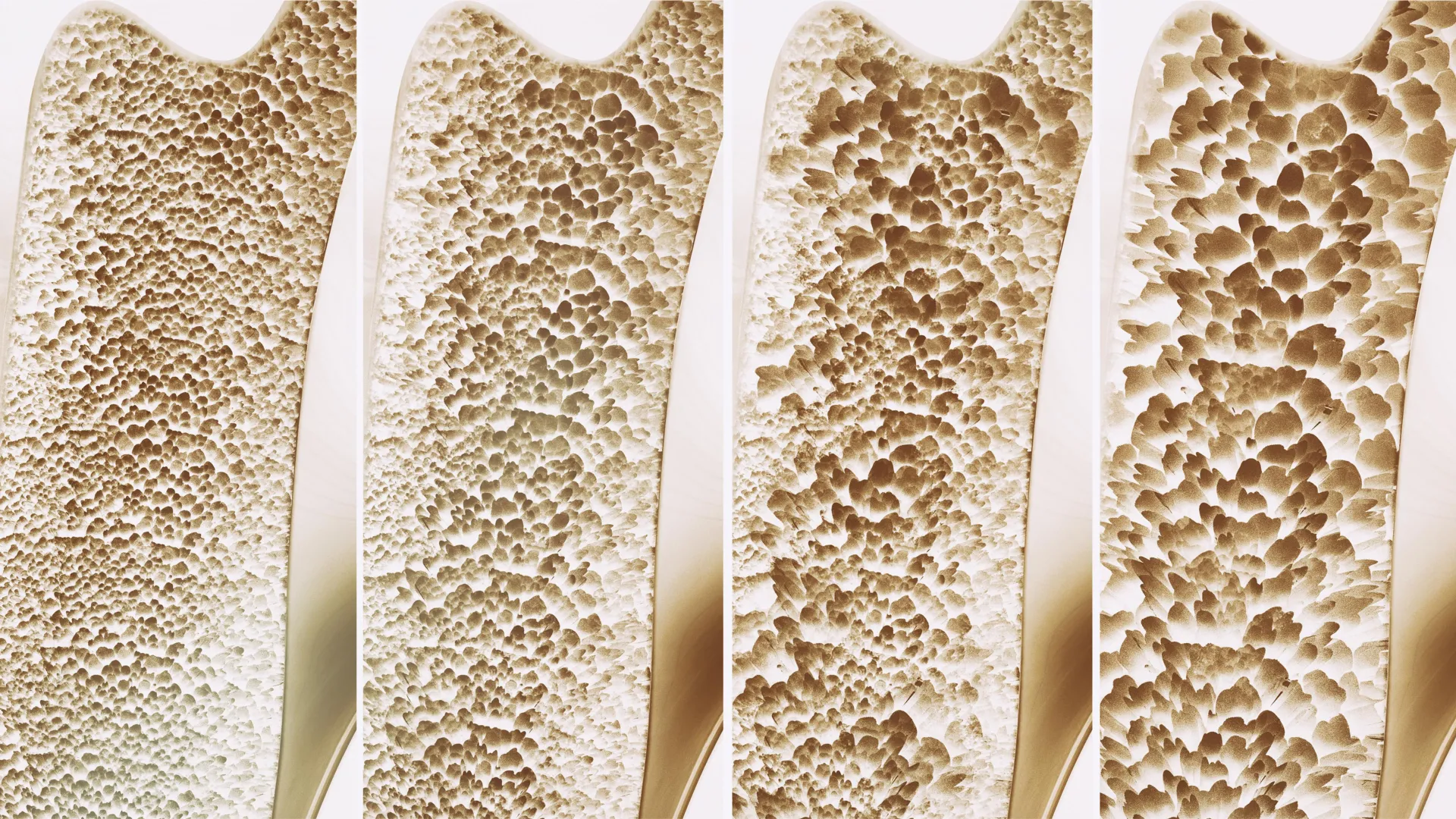
Osteoporosis, a pervasive skeletal disorder characterized by diminished bone density and compromised structural integrity, poses a significant global health challenge, leaving millions vulnerable to debilitating fractures. The persistent quest for therapeutic interventions that are not only efficacious but also sustainable for long-term patient use continues to drive scientific inquiry. In Germany alone, the burden of this condition affects approximately six million individuals, with women disproportionately represented. Existing treatment modalities, while offering some relief, frequently present limitations in their efficacy and can be associated with undesirable side effects, prompting researchers to diligently explore novel biological targets capable of fostering bone preservation or even encouraging its regeneration. A recent breakthrough from Leipzig University has illuminated a promising new avenue, identifying a previously underappreciated receptor, GPR133, as a critical player in maintaining skeletal robustness.
This newly identified target, GPR133, belongs to the intriguing class of adhesion G protein-coupled receptors (GPCRs), a family of transmembrane proteins embedded within cell membranes that act as crucial mediators of cellular communication. These receptors are instrumental in translating external stimuli into intracellular responses, thereby orchestrating a wide array of physiological processes. While the precise functions of this receptor family remain an active area of investigation, the latest research strongly implicates GPR133 in the intricate biological pathways governing bone formation and maintenance.
Evidence from the Leipzig University study underscores the pivotal role of GPR133 in bone health. Experiments conducted with laboratory mice revealed a stark consequence of impaired GPR133 function: young mice exhibiting genetic alterations affecting this receptor displayed premature bone density loss, mirroring the pathological hallmarks of human osteoporosis. Conversely, the administration of AP503, a compound recently identified through computational screening as a potent stimulator of GPR133, led to a significant augmentation of bone strength in both healthy control mice and those afflicted with an osteoporosis-like condition. Professor Ines Liebscher, the lead investigator from the Rudolf Schönheimer Institute of Biochemistry at the Faculty of Medicine, highlighted the transformative potential of these findings, stating that GPR133 emerges as a highly promising target for the development of next-generation osteoporosis therapies. The ability of AP503 to enhance bone integrity in both healthy and osteoporotic animal models provides a compelling rationale for its further investigation.
The mechanism by which GPR133 exerts its bone-building influence is multifaceted, involving intricate interactions within the bone microenvironment. Within bone tissue, GPR133 is activated by physical forces and the cellular crosstalk occurring between adjacent bone cells. Upon activation, this receptor initiates a cascade of intracellular signaling events that critically modulate the delicate equilibrium between bone-forming cells and bone-resorbing cells. Osteoblasts, the specialized cells responsible for synthesizing new bone matrix, and osteoclasts, which are involved in the physiological breakdown and remodeling of existing bone, must function in a tightly regulated balance to ensure skeletal health.
The activation of GPR133 appears to favor an environment conducive to bone anabolism by promoting osteoblast activity while simultaneously suppressing the resorptive function of osteoclasts. This coordinated action effectively shifts the cellular balance towards the net accumulation of bone tissue, resulting in bones that are both denser and more resilient. The compound AP503, by effectively mimicking the natural activation process of GPR133, holds the potential to bolster bone strength or even facilitate the repair of bone that has already suffered degradation. A particularly compelling application lies in addressing osteoporosis associated with menopause, a phase characterized by declining estrogen levels, which can precipitate accelerated bone loss in women.
Beyond its direct impact on skeletal integrity, the implications of GPR133 activation may extend to other vital physiological systems. Intriguingly, prior research conducted by the same Leipzig University team had already established that AP503 administration also confers strength to skeletal muscle. This dual action, strengthening both bone and muscle, was highlighted by Dr. Juliane Lehmann, the study’s lead author and a researcher at the Rudolf Schönheimer Institute of Biochemistry. She emphasized the considerable therapeutic promise of GPR133, particularly in the context of an aging global population, where age-related decline in both bone and muscle mass is a common concern.
A therapeutic strategy capable of simultaneously enhancing bone and muscle strength could offer profound benefits for older adults, who frequently experience concurrent deterioration in these tissues. The maintenance of robust musculature is intrinsically linked to improved mobility, balance, and overall functional independence, while stronger bones significantly reduce the susceptibility to fractures and their associated morbidity.
The Leipzig University research team is actively pursuing a comprehensive research agenda to further elucidate the intricate workings of GPR133. Current efforts are focused on a deeper understanding of the receptor’s complete functional repertoire and exploring its potential involvement in the pathogenesis of other diseases. Furthermore, ongoing investigations aim to unravel the receptor’s broader physiological roles throughout the entire organism.
Leipzig University has cultivated a rich legacy of research into adhesion G protein-coupled receptors, dedicating significant resources and scientific expertise to this field for over a decade. This commitment is exemplified by the establishment of the Collaborative Research Center 1423, an interdisciplinary initiative focused on understanding the structural dynamics underlying GPCR activation and signaling. The program delves into the complex conformational changes these receptors undergo, their subsequent activation mechanisms, and the intricate pathways through which they transmit signals within cells. This sustained focus has positioned Leipzig University as a globally recognized leader in the scientific exploration of GPCRs.
About the Author