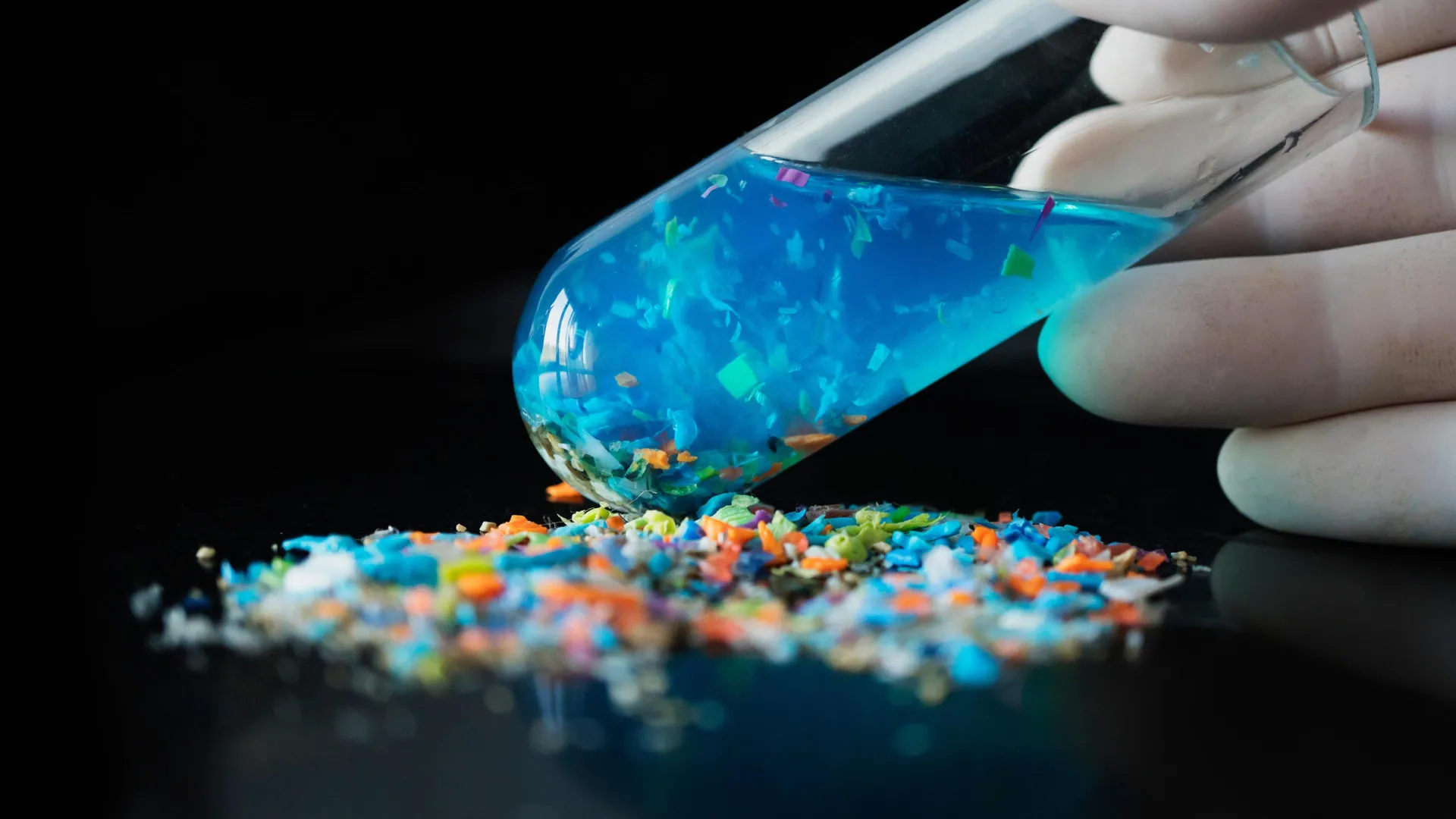
The pervasive spread of minuscule plastic particles, encompassing both microplastics and their even smaller counterparts, nanoplastics, represents one of the most pressing environmental challenges of the modern era. These fragments, often imperceptible to the naked eye, have infiltrated virtually every corner of our planet, from the deepest abyssal trenches of the oceans to fertile agricultural soils, and alarmingly, within the tissues and systems of a vast array of wildlife and even the human body itself. Despite their undeniable ubiquity and the growing concern over their potential ramifications, the precise biological processes that unfold once these synthetic materials gain entry into living organisms have remained largely enigmatic. A recent scientific advancement, detailed in a new study, introduces a sophisticated fluorescence-based methodology poised to revolutionize this field by enabling researchers to observe microplastics dynamically as they navigate biological systems, undergo chemical alterations, and ultimately break down.
The sheer scale of global plastic production underscores the urgency of this research. Annual output now exceeds an astounding 460 million tons, a figure that continues its upward trajectory. Concomitantly, millions of tons of these microscopic plastic particles are shed into the environment each year, entering complex ecological webs and eventually, biological entities. Scientific investigations have confirmed their presence in diverse species, including marine animals, avian populations, and critically, within human biological samples, ranging from circulating blood and liver tissue to even delicate brain matter. Preliminary laboratory studies, while not conclusive on human health, have suggested potential links between exposure to these particles and various adverse biological responses, such as inflammatory reactions, cellular damage to organs, and disruptions to developmental processes. Nevertheless, a significant void persists in our collective understanding regarding the specific behaviors and transformations of these particles once they are internalized by living systems.
Traditional scientific methodologies have provided only fragmented insights into this complex issue. As Wenhong Fan, a corresponding author on the study, articulated, "Most current methods give us only a snapshot in time. We can measure how many particles are present in a tissue, but we cannot directly observe how they travel, accumulate, transform, or break down inside living organisms." This limitation has severely hampered efforts to move beyond mere detection towards a comprehensive mechanistic understanding. Existing analytical techniques, such as infrared spectroscopy and mass spectrometry, while powerful for identifying the chemical composition of plastics, typically necessitate the destruction of the biological tissue samples to perform the analysis. This inherent destructiveness precludes any longitudinal observation, effectively preventing scientists from tracking the dynamic journey of microplastics within a living host over an extended period.
The potential of fluorescence imaging as a non-destructive, real-time tracking solution has long been recognized, yet its application in microplastic research has been plagued by several technical hurdles. Conventional methods often rely on coating plastic particles with external fluorescent dyes. These dyes, however, are prone to a range of issues within complex biological environments. Problems include signal fading over time, leakage of the dye from the particle into surrounding tissues, and a reduction in brightness—a phenomenon known as quenching—due to interactions with biological molecules or changes in the local chemical environment. Such limitations have rendered accurate, long-term monitoring of microplastics challenging, if not impossible, using previously available fluorescent labeling strategies.
Addressing these critical shortcomings, the research team has innovated a novel approach they term a "fluorescent monomer controlled synthesis strategy." This technique represents a fundamental paradigm shift in how plastics are rendered traceable. Instead of superficially applying a fluorescent coating, the light-emitting components are meticulously integrated directly into the plastic’s fundamental molecular architecture during its synthesis. This means the plastic itself is inherently fluorescent, rather than merely being adorned with a dye. A key aspect of this design is the utilization of aggregation-induced emission (AIE) materials. Unlike traditional fluorophores that often dim or quench when highly concentrated or aggregated, AIE materials exhibit the inverse phenomenon: they glow more intensely when clustered together. This characteristic is particularly advantageous in biological settings, where particles might accumulate or where the surrounding environment could otherwise diminish a standard fluorescent signal. The AIE property ensures a remarkably stable and bright signal, significantly mitigating the issues of fading or reduced luminescence that have hindered prior fluorescence-based tracking efforts.
The versatility of this new technique extends beyond just enhanced signal stability. Researchers gain unprecedented control over several key characteristics of the engineered fluorescent plastic particles. They can precisely fine-tune the particle’s brightness, the specific color of the emitted light, and even its size and shape. This level of customization is invaluable for experimental design, allowing scientists to create particles that closely mimic the diverse range of microplastics found in natural environments. Perhaps one of the most profound capabilities unlocked by this method is the ability to track the entire life cycle of microplastics within an organism. Because the fluorescent material is uniformly distributed throughout the entirety of each particle, not only the intact plastic fragments remain visible, but also the smaller, often more biologically reactive, fragments generated as the plastic degrades within the body. This continuous visibility, from initial ingestion and subsequent internal transport to chemical transformation and ultimate breakdown into minute components, marks a monumental leap forward in the study of microplastic fate.
While still undergoing experimental validation, this innovative strategy is firmly rooted in well-established principles derived from polymer chemistry and biocompatible fluorescence imaging. This strong foundational basis instills confidence in its future applicability and robustness. The researchers anticipate that this approach will quickly become an indispensable tool for meticulously investigating the intricate interactions between microplastics and various biological entities, including individual cells, complex tissues, and integrated organ systems. By providing a dynamic, real-time view, this method will allow scientists to move beyond mere correlations and delve into the causative mechanisms of microplastic toxicity.
As Professor Fan underscored, "Clarifying the transport and transformation processes of microplastics inside organisms is essential for assessing their true ecological and health risks. Dynamic tracking will help us move beyond simple exposure measurements toward a deeper understanding of toxicity mechanisms." This dynamic understanding is critical. For instance, knowing where microplastics accumulate, how long they reside in specific tissues, and what byproducts they generate during degradation can directly inform our understanding of inflammation pathways, potential endocrine disruption, or even genotoxicity. It could illuminate whether certain organs are more vulnerable to accumulation or damage, or if specific types of plastics pose greater risks due to their degradation profiles.
The implications for public health and environmental policy are substantial. As global anxieties surrounding the pervasive nature of plastic pollution continue to escalate, the development of sophisticated tools capable of illuminating the precise behavior of microplastics within living systems becomes paramount. Such advancements are poised to play a pivotal role in refining existing risk assessments, moving them from generalized estimations to evidence-based conclusions. Furthermore, the granular insights garnered from this real-time tracking capability will be instrumental in guiding the formulation of more effective and targeted environmental regulations, protective public health strategies, and innovative solutions for plastic waste management. This research not only offers a beacon of hope for unraveling one of environmental science’s most complex puzzles but also provides a powerful instrument for shaping a healthier future for both human populations and the planet’s delicate ecosystems.
About the Author