Hidden Toxins in Hair Extensions: New Scientific Review Unmasks Public Health Risks in a Growing Market.
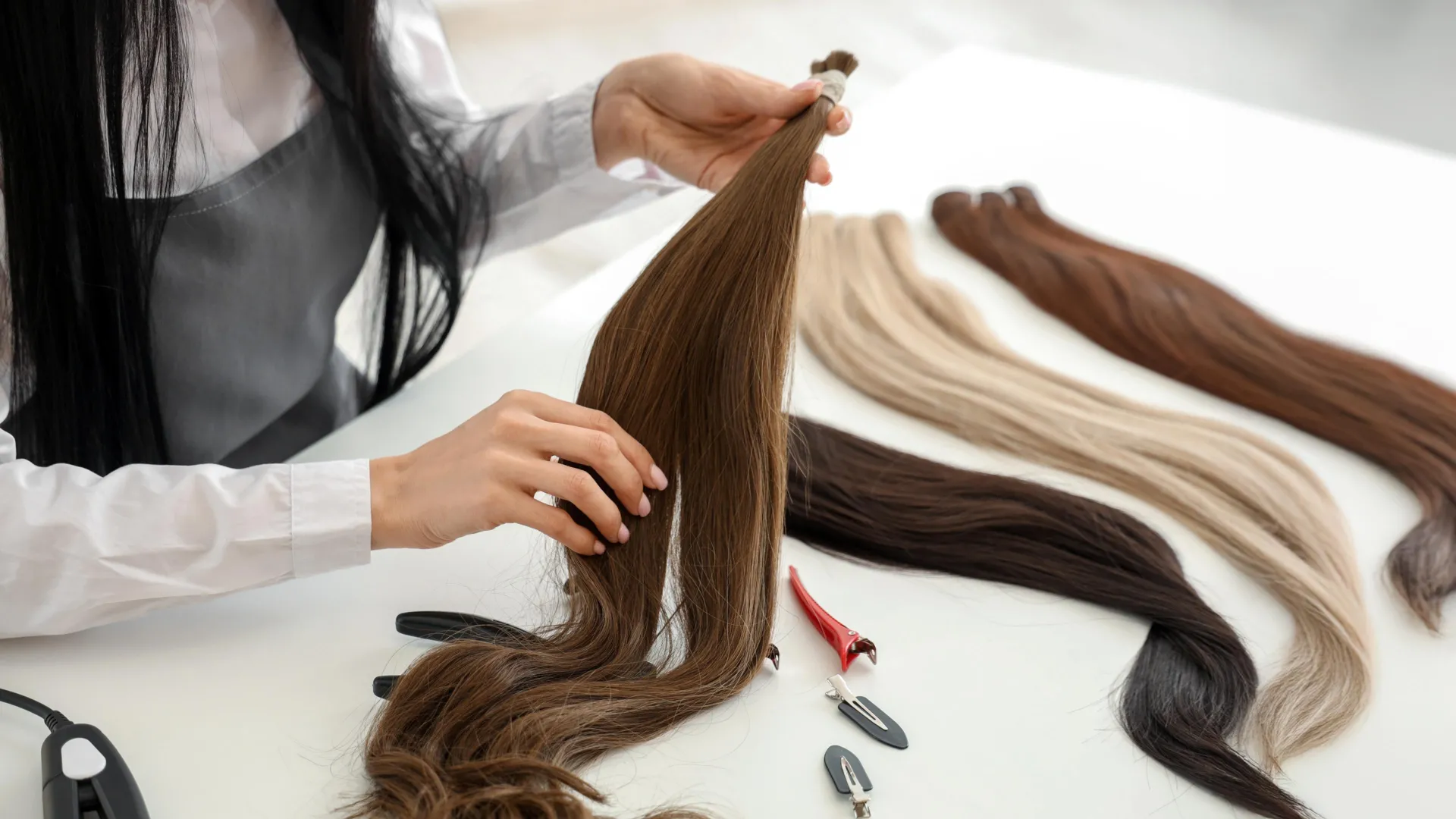
A groundbreaking scientific inquiry spearheaded by the Silent Spring Institute has brought to light a pervasive presence of potentially hazardous chemical compounds within a diverse array of commercially available hair extensions, encompassing those crafted from authentic human hair. This extensive investigation represents the most comprehensive analysis to date of the chemical composition of these widely utilized, yet largely unregulated, cosmetic accessories. The conclusions drawn from this research provide compelling new evidence suggesting that hair extensions may pose considerable health challenges, a concern particularly salient for Black women, who constitute the predominant demographic utilizing these products at significantly higher rates.
The findings, published recently in the esteemed American Chemical Society journal Environment & Health, emerge amidst escalating apprehensions regarding the long-term health ramifications associated with consistent use of hair extensions. Statistical data underscores the disproportionate engagement with these products: over 70 percent of Black women report having worn hair extensions at least once within the past year, starkly contrasting with fewer than 10 percent of women from other racial and ethnic backgrounds. For many, extensions serve as a vital medium for cultural expression, a cornerstone of personal aesthetic, and a practical styling solution, making the implications of these findings particularly impactful for this community.
Dr. Elissia Franklin, a distinguished research scientist at the Silent Spring Institute and the lead author of the study, articulated the impetus behind this extensive endeavor. "While previous investigations have identified certain chemicals of concern in hair extensions, a significant void persisted in our understanding of their overall chemical blueprint. Our objective was to construct a more complete panorama of the scope of this issue," Dr. Franklin explained. She further emphasized the historical context of neglect: "This industry has historically demonstrated a lack of attention to the health considerations of Black women, who should not be compelled to choose between their cultural identity, personal convenience, and their well-being."
Hair extensions are fabricated from a variety of materials, broadly categorized into synthetic fibers—primarily composed of plastic polymers—and bio-based alternatives, which can include human hair, banana fibers, or silk. During the manufacturing process, these constituent fibers frequently undergo chemical treatments designed to impart specific functional properties, such as flame resistance, water repellency, or antimicrobial characteristics. Despite the incorporation of these chemical agents, a troubling lack of transparency pervades the industry. Manufacturers seldom provide comprehensive disclosure of the specific chemicals employed to achieve these attributes, leaving consumers largely uninformed about potential health hazards stemming from prolonged exposure.
The proximity of these fibers to the scalp and neck means that wearers experience extensive dermal contact, presenting a direct pathway for chemical absorption. Furthermore, the application of heat during styling routines—a common practice for maintaining and customizing extensions—can facilitate the volatilization of these chemicals, releasing them into the surrounding air where they can be inhaled by the user. These dual exposure routes amplify the potential for adverse health outcomes, necessitating a deeper understanding of the substances present in these products.
To systematically unravel the chemical composition of these consumer goods, Dr. Franklin and her research team undertook a rigorous investigation. They procured 43 distinct brands of popular hair extension products from a range of online retailers and local beauty supply establishments, ensuring a representative sample of the market. The acquired products were then systematically categorized based on their primary fiber type: synthetic (dominated by plastic polymers) or bio-based (encompassing human, banana, or silk components). Meticulous documentation was also made of the various claims advertised on the product packaging. Among the synthetic samples, a notable 19 products explicitly claimed to be flame retardant, three were marketed as water resistant, nine advertised heat resistance, and three promoted "green" credentials through statements like "no PVC" or "non-toxic."
The analytical phase of the study employed a sophisticated methodology known as non-targeted analysis. This approach, significantly more expansive than conventional targeted screening, enabled the researchers to cast a wide net, searching for an extensive spectrum of chemicals, including substances not typically sought in standard consumer product evaluations. Utilizing advanced instrumentation, specifically two-dimensional gas chromatography coupled with high-resolution mass spectrometry, the team successfully detected over 900 distinct chemical signatures. These signatures represented a mix of both previously recognized and entirely novel compounds. Subsequently, state-of-the-art machine-learning algorithms were deployed to compare these intricate chemical signatures against an exhaustive chemical database, ultimately facilitating the precise identification of 169 specific chemical compounds spanning nine major structural classifications.
The comprehensive testing yielded profoundly concerning results, revealing the presence of numerous substances scientifically linked to severe health detriments. These included compounds associated with carcinogenic effects, disruption of the endocrine system, developmental harm, and adverse impacts on the immune system. Among the specific classes of chemicals identified were various flame retardants, phthalates, pesticides, styrene, tetrachloroethane, and organotins. Each of these categories carries a well-documented profile of toxicity, raising significant red flags for consumer safety.
A particularly surprising discovery for the research team was the widespread presence of organotins. As Dr. Franklin noted, "We were especially surprised to find organotins." These compounds are frequently employed as heat stabilizers in the production of polyvinyl chloride (PVC) plastics and have been implicated in causing skin irritation—a symptom commonly reported by individuals who wear hair extensions. Beyond dermal reactions, organotins are also known to be endocrine disruptors and have been associated with increased cancer risk, adding another layer of concern to the study’s findings. The detection of these substances highlights the complex chemical landscape of these products and the potential for a cascade of health issues.
The global market for hair extensions is experiencing exponential growth, with projections indicating it will exceed an astonishing $14 billion by the year 2028. The United States currently stands as the leading importer within this massive industry. Given the immense scale of this market and the alarming array of hazardous chemicals identified in the study, Dr. Franklin unequivocally asserts the urgent necessity for enhanced regulatory oversight. "These findings unequivocally demonstrate that stronger oversight is imperatively required to safeguard consumers and to compel manufacturing companies to invest in the development and production of safer product alternatives," she declared.
The relevance of many of the detected substances to established regulatory frameworks further underscores the urgency of this issue. A significant number of the identified chemicals are listed under California’s Proposition 65, a law requiring businesses to provide warnings about significant exposures to chemicals that cause cancer, birth defects, or other reproductive harm. This suggests that hair extensions, like other consumer products, may warrant clearer health warnings and more rigorous regulatory scrutiny to inform and protect the public.
Momentum for policy reform is steadily gaining traction across various governmental levels. In New York, state legislators have introduced proposed legislation that would mandate manufacturers of synthetic braids and hair extensions to fully disclose all ingredients used in their products. Concurrently, in New Jersey, a bill is actively progressing through the legislative process, aiming to prohibit the inclusion of certain harmful chemicals in synthetic hair products. On a national scale, the "Safer Beauty Bill Package," which was introduced in Congress last year, contains critical provisions designed to empower the Food and Drug Administration (FDA) with the authority to regulate the safety of synthetic braids and hair extensions, thereby addressing the current regulatory vacuum at a federal level.
This critical research project received essential financial backing from a Beauty Justice Grant provided by the Environmental Defense Fund, alongside generous charitable contributions directed to the Silent Spring Institute, specifically supporting the Institute’s Safer Chemicals Program. This collaborative funding model highlights the growing recognition of the intersection between environmental health, consumer product safety, and social equity, particularly within communities disproportionately affected by chemical exposures. The study serves as a potent call to action for industry, regulators, and consumers alike to prioritize health and transparency in the rapidly expanding beauty sector.
Related posts:

Related News