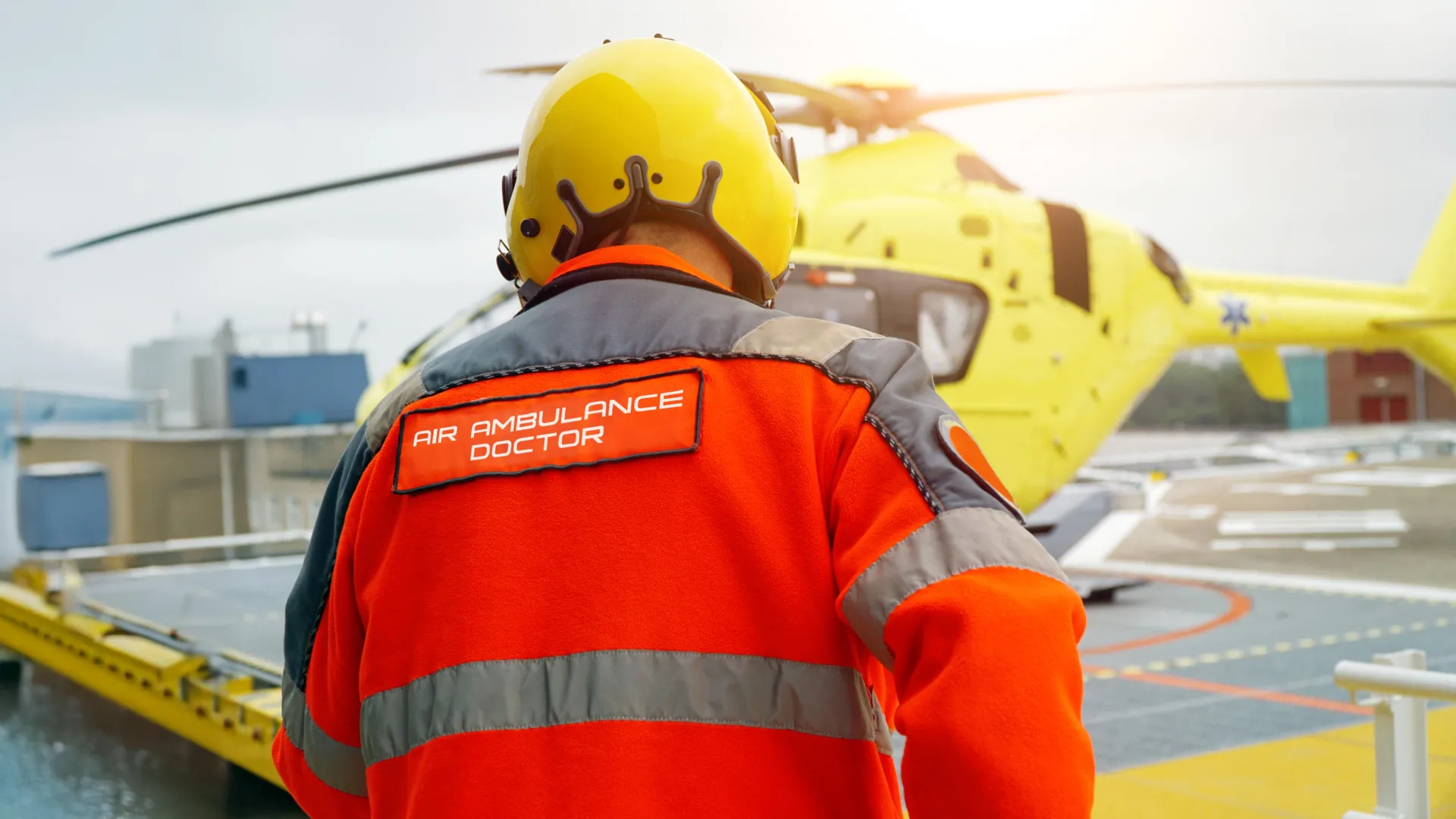
A comprehensive decade-long analysis of trauma patient outcomes has revealed a statistically significant improvement in survival rates for individuals suffering life-threatening injuries, particularly when advanced medical interventions are delivered via helicopter. Data compiled from a prominent air ambulance service operating across the South East of England indicates that critically injured patients treated by this specialized team experienced better-than-anticipated results. The findings, recently published in the Emergency Medicine Journal, suggest that for every one hundred severely injured patients receiving care, approximately five additional lives were saved. This suggests a tangible benefit derived from the rapid deployment of highly skilled medical professionals and advanced equipment directly to the scene of catastrophic events.
The intricate challenge of definitively quantifying the impact of Helicopter Emergency Medical Services (HEMS) on trauma survival has long been a subject of debate within the global medical community. Previous international studies have frequently encountered methodological inconsistencies, limited sample sizes, and a lack of standardized outcome definitions, which have collectively hindered direct comparisons and the drawing of robust conclusions. Furthermore, a persistent question has been the precise identification of patient cohorts who derive the most substantial benefit from the unique capabilities offered by helicopter-based emergency medical response. Addressing these complexities, the present study aimed to provide clearer insights by examining a substantial dataset.
This extensive review delved into the medical records of 3,225 trauma patients who received pre-hospital care from a singular HEMS team. This particular service covers the geographical areas of Kent, Surrey, and Sussex, and the data under scrutiny spanned the critical period from 2013 through 2022, encompassing nearly a full decade of operational activity. The research team employed a sophisticated statistical methodology, known as Ws analysis, to meticulously estimate each patient’s probability of survival. This advanced analytical approach was designed to account for critical variables such as the severity of the injuries sustained and the individual characteristics of each patient. By adjusting for these factors, the analysis could then more accurately assess deviations from predicted survival probabilities and identify factors associated with mortality within the first 30 days following the traumatic event.
A particularly intriguing aspect of the research involved a detailed examination of cases where patients survived despite having a low statistical likelihood of doing so, as well as an in-depth analysis of outcomes in instances of traumatic cardiac arrest. Traumatic cardiac arrest occurs when the heart ceases to beat as a direct consequence of severe physical trauma, such as massive blood loss or severe chest injuries. A key metric within this sub-analysis was the occurrence of return of spontaneous circulation (ROSC) – the restoration of a regular heartbeat and pulse – prior to the patient’s arrival at a hospital facility. This metric serves as a critical indicator of the effectiveness of immediate resuscitation efforts.
Across the entire cohort of 3,225 patients analyzed, a remarkable 2,125 individuals survived for at least 30 days post-injury. This translated into an actual observed survival rate of 85%, which significantly exceeded the statistically expected survival rate of 81%. This difference, while seemingly small on a percentage basis, represents a substantial real-world impact, equating to approximately five additional survivors for every 100 severely injured patients. Extrapolating this figure to the service’s typical annual caseload suggests that as many as 115 lives could be saved each year as a direct result of their interventions.
The study further sought to pinpoint which specific patient groups experienced the most pronounced improvements in survival. It was observed that patients with severe injuries who had a moderate predicted chance of survival, specifically between 25% and 45%, demonstrated some of the most significant gains. Within this subgroup, a notable 35% achieved survival for 30 days, a far greater proportion than their initial statistical prognosis would have suggested. Moreover, patients who presented with a low probability of survival, less than 50%, also exhibited a higher-than-expected survival rate. Despite the extreme severity of their injuries, 39% of these critically ill patients were still alive after 30 days, underscoring the potential of advanced pre-hospital care in these dire circumstances.
Several key factors were identified as strong predictors of this unexpected survival. Younger age was consistently associated with better outcomes, as was a higher initial Glasgow Coma Scale (GCS) score. The GCS is a standardized neurological scale used by medical professionals to objectively assess a person’s level of consciousness. It assigns a numerical value between 3 and 15, with higher scores indicating greater consciousness and responsiveness, particularly crucial in evaluating brain injuries. The presence of pre-hospital emergency anesthesia, a procedure that induces a controlled coma and can only be administered by highly trained medical teams such as those found in HEMS, also emerged as a critical factor. This intervention was independently linked to improved survival rates among patients suffering severe trauma.
In the specific context of traumatic cardiac arrest, the data revealed compelling insights. Out of 1,316 patients who experienced this life-threatening event, a significant proportion, 356 individuals (27%), achieved ROSC while en route to the hospital. Tragically, the remaining 960 patients were pronounced deceased at the scene. For the 356 patients who initially regained circulation, detailed 30-day outcome data was available for 185 individuals, representing approximately 52% of this subgroup. Of those with available data, 46 patients (25%) were still alive after the 30-day period, while 139 individuals succumbed to their injuries after reaching the hospital. An encouraging trend within this critical group was the annual increase in the likelihood of ROSC, which rose by approximately 6% each year between 2013 and 2022, suggesting ongoing improvements in resuscitation techniques and protocols.
The researchers were careful to articulate the limitations of their study, emphasizing that the observed survival rates exceeding statistical predictions do not constitute definitive proof of causality attributed solely to HEMS. Their estimations are predicated on the assumption that patient characteristics and the service’s operational performance remained relatively consistent throughout the study period, an assumption that may not hold true in all scenarios. Despite these caveats, the research team asserts that their findings powerfully highlight the "potential magnitude of clinical benefit," aligning with previously established economic and social advantages documented in earlier research.
In conclusion, the study’s authors posit that these results offer compelling support for continued investment in HEMS, particularly for the critical care of severely injured patients. However, they also advocate for the necessity of comparative studies that directly assess HEMS against alternative care pathways to establish definitive causal effectiveness and optimize resource allocation within the broader emergency medical system. The implications of this research extend beyond mere survival statistics, pointing towards the profound impact of rapid, expert medical intervention in the crucial minutes and hours following a life-altering injury.
About the Author