
In an increasingly sedentary world, where digital screens and desk jobs dominate daily routines, the human body is quietly undergoing a profound transformation. What was once considered a minor lifestyle habit has escalated into a significant public health concern, with prolonged sitting often compared to the detrimental effects of smoking due to its independent and far-reaching impact on well-being. This widespread issue, often dubbed "sitting disease," extends beyond mere discomfort, manifesting as a fundamental reorganization of the body’s internal systems, leading to a cascade of adverse health outcomes.
Extensive scientific inquiry has illuminated the serious ramifications of sustained inactivity. A comprehensive meta-analysis, published in the esteemed Annals of Internal Medicine, revealed a compelling correlation between extended sedentary time and an elevated predisposition to cardiovascular disease, various forms of cancer, and all-cause mortality. Remarkably, these heightened risks persist even among individuals who diligently engage in regular physical exercise. This underscores a crucial distinction: an hour of vigorous activity cannot fully negate the health detriments incurred by spending the majority of the remaining day in a seated posture. Further reinforcing these findings, investigations featured in the American Journal of Epidemiology indicate that individuals who remain seated for more than six hours daily face a substantially higher likelihood of premature death when contrasted with those who limit their sitting to under three hours. Some analyses even suggest that excessive time spent seated could diminish an individual’s life expectancy by several years, placing it on par with other major lifestyle hazards such as obesity and chronic inactivity.
From a physiological perspective, the human body is inherently designed for movement. It operates as an intricate network of interconnected systems, akin to a complex river ecosystem where constant flow is vital for life. This encompasses not only the macroscopic movement of muscles and limbs but also the microscopic flow of essential bodily fluids: blood, lymph, and cerebrospinal fluid. The uninterrupted circulation of these fluids is paramount for delivering oxygen and nutrients to tissues, efficiently removing metabolic waste products, and maintaining the optimal regulation of the nervous system. When this dynamic flow is impeded, the entire internal environment begins to shift, much like a river that ceases to move and becomes stagnant. Over years and decades, prolonged sitting induces such a state, leading to a gradual but profound restructuring of the body.
Specifically, when the body remains in a seated posture for extended durations, it doesn’t merely experience muscle tightness; it actively reorganizes its structural relationships around this state of stillness. The hip joints, for instance, begin to lose their dynamic interplay with the rest of the kinetic chain, transforming from flexible components into points of restriction. This alteration significantly compromises the natural movement patterns of the pelvis, which in turn directly influences how forces are distributed and absorbed throughout the spinal column. The spine itself, far more than just a skeletal support structure, serves as a critical conduit for nerve pathways, fluid exchange, and communication between various physiological systems. Chronic compression of the spinal discs, a direct consequence of prolonged sitting, not only diminishes range of motion but also impairs the body’s capacity to circulate vital fluids through this central axis. Intervertebral discs, which rely on movement for hydration, become less efficient in absorbing nutrients and expelling waste. Blood flow to the spinal structures and surrounding musculature becomes sluggish, and lymphatic drainage, crucial for immune function and waste removal, decelerates. Consequently, the nervous system, which depends on clear signals and unimpeded pathways, may begin to operate with reduced clarity and efficiency.
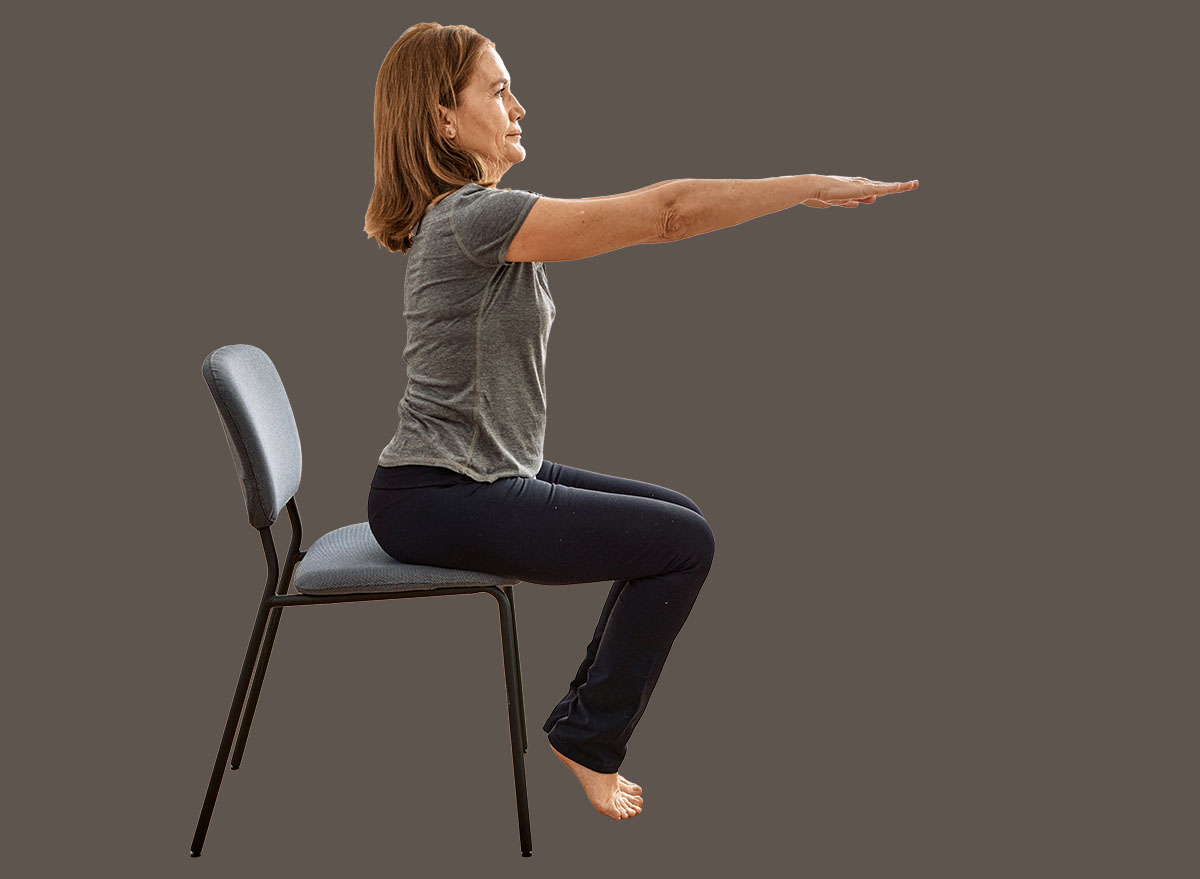
Many individuals instinctively attempt to counteract the effects of sedentary living through generalized stretching routines or simply by increasing their overall physical activity. While any movement is undeniably beneficial, these broad approaches often fall short in fully restoring the body’s intricate systems once significant postural adaptations and space loss have occurred. If the fundamental relationships between bodily segments have been compromised and vital anatomical space has been diminished, generic movements alone may not be sufficient to re-establish optimal function. A more precise, targeted methodology is required—one that actively reintroduces space within joints and tissues, thereby restoring the critical flow of fluids and enhancing neuromuscular communication.
This is where specialized movement disciplines such as ELDOA (Elongation Longitudinaux avec Decoaptation Ostéo Articulaire) and myofascial stretching offer a powerful solution. ELDOA, a sophisticated form of postural exercise, is designed to create specific space (decoaptation) within particular joint segments, especially along the spine. By targeting these precise areas, ELDOA facilitates the renewed movement of fluids, improves local circulation, and provides superior sensory input to the nervous system, enabling it to reorganize and optimize body mechanics. Myofascial stretching complements this approach by focusing on the fascial system—the connective tissue matrix that envelops muscles, bones, and organs, providing structural integrity and continuity throughout the body. Instead of merely stretching isolated muscles, myofascial techniques aim to restore the integrated function of entire fascial lines, ensuring that key structures like the hips, pelvis, and spine operate synergistically as a cohesive, dynamic system. The beauty of these techniques is their adaptability, with many effective exercises executable from the convenience of a chair, making them highly accessible for integration into even the busiest schedules.
Here are five targeted chair-based movements designed to mitigate the cumulative effects of chronic sitting:
1. T8/T9 ELDOA (Chair Version):
This specialized ELDOA targets the junction between the eighth and ninth thoracic vertebrae, situated roughly in the middle of the upper back. This segment of the spine is particularly prone to compression from prolonged sitting, which can impede fluid exchange and circulation in the area. The exercise is designed to create space at this specific vertebral level, promoting enhanced blood flow and nerve function. To perform this, position yourself at the front edge of a sturdy chair with your feet flat on the floor, hip-width apart. Lean slightly forward, grasping the back of the chair or the seat pan firmly. Inhale deeply, then as you exhale, engage a gentle pushing action through your hands as if attempting to lengthen your torso upwards and forward, creating a subtle arch in your upper back while maintaining a relaxed abdomen. Your gaze should be directed slightly upwards. Hold this sustained lengthening for approximately 60 seconds, breathing deeply and calmly. The objective is not to aggressively contract your abdominal muscles; rather, keep them relaxed to allow the diaphragm to function optimally, facilitating the fluid exchange this movement is intended to restore. This exercise primarily engages deep spinal stabilizers, thoracic extensors, and shoulder external rotators.
2. Rib 10 ELDOA (Chair Version):
This ELDOA focuses on the tenth rib, a key anatomical landmark that helps to open the lateral fascial line of the body. Prolonged sitting often leads to a "locking down" of this lateral chain, restricting movement between the ribs, spine, and pelvis on each side. By targeting the tenth rib, this exercise helps to restore this crucial interrelationship. Begin by sitting sideways on a chair, with one hip comfortably against the backrest. Extend the arm on the side closest to the backrest overhead, grasping the top of the chair back. The opposite hand can rest on your thigh. Inhale, then as you exhale, gently lean away from the chair back, creating a lateral stretch along your side body. Simultaneously, use the overhead arm to gently pull upwards and slightly away from the chair, creating a sense of lift and space through your rib cage and spine. Maintain a perfectly flat and straight profile from the side; avoid any arching or rounding of your back. Hold for 60 seconds on each side, ensuring both sides receive equal attention to restore balance. This movement engages lateral trunk stabilizers, intercostals, the quadratus lumborum, and the oblique muscles.

3. L2/L3 ELDOA (Chair Version):
The L2/L3 vertebral junction is located in the lumbar spine, typically just above the navel. This area is a frequent site of compression and restricted circulation due to extended periods of sitting, making it a critical point for restoring lower back health. To execute this ELDOA, sit upright in your chair with your feet flat and hip-width apart. Place your hands on your inner thighs or knees. Inhale, and as you exhale, press your hands firmly into your thighs, simultaneously attempting to lift your torso upwards and slightly forward, creating a subtle decompression in your lower back. Your head should remain in a neutral position, and your gaze directed straight ahead. Throughout the hold, maintain a relaxed abdominal wall. Bracing your core or holding your breath will counteract the intended effect, as the exercise aims to enhance fluid exchange, which requires unobstructed diaphragmatic breathing. Hold this posture for approximately 60 seconds. This exercise primarily targets deep lumbar stabilizers, hip adductors, and the thoracolumbar fascia.
4. Myofascial Hamstring Stretch (Chair Version):
This specific hamstring stretch goes beyond simply lengthening muscle fibers; it aims to restore the integrated connection between the hips, pelvis, and spine. Tight hamstrings, a common consequence of prolonged sitting, exert a significant pull on the pelvis, altering its alignment and subsequently impacting how forces are transmitted throughout the entire trunk. To perform this, sit towards the front of your chair. Extend one leg straight out in front of you, with your heel on the floor and toes pointing upwards. Keep the knee of the extended leg softly bent, not locked. Place your hands on your hips to ensure your pelvis remains level. Inhale, then as you exhale, gently hinge forward from your hips, keeping your spine naturally straight and flat. The stretch should be felt distinctly in the hamstring of the extended leg, not in your lower back. If you feel any flexion or rounding in your spine, ease back slightly until your back is flat, then hold. Hold this position for 30 to 90 seconds per leg. For a 30-second hold, alternate legs for three sets per side. For a 90-second hold, one set per leg is typically sufficient. This targets the hamstrings and the posterior chain fascia.
5. Myofascial Abdominal Stretch (Chair Version):
This comprehensive stretch effectively targets not only the external obliques but also engages the entire abdominal wall, including the internal obliques and deeper transverse abdominis. When the abdominal fascia becomes shortened and restricted from prolonged sitting, it can significantly limit rib cage movement, diminish breathing capacity, and impair spinal rotation. To perform this, sit upright in your chair, feet flat on the floor. Extend one arm overhead, reaching towards the ceiling. Inhale, then as you exhale, gently lean sideways away from the raised arm, simultaneously rotating your torso slightly. Allow your eyes to follow your extended elbow as it moves, maintaining a visual connection throughout the stretch. Losing this visual cue can diminish the rotational component and reduce the effectiveness of the stretch across the full abdominal wall. The goal is to feel a lengthening sensation across your side and front abdominal region. Hold for 90 seconds per side, or if preferring shorter durations, hold for 30 seconds and complete three sets per side. Ensure you perform the stretch on both sides to maintain symmetry and balance. This exercise specifically targets the external obliques, internal obliques, and the entire abdominal fascial wall.
Integrating these accessible, chair-based movements into your daily routine offers a powerful strategy for counteracting the pervasive negative effects of prolonged sitting. They provide a precise method to reclaim lost anatomical space, rejuvenate fluid dynamics, and restore integrated bodily function, helping individuals to mitigate risks to cardiovascular health, metabolic function, and musculoskeletal integrity. By embracing these intentional movements, one can proactively foster a more resilient, dynamic, and vital physical state, ultimately enhancing overall quality of life and longevity.
About the Author