As individuals navigate the landscape of midlife and beyond, physiological shifts can often manifest in noticeable changes to body composition, particularly around the midsection. One common presentation is the development of an abdominal overhang, often colloquially referred to as an "apron belly" or medically as a pannus. This phenomenon, characterized by excess skin and adipose tissue that drapes over the pubic area, is not merely a superficial concern; it can be influenced by a confluence of factors including age-related muscle mass decline (sarcopenia), hormonal fluctuations, previous pregnancies, significant weight changes, and the natural redistribution of fat. Addressing this specific abdominal contour requires a targeted and often nuanced approach, one that prioritizes the activation of deep core musculature over high-impact or momentum-driven exercises typically associated with conventional gym routines. For many in their later years, a specialized regimen performed in the comfort and support of a bed offers a uniquely effective pathway to enhanced core strength and improved abdominal definition.
Traditional gym equipment, while beneficial for overall fitness, can sometimes fall short in its ability to effectively engage the innermost layers of the abdominal wall, particularly the transverse abdominis, which acts like a natural corset for the trunk. Many machines guide movements, potentially allowing superficial muscles or momentum to dominate, thereby reducing the critical, self-stabilizing work that the deep core muscles need to perform. This reduced intrinsic activation can limit their capacity to pull the abdomen inward and provide robust support. In contrast, exercises performed on a bed inherently demand greater body control and stabilization. Without external supports, the body must actively engage its core throughout the entire range of motion, fostering consistent muscle activation and leading to more profound strength gains in the specific areas that contribute to a flatter, more supported midsection. Furthermore, the low-impact nature and inherent comfort of a bed surface can significantly enhance exercise adherence, a crucial factor for long-term success in any fitness endeavor.
The underlying principle behind the efficacy of these targeted, bed-based movements lies in their capacity to cultivate consistent and controlled engagement of the core. When the abdominal muscles, particularly the deeper stabilizers, are trained regularly with deliberate, slow repetitions, they develop increased strength and endurance. Over time, this improved muscular function encourages a natural drawing-in of the abdominal wall, which can lead to a noticeable reduction in the appearance of an abdominal overhang. This systematic approach not only contributes to aesthetic improvements but also underpins enhanced postural support, reduced lower back discomfort, and improved functional movement in daily life.
Let’s delve into a series of five foundational movements that specifically target the deep core stabilizers, the lower abdominal region, and surrounding supportive muscles. These exercises are designed to be performed with precision and mindful contraction, emphasizing quality of movement over quantity.
1. Supine Pelvic Tucks
This exercise primarily targets the lower rectus abdominis and, crucially, the transverse abdominis. It serves as an excellent foundational movement for teaching proper core engagement without imposing undue stress on the lumbar spine or hips. Many individuals mistakenly believe they are engaging their core during similar movements, but without conscious control and a slow tempo, the deepest abdominal layers may not fully activate. This particular variation is designed to rectify that by demanding deliberate, unhurried execution.
- How to Perform: Lie flat on your back on the bed with your knees bent and feet flat, hip-width apart. Ensure your lower back maintains a natural, slight curve. Gently draw your belly button towards your spine, pressing your lower back slightly into the bed. This is a subtle movement where you tilt your pelvis slightly upward, causing your tailbone to lift minimally. Hold this contraction for a few seconds, focusing on the deep abdominal engagement, then slowly release back to the starting position. The movement should be minimal and internally focused, not a large hip lift.
- Benefits: This movement helps to re-educate the body on how to engage the deep core, which is essential for stabilizing the pelvis and supporting the abdominal wall from the inside out. Consistent practice aids in restoring the inherent muscle support necessary for a firmer lower belly.
- Key Focus Points: Avoid using momentum or straining your neck. The movement originates from the core, not the legs or back. Breathe deeply throughout the exercise, exhaling as you tuck.
2. Controlled Heel Extensions with Abdominal Brace
Despite its seemingly simple nature, this exercise yields significant results when executed with precision. Its primary value lies in its ability to train the deep stabilizing muscles of the core, which are directly responsible for containing the abdominal contents rather than allowing them to protrude. Many conventional exercises often overlook this vital muscle layer, thereby hindering progress towards a more contoured midsection.
- How to Perform: Begin by lying on your back with knees bent and feet flat on the bed, similar to the previous exercise. Engage your deep core muscles by gently drawing your belly button towards your spine, ensuring your lower back remains pressed into the bed or maintains its natural, stable curve. Slowly extend one heel away from your body, sliding it along the bed surface until your leg is almost straight. Maintain the core brace throughout the extension, preventing any arching of the lower back. If your lower back begins to arch, it signals a loss of core engagement, prompting you to tighten your abdomen again. Slowly slide the heel back to the starting position, then repeat with the opposite leg.
- Benefits: This constant feedback loop helps to re-establish proper core engagement patterns. With regular practice, these deep muscles strengthen, providing more effective support for the abdomen and contributing to a flatter profile.
- Key Focus Points: The slower you extend and return your leg, the more challenging and effective the exercise becomes. Focus on keeping your hips level and stable throughout the movement.
3. Gradual Leg Lifts with Sustained Hold
This exercise specifically targets and strengthens the lower segment of the rectus abdominis through controlled lifting and the application of sustained tension. Incorporating an isometric hold at the apex of the movement is particularly advantageous as it compels the muscles to maintain full engagement, rather than relying on momentum. This sustained contraction is where genuine strength accretion occurs.
- How to Perform: Lie flat on your back with legs extended straight. For increased support, you can place your hands gently under your lower back or glutes. Engage your core, pressing your lower back firmly into the bed. Slowly lift both legs off the bed, keeping them as straight as possible, until they are approximately 6-12 inches from the surface, or to a height where your lower back remains completely stable and unarched. Hold this position for several seconds, feeling the deep contraction in your lower abdomen. Then, with controlled movement, slowly lower your legs back down towards the bed without allowing them to fully rest. Repeat.
- Benefits: Lifting both legs simultaneously requires significant core stabilization to prevent pelvic tilt and lumbar arching. The isometric hold amplifies the demand on the lower abdominal muscles, simultaneously building endurance and strength. Over time, this significantly tightens the region most prone to abdominal overhang and enhances overall midsection control.
- Key Focus Points: The most critical aspect is maintaining a flat lower back against the bed. If your back arches, reduce the range of motion or lift your legs higher until you can maintain proper form. Breathing should be steady and controlled.
4. Alternating Supine March with Core Stability
The alternating bed march is designed to cultivate both coordination and continuous activation of the core musculature. This movement is particularly effective because it mimics natural leg motion while demanding consistent core engagement throughout its execution. This synergy makes it highly beneficial for rebuilding functional strength that seamlessly translates into everyday activities and improved posture.
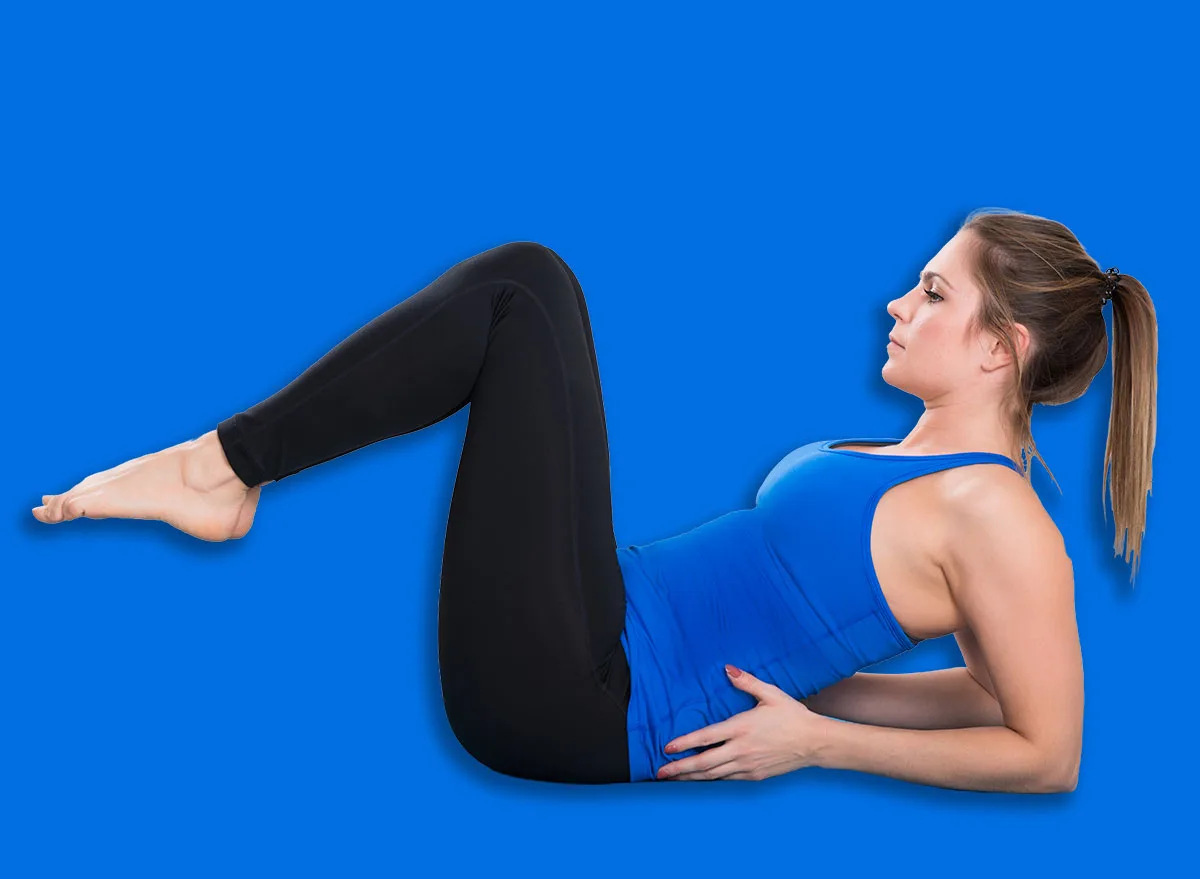
- How to Perform: Lie on your back with knees bent, feet flat on the bed, and arms resting at your sides. Engage your core by gently drawing your belly button towards your spine, ensuring your lower back is stable. Slowly lift one knee towards your chest, maintaining a 90-degree bend in the knee. The movement should be controlled and deliberate, without allowing your hips to rock or your lower back to arch. As you lift, focus on the abdominal muscles stabilizing your torso. Slowly lower the foot back to the bed, then repeat the action with the opposite leg. Continue alternating legs in a rhythmic, controlled manner.
- Benefits: Each time a knee lifts, the deep abdominal muscles must actively stabilize the body to prevent any shifting or tilting of the pelvis. Performing the movement slowly extends the time under tension, thereby enhancing control and muscular endurance. Over time, this strengthens the intrinsic core muscles that support the abdomen, contributing to a flatter, more streamlined appearance and improved gait stability.
- Key Focus Points: Maintain a consistent pace. The goal is smooth, controlled movement rather than speed. Keep your gaze directed upwards to avoid neck strain.
5. Modified Toe Reach Crunch
This exercise specifically targets the upper and mid-abdominal muscle groups while simultaneously engaging the lower core for essential stability. It is a preferred alternative to a full sit-up for many, as it effectively strengthens the entire abdominal wall without placing undue strain on the neck or lower back, which can be common with more extensive flexion movements.
- How to Perform: Lie on your back with knees bent and feet flat on the bed. Extend your arms straight up towards the ceiling, or if preferred, lightly place your fingertips behind your ears without pulling on your neck. Engage your core by drawing your belly button towards your spine. Slowly curl your head and shoulders off the bed, reaching your hands towards your toes or the ceiling. The movement should be a controlled "crunch," lifting only to the point where your shoulder blades are off the bed, feeling a strong contraction in your upper and mid-abdomen. Avoid straining your neck; keep a small gap between your chin and chest. Hold briefly at the peak of the contraction, then slowly and with control, lower your upper body back down to the starting position.
- Benefits: The act of reaching towards your toes creates a robust and concentrated contraction through the entire abdominal region. The slow, controlled lowering phase maintains muscle tension for a longer duration, significantly improving the exercise’s overall effectiveness and muscle hypertrophy. With consistent practice, this contributes to a more toned upper abdomen and reinforces comprehensive core strength.
- Key Focus Points: Focus on articulating your spine upwards one vertebra at a time, rather than just lifting your head. Exhale as you crunch up and inhale as you lower down.
Embracing a consistent routine of these bed-based core exercises can be a transformative step for individuals seeking to enhance abdominal firmness and stability in their later years. The accessibility, low-impact nature, and targeted activation offered by these movements make them an ideal choice for integrating into a daily regimen. While these exercises provide a powerful tool for strengthening the deep core and improving abdominal contour, it is important to remember that they are one component of a holistic approach to wellness. Nutritional choices, adequate hydration, sufficient sleep, and overall physical activity all contribute to body composition and health. As with any new fitness program, consulting with a healthcare professional or certified fitness expert before beginning is always recommended to ensure it aligns with individual health needs and capabilities. Through dedication and mindful practice, reclaiming core strength and confidence is an achievable goal, fostering not just physical improvements but also an enhanced sense of well-being.
About the Author