The remarkable strides in public health and medical interventions have undeniably extended human lifespans, yet this increased longevity often comes with a diminished quality of life, characterized by a greater prevalence of health challenges rather than sustained vitality. While the inevitability of biological aging is a universal constant, its progression significantly amplifies the susceptibility to a spectrum of chronic conditions, including malignancies, metabolic disorders like diabetes, and neurodegenerative ailments such as Alzheimer’s disease. A fundamental question occupying the minds of researchers is the intricate relationship between the aging process and the simultaneous emergence of these debilitating diseases.
At the forefront of this investigative frontier is the laboratory spearheaded by Kris Burkewitz, an assistant professor specializing in cell and developmental biology. His team is actively exploring the possibility of decoupling the intrinsic biological mechanisms of aging from the pathological pathways that lead to disease. The ultimate ambition is to pave the way for individuals to maintain a higher degree of health and functional capacity well into their advanced years. To achieve this, the research delves into the sophisticated methods by which cells organize their internal components, known as organelles, and meticulously examines how alterations in these structural arrangements impact cellular efficiency, metabolic processes, and ultimately, the predisposition to disease.
Recent groundbreaking findings, detailed in a seminal publication in the esteemed journal Nature Cell Biology, have illuminated a previously unrecognized cellular strategy for adapting to the aging process. Burkewitz and his collaborators have demonstrated that as organisms age, cells actively engage in the dynamic restructuring of the endoplasmic reticulum (ER), a vast and intricately folded organelle that serves as a central hub for cellular manufacturing and transport. Far from being a static entity, the ER undergoes a deliberate and controlled process of remodeling that escalates with the passage of time and organismal development.
The research team has pinpointed a specific cellular mechanism, termed ER-phagy, as the driving force behind this age-related ER reorganization. ER-phagy involves the highly selective degradation and removal of particular segments of the endoplasmic reticulum. The identification of ER-phagy as an integral component of the aging cascade carries profound implications, suggesting that it could emerge as a promising therapeutic target for a range of age-associated conditions, including but not limited to neurodegenerative disorders and various metabolic diseases.
The prevailing scientific discourse on aging has often concentrated on quantifying the fluctuating abundance of different molecular machinery within cells over time. In contrast, the Burkewitz lab’s pioneering work shifts the focus from mere component levels to the fundamental principles of cellular organization. Professor Burkewitz articulated this paradigm shift, stating that his team’s investigations are centered on "how aging affects the way that cells house and organize these machineries within their complex inner architectures."
The efficacy and performance of a cell are not solely dictated by the repertoire of molecular tools it possesses, but crucially by the spatial arrangement and connectivity of these tools. Burkewitz employs a compelling analogy, likening a cell to a complex manufacturing facility. Even if all the necessary machinery for production is present and functional, the overall efficiency hinges on the strategic placement and sequential arrangement of these machines. He elaborated, "When space is limited or production demands change, the factory has to reorganize its layout to make the right products. If organization breaks down, production becomes very inefficient."
Within this intricate cellular factory, the endoplasmic reticulum plays a pivotal role in dictating the overall structural integrity and functional organization. The ER forms an extensive and interconnected network of membranes, comprising flattened sacs and tubules, that is indispensable for the synthesis of proteins and lipids. Beyond its direct roles in molecular production, it also provides a crucial scaffolding that supports the architectural framework of the entire cell. Despite its profound importance, the precise mechanisms by which the ER’s intricate three-dimensional structure is altered throughout the aging process have remained largely enigmatic to the scientific community until now.
Eric Donahue, the study’s lead author and a medical student pursuing a dual MD-PhD degree, who conducted his doctoral research within the Burkewitz laboratory, emphasized the transformative nature of their findings. He remarked, "We didn’t just add a piece to the aging puzzle — we found a whole section that hasn’t even been touched." Donahue’s dedicated research efforts were focused on the intricate interplay between ER-phagy, ER remodeling, and the broader phenomenon of aging.
To meticulously observe and document the dynamic transformations of the ER over time, the research group leveraged cutting-edge genetic engineering techniques in conjunction with sophisticated light and electron microscopy. Their investigations were conducted using Caenorhabditis elegans (C. elegans) worms, a well-established and highly valuable model organism extensively utilized in aging research. The inherent transparency of these nematodes, coupled with their relatively short lifespans, provides an unparalleled window for scientists to directly visualize and analyze cellular changes within intact, living organisms as they age.
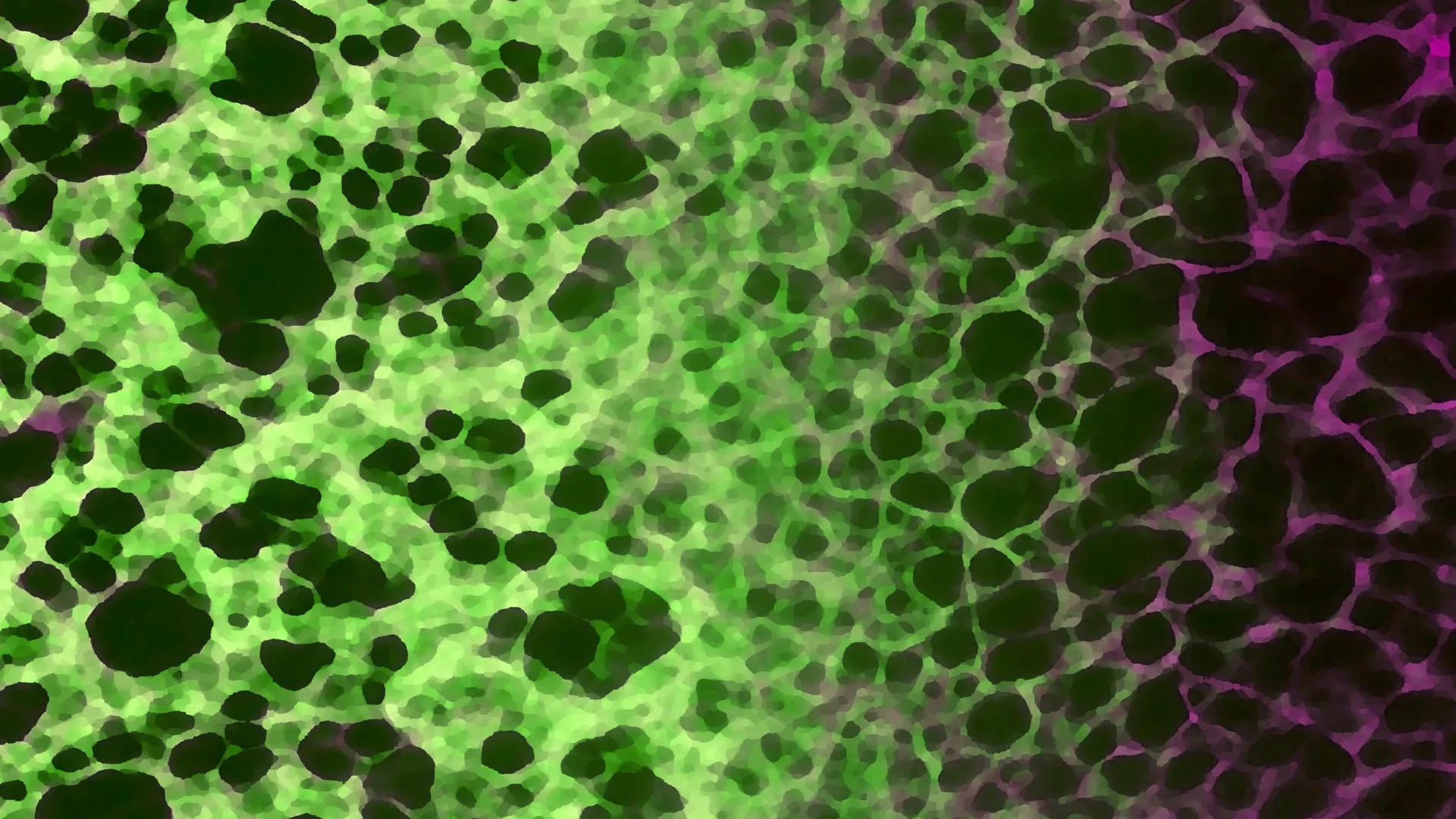
The research revealed a striking pattern of ER alteration in aging cells. Specifically, the study observed a significant reduction in the abundance of the "rough" ER, the form characteristically studded with ribosomes and intimately involved in protein synthesis and folding. In stark contrast, the tubular network of the ER, which is more closely associated with lipid and steroid biosynthesis, experienced only a minor decline. This observed differential remodeling aligns with well-documented physiological hallmarks of aging, such as a diminished capacity to maintain protein homeostasis and metabolic shifts that can contribute to the aberrant accumulation of adipose tissue in various organs. Nevertheless, further rigorous investigation is necessitated to definitively establish direct causal relationships between these structural changes and specific age-related pathologies.
Crucially, the study provided compelling evidence that ER-phagy actively orchestrates the reshaping of the ER during the aging process. The observed correlation between ER-phagy and lifespan is particularly significant, suggesting that this cellular process contributes directly to promoting healthier aging rather than merely being a passive indicator of cellular deterioration. This finding opens up exciting avenues for therapeutic intervention.
Looking ahead, the Burkewitz laboratory intends to continue its in-depth exploration of how distinct ER structural configurations influence metabolic function at both the microscopic cellular level and the macroscopic whole-organism level. Given the ER’s central role in organizing a multitude of other intracellular components, a comprehensive understanding of how its dynamic remodeling impacts the broader cellular environment is considered a critical next step in their research agenda. Professor Burkewitz highlighted the temporal significance of these findings, noting that "Changes in the ER occur relatively early in the aging process." He further elaborated on the profound implications of this observation: "One of the most exciting implications of this is that it may be one of the triggers for what comes later: dysfunction and disease."
If researchers can precisely pinpoint the initiating factors responsible for these early ER alterations, it may unlock the potential to preempt the cascade of events that ultimately culminates in the development of age-related diseases. This fundamental understanding could pave the way for novel preventative strategies and therapeutic interventions designed to enhance healthspan, allowing individuals to enjoy a greater number of years in robust health and well-being.
The foundational paper detailing this research, titled "ER remodelling is a feature of ageing and depends on ER-phagy," was published in Nature Cell Biology in February 2026. This significant scientific undertaking was a collaborative effort, benefiting from the expertise of researchers at Vanderbilt University, including Jason MacGurn, Andrew Folkmann, Rafael Arrojo e Drigo, and Lauren Jackson, alongside collaborators from the University of Michigan and the University of California, San Diego. Financial support for this pioneering work was generously provided by grants from the National Institute on Aging, the National Institute of General Medical Sciences, and the Glenn Foundation for Medical Research/American Federation for Aging Research, underscoring the critical importance of this line of inquiry for public health.
About the Author