Maintaining optimal posture often becomes a significant concern as individuals progress into their senior years. The cumulative effects of gravity, daily habits, and physiological changes contribute to a gradual decline in spinal alignment, frequently manifesting as rounded shoulders, a forward head position, and an exaggerated curvature of the upper back. This phenomenon, while seemingly benign, has far-reaching implications for overall health, functional independence, and quality of life. Beyond aesthetic considerations, a compromised posture can impede respiratory function, exacerbate musculoskeletal pain, increase the risk of falls due to impaired balance, and even affect mood and confidence. Addressing these age-related postural shifts requires a strategic and proactive approach, particularly through targeted physical activity incorporated early in the day.
The primary driver behind postural degradation in later life is a complex interplay of muscular and structural transformations within the body. A pivotal factor is sarcopenia, the age-associated loss of muscle mass and strength. This process disproportionately impacts critical stabilizing muscles responsible for maintaining an upright stance, including those of the upper back, the gluteal complex, and the deep core. As these muscle groups weaken, the skeletal system loses its primary support structure, leading to compensatory changes and an increased reliance on passive structures like ligaments and intervertebral discs, which are not designed for sustained support. Furthermore, reduced bone density, degenerative disc disease, and changes in joint cartilage can contribute to spinal compression and altered alignment.
Lifestyle choices also play a substantial role. Many common activities, from prolonged sitting at a desk to routine walking or cycling, tend to encourage a forward-dominant body position. This repetitive anterior bias reinforces detrimental postural patterns, such as the aforementioned rounded shoulders and anterior head carriage. Justin Kraft, a NASM-certified Performance Enhancement Specialist and Corrective Exercise Specialist, as well as the founder of Aspire2MoreFitness.com, highlights that even active individuals are susceptible to these issues. He explains that without specific interventions designed to counteract these imbalances, the body’s intrinsic capacity to maintain proper upright alignment is gradually undermined. Kraft advocates for exercise routines that engage the body across all three planes of motion—sagittal, frontal, and transverse—to mitigate these forward-dominant tendencies.
Conventional wisdom often points to stretching as the go-to solution for stiffness and poor posture. While flexibility exercises offer undeniable benefits, such as improving range of motion and alleviating muscular tension, experts emphasize their limitations when it comes to long-term postural correction. Dr. Dustin DebRoy, Manager of Chiropractic Education and Relations at The Joint Chiropractic, who specializes in spine alignment, defines posture as the body’s default position under the influence of gravity. He points out that reliance solely on floor-based stretches often fails to adequately engage the deep stabilizing muscles essential for maintaining this default alignment throughout the day.
Justin Kraft further elaborates on this distinction, noting that many floor stretches are passive. They may temporarily lengthen tight muscles, such as the pectorals or hip flexors, but they do not actively instruct the body on how to sustain correct alignment. Critically, without simultaneously strengthening the opposing muscle groups—the upper back, glutes, and core—the body inevitably reverts to its habitual, often suboptimal, posture. The goal, therefore, is not merely to increase mobility but to cultivate the strength and neuromuscular control necessary to actively hold a proper alignment against gravitational forces and daily demands.
To address these needs effectively, a series of dynamic, strength-focused exercises performed consistently, ideally as part of a morning regimen, offers a superior pathway to restoring and maintaining postural integrity in individuals over 60. These exercises transcend the passive benefits of stretching by actively engaging and strengthening the muscles crucial for sustained support.
Here are four highly effective morning movements recommended by experts for promoting robust postural health:
1. Wall Posture Reset (Wall Angels)
This exercise is a foundational movement for reinforcing optimal alignment of the spine, shoulders, and neck while actively engaging the upper-back musculature. By pressing the entire posterior chain against a flat surface, individuals can effectively re-educate their body about proper anatomical positioning.
- Execution: Stand with your back against a wall, ensuring your head, shoulders, and glutes are in contact with the surface. Your feet should be about shoulder-width apart, a few inches from the wall. Bring your arms up so your elbows and wrists are also against the wall, forming a ‘W’ shape. Slowly slide your arms up the wall, keeping elbows and wrists pressed against it, until your arms are extended overhead, forming a ‘Y’ shape. Control the movement as you slide them back down to the ‘W’ position.
- Benefits: This movement significantly improves thoracic spine mobility, counteracts the effects of kyphosis (upper back rounding), and strengthens the muscles that retract and depress the shoulder blades, promoting an open chest and a more upright torso. It can also alleviate shoulder stiffness and pain by enhancing glenohumeral joint mobility and stability. Kraft emphasizes its profound ability to increase mobility for those experiencing shoulder discomfort.
2. Glute Bridges
The glute bridge is an indispensable exercise for activating and strengthening the gluteal muscles, which are paramount for maintaining proper pelvic alignment and alleviating undue stress on the lower back. Strong glutes contribute to a stable pelvis, preventing an anterior pelvic tilt often associated with sedentary lifestyles and weakened core muscles.
- Execution: Lie on your back with your knees bent and feet flat on the floor, hip-width apart, positioned close to your glutes. Ensure your lower back is pressed into the floor. Engage your core and glutes, then lift your hips off the ground until your body forms a straight line from your shoulders to your knees. Focus on driving through your heels and squeezing your glutes at the top of the movement. Slowly lower your hips back down.
- Benefits: This exercise directly targets the gluteus maximus, which is crucial for hip extension and external rotation, thereby supporting the lumbar spine. It helps counteract the effects of prolonged sitting, which can lead to gluteal amnesia and reliance on the lower back. Kraft advises focusing on glute engagement by consciously pushing against the ground with the feet rather than using the lower back to initiate the lift, especially for beginners. Progressive variations can be introduced as strength improves.
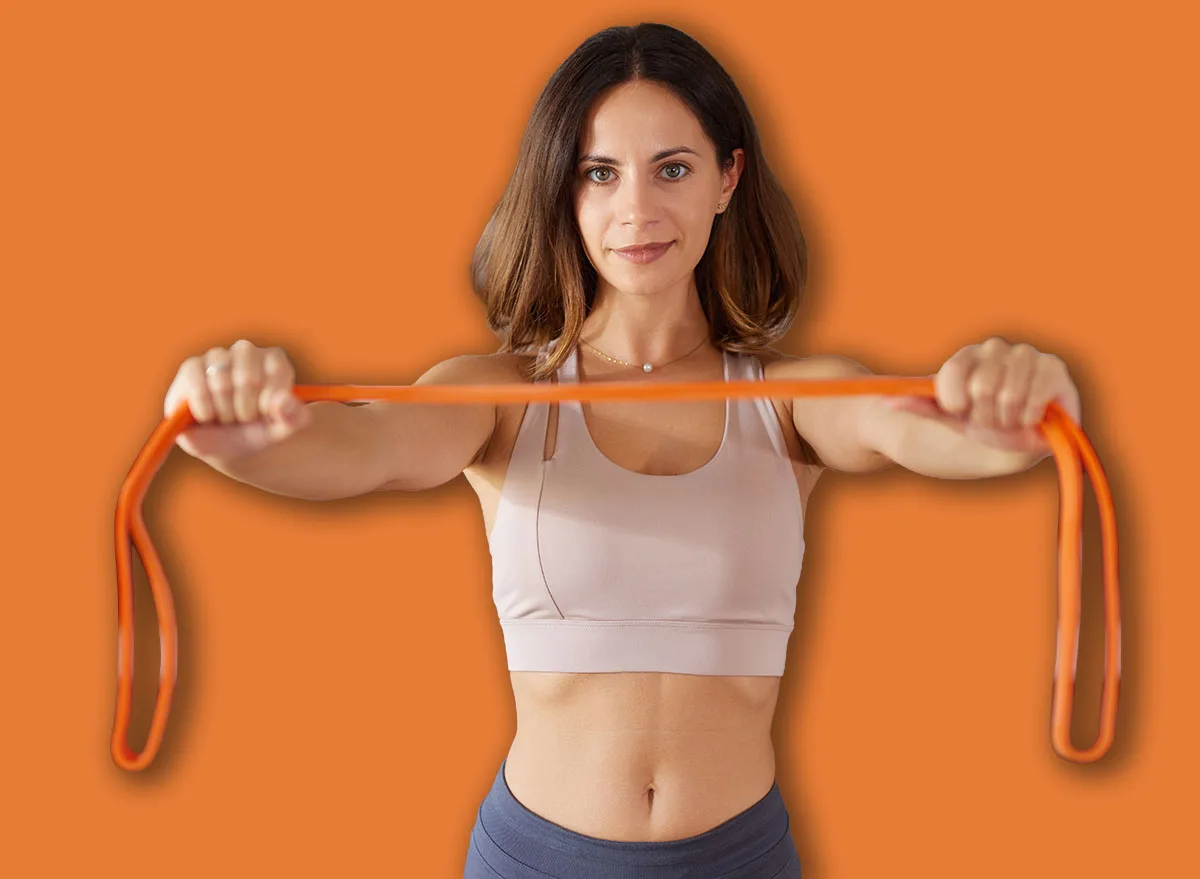
3. Standing Band Pull-Aparts
This exercise is specifically designed to fortify the muscles of the upper back and the posterior deltoids, directly combating the pervasive issue of rounded shoulders and promoting a more balanced shoulder girdle. Many individuals, especially those with desk-bound occupations, exhibit underdeveloped rear deltoids.
- Execution: Stand tall with good posture, holding a resistance band with both hands, arms extended straight out in front of you at shoulder height. Your hands should be shoulder-width apart, creating slight tension in the band. Keeping your arms straight, pull the band apart by squeezing your shoulder blades together. Your hands should move outwards until they are wider than your shoulders. Control the return to the starting position.
- Benefits: By strengthening the rhomboids, middle and lower trapezius, and posterior deltoids, this movement directly pulls the shoulders back and down, counteracting the internal rotation often seen in poor posture. Kraft notes that under-active rear deltoids not only compromise posture but also impair overall shoulder mobility and function. Regular performance can significantly improve the resting position of the shoulders and enhance scapular stability.
4. Farmer’s Carry
The Farmer’s Carry is a highly functional, full-body exercise that develops core stability, grip strength, and overall postural endurance. It challenges the entire kinetic chain to stabilize against an external load, thereby reinforcing an upright and resilient trunk.
- Execution: Hold a heavy dumbbell or kettlebell in each hand, palms facing your body. Stand tall with your shoulders pulled back and down, core engaged, and gaze forward. Walk a set distance (e.g., 20-50 feet) while maintaining a perfectly upright posture, resisting any tendency to lean or slouch. Ensure your shoulders remain level and your core tight.
- Benefits: This exercise is exceptional for building isometric strength throughout the core, improving grip strength, and enhancing the endurance of the postural muscles from the feet up to the neck. It forces the body to actively resist lateral flexion and rotation, promoting a strong, stable, and upright spinal column. The continuous demand for stabilization makes it a powerful tool for developing sustained postural control in dynamic movement.
Incorporating these dynamic morning movements into a daily routine offers a powerful strategy for mitigating age-related postural decline. However, achieving and maintaining optimal postural health is a multifaceted endeavor that extends beyond just these exercises. A holistic approach includes adequate hydration, a nutrient-rich diet to support muscle and bone health, regular overall physical activity, and attention to ergonomic principles in daily environments. For persistent postural issues or pain, consulting with healthcare professionals such as chiropractors, physical therapists, or certified personal trainers like Justin Kraft can provide personalized guidance and ensure exercises are performed safely and effectively. Consistency, coupled with an awareness of one’s body and its responses, remains the cornerstone of any successful journey toward improved postural health and an enhanced quality of life in the golden years.
About the Author