Viruses, masters of cellular infiltration, rely heavily on the intricate protein structures adorning their exteriors to breach the defenses of host cells. These surface proteins are the prime targets for the development of prophylactic and therapeutic interventions, particularly vaccines. Historically, scientific inquiry into these crucial viral components has necessitated the creation of simplified laboratory models, often involving the isolation of these proteins without their native embedding within the viral membrane. This artificial separation, while facilitating handling and study, frequently omits critical structural elements that naturally reside within the virus’s lipid bilayer. Consequently, these decontextualized proteins may not accurately recapitulate the interactions observed during a genuine infection, thereby hindering a precise understanding of how the immune system, specifically antibodies, recognizes and neutralizes these pathogens.
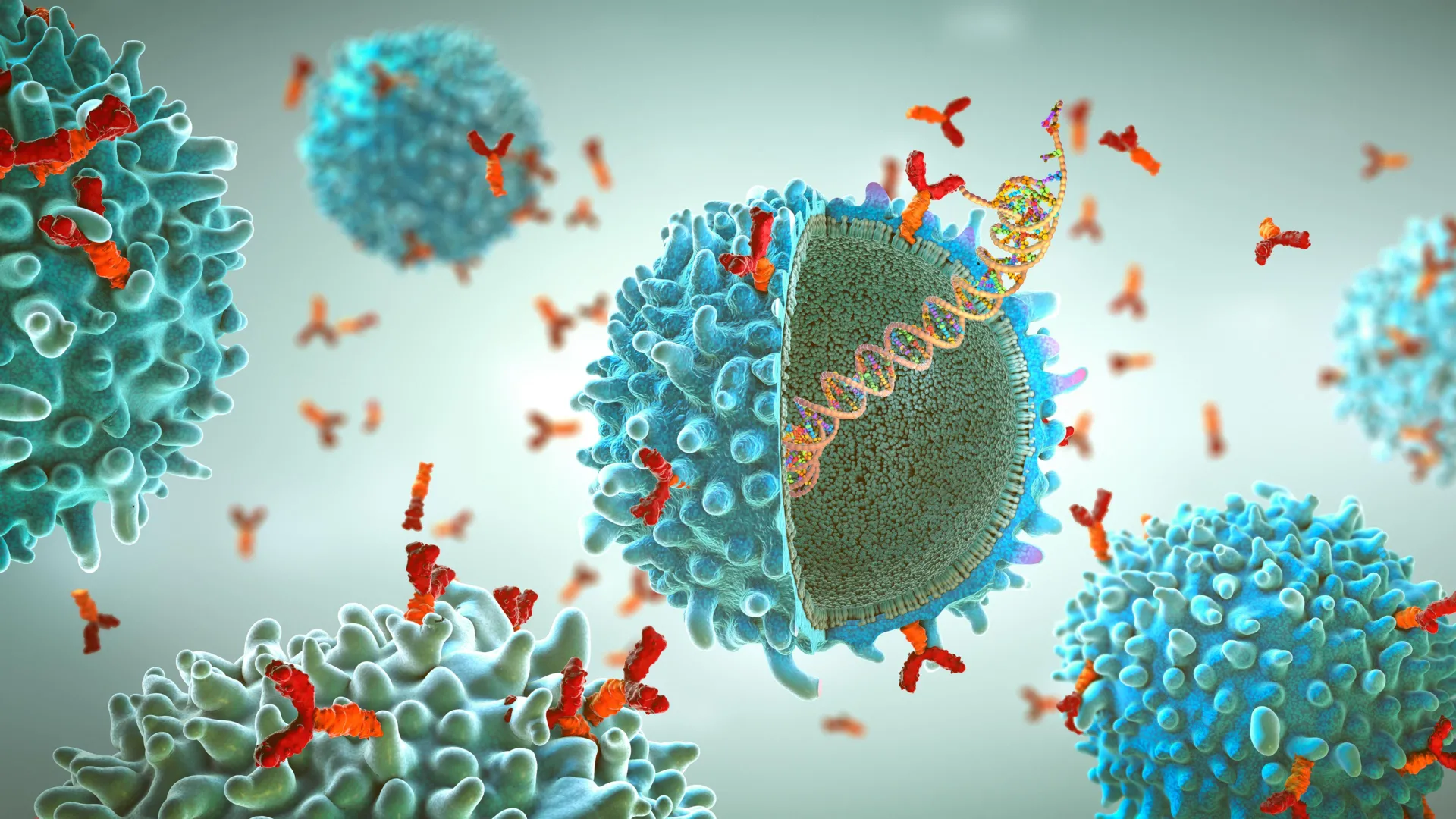
A groundbreaking advancement has emerged from the collaborative efforts of researchers at Scripps Research, in conjunction with the International AIDS Vaccine Initiative (IAVI) and a consortium of other scientific institutions. They have engineered a sophisticated new platform designed to examine viral proteins in a form that more closely mirrors their authentic biological configuration. This innovative methodology leverages the power of nanodisc technology, a technique that encapsulates target proteins within minute, self-assembling lipid particles. This carefully constructed environment effectively reconstitutes a semblance of the virus’s native outer membrane, crucially preserving the structural integrity and functional dynamics of the viral proteins. The implications of this approach are profound, promising to illuminate the nuanced ways in which antibodies engage with viruses, thereby offering a more robust foundation for the design of next-generation vaccines.
The scientific endeavor, detailed in the esteemed journal Nature Communications, put this novel nanodisc platform to the test utilizing key surface proteins from both the Human Immunodeficiency Virus (HIV) and the Ebola virus. These pathogens have persistently presented formidable challenges to the scientific community’s efforts in vaccine development, largely attributed to the inherent difficulty in eliciting a potent immune response against their surface proteins. The research team posits that this versatile platform holds significant potential for application to a wide spectrum of other viruses that also feature membrane-bound surface proteins, including, but not limited to, the influenza virus and the severe acute respiratory syndrome coronavirus 2 (SARS-CoV-2).
William Schief, a distinguished professor at Scripps Research and the executive director of vaccine design at IAVI’s Neutralizing Antibody Center, a co-senior author on the study, articulated the long-standing limitations in viral protein research. "For many years, we’ve had to rely on versions of viral proteins that are missing important pieces," he stated, emphasizing the scientific community’s reliance on incomplete viral protein models. He further elaborated on the significance of the new platform: "Our platform lets us study these proteins in a setting that better reflects their natural environment, which is critical if we want to understand how protective antibodies recognize a virus."
The biological reality of viral surface proteins is that they are intrinsically integrated within a lipid membrane and often adopt specific, functional arrangements. Traditional laboratory investigations have frequently involved the excision of the membrane-anchoring domains of these proteins to simplify experimental procedures. While this simplification can facilitate protein purification and handling, it often obscures vital structural nuances. This is particularly problematic for antibodies that target regions of the protein situated in close proximity to the membrane, as these interaction sites may be fundamentally altered or rendered inaccessible in the absence of their natural lipid context.
To surmount this critical experimental hurdle, the research team ingeniously incorporated candidate vaccine proteins into nanodiscs. These minuscule, stable lipid structures serve to anchor the proteins, maintaining their spatial orientation and effectively mimicking the architecture of the virus’s exterior. This meticulously engineered system enables scientists to scrutinize antibody-viral protein interactions within a highly realistic physiological milieu. Crucially, the nanodisc platform seamlessly integrates with established vaccine research methodologies, facilitating standard antibody binding assays, advanced immune cell sorting techniques, and high-resolution imaging studies.
Kimmo Rantalainen, the study’s lead author and a senior scientist within Professor Schief’s laboratory, highlighted the integral nature of the platform’s development. "Putting all of these components together into a single, reliable system was the key," he remarked. He further explained that while the individual technological components had previously existed, their successful integration into a reproducible and scalable framework has unlocked unprecedented avenues for the analysis and design of vaccines.
The application of this innovative platform has yielded novel insights into the complexities of antibody responses, particularly when examining HIV. The researchers focused their attention on a particularly stable region of the HIV surface protein situated near the viral membrane. This specific region is a recognized target for a class of broadly neutralizing antibodies (bNAbs) capable of inhibiting a wide spectrum of HIV variants. The efficacy of these bNAbs stems from their ability to recognize conserved epitopes on the virus, structures that remain consistent even as HIV undergoes rapid mutation, making them exceptionally valuable targets for vaccine development.
Employing the nanodisc platform, the research team was able to capture exceptionally detailed structural representations of how these bNAbs interact with HIV proteins within their native membrane-like environment. This level of visualization revealed critical structural features that were previously undetectable when these proteins were studied in isolation. The findings also provided crucial clues regarding the mechanisms by which certain antibodies neutralize viruses, suggesting that they may function by disrupting the viral structures essential for cellular entry. This understanding offers invaluable guidance for the rational design of more effective vaccine candidates.
"The structure gave us a level of detail we simply couldn’t access before," Rantalainen observed, underscoring the transformative nature of the new data. He elaborated, "It showed us new interactions at the membrane interface and suggested why those matter for antibody function."
The demonstrated utility of this nanodisc platform extends far beyond the study of HIV. To underscore its broad applicability, the researchers successfully applied the methodology to investigate proteins from the Ebola virus. The results from these experiments corroborated the platform’s ability to facilitate antibody recognition and binding to viral proteins within a membrane-mimicking context, reinforcing its potential as a universal tool.
Furthermore, the platform’s capabilities are not confined to purely structural analyses. It is equally adept at investigating the immunogenicity of vaccine candidates. By employing nanodiscs as sophisticated molecular "bait," scientists can effectively isolate and identify specific immune cells that exhibit a response to particular viral proteins. This capability provides a more precise and granular understanding of how the human immune system reacts to different vaccine designs. An additional significant advantage of this integrated system is its remarkable efficiency. Processes that previously required a month or more to complete can now be accomplished in approximately one week, thereby significantly accelerating the comparative analysis of multiple vaccine candidates.
While the nanodisc platform itself does not constitute a vaccine, it represents a powerful and indispensable tool designed to augment and accelerate vaccine research endeavors. This is of particular importance for viruses that have historically resisted the development of effective vaccines through conventional approaches.
Professor Schief emphasized the platform’s pivotal role in advancing the field. "This gives the field a more realistic, accurate way to test ideas early on," he asserted. He concluded with an optimistic outlook: "By improving how we study viral proteins and antibody responses, we hope this platform will help advance next-generation vaccines against some of the world’s most challenging viruses."
The comprehensive study, titled "Virus glycoprotein nanodisc platform for vaccine analytics," involved contributions from a substantial roster of researchers. Beyond Schief and Rantalainen, the author list includes Alessia Liguori, Gabriel Ozorowski, Claudia Flynn, Jon M. Steichen, Olivia M. Swanson, Patrick J. Madden, Sabyasachi Baboo, Swastik Phulera, Anant Gharpure, Danny Lu, Oleksandr Kalyuzhniy, Patrick Skog, Sierra Terada, Monolina Shil, Jolene K. Diedrich, Erik Georgeson, Ryan Tingle, Saman Eskandarzadeh, Wen-Hsin Lee, Nushin Alavi, Diana Goodwin, Michael Kubitz, Sonya Amirzehni, Devin Sok, Jeong Hyun Lee, John R. Yates III, James C. Paulson, Shane Crotty, Torben Schiffner, and Andrew B. Ward, all affiliated with Scripps Research. Sunny Himansu from Moderna Inc. also contributed to the work.
This significant scientific undertaking received crucial financial support from various esteemed organizations. Funding was provided by the National Institute of Allergy and Infectious Diseases of the National Institutes of Health through grants UM1 AI144462, R01 AI147826, R56 AI192143, and 5F31AI179426-02. Additional support came from the Bill and Melinda Gates Foundation Collaboration for AIDS Vaccine Discovery, under grants INV-007522, INV-008813, and INV-002916. The IAVI Neutralizing Antibody Center contributed through grants INV-034657 and INV-064772, and the Alexander von Humboldt Foundation also provided funding for this research.
About the Author