
The catastrophic impact of the Black Death, which decimated Europe’s population between 1347 and 1353, is a well-documented chapter in human history. Yet, the story of plague’s relentless grip on the continent did not conclude with the passing of that initial, devastating wave. For over four hundred subsequent years, recurrent outbreaks of bubonic plague consistently destabilized urban centers, economic frameworks, and social structures across Europe and its surrounding territories. A groundbreaking new investigation, spearheaded by scientists at the University of Tartu, now offers an unprecedentedly detailed reconstruction of these centuries of persistent affliction. By meticulously analyzing ancient DNA (aDNA) extracted from the remains of individuals who perished from the disease, researchers have charted the intricate pathways of Yersinia pestis, the bacterium responsible for plague, revealing how it spread, evolved, and repeatedly resurfaced long after the initial pandemic subsided.
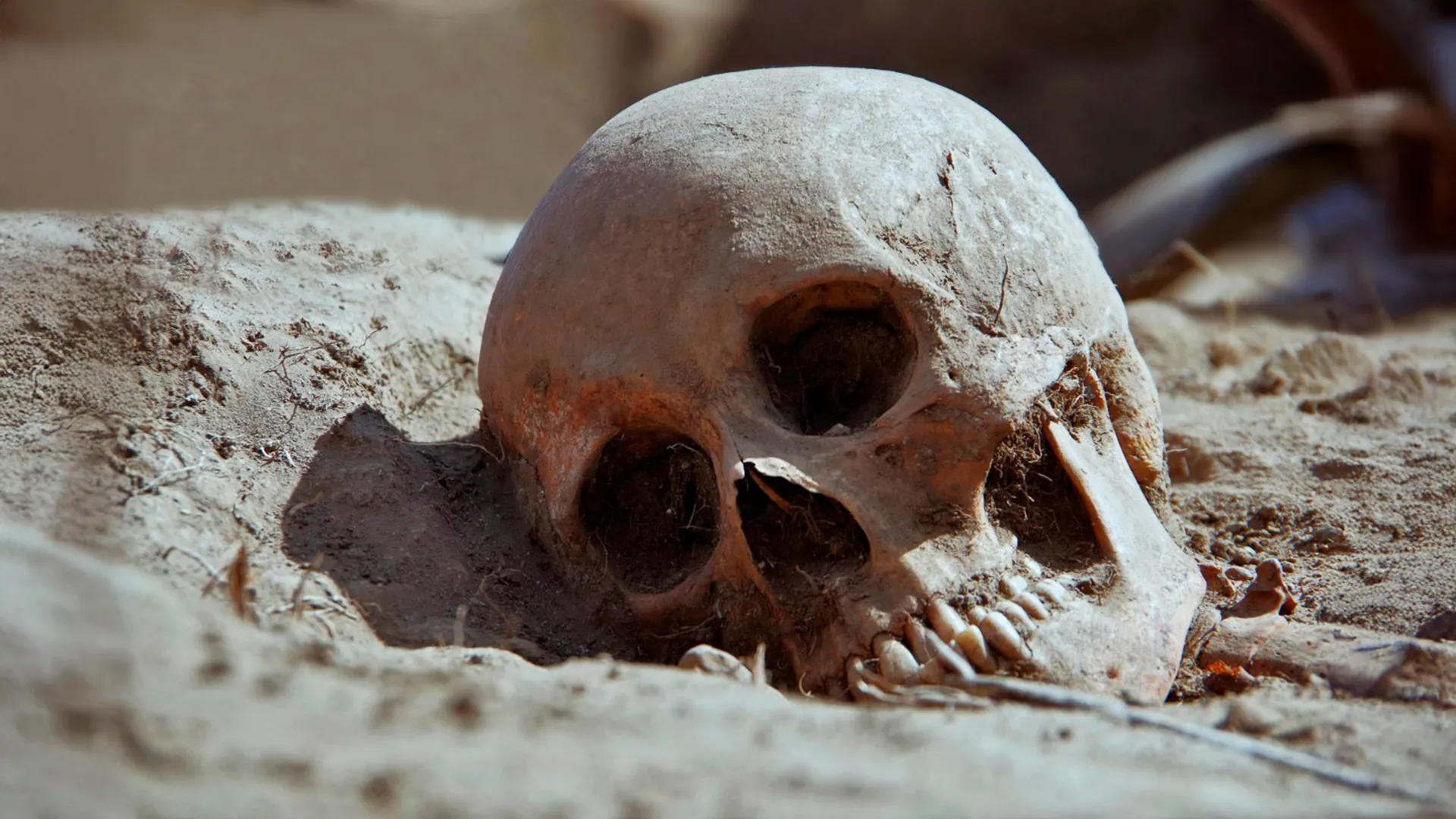
This ambitious study involved the reconstruction of 26 novel Yersinia pestis genomes. These genetic blueprints were painstakingly pieced together from human archaeological remains recovered from 11 distinct sites spanning five countries: Estonia, Russia, England, the Netherlands, and Switzerland. The samples, dating from the late 14th through the 18th centuries, encompass a substantial portion of what is historically referred to as the Second Plague Pandemic. This extensive geographical and temporal range has allowed the research team to construct the most comprehensive genetic narrative of this prolonged pandemic to date, offering critical insights into the pathogen’s enduring presence.
One of the study’s most compelling revelations challenges previous assumptions about plague’s long-term persistence. Instead of the disease merely surviving in a singular geographical locus and repeatedly radiating outwards, the genetic evidence suggests a more complex dynamic. Yersinia pestis appears to have re-emerged in disparate regions of Europe over the centuries, potentially establishing multiple localized reservoirs where the bacterium could persist independently. Estonia, for instance, emerged as a region particularly susceptible to repeated introductions of the plague. The genetic signatures indicated that the bacterium entered this Baltic nation on multiple occasions throughout the Second Plague Pandemic, underscoring the crucial role of European connectivity and long-distance trade routes in facilitating the pathogen’s movement.
A particularly striking evolutionary pattern was observed during the period spanning approximately 1450 to 1500. During these five decades, plague lineages underwent a significant expansion, subsequently diversifying into three distinct and important genetic branches. This diversification is hypothesized to have played a pivotal role in the establishment of novel Yersinia pestis reservoirs within various wild rodent populations across the continent. Such reservoirs are critical for the long-term survival of the bacterium, providing a consistent source for future outbreaks, even in the absence of direct human-to-human transmission.
Environmental factors, specifically climatic shifts, are also posited to have influenced this significant genetic expansion. The researchers highlight the Great Renaissance Drought as a potential contributing element. Modern epidemiological investigations into plague systems have consistently demonstrated a strong correlation between changes in climate and the frequency and intensity of outbreaks among wild rodents, which serve as natural hosts for the bacterium. Fluctuations in temperature and precipitation can impact rodent populations, their foraging behaviors, and their susceptibility to infection, thereby indirectly influencing the likelihood of spillover events into human populations. Professor Kristiina Tambets, a senior author on the study, emphasized the depth of these findings, stating, "We found evidence for repeated introductions of plague into Estonia starting already in the late 14th century and identified several previously unknown genetic lineages, both in urban and rural settings." This underscores the multifaceted nature of plague’s reintroduction and adaptation.
A significant hurdle in the study of ancient pandemics lies in precisely pinpointing the timing of historical infections. During the recent COVID-19 pandemic, scientists could track individual viral variants with remarkable accuracy due to the precise dating associated with each sequenced genome. Ancient disease samples, however, rarely come with such granular temporal information. Archaeological remains are typically dated using radiocarbon techniques, which often yield broad time windows spanning many decades, or even over a century, thereby limiting the interpretability of genetic data. Dr. Marcel Keller, the study’s main author, articulated this challenge: "With COVID-19, scientists could reconstruct the spread of individual strains extremely well because the genomes came with precise timestamps. For historical pandemics, those timestamps are often missing or may cover more than 100 years, which limits our ability to interpret the genetic data."
To overcome this methodological obstacle, the research team innovated a novel approach designed to narrow these expansive dating ranges. Their technique involved examining the position of individual plague genomes within the bacterium’s broader evolutionary tree. By analyzing the phylogenetic relationships, researchers could infer more refined and precise dates for many of the ancient samples. This groundbreaking methodological refinement allowed them to integrate ancient infection events into a much more accurate historical chronology.
The enhanced dating methodology was then applied not only to the 26 newly sequenced genomes but also to 64 previously published Yersinia pestis genomes. This systematic re-evaluation represents the first concerted effort to link nearly all available plague genomes from the 14th to the 18th centuries with specific outbreaks detailed in historical records. This fusion of genetic and historical data has provided an unparalleled level of detail. According to Professor Philip Slavin, a historian and corresponding author, "We were able to improve dating intervals for many samples, which allowed us to connect them to specific plague waves and outbreaks that were recorded in the respective towns or regions by chroniclers." This cross-disciplinary validation significantly bolsters the study’s conclusions, creating a richer, more nuanced understanding of plague’s historical trajectory.
The genetic record further illuminated the profound influence of human societal activities on the pathogen’s dissemination. Newly analyzed genomes provide compelling additional evidence linking outbreaks directly to major conflicts such as the Thirty Years’ War (1618-1648) and the Great Northern War (circa 1700-1721). Armies, along with displaced civilians, refugees, and merchants, frequently utilized common travel arteries. These routes, bustling with movement, inadvertently created fertile ground for the pathogen to traverse vast distances and spread between disparate regions. Dr. Christiana L. Scheib, also a senior author, explained, "We see how Yersinia pestis splits into new branches during periods of conflict and spreads along the routes traveled by troops and displaced populations."
The findings also add granular detail to plague outbreaks specifically associated with the Great Northern War. For instance, during the 1710 siege of Tallinn, the disease exacted a heavy toll not only on the besieging Russian and defending Swedish soldiers but also on the civilian population trapped within the city walls. This vivid historical example underscores how warfare created ideal conditions for plague transmission, transforming battlegrounds and besieged cities into epicenters of infection. Collectively, the evidence meticulously assembled by this study emphatically demonstrates that plague was far more than a singular medieval catastrophe. It remained a recurring and formidable danger for numerous generations, persistently returning to communities across the European continent.
Although Yersinia pestis no longer poses a significant public health threat in Europe, the bacterium has not been eradicated globally. It continues to persist in natural rodent reservoirs in various regions worldwide, making ongoing research into its dynamics crucial. The insights garnered from understanding how plague established itself after the initial Black Death, maintained its presence for centuries, and eventually disappeared from Europe are invaluable. Such knowledge can profoundly enhance scientists’ comprehension of the long-term behavior of infectious diseases in general.
The ability to connect ancient pathogen genomes with documented historical outbreaks and hypothesized animal reservoirs offers a unique lens through which to examine the fundamental processes of disease emergence, spread, establishment, and long-term persistence. This historical epidemiological data holds immense potential for improving contemporary disease surveillance strategies and fortifying efforts to monitor areas where plague remains endemic today. By understanding the historical interplay of environmental, evolutionary, and human factors that shaped past pandemics, researchers can develop more robust models and interventions for current and future infectious disease challenges.
This ambitious project exemplifies the power of interdisciplinary collaboration, bringing together researchers and evidence from diverse countries and scientific domains. Expertise and samples were contributed by collaborators across Europe, including scientists from the University of Cambridge and research partners in the Netherlands and Switzerland. By synergistically combining ancient DNA analysis, archaeological investigation, meticulous historical record review, and advanced radiocarbon dating techniques, the researchers have constructed what they describe as the most comprehensive genetic portrait of the Second Plague Pandemic to date. Their findings illuminate a disease that dynamically crossed borders, evolved into novel lineages, followed the currents of human migration and conflict, and profoundly continued to shape the fabric of Europe for centuries after the initial Black Death had seemingly run its course.
About the Author









