
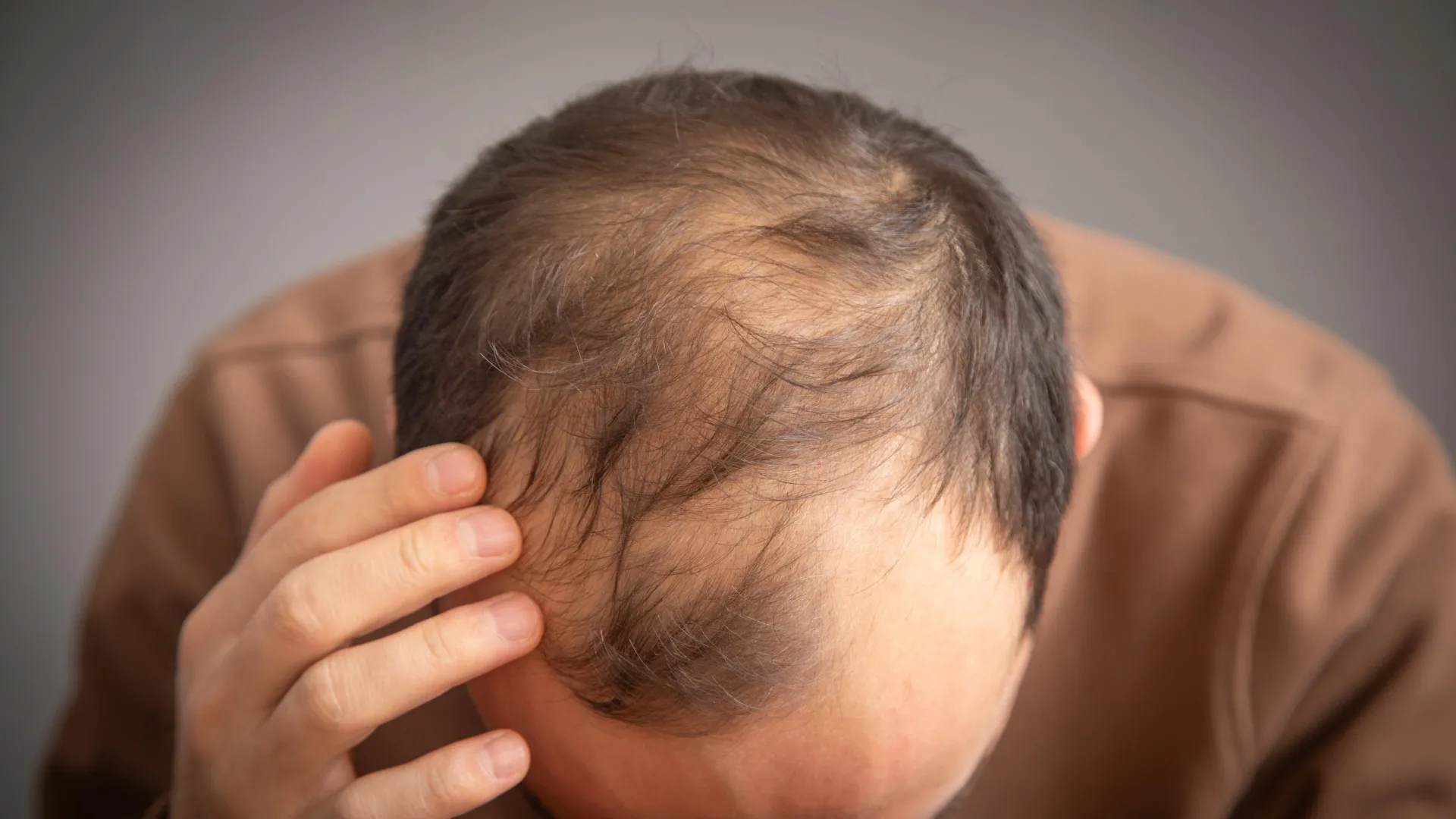
A recent scientific investigation has unearthed a compelling genetic connection between the physiological mechanisms influenced by GLP-1 receptor agonist medications and an elevated propensity for androgenetic alopecia, commonly known as male pattern baldness, in certain individuals. This groundbreaking research, conducted by a team at NYU Langone Health, provides the first genetic evidence supporting a long-suspected association, suggesting that men already genetically predisposed to this prevalent form of hair loss may experience an additional 7 percent increase in risk when utilizing popular GLP-1 drugs such as Ozempic, Wegovy, and Zepbound for conditions like type 2 diabetes and obesity.
Glucagon-like peptide-1 (GLP-1) receptor agonists represent a class of pharmacological agents that have revolutionized the management of type 2 diabetes and, more recently, chronic weight management. These medications work by mimicking the effects of the natural GLP-1 hormone, which is released by the intestine in response to food intake. Their primary actions include stimulating insulin secretion in a glucose-dependent manner, suppressing glucagon release, slowing gastric emptying, and promoting a sense of satiety, thereby reducing appetite and caloric intake. The efficacy of these drugs in improving glycemic control and facilitating significant weight loss has led to their widespread adoption, with survey data indicating that an estimated 12 percent of Americans have used GLP-1 drugs specifically for weight reduction. Among women aged 50 to 64, this figure rises to one-fifth. Since the initial FDA approval of Ozempic in 2020, prescriptions for GLP-1 agonists have more than tripled, highlighting their burgeoning impact on public health.
Prior to this new study, anecdotal reports and clinical observations had already noted instances of hair thinning or loss among both male and female users of GLP-1 medications. The prevailing hypothesis for this phenomenon largely attributed the shedding to the physiological stress induced by rapid weight loss. Significant and swift reductions in body mass can trigger a temporary condition known as telogen effluvium, where a large number of hair follicles prematurely enter the resting (telogen) phase, leading to increased shedding several months later. In many cases, individuals reported that their hair growth patterns normalized once their weight stabilized, lending credence to the weight-loss-induced stress theory. However, some researchers suspected that an underlying genetic component might also contribute to the observed hair loss, a possibility now substantially supported by the findings published on September 3 in the Journal of Investigative Dermatology.
The research team at NYU Langone Health embarked on a detailed genetic analysis to explore this potential causal link. Their investigation centered on the GLP1R gene, a critical genetic locus that inherently influences the expression levels of glucagon-like peptide-1 (GLP-1) receptor proteins within the body’s cells. By studying the activity associated with this particular gene, the researchers were able to establish an indicator for the overall activity of GLP-1 agonists. A higher level of GLP1R activity correlates directly with increased concentrations of GLP-1 receptor proteins.
A pivotal aspect of the study involved comparing genetic blueprints associated with elevated GLP1R activity against the genetic profiles found in men diagnosed with androgenetic alopecia. Androgenetic alopecia is the most prevalent form of hair loss, characterized by a progressive miniaturization of hair follicles on the scalp, ultimately leading to shorter, finer, and eventually absent hairs. It is a polygenic condition, meaning it results from the combined action of multiple genes, and is strongly influenced by androgens (male hormones) and genetic predisposition. This inherited condition typically manifests as a receding hairline and thinning at the crown and temples. Affecting approximately half of White American males over the age of 50, and a similar proportion of postmenopausal White American females, it represents a significant cosmetic and psychological concern for millions globally. Due to the extensive prior research into male hair loss compared to that in women, the current study focused exclusively on investigating a potential causal connection in men, a limitation the researchers intend to address in future studies.
The analytical process revealed a significant finding: genetic variants linked to naturally higher levels of GLP-1 receptor proteins were observed to be more prevalent among men afflicted with androgenetic alopecia. This discovery suggested a shared biological pathway or interaction between GLP-1 signaling and the genetic susceptibility to male pattern baldness. To ensure the robustness of their findings, the research team meticulously adjusted their analysis to account for several known risk factors for hair loss that could potentially confound the results.
One such factor considered was hypertension, or high blood pressure, which has been implicated in hair loss due to its potential to impair blood flow to the scalp, thereby compromising the ability of hair follicles to grow normally. Even after meticulously accounting for the influence of hypertension in their statistical models, the observed additional 7 percent risk associated with GLP-1 activity persisted, underscoring the independence of the genetic link they identified. Furthermore, the investigators explored whether other metabolic conditions, such as insulin resistance—a primary driver of type 2 diabetes—or reduced testosterone levels, could explain the association. Both insulin resistance and testosterone levels play complex roles in metabolic health and hair follicle biology. However, after adjusting for these factors, neither could account for the observed correlation, and the increased hair loss risk associated with GLP-1 activity consistently remained at 7 percent. This meticulous approach solidified the conclusion that the genetic connection to GLP-1 activity was distinct from these other influences.
According to Dr. Lynn Petukhova, the study’s senior investigator and an assistant professor in the Ronald O. Perelman Department of Dermatology and the Department of Population Health at NYU Grossman School of Medicine, "Our study provides the first genetic link between GLP-1 use and an increased risk of male-pattern hair loss from androgenetic alopecia, an association long suspected but until now not shown scientifically." The convergence of genetic activity related to both GLP-1 utilization and hair loss, as evidenced by this research, strongly implies an underlying biological connection between the two processes.
The implications of these findings are substantial for both clinical practice and personalized medicine. The study suggests a future where genetic screening could become a valuable tool for identifying individuals who might be particularly vulnerable to hair loss before they commence GLP-1 medication regimens. "Our findings suggest that, if future experiments prove successful, some men, and possibly women too, could be screened and benchmarked for their risk of hair loss before being prescribed GLP-1 medications," Dr. Petukhova elaborated. Such foresight could empower healthcare providers to engage in proactive patient counseling and tailored treatment strategies. Moreover, the research opens avenues for potential combination therapies. Dr. Petukhova envisioned a scenario where "these findings leading to some GLP-1 users being prescribed combination treatments to prevent hair loss, such as minoxidil or some other drug," alongside their GLP-1 agonists.
Further research is crucial to fully elucidate the precise molecular mechanisms through which GLP-1 activity might disrupt or interfere with the normal hair follicle growth cycle. Dr. Petukhova and her team are committed to this next phase of inquiry and also plan to extend their investigations to determine whether the same genetic connection identified in men is also present in women, addressing a key limitation of the current study.
For their comprehensive analysis, the researchers leveraged extensive publicly accessible genetic databases. These included the eQTLGen database, which compiles genetic information from 31,684 individuals, predominantly White men and women. Additionally, the Complex Traits Genetics group database, comprising data from 205,327 individuals, primarily White men, contributed significantly to the study’s statistical power and breadth. The utilization of these large datasets was instrumental in identifying robust genetic associations.
Funding support for this pivotal research was generously provided by the National Institutes of Health through grants R01AR080796 and K01AR075111. The collaborative effort involved several key researchers from NYU Langone, including co-investigators Dr. Jerry Shapiro and Dr. Kristen Lo Sicco, alongside Derek Mass, MPH; Mary Casagrande, MPH; and Poppy Gould, PhD; with Archie Spindler serving as a co-lead investigator. Additional contributions came from co-lead investigator Dr. Ravi Ramesur, affiliated with the University of Pennsylvania and King’s College London, and co-investigator Dr. Atlas Khan from Columbia University. It is important to note the disclosure that Drs. Shapiro and Lo Sicco have previously served as study investigators for hair loss drugs and devices manufactured by Pfizer and Regen Labs. Furthermore, Dr. Lo Sicco is a compensated consultant for Pfizer, Lilly, Ro, Priovant, Veradermics, and Aquis, with all such relationships managed in adherence to NYU Langone’s institutional policies.
About the Author









