
For many individuals, particularly those navigating the sixth decade of life and beyond, the sensation of stiff, aching feet has become an unfortunate constant. This prevalent issue often stems from a lifetime of encasing feet in supportive footwear, inadvertently diminishing their inherent strength and dynamic capabilities. While shoes and orthotics undeniably offer necessary support in certain situations, a deeper understanding of the foot’s complex engineering reveals that true, lasting resilience is forged through active engagement and targeted movement, rather than passive external assistance. It is a critical paradigm shift: recognizing the foot not as a rigid foundation requiring constant buttressing, but as an extraordinarily adaptive, self-regulating mechanism that thrives on dynamic interaction with its environment.
The human foot is a marvel of biological engineering, an intricate structure comprising a staggering 26 bones, with an additional two sesamoid bones often present, accounting for nearly a quarter of all the bones in the entire body. These bones articulate across more than 33 joints, held together and moved by over 100 muscles, tendons, and ligaments. This dense concentration of musculoskeletal components allows for an astonishing range of motion and adaptability. Far from being a simple, static platform, the foot is designed for dynamic interplay, constantly adjusting to varied terrains and forces encountered during daily activities.
Central to this dynamic design are the three primary arches: the medial longitudinal arch, the lateral longitudinal arch, and the transverse arch. These are not immutable, fixed structures, but rather flexible, spring-like configurations that deform and recoil with every step. When weight is applied, these arches subtly flatten, absorbing impact and distributing pressure across the sole. As the foot prepares to push off, the arches become more rigid, transforming into a powerful lever that efficiently propels the body forward. This sophisticated interplay of flexibility and rigidity is fundamental to an efficient and injury-free gait.
Consider the immense forces the feet must manage. With each stride during walking, the foot can bear two to three times an individual’s body weight. This force escalates dramatically during activities like running, where it can reach seven times body weight, and on hard surfaces such as concrete, it might peak at 12 to 15 times. If the foot’s intrinsic mechanisms for absorbing and distributing these forces are compromised, the impact reverberates unchecked through the kinetic chain, potentially contributing to stress and discomfort in the knees, hips, and even the spinal column. The plantar fascia, a thick band of connective tissue running along the sole, plays a crucial role in this process. During the push-off phase, as the big toe extends, the plantar fascia tightens, elevating the arch and effectively transforming the foot into a rigid, energy-storing spring, ready to release that energy for propulsion. This elegant "windlass mechanism" is a testament to the foot’s intelligent design.
However, modern lifestyles, characterized by prolonged periods in restrictive footwear and reduced opportunities for barefoot activity, often hinder the natural development and maintenance of this complex system. Shoes, while providing protection and comfort, can inadvertently disengage the foot’s intrinsic musculature and diminish its sensory input. This can lead to a gradual weakening of the small, stabilizing muscles within the foot and ankle, impairing their ability to perform their natural shock-absorbing and propulsion roles.
Orthotics, custom or over-the-counter arch supports, are often prescribed to address various foot ailments. They serve a vital purpose in managing specific injuries, deformities, or medical conditions by providing external support and correcting biomechanical imbalances. However, it is crucial to differentiate between support and strengthening. Orthotics support the foot; they do not strengthen its muscles, improve its coordination, or retrain its nervous system. For many individuals without severe pathologies, an over-reliance on orthotics can potentially create a dependency, allowing the foot’s natural stabilizing muscles to remain underutilized and weak. The goal for general foot health, especially as one ages, should be to empower the foot to perform its functions intrinsically, rather than perpetually outsourcing that work to external devices.
One of the most profound benefits of barefoot movement and targeted foot exercises lies in enhancing proprioception. The sole of the foot is densely populated with thousands of sensory receptors, acting as a sophisticated interface between the body and the ground. These receptors constantly gather crucial information about pressure distribution, surface texture, joint position, and subtle movements. This rich stream of data is relayed to the brain, which then orchestrates minute, unconscious adjustments throughout the ankles, knees, hips, and spine, long before conscious awareness kicks in. Think of the feet as the body’s primary sensory antennae, providing critical navigation data.
As individuals age, this vital proprioceptive feedback often diminishes. This decline is not necessarily due to a failing brain, but rather a consequence of less active feet, habitually encased in shoes. Reduced sensory input leads to less robust neural signaling, weakening the brain-foot connection. Over time, this can contribute significantly to a decline in balance, coordination, and overall movement quality, increasing the risk of falls—a major concern for older adults. Re-engaging these sensory pathways through barefoot activity can revitalize this crucial feedback loop, improving stability and confidence in movement.
Beyond proprioception, the foot’s sole contains one of the body’s highest concentrations of nerve endings, which explains why practices like foot massage and reflexology have persisted across cultures for millennia. While direct links between specific foot zones and distant organs remain largely unproven scientifically, stimulating the feet is widely recognized for its ability to promote relaxation, potentially alter pain perception, and significantly increase sensory awareness. Whether through manual manipulation or simply spending more time moving without shoes, providing the nervous system with richer, more varied tactile and proprioceptive information is a powerful tool for restoring overall bodily function.
The following exercises are designed not merely to strengthen individual muscles but to comprehensively rebuild the foot’s natural dynamic system, enhancing its ability to absorb shock, distribute forces, and provide stable propulsion. They encourage conscious engagement with the foot’s intricate mechanics, fostering a deeper connection between mind and body, and promoting lifelong mobility and independence.
1. Plantar Fascia Self-Release (Self-Massage)
This foundational exercise aims to improve the pliability and reduce tension in the plantar fascia and the intrinsic muscles of the sole, preparing the foot for more active engagement.

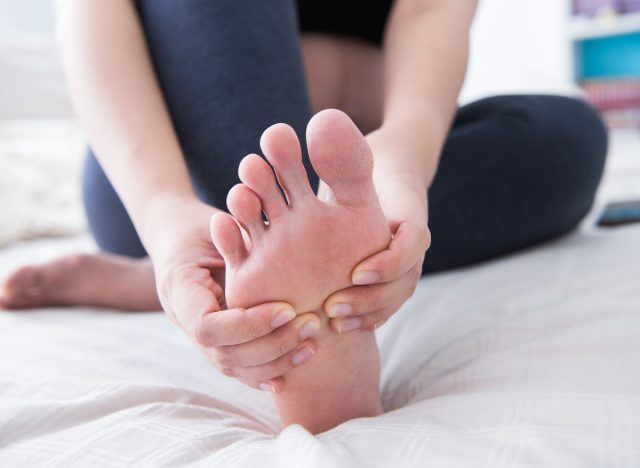
- How to Do It: Sit comfortably in a chair or on the floor, bringing one foot up to rest on the opposite thigh. Use your thumbs to systematically massage the arch of your foot, applying firm but tolerable pressure. Work from the heel towards the toes, exploring any tender spots. Alternatively, place a small, firm ball (like a lacrosse ball or golf ball) on the floor and roll your bare foot over it, applying pressure as needed. Focus on releasing tension rather than just superficial rubbing.
- Mistakes to Avoid: Pressing too hard initially, causing sharp pain. Neglecting the entire arch area, focusing only on one spot. Rushing through the process.
- Sets and Duration: Aim for 3 to 5 minutes per foot.
- Form Tip: Notice how the space between your toes might increase after the massage, indicating improved tissue flexibility and spread. Consistent practice can help maintain this natural splay.
2. Articulated Toe Lifts and Spreads (Single-Leg Standing Toe Coordination)
This exercise focuses on isolating and strengthening the intrinsic foot muscles and enhancing neurological control over individual toe movements, crucial for balance and gait.
- How to Do It: Begin seated, then progress to kneeling, and finally standing on one leg. While maintaining balance, try to lift all five toes off the ground simultaneously, then slowly lower them. Next, try to lift only the big toe while keeping the other four down, then reverse, lifting only the small four toes while keeping the big toe grounded. Progress to spreading your toes wide apart, creating space between each digit, then gently bringing them back together.
- Mistakes to Avoid: Compensating by gripping the floor with the entire foot or scrunching the toes. Losing balance significantly during standing variations.
- Sets and Duration: Perform for 60 to 90 seconds per foot, completing 1 to 3 sets.
- Form Tip: The key is control and isolation. It may feel challenging at first, but consistency will improve the neural connection and muscle activation. Work at the level where you can maintain control.
3. Dynamic Foot Rolling (The Shuffle Walk)
Inspired by principles of gait mechanics, this exercise enhances proprioceptive feedback and promotes a smooth, coordinated foot roll, mimicking the natural movement patterns of walking.
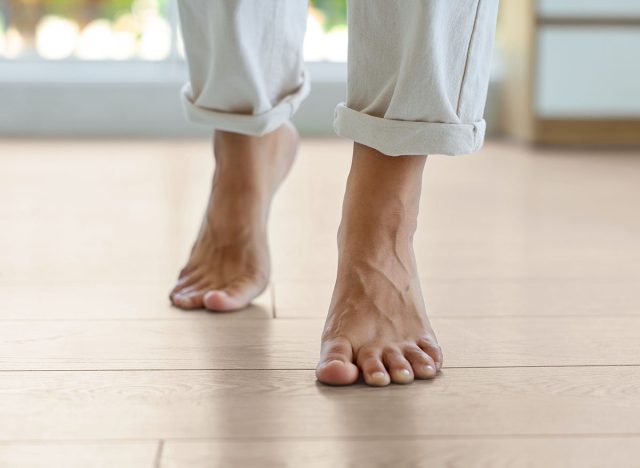
- How to Do It: Stand barefoot on a smooth, non-slip surface. Begin by slowly lifting one heel while keeping the toes and ball of that foot grounded. As you shift your weight forward, gently drag the ball of your foot and toes along the floor as you initiate a small step. Then, smoothly roll the foot forward, lifting the toes last as the other heel lifts. The motion should be continuous and controlled, like a slow, deliberate "shuffle" where the foot maintains contact with the ground for an extended period, maximizing sensory input. The objective is to articulate each part of the foot through the movement, rather than lifting the foot completely off the ground.
- Mistakes to Avoid: Lifting the foot too high off the ground. Rushing the movement. Not engaging the toes and the ball of the foot in the "drag" phase.
- Sets and Duration: Practice for 60 to 90 seconds, performing 1 to 3 sets.
- Form Tip: Visualize your foot as a finely tuned sensor, gathering maximum information from the ground as it slowly rolls and glides.
4. Controlled Heel Raises with March (March with Calf Raise)
This exercise strengthens the calf muscles and the intrinsic foot muscles responsible for the powerful "toe-off" phase of gait, crucial for efficient propulsion and force distribution.
- How to Do It: Stand tall with feet hip-width apart. Begin by performing a controlled marching motion, lifting one knee towards your chest. As you lift the knee, simultaneously rise onto the ball of the foot of your standing leg, performing a calf raise. Hold this elevated position briefly (1-2 seconds) at the top, focusing on the engagement of your calf and the stability of your foot. Slowly lower your heel and the marching foot back to the starting position, then repeat on the other side. Ensure the calf raise is driven by the ball of the foot, especially the big toe, rather than rolling outwards onto the pinky toe side.
- Mistakes to Avoid: Rushing the movement and using momentum rather than controlled muscle engagement. Allowing ankles to roll inward or outward excessively. Not fully extending onto the ball of the foot.
- Sets and Duration: Continue for 60 to 90 seconds, completing 1 to 3 sets.
- Form Tip: Initially, focus on a stable march with a brief hold at the top before adding the calf raise. As strength improves, emphasize the smooth, controlled ascent and descent of the heel, connecting the movement to efficient forward propulsion.
By consistently integrating these barefoot exercises into a daily routine, individuals can proactively combat age-related stiffness and weakness in their feet. This approach moves beyond simply supporting a problem, instead fostering a robust, adaptable, and naturally resilient foot structure. Reclaiming the intrinsic strength and sensory awareness of the feet is a powerful step towards maintaining mobility, improving balance, and enhancing overall quality of life well into the later years, allowing one to move through the world with greater confidence and comfort.
About the Author