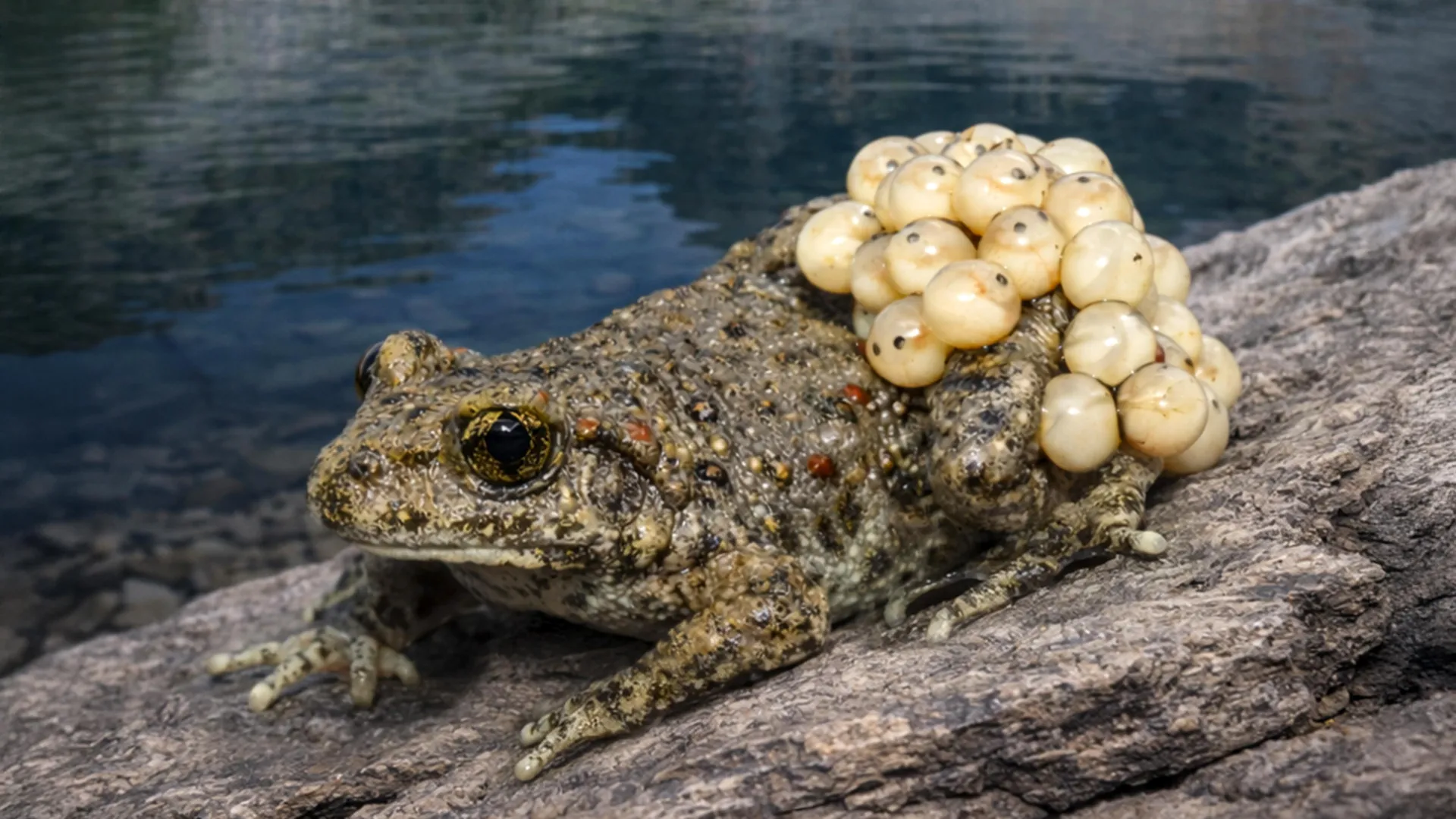
For years, the scientific community has grappled with the devastating impact of a virulent fungal pathogen that has decimated amphibian populations across the globe, leading to widespread ecological imbalance and the precipitous decline of countless frog and toad species. A groundbreaking international research effort, spearheaded by institutions including University College London (UCL), the Zoological Society of London (ZSL), and Imperial College London, has now illuminated a crucial factor determining the survival of these vulnerable creatures: the precisely timed development of their immune systems. The comprehensive findings of this investigation have been formally documented and disseminated in the esteemed scientific journal, Nature Chemical Biology.
The insidious pathogen, scientifically identified as Batrachochytrium dendrobatidis (commonly abbreviated as Bd), is the causative agent of chytridiomycosis, a devastating disease that systematically attacks the dermal tissues of amphibians. This fungal infection critically compromises the animals’ ability to maintain essential physiological functions, particularly their capacity to regulate osmotic balance and the absorption of vital salts and minerals from their environment. The fungus exhibits a particular predilection for keratin, a protein abundant in the specialized skin layers of adult amphibians. Consequently, juvenile amphibians, in their larval and tadpole stages, are largely insulated from the lethal effects of Bd due to their underdeveloped skin structure. However, upon metamorphosis into their adult forms, their skin undergoes a transformation that renders them highly susceptible to infection, often triggering catastrophic mortality events and rapid population collapse.
To unravel the complex mechanisms underlying differential population recovery in the face of this persistent fungal threat, the research team embarked on an extensive field study. Their focus was directed towards populations of the common midwife toad (Alytes obstetricans) inhabiting a series of four distinct lakes nestled within the Pyrenean mountain range, straddling the borders of France and Spain. Crucially, all four of these aquatic ecosystems had previously endured severe epizootics of Bd. The researchers observed a stark divergence in the ecological trajectories of these toad populations: at one of the studied lakes, the midwife toad population was still in a state of severe decline, teetering on the brink of local extinction. In striking contrast, the toad populations at the other three lakes had demonstrated remarkable resilience and had begun a significant recovery, even in the continued presence of the Bd fungus within their environment.
The core of the scientific inquiry centered on a vital component of the amphibian innate immune system: antimicrobial peptides. These naturally occurring chemical compounds are secreted from the amphibian skin and play a pivotal role in defending against a broad spectrum of microbial invaders, including pathogenic fungi. The researchers’ meticulous analysis revealed a profound difference in the immune preparedness of toads from the recovering populations. They discovered that these resilient toads initiated the production of these crucial protective peptides at a significantly earlier developmental stage, specifically while they were still in their tadpole phase. This precocious development meant that by the time these individuals transitioned to adulthood and their skin became susceptible to Bd infection, their immune defenses were already robustly established and poised to combat the pathogen.
Conversely, toads originating from the struggling, declining population exhibited a markedly attenuated production of these essential antimicrobial peptides during their tadpole stage. This deficit left them ill-equipped to mount an effective defense when they matured into adults, thereby increasing their vulnerability to the lethal effects of chytridiomycosis and perpetuating the population’s downward spiral. Dr. Phillip Jervis, the lead author of the study and affiliated with UCL Chemistry, ZSL Institute of Zoology, and Imperial College London, articulated the significance of these findings, stating, "Our study demonstrates that species severely impacted by this disease possess the inherent capacity for recovery. They possess the biological mechanisms to fend off infection; the critical determinant is the temporal aspect of their immune maturation. The disease typically claims the lives of toads and frogs during their transition from tadpole to adult. Achieving mature immunity during the tadpole phase significantly enhances the survival prospects of these toads, enabling the population to persist and regenerate."
Dr. Jervis further elaborated on the avenues for future research, indicating that the subsequent phase of their investigation would delve into the factors that impede the timely maturation of these sophisticated immune systems. He suggested that such impediments could be attributed to a confluence of genetic predispositions or environmental influences. These environmental factors might encompass variables such as ambient temperature fluctuations or the presence of predatory species like trout. The latter, in particular, could exert pressure on tadpoles, compelling them to accelerate their development and emerge from the water as terrestrial adults more rapidly, thereby curtailing the window for their immune systems to fully mature.
In their quest to comprehensively characterize the chemical arsenal of the toads’ dermal defenses, the researchers employed advanced mass spectrometry techniques. This sophisticated analytical methodology allowed them to meticulously examine the complex cocktail of peptides—short chains of amino acids that serve as building blocks for proteins—released from the amphibian skin. The intricate analysis yielded an astonishing discovery: a far more extensive repertoire of immune peptides than scientists had previously anticipated. Out of a total of 1,152 identified peptides, a staggering 1,145 were entirely novel and had never been documented in scientific literature prior to this study.
Furthermore, the research provided compelling evidence linking the diversity of these peptide secretions during the tadpole stage to subsequent survival rates. Tadpoles that produced a broader array of these defensive peptides, indicative of a more advanced immune system prior to their adult transformation, exhibited a significantly higher probability of surviving even in the persistent presence of Bd outbreaks. In stark contrast, populations where tadpoles produced a more limited spectrum of peptides continued to experience elevated mortality rates, underscoring the critical role of early-life immune development.
The profound implications of these findings extend beyond amphibian conservation, holding considerable promise for advancements in human medicine. Professor Alethea Tabor, the senior author of the study from UCL Chemistry, highlighted the potential, stating, "We have unearthed a diversity of peptides far exceeding our initial expectations. Our immediate objective is to elucidate the precise mechanisms by which these peptides exert their pathogen-controlling functions and to identify those with specific antimicrobial properties." She further emphasized the historical precedent for medical breakthroughs originating from natural sources, citing penicillin, derived from fungi, as a prime example. "Consequently," she continued, "these peptides represent promising new leads that could be harnessed to enhance human health, particularly in light of our species’ ongoing challenges with the escalating problem of antimicrobial resistance, which necessitates the urgent discovery of novel therapeutic strategies for treating infections."
The mass spectrometry technology employed in this study, specifically tandem mass spectrometry utilized at UCL Chemistry, enables scientists to determine the mass of molecules with exceptional precision. By fragmenting peptides into smaller components, measuring the mass of these fragments, and subsequently reconstructing the original peptide’s structural architecture, the research team was able to accurately identify and sequence hundreds of previously unknown molecular entities. Dr. Kersti Karu, a co-author from UCL Chemistry, noted the recent advancements in analytical capabilities, remarking, "The ability to analyze hundreds to thousands of molecules simultaneously has only become feasible within the last decade. This analytical approach, more commonly applied in human health research—for instance, in distinguishing cancerous cells from normal tissue—is now being increasingly adapted for diverse areas of biological investigation." The ambitious scope of this groundbreaking research was made possible through generous funding from the UK’s Natural Environment Research Council (NERC) and the Leverhulme Trust.
About the Author