
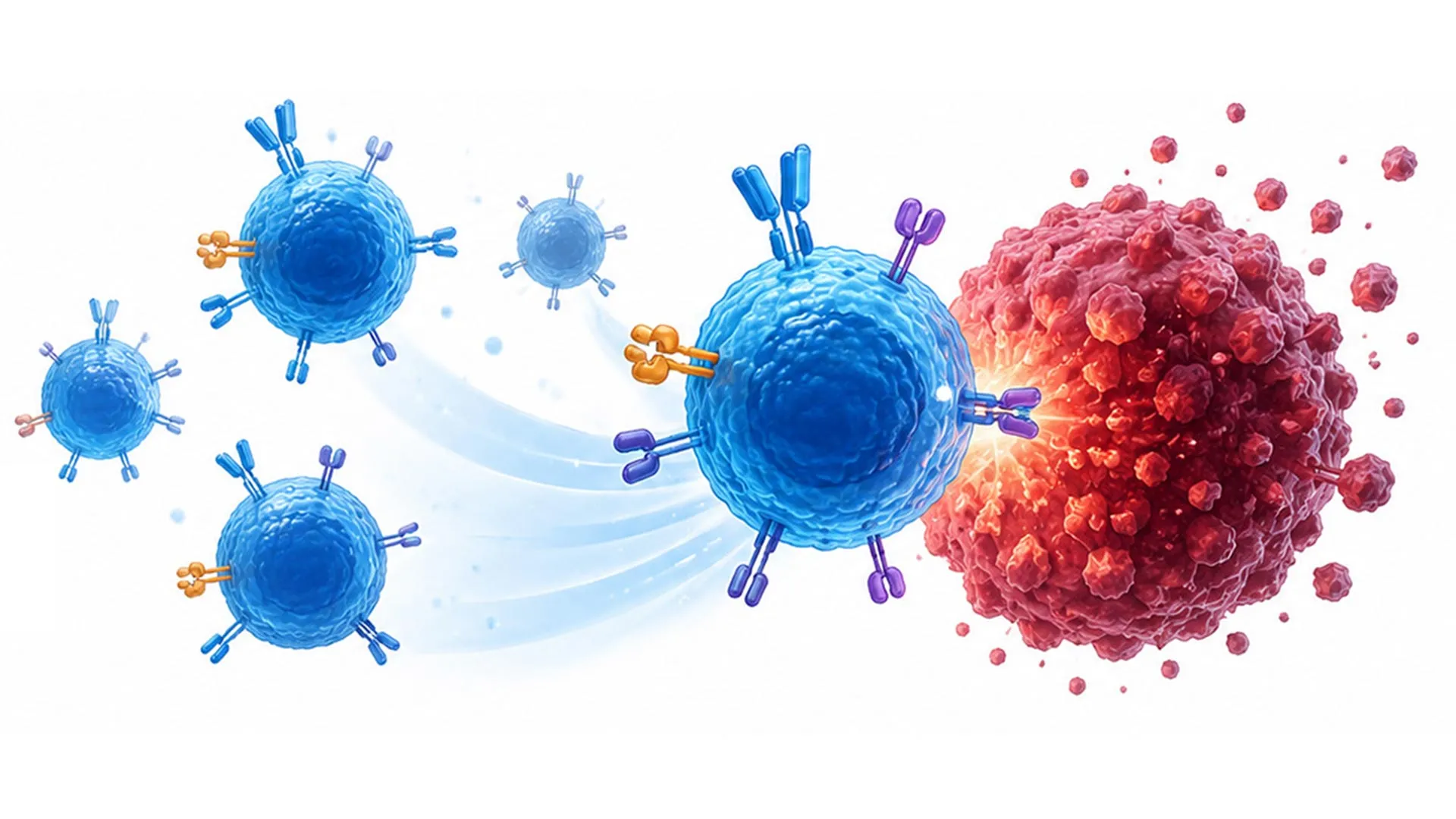
Solid tumors represent a formidable challenge in oncology, frequently resisting conventional therapeutic approaches and often eluding the grasp of even advanced immunotherapies. A significant scientific stride from researchers at the University of California, Los Angeles (UCLA) offers a potential paradigm shift, introducing an innovative method that harnesses the unique properties of umbilical cord blood stem cells to create potent, universally applicable, and cost-effective cancer-fighting T cells. This novel strategy addresses several critical bottlenecks currently hindering the widespread adoption and efficacy of cellular immunotherapies, particularly for complex solid malignancies.
At the heart of this advancement lies T-cell receptor (TCR) therapy, a sophisticated form of cancer treatment. Unlike traditional chemotherapy or radiation, TCR therapy operates by arming a patient’s own immune cells, specifically T lymphocytes, with enhanced capabilities to precisely identify and eradicate malignant cells. This process involves genetically modifying these T cells to express specialized receptors that recognize specific markers on cancer cells. While sharing conceptual similarities with CAR T-cell therapy—another groundbreaking immunotherapy—TCR therapy possesses a distinct advantage crucial for confronting solid tumors. CAR T cells typically target proteins situated on the exterior surface of cancer cells. In contrast, TCR therapy delves deeper; it can detect minute fragments of proteins that originate from within a cancer cell’s interior, subsequently transported and displayed on its surface. These internal protein snippets act as identifying flags, signaling the cell’s abnormal state. This expanded detection capability is particularly vital for solid tumors, as many of the aberrant molecular changes driving their cancerous behavior are sequestered inside the cell, rendering them inaccessible to many existing external-targeting immune treatments.
Despite its profound promise, the journey of TCR therapy from laboratory to broad clinical application has been fraught with practical obstacles. A primary challenge stems from the highly personalized nature of current approaches. Typically, treatment necessitates extracting T cells directly from each individual patient, genetically modifying them, expanding them in a laboratory setting, and then reinfusing them. This intricate, individualized manufacturing process is not only time-intensive, often spanning several weeks, but also prohibitively expensive, with costs frequently escalating into the hundreds of thousands of dollars. Such financial and logistical burdens severely restrict accessibility, making these life-saving therapies available to only a select few.
An alternative strategy, exploring the use of T cells sourced from healthy donors, has been investigated to circumvent the complexities of personalized manufacturing. The vision behind this "allogeneic" or "off-the-shelf" approach is to create batches of therapeutic cells in advance, which could then be stored and administered to multiple patients as needed. However, donor-derived cells introduce a significant safety concern: the risk of graft-versus-host disease (GvHD). In this potentially life-threatening complication, the transplanted immune cells mistakenly perceive the recipient’s healthy tissues as foreign and launch an immune attack, leading to severe and widespread damage. This immunological incompatibility has been a major barrier to developing broadly applicable allogeneic cell therapies.
The UCLA research team has engineered an ingenious solution designed to simultaneously tackle both the logistical hurdles of manufacturing and the immunological challenge of GvHD. Their findings, detailed in the journal Cell Reports Medicine, describe a scalable methodology for generating consistent batches of cancer-targeting T cells. Instead of starting with mature T cells from a donor, which already possess a diverse array of natural T-cell receptors, the scientists began at an earlier, more malleable stage of immune cell development: blood stem cells derived from donated umbilical cord blood.
Cord blood is a rich source of hematopoietic stem cells, which are immature cells capable of differentiating into all major types of blood and immune cells. This unique starting material offers several advantages: it is relatively abundant, ethically sourced, and its stem cells are immunologically "naïve," meaning they have not yet developed the extensive repertoire of T-cell receptors that can lead to GvHD in donor-derived cells. The UCLA team genetically engineered these cord blood stem cells by inserting a gene for a specific T-cell receptor designed to recognize NY-ESO-1. NY-ESO-1 is a well-characterized "cancer-testis antigen," a protein that is typically found only in testicular cells but is aberrantly expressed in a wide variety of solid tumors, including melanoma, ovarian, lung, and prostate cancers.
After successfully introducing the cancer-targeting receptor into the stem cells, the researchers meticulously guided their development in the laboratory, coaxing them to mature into functional T cells. This strategy of introducing the cancer-targeting receptor at such an early, undifferentiated stage confers a critical advantage. As these engineered stem cells mature, they do not develop the random and diverse collection of natural T-cell receptors that would typically be present on mature donor T cells. This significantly reduces the risk that the resulting therapeutic cells will recognize and attack the patient’s healthy tissues, thereby mitigating the threat of GvHD. As co-first author Yichen (John) Zhu, a graduate student at the UCLA Broad Stem Cell Research Center, explained, "Stem cells are undifferentiated — they’re not yet mature T cells with a fixed receptor already in place. When we differentiate our engineered stem cells into T cells, essentially all of the resulting cells carry the same receptor and go after the same tumor target." This contrasts sharply with conventional allogeneic T-cell therapies, which often require additional, complex gene editing to silence existing donor T-cell receptors to prevent harmful reactions against the patient.
Beyond addressing GvHD, the UCLA team engineered their AlloESO-T cells with an additional layer of defense against one of cancer’s most insidious evasive tactics: antigen escape. Solid tumors are notorious for their heterogeneity; cancer cells within the same tumor can exhibit considerable variation, and some may cease to display the specific molecular marker that a targeted therapy was designed to recognize. This phenomenon allows cancer cells to evade detection and survive, even when an initial treatment proves effective. To counteract this, the AlloESO-T cells were equipped with not only the engineered NY-ESO-1 targeting receptor but also natural killer (NK) cell receptors. These NK receptors are designed to recognize "stress signals" frequently displayed by many tumor cells, irrespective of their NY-ESO-1 status. This dual-detection system provides a crucial backup mechanism, ensuring that the therapeutic cells may still be able to identify and destroy a tumor cell even if it downregulates or loses its NY-ESO-1 antigen expression. As Zhu highlighted, "Solid tumors are very diverse. Some tumor cells lose or hide the antigen a therapy is designed to find — what we call antigen escape. When that happens, a therapy built around a single target loses its grip. Our stem cell-derived cells still have a second mechanism to kill those tumor cells." Laboratory experiments with human melanoma, ovarian, and prostate cancer cells provided robust evidence for this concept, demonstrating that the NK cell receptors enabled the engineered T cells to eliminate cancer cells that would otherwise escape detection by the NY-ESO-1 targeting pathway alone. This innovative dual targeting strategy could effectively close off a major escape route for resistant cancer cells.
The efficacy and safety of these engineered AlloESO-T cells were rigorously evaluated in preclinical mouse models of ovarian cancer and melanoma. A single administration of the AlloESO-T cells produced profound and sustained control over tumor growth, leading to significantly extended survival in the treated animals. Crucially, these beneficial effects were achieved without any evidence of dangerous side effects, particularly GvHD. In stark contrast, mice treated with conventionally engineered T cells derived from mature donors experienced only partial and temporary tumor control, and notably, developed symptoms of graft-versus-host disease. Similar positive outcomes were observed in the melanoma model, where AlloESO-T cells effectively slowed tumor progression and delayed cancer recurrence, outperforming conventional comparison cells which offered only transient benefits.
Further analysis revealed significant differences in the behavior of the two cell types post-treatment. Following a single infusion, the AlloESO-T cells demonstrated remarkable expansion, increasing in number by approximately 100-fold. They efficiently migrated into the tumor sites, proliferated where they were most needed, and maintained their active anti-cancer state for several weeks, while largely avoiding accumulation in healthy organs. Conversely, the conventionally engineered donor T cells exhibited an undesirable distribution, accumulating in organs like the liver and lungs, and inducing the very type of toxicity that the new stem cell-based strategy aims to prevent.
Beyond their impressive tumor control capabilities, one of the most transformative advantages of this platform lies in its manufacturing potential. Current personalized T-cell treatments necessitate individual cell collection and processing for each patient, a bespoke approach that severely limits scale. By initiating the process with cord blood stem cells, researchers can produce therapeutic cells on an unprecedented scale. Given that a relatively small quantity of cord blood stem cells can generate an enormous number of immune cells, a single starting supply could potentially yield thousands of treatment doses. Co-senior author Yanruide (Charlie) Li, a postdoctoral scholar in the Yang lab, highlighted this potential: "From a small number of cord blood stem cells, we can generate trillions of therapeutic cells — enough for thousands of doses — within about six weeks. At an estimated $5,000 per dose, this approach would be far more accessible than today’s therapies." This projected cost represents a dramatic reduction compared to the current personalized T-cell treatments, which can cost hundreds of thousands of dollars, making advanced immunotherapy potentially accessible to a much broader patient population.
The researchers envision AlloESO-T as more than a single therapy targeting a specific cancer protein; they present it as a versatile and modular therapeutic platform. Many solid tumors lack suitable protein markers on their outer surfaces for conventional immunotherapies to recognize. TCR-based treatments offer a crucial alternative by enabling receptors to identify protein fragments that originate within tumor cells and are subsequently presented on the cell surface. This inherent capability opens new avenues for targeting cancers that have historically proven recalcitrant to existing cell therapies. As Li affirmed, "We’re not just presenting one therapy for one target. We want to share the platform itself. As long as a receptor for a given cancer antigen has been validated, we can build it into this system and generate T cells specific to that target." The AlloESO-T system also benefits from leveraging established manufacturing protocols developed by Yang’s laboratory for its CAR-NKT platform, another off-the-shelf immunotherapy strategy. This existing infrastructure, in partnership with the UCLA Health Center for Advanced Biotherapies, is expected to accelerate the scaling of AlloESO-T, potentially expediting its progression toward clinical testing.
While the preclinical results are highly encouraging and represent a significant scientific achievement, it is imperative to acknowledge that the therapeutic cells described in this research have, to date, only been evaluated in experimental settings. They have not yet undergone testing in human subjects through clinical trials, nor have they received approval from the U.S. Food and Drug Administration (FDA) for human use, safety, or effectiveness. The journey from promising laboratory discovery to an approved clinical treatment is long and rigorous, requiring extensive human trials to confirm safety, optimal dosing, and efficacy. Nevertheless, this innovative cord blood stem cell platform from UCLA offers a compelling vision for a future where advanced, potent, and affordable T-cell immunotherapies are readily available to combat a wide spectrum of solid tumors, transforming cancer care on a global scale.
Additional authors include Jiaji Yu, Yu Jeong Kim, Yanxin Tian, Zhe Li, Yuning Chen, Zibai Lyu, Enbo Zhu, Annabel S. Zhao, Nathan Ma, Catherine Zhang, Adam Kramer, Matthew Wilson, Ryan Hon, Yu-Chen Wang, Siyu Lin, Xinyuan Shen, Zoe Hahn, Yuchong Zhang and Aijun Wang. This research received support from the California Institute for Regenerative Medicine, the UCLA Molecular Biology Institute, the UCLA Office of the Chancellor and the UCLA Goodman-Luskin Microbiome Center.
About the Author









