The World Health Organization (WHO) has formally recognized Timor-Leste as a nation free from malaria transmission, signifying a monumental public health victory for the young Southeast Asian country. This esteemed certification highlights an extraordinary journey from a high disease burden shortly after its independence in 2002 to the complete elimination of indigenous malaria cases. The announcement underscores the profound impact of dedicated national leadership, strategic public health interventions, and sustained international collaboration in confronting one of the globe’s most persistent infectious diseases.
Dr. Tedros Adhanom Ghebreyesus, the Director-General of the WHO, extended commendations to the people and government of Timor-Leste for this significant accomplishment. He emphasized that the nation’s success provides compelling evidence that malaria can indeed be overcome when a robust political commitment, intelligently designed health programs, consistent financial investment from both domestic and international sources, and the tireless efforts of healthcare professionals converge effectively. This achievement not only protects the health of its citizens but also serves as an inspiring example for other countries striving for similar public health goals.
With this recent designation, Timor-Leste joins an exclusive group of countries and territories that have successfully eradicated malaria. It becomes the 47th country and one territory globally to receive this prestigious certification from the WHO. Furthermore, it holds the distinction of being the third nation within the WHO South-East Asia region to achieve this status, following the Maldives in 2015 and Sri Lanka in 2016, further solidifying the region’s progress in disease control.
The process for obtaining WHO certification of malaria elimination is rigorous and demanding. A country must provide irrefutable evidence that the indigenous chain of malaria transmission has been completely halted nationwide for a minimum of three consecutive years. This requires meticulous surveillance, accurate data reporting, and a robust system for detecting and responding to any potential reintroduction of the disease. The certification is not merely an acknowledgment of past success but a validation of a sustainable, resilient public health framework.
Dr. Élia António de Araújo dos Reis Amaral, the Minister of Health for the Government of Timor-Leste, articulated the profound sentiment of national pride associated with this achievement. She characterized malaria as a formidable adversary, often insidious in its spread and devastating in its impact, claiming countless lives that could have been saved. The Minister acknowledged the unwavering dedication of health workers, the resilience of communities, and the steadfast support from partners like the WHO. She highlighted the remarkable reduction from over 223,000 cases to zero indigenous infections, dedicating this triumph to both those lost and those whose lives are now safeguarded. Dr. Amaral stressed the critical need for ongoing vigilance and community engagement to prevent any re-establishment of the disease within the country’s borders.
Timor-Leste’s journey from a nation grappling with a significant malaria burden to achieving elimination status unfolded with remarkable speed and strategic foresight. Following its independence in 2002, the nation faced immense challenges in establishing basic infrastructure and public services, including a functional healthcare system. Malaria presented a severe impediment to development, overwhelming nascent health facilities and significantly impacting public health. In 2006, the country recorded a peak of more than 223,000 clinically diagnosed malaria cases, underscoring the urgency of the situation.
The pivotal turning point came in 2003, when the Ministry of Health took decisive action to establish the National Malaria Programme. This dedicated entity was tasked with the comprehensive planning, implementation, and rigorous monitoring of malaria control efforts across the entire nation. Despite starting with a minimal staff of just two full-time officers, the program’s initial leadership demonstrated exceptional technical acumen, strong managerial capabilities, and an unwavering commitment to detail. These foundational elements were crucial in initiating the country’s progress against the disease.
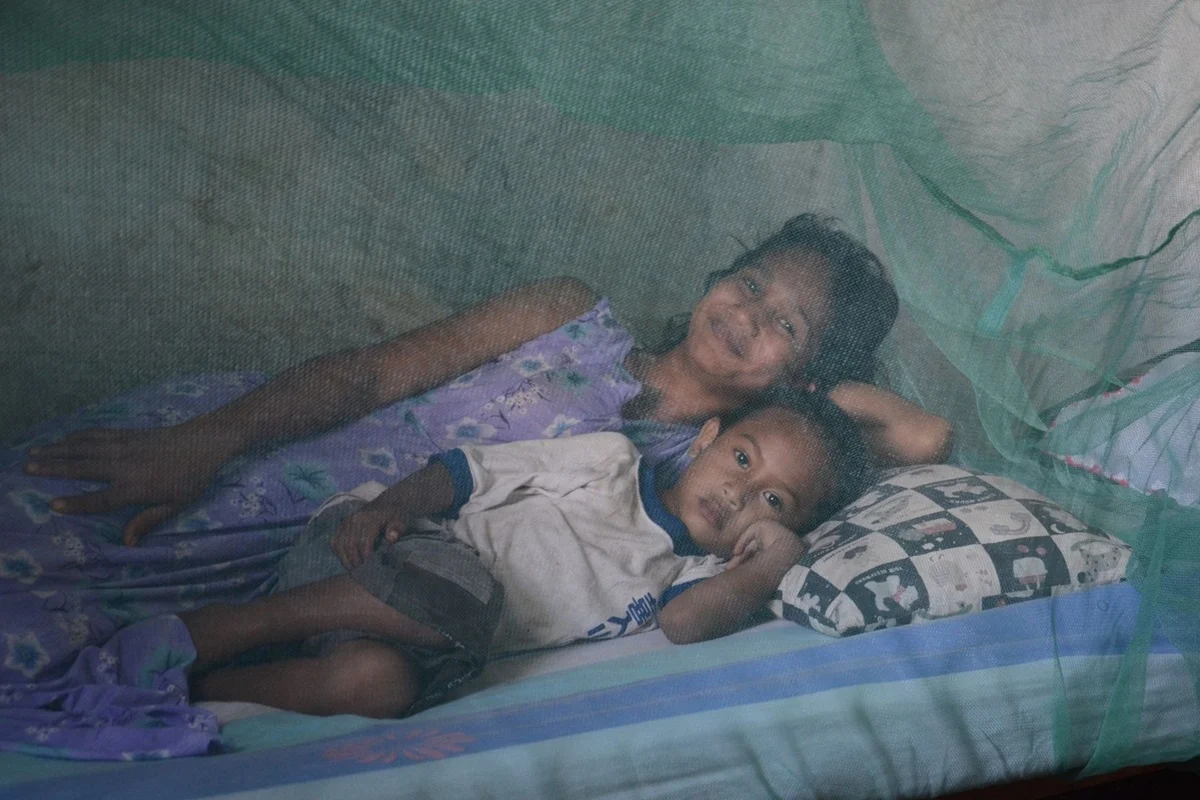
Within a few years of its inception, the National Malaria Programme began to introduce and scale up crucial interventions based on international best practices. These included the adoption of rapid diagnostic tests (RDTs), which enabled quick and accurate identification of malaria infections, even in remote areas. Concurrently, artemisinin-based combination therapies (ACTs) were integrated into the National Malaria Treatment Guidelines, ensuring effective treatment for confirmed cases. Furthermore, the systematic distribution of free, long-lasting insecticide-treated nets (LLINs) commenced, targeting communities identified as being at the highest risk of transmission. These nets provided a critical barrier against mosquito bites, the primary mode of malaria transmission.
The scope of these efforts expanded significantly in 2009 with crucial support from the Global Fund to Fight AIDS, Tuberculosis and Malaria. This partnership enabled Timor-Leste to intensify its nationwide vector control strategies. The distribution of LLINs was broadened, and indoor residual spraying (IRS) campaigns were implemented to further reduce mosquito populations within homes. Simultaneously, diagnostic capabilities were enhanced and decentralized, with microscopy and RDTs becoming available at numerous local health posts, bringing essential diagnostic services closer to the population.
Addressing the severe constraints of a limited healthcare workforce, particularly a shortage of doctors and trained health professionals, Timor-Leste strategically invested in developing and strengthening its three-tier health system. This comprehensive structure comprised national hospitals at the apex, complemented by regional reference hospitals, numerous community health centers (CHCs), and a network of health posts. This design aimed to ensure that the vast majority of residents could access essential healthcare services within a reasonable travel time, often within an hour’s walk. Complementing this infrastructure, the government implemented a policy of free universal healthcare, ensuring that all citizens could receive services at the point of care without financial barriers. To further extend reach into remote and underserved areas, monthly mobile clinics and dedicated community outreach programs were established, bringing health services directly to the people.
The ultimate success of Timor-Leste’s malaria elimination efforts stands as a testament to the power of multifaceted collaboration and robust national leadership. The synergistic partnership between the Ministry of Health, the World Health Organization, local communities, various non-governmental organizations, international donors, and multiple governmental sectors was indispensable. A sophisticated, real-time integrated case-based surveillance system was instrumental in enabling rapid data collection, analysis, and an immediate public health response to any suspected cases. Concurrently, a cadre of well-trained health workers ensured the timely detection and thorough screening of malaria cases, including rigorous monitoring at national borders to prevent imported infections. These integrated and sustained efforts collectively paved the way for the nation to receive its official malaria-free certification.
Dr. Arvind Mathur, the WHO Representative to Timor-Leste, described the malaria-free certification as a defining national triumph, born from courageous leadership, the relentless dedication of health workers, and the collective resolve of its populace. He underscored that as a nascent nation, Timor-Leste maintained an unwavering focus on systematic testing, effective treatment, and thorough investigation of every case. Dr. Mathur emphasized that achieving and sustaining zero transmission and zero deaths from malaria demands more than scientific knowledge alone; it requires immense perseverance and determination. He concluded that this victory safeguards the health and future prospects of generations to come, vividly illustrating the extraordinary accomplishments possible for a resolute nation.
The WHO’s malaria-free certification process is a meticulously structured procedure. The final determination for awarding this certification rests with the WHO Director-General, whose decision is informed by a comprehensive recommendation from the Technical Advisory Group on Malaria Elimination and Certification (TAG-ME), further validated by the Malaria Policy Advisory Group (MPAG). This multi-layered review ensures that the highest scientific and public health standards are met before a country is declared free from malaria.
About the Author