
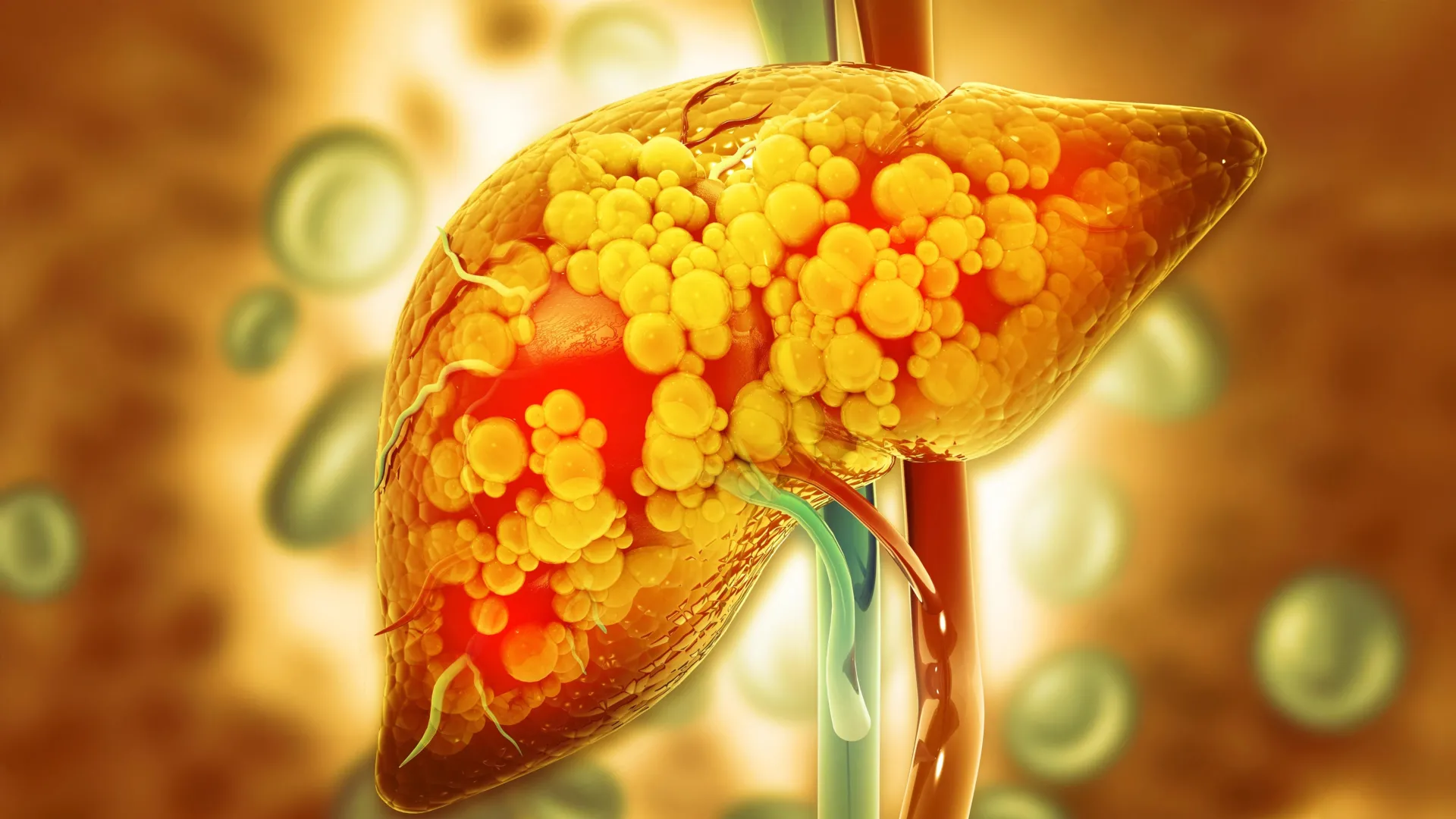
A significant scientific breakthrough, spearheaded by researchers from Cedars-Sinai Health Sciences University, has illuminated a crucial enzymatic pathway that may offer a novel strategy to prevent the advancement of a prevalent and potentially life-threatening liver condition. The findings, detailed in the esteemed journal Nature Metabolism, pinpoint an enzyme named UBE2N as a key molecular guardian, capable of shielding the liver from the escalating damage characteristic of severe metabolic dysfunction-associated steatotic liver disease (MASLD). This discovery holds profound implications for developing future interventions to mitigate serious hepatic injury and avert the progression toward liver failure, a critical unmet medical need.
Metabolic dysfunction-associated steatotic liver disease, formerly recognized as nonalcoholic fatty liver disease (NAFLD), represents a burgeoning global health crisis. Affecting an estimated 100 million individuals across the United States alone, according to the American Liver Foundation, MASLD is primarily characterized by the accumulation of excess fat within liver cells, often without a history of significant alcohol consumption. While many individuals with MASLD remain asymptomatic or experience a benign course, a substantial subset, approximately 20% to 25%, progress to a more aggressive form known as metabolic dysfunction-associated steatohepatitis (MASH), previously termed nonalcoholic steatohepatitis (NASH). MASH signifies a critical turning point where simple fat accumulation is compounded by inflammation, hepatocellular injury, and fibrotic scarring, elements that collectively pave the way for cirrhosis, liver failure, and an increased risk of hepatocellular carcinoma.
The clinical landscape for MASH patients is currently challenging, marked by a paucity of effective pharmacological treatments. Therapeutic strategies predominantly revolve around comprehensive lifestyle modifications, including dietary changes, weight management, and increased physical activity, aimed at limiting further hepatic damage. Although certain medications show promise and are under investigation, a definitive cure for MASH remains elusive, underscoring the urgent necessity for innovative therapeutic targets and pathways.
Earlier investigative work had previously implicated dysfunctional mitochondria – the vital organelles responsible for generating energy within cells – as significant contributors to the initiation and exacerbation of MASH. Building upon this foundational understanding, the recent multicenter study, led by Cedars-Sinai researchers, meticulously investigated the molecular underpinnings of MASH progression. Their rigorous analysis revealed a compelling correlation: as MASH advanced, the levels of the UBE2N enzyme in liver cells demonstrably declined. This reduction was observed to coincide with an increase in cellular damage and inflammation within the hepatic tissue.
Dr. Ekihiro Seki, a distinguished professor of Medicine and Biomedical Sciences at Cedars-Sinai and a co-corresponding author of this landmark study, elucidated the multifaceted protective role of UBE2N. "The UBE2N enzyme appears to confer a crucial protective effect on the liver against the inflammation and injury intrinsically linked to MASH," Dr. Seki explained. "It achieves this by facilitating the efficient removal of compromised mitochondria, a process essential for maintaining cellular health, and concurrently supporting the metabolic breakdown of accumulated fat within liver cells. Our observations clearly showed that when the concentrations of this enzyme decreased, we encountered a noticeable surge in damaged cells and heightened liver injury." This dual functionality – managing mitochondrial quality control and aiding lipid metabolism – positions UBE2N as a central regulator of hepatic homeostasis in the context of steatotic liver disease.
To further validate these observational findings and explore the therapeutic potential of UBE2N, the research team conducted a series of preclinical experiments. In carefully designed laboratory models using mice afflicted with a condition mimicking MASH, the researchers successfully restored UBE2N to physiological levels within the animals’ livers. The results of this intervention were remarkably positive. Following the restoration of UBE2N, the scientists documented significant reductions in several key pathological indicators of MASH, including diminished fat accumulation within the liver, a marked decrease in inflammation, and a significant alleviation of fibrotic scarring. These compelling outcomes provide robust evidence supporting the hypothesis that modulating UBE2N levels could offer a viable strategy to halt or even reverse the progression of liver damage.
The profound implications of these findings extend to the development of novel therapeutic approaches. The identification of UBE2N’s pivotal role suggests that this enzyme could serve as a promising pharmacological target to prevent MASLD from advancing into the more severe and detrimental MASH stage. Future pharmaceutical endeavors could focus on developing compounds that either directly enhance UBE2N activity, stabilize its levels, or mimic its protective functions within liver cells.
Dr. Shelly Lu, the Women’s Guild Chair in Gastroenterology and director of the Karsh Division of Gastroenterology and Hepatology at Cedars-Sinai, underscored the transformative potential of this research. "The elucidation of this enzyme’s regulatory function over mitochondrial dynamics within the liver represents a critical stride forward in our comprehensive understanding of steatotic liver disease," Dr. Lu stated. "Subsequent research initiatives will be instrumental in evaluating whether augmenting this identified protective pathway can synergistically complement existing therapeutic regimens, precisely identify patient populations most likely to derive benefit from such interventions, and ultimately pave the way for groundbreaking new therapeutic strategies aimed at preventing advanced liver disease."
This comprehensive investigation was a testament to collaborative scientific endeavor, involving a team of dedicated researchers. Key contributing authors from Cedars-Sinai included Michitaka Matsuda, So Yeon Kim, Takashi Tsuchiya, and Yoon Seok Roh. The broader multicenter team also comprised Feng Wang, Jin Lee, Jeong-Su Park, Meizhou Huang, Hwan Ma, Guoyan Sui, Zixiong Zhou, Xufeng Wu, Haram Lee, Soohwan Oh, Hanseul Park, Key-Hwan Lim, Chun-Woong Park, Sang-Bae Han, Jin Tae Hong, and Michael Karin. This extensive collaboration underscores the complexity and interdisciplinary nature of modern biomedical research.
The project received vital financial backing from several esteemed organizations, facilitating the rigorous scientific inquiry. Funding sources included the National Research Foundation of Korea (grant nos. RS-2025-02273102 and RS-2025-02603096), the Regional Innovation System & Education (RISE) programme of Chungbuk (grant no. 2025-RISE-11-014-03), the Pinnacle Research Award of the American Association for the Study of Liver Diseases (AASLD, to J.L.), the San Diego Digestive Diseases Research Center (SDDRC) Pilot/Feasibility Grant (NIDDK P30 DK120515, to J.L.), the National Institutes of Health (grant nos. R01DK085252, R01DK138591 and R01CA301632), and the National Natural Science Foundation of China (grant no. 82404726). This substantial support was instrumental in enabling the in-depth studies that culminated in these impactful findings.
In conclusion, the discovery of UBE2N’s protective role in mitigating the progression of MASLD to MASH represents a beacon of hope in the ongoing fight against severe liver disease. By offering a novel molecular target and shedding light on critical cellular mechanisms, this research paves the way for the development of innovative therapeutic strategies that could fundamentally alter the trajectory of millions of lives affected by this silent epidemic, moving closer to a future where MASH can be effectively managed or even prevented.
About the Author









