Many individuals over the age of 60 observe a noticeable expansion around their midsection, a phenomenon that can be particularly disheartening for those who maintain a consistent walking regimen and active lifestyle. This common experience is often misattributed to a decline in personal discipline or insufficient physical exertion. However, the reality is rooted in a complex interplay of physiological shifts that occur with aging, fundamentally altering how the body manages fat storage and energy expenditure. These biological transformations mean that relying solely on conventional cardiovascular activities, such as daily walks, frequently proves less effective for waistline refinement than anticipated. According to an experienced personal trainer and fitness educator at TRAINFITNESS, with four decades of expertise in the wellness sector, the concern of a thickening waistline is among the most frequently voiced by clients in their seventh decade and beyond. While this development can be frustrating, it is not an inevitable aspect of aging, and targeted standing exercises offer a distinct pathway to address it. These five specific movements require no specialized equipment, can be performed comfortably within a home environment, typically take between 15 and 20 minutes, and are strategically designed to engage the muscle groups crucial for gradually firming and sculpting the abdominal region.
The Evolving Body: Understanding Age-Related Abdominal Changes
As individuals progress past 60, the body undergoes significant hormonal fluctuations that recalibrate fat distribution patterns. For women, the decline in estrogen levels often leads to an increased propensity for fat accumulation around the abdomen, diverging from earlier patterns where adipose tissue might have been stored more predominantly in the hips and thighs. Men experience analogous shifts as testosterone levels naturally diminish. This isn’t merely about an increase in overall body mass; it signifies a fundamental redistribution of fat to areas that were previously less affected.
Beyond hormonal influences, another critical factor is sarcopenia, the progressive loss of muscle mass and strength that commences around age 30 and accelerates significantly after 60. On average, adults can expect to lose between 3% and 8% of their muscle mass per decade. Muscle tissue is metabolically active, meaning it burns more calories at rest compared to fat. Consequently, a reduction in muscle mass directly correlates with a slower resting metabolic rate (RMR). This means that even if dietary intake remains consistent with habits from a decade prior, the body is likely to process and store a greater proportion of calories as fat due to reduced energy demands at rest.
Traditional cardiovascular workouts, while offering numerous health benefits, often fall short in addressing these age-related changes for two primary reasons. Firstly, while activities like walking expend calories during the period of exertion, they do not substantially contribute to the preservation or augmentation of muscle mass. A daily hour-long walk, for instance, burns energy while in motion, but once the activity ceases, the body’s metabolic rate reverts to its baseline, which is increasingly slower due to sarcopenia. Therefore, while excellent for cardiovascular health and endurance, cardio alone typically does little to modify overall body composition by building muscle. Secondly, the nature of fat itself becomes a crucial consideration. Visceral fat, which accumulates deep within the abdominal cavity, enveloping vital organs, is particularly challenging to reduce. Scientific studies indicate that resistance training, which stimulates muscle growth and metabolic activity, is more effective in targeting and reducing this harmful type of fat compared to aerobic exercise alone.
Beyond Aerobics: The Power of Standing Core Engagement
Standing resistance exercises present a compelling solution because they directly counteract the age-related challenges outlined above. By engaging muscles against resistance, these movements stimulate muscle protein synthesis, leading to increased muscle mass. Each increment of muscle tissue gained or sustained boosts the body’s caloric expenditure throughout the entire day, not just during the workout itself. This creates a cumulative metabolic advantage over weeks and months that cannot be achieved through cardiovascular activities alone.
When an individual performs standing exercises that activate the core and integrate multiple muscle groups, the body must constantly engage its stabilizing mechanisms. This requires the coordinated effort of the rectus abdominis, obliques, and deeper core muscles (such as the transverse abdominis and multifidus) to maintain balance and an upright posture. This continuous engagement strengthens and tones the muscles surrounding the waist in a manner distinct from the benefits offered by walking or other low-impact cardio.
Furthermore, resistance training elicits what is known as Excess Post-exercise Oxygen Consumption (EPOC), commonly referred to as the "afterburn effect." This physiological phenomenon occurs because strenuous exercise, particularly resistance work, creates microscopic damage to muscle fibers. The body then expends additional energy (calories) for 24 to 48 hours post-workout to repair these micro-tears and rebuild stronger muscle tissue. In contrast, while cardio burns calories during the activity, it does not typically generate the same prolonged metabolic demand once the movement ceases.
Beyond their physiological benefits, standing exercises are highly practical and sustainable for older adults. They circumvent the need for repeatedly getting down to and up from the floor, which can be challenging or uncomfortable for some. Moreover, they avoid the high-impact movements that can place undue stress on joints. The ability to perform these exercises at home, often with minimal or no equipment, significantly enhances adherence rates, making long-term consistency more achievable.
Five Foundational Standing Exercises for a Stronger Midsection

Here are five standing exercises that specifically target the core, promoting a stronger, more defined waistline.
-
Standing Torso Rotation
- Primary Muscle Groups Targeted: Obliques (internal and external), transverse abdominis, spinal erectors.
- Benefits: Directly strengthens the side abdominal muscles, which are key for rotational stability and defining the waist. Improves trunk rotation crucial for daily activities like reaching and turning.
- How to Do It: Stand with feet shoulder-width apart, knees slightly bent. Hold hands clasped at chest level or extend arms forward at shoulder height. Keeping hips relatively still, slowly twist your torso to one side, feeling the engagement in your obliques. Return to center and repeat on the other side. Maintain a tall posture throughout.
- Recommended Sets and Reps: Aim for 15 to 20 rotations per side, progressively working towards 3 sets.
- Common Errors to Avoid: Jerking movements, allowing the hips to fully rotate with the torso (reduces oblique engagement), holding your breath, or excessive arching of the lower back. Control the movement and focus on core activation.
-
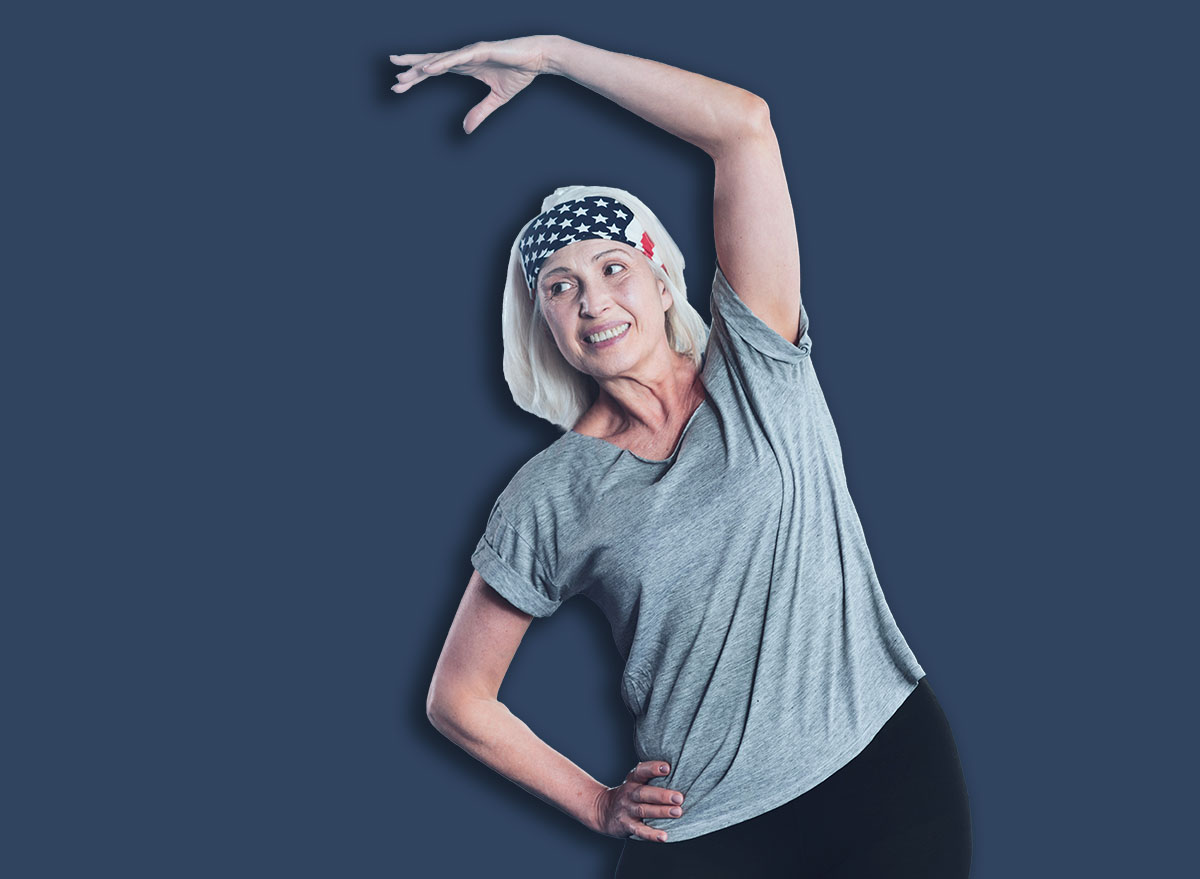
Standing Side Bend
- Primary Muscle Groups Targeted: Obliques, quadratus lumborum (lateral trunk muscles), serratus anterior.
- Benefits: Focuses on lateral flexion, an often-neglected movement pattern that can significantly impact waist measurement and create a more sculpted profile. Enhances flexibility and side-body strength.
- How to Do It: Stand tall with feet hip-width apart. Place one hand behind your head or on your hip, and let the other arm hang loosely at your side. Slowly bend directly to the side, allowing the hanging arm to slide down your thigh. Feel the stretch on the elevated side and contraction on the bending side. Return to the starting position.
- Recommended Sets and Reps: Perform 12 to 15 bends per side for 2 to 3 sets.
- Common Errors to Avoid: Bending forward or backward instead of directly to the side, rushing the movement, using momentum, or shrugging shoulders towards the ears. Keep the movement controlled and deliberate.
-
Standing Knee to Elbow
- Primary Muscle Groups Targeted: Obliques, deep abdominals (transverse abdominis), hip flexors, rectus abdominis.
- Benefits: This dynamic exercise combines core rotation with hip flexion, activating multiple core layers while simultaneously improving balance and coordination, skills that become increasingly vital with age.
- How to Do It: Stand upright with feet hip-width apart, hands lightly placed behind your head or at your temples. Lift one knee towards your chest while simultaneously twisting your torso to bring the opposite elbow towards that knee. Aim for a controlled crunch rather than physically touching if flexibility is limited. Lower the leg and return to the starting position before repeating on the other side.
- Recommended Sets and Reps: Begin with 10 to 12 repetitions per side for 2 sets, gradually increasing to 15 to 20 per side for 3 sets as strength improves.
- Common Errors to Avoid: Rounding the back excessively, losing balance, allowing the hips to sway, or using arm strength to pull the head rather than engaging the core to bring the elbow towards the knee.
-
Standing Wood Chop
- Primary Muscle Groups Targeted: Entire core musculature (obliques, rectus abdominis, transverse abdominis), spinal stabilizers, glutes, shoulders.
- Benefits: This functional, diagonal movement mimics real-life actions, engaging the entire core through a powerful rotation. It strengthens the rotational capacity of the trunk and the muscles that contribute to a firm, integrated midsection.
- How to Do It: Stand with feet wider than shoulder-width, knees slightly bent. Imagine holding an axe with both hands (or hold a light weight if available). Start with your hands positioned above one shoulder. In a controlled, diagonal motion, "chop" downwards across your body towards the opposite hip, pivoting slightly on your feet as you twist. Return slowly to the starting position.
- Recommended Sets and Reps: Complete 12 to 15 chops per side for 2 to 3 sets.
- Common Errors to Avoid: Swinging wildly without core control, locking the knees, allowing the back to round, or neglecting the controlled return phase of the movement. Focus on a smooth, powerful, yet controlled motion.
-
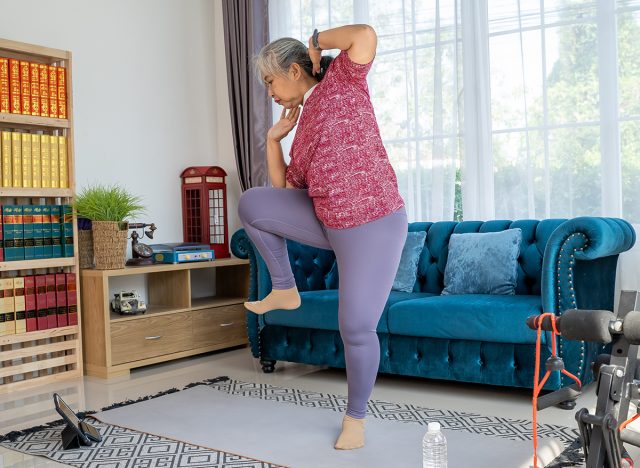
Standing March with Twist
- Primary Muscle Groups Targeted: Obliques, hip flexors, core stabilizers, rectus abdominis.
- Benefits: This exercise blends light cardiovascular activity with specific core engagement through rotation, elevating the heart rate while directly targeting the waist. The marching component also significantly enhances hip mobility and dynamic balance.
- How to Do It: Stand tall with feet hip-width apart, hands behind your head or at your chest. Begin marching in place, lifting your knees high. As you lift each knee, simultaneously twist your torso to bring the opposite elbow towards the raised knee. Maintain a brisk but controlled pace.
- Recommended Sets and Reps: Initiate with 30 seconds to 1 minute of continuous marching with twists, working towards 2 to 3 minutes as your cardiovascular fitness and core endurance improve.
- Common Errors to Avoid: Slouching, failing to lift the knees adequately, allowing the torso twist to become a mere arm swing, or losing control of the marching rhythm.
Integrating a New Routine: Practical Implementation for Long-Term Success
To effectively incorporate these exercises, aim for 2 to 3 sessions per week, ensuring at least one day of rest between workouts to allow for muscle recovery and adaptation. All five exercises can be performed within a single session, or they can be distributed throughout the week if that feels more manageable. A typical session structure would involve performing each exercise for the recommended repetitions or duration, taking a brief rest of 30 to 60 seconds between exercises, and then repeating the entire circuit 2 to 3 times. Once familiar with the movements, a complete session should generally not exceed 15 to 20 minutes.
These standing core exercises can be performed independently or integrated seamlessly into an existing walking routine. Some individuals prefer to complete their standing exercises in the morning and take their walk later in the day, while others opt for a short walk as a warm-up before transitioning into the core workout. The optimal approach is ultimately the one that best fits your schedule and preferences, fostering consistent adherence.
Prioritizing Safety and Individual Needs
Before embarking on any new exercise regimen, particularly after the age of 60, it is imperative to consult with a healthcare professional. This is especially crucial for individuals with pre-existing conditions such as uncontrolled high blood pressure, recent surgical procedures (especially abdominal), severe osteoporosis, significant balance impairments, or any diagnosed heart condition. Should you experience any acute pain, dizziness, chest discomfort, or severe shortness of breath during these exercises, discontinue immediately and seek medical advice. Individuals with a history of lower back issues, including disc problems, sciatica, or chronic back pain, should exercise particular caution with twisting movements and discuss these exercises with their physician or physical therapist prior to beginning. Modifications may be necessary to ensure safety and effectiveness.
Anticipating Results: What to Expect in Weeks and Months

With consistent engagement, performing these exercises at least twice a week for 4 to 6 weeks, individuals can reasonably anticipate a reduction in waist circumference of 1 to 2 inches. Individual results will naturally vary based on factors such as baseline fitness, dietary habits, and the amount of visceral fat present.
The initial indicators of progress may not be immediately apparent in a mirror. Instead, you are more likely to first experience improvements in posture and a noticeable increase in core strength. Your clothing will likely begin to fit differently before dramatic visual changes manifest; trousers that once felt snug around the waist may become looser. You might also find yourself standing taller and with greater ease, without consciously thinking about it.
It is important to remember that visible results stem not only from fat reduction but also from muscle toning. Even if the scale doesn’t show a significant weight decrease, the tightening and strengthening of your abdominal muscles will contribute to a smaller, more defined waistline, providing a firmer and more compact appearance.
The Indispensable Role of Nutritional Strategy
It is critical to underscore that diet represents the single most influential factor in achieving noticeable results in body composition. Regardless of how diligently one trains, it is simply not possible to out-exercise a consistently poor diet. If caloric intake substantially exceeds the body’s energy expenditure, muscle will indeed be built, but it may remain obscured by an overlying layer of body fat.
Most individuals who achieve lasting success adopt small, sustainable dietary adjustments rather than drastic, restrictive changes. This often involves prioritizing whole, unprocessed foods, ensuring adequate protein intake to support muscle maintenance and growth, increasing consumption of vegetables and fiber, moderating alcohol intake, and cultivating a greater awareness of portion sizes. While the exercises build the foundational muscle and metabolic machinery, dietary choices ultimately determine the extent to which those physical improvements become visibly apparent.

Sustaining Progress: The Long-Term View
Ultimately, consistency in adhering to an exercise regimen holds greater importance than sporadic bursts of intense activity. Engaging in these standing core exercises twice a week for several months will yield superior, more enduring results compared to a highly intense but short-lived three-week program. Patience is also a virtue in this journey; the body requires time to adapt and respond. By embracing a consistent approach and allowing for gradual progress, the desired outcomes will inevitably materialize, contributing not only to a more defined waistline but also to enhanced overall health and vitality as you age.
About the Author