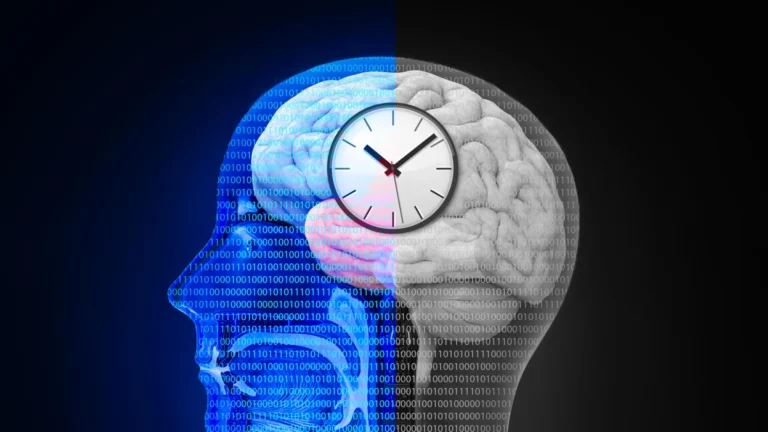
A significant body of new scientific inquiry originating from the University of Missouri posits a compelling correlation between the establishment of predictable daily schedules and a marked improvement in both physical comfort and emotional resilience among the elderly population. This research indicates that individuals who adhere to consistent patterns of daily activity—spanning from their morning wake-up times and meal schedules to their engagement in work or study, social interactions, and evening bedtime—experience a tangible reduction in the intensity of chronic pain and a lessening of depressive symptomatology, even in the presence of sleep disturbances like insomnia.
The implications of this study extend beyond mere conjecture, suggesting that the very structure and rhythm of our day-to-day existence serve as fundamental pillars supporting overall health. While insomnia is a prevalent issue, affecting roughly half of adults aged 60 and over according to the National Council on Aging, this research uncovers a crucial nuance: the quality of sleep, while important, is not the sole determinant of well-being. Eunjin Tracy, an assistant professor within the College of Education and Human Development, spearheaded this investigation, analyzing survey data from 67 older adults, 37 of whom reported experiencing insomnia. The expectation was that those with sleep difficulties would exhibit higher levels of pain and depression, a hypothesis that generally held true. However, the breakthrough finding was the consistent observation that participants who actively maintained regular daily routines reported diminished pain and depression, irrespective of their sleep quality.
"Even when sleep quality was not optimal, individuals who demonstrated a consistent daily rhythm consistently reported lower degrees of physical discomfort and less pronounced depressive symptoms when contrasted with those who lacked such regularity," stated Tracy. This consistency in daily timing, from the moment of waking and engaging in meals to periods of work or academic pursuit, social engagement, and finally, retiring for the night, acts as a powerful set of temporal cues. These cues, in turn, are instrumental in synchronizing our internal biological clocks. Tracy elaborates that this internal synchronization, when maintained over extended periods, appears to be intrinsically linked to more favorable health outcomes.
The intricate relationship between daily routines and the body’s internal clock, often referred to as the circadian rhythm, is central to these findings. The circadian rhythm is the body’s innate 24-hour physiological cycle, governing a multitude of bodily functions, including sleep-wake patterns, hormone release, body temperature fluctuations, and mood regulation. Predictable and regular activities serve as vital external signals, or "zeitgebers," that help entrain and stabilize this internal timing system. When this rhythm is functioning optimally, the body operates with greater efficiency and resilience. Conversely, disruptions to this delicate balance can lead to a cascade of negative effects.
"When our circadian rhythm is well-regulated, our physiological systems function optimally; however, when this rhythm becomes overly disrupted, our bodies’ performance suffers significantly," Tracy explained. Even minor inconsistencies, such as variations in meal times or the timing of daily activities, can begin to destabilize this internal clock. The study highlights the concept of "social jet lag," a phenomenon where discrepancies between weekend and weekday schedules can create internal timing conflicts, akin to the physiological effects of long-distance travel across time zones. This suggests that the social demands and leisure activities that often lead to altered sleep and wake times on weekends can have a detrimental impact on our biological synchronization.
Tracy emphasizes the potential benefits of maintaining a uniform routine across the entire week, including weekends, as a strategy to mitigate these disruptive influences and foster greater internal harmony. "As someone who personally adheres to a consistent wake and sleep schedule daily, I believe the advantages of a daily routine extend to individuals across all age demographics throughout their entire lifespan," she remarked. There is a growing recognition within the scientific community regarding the adverse consequences of social jet lag and its disruption of our circadian rhythms. Tracy expressed hope that this research will elevate public awareness and encourage more people to consider the profound health benefits associated with establishing and maintaining a structured daily routine. She advocates for a more holistic approach to health and well-being research, one that encompasses the full 24-hour cycle rather than solely focusing on periods of wakefulness. "Considering that approximately one-third of our lives is dedicated to sleep, it is imperative that health and well-being research adopt a comprehensive 24-hour perspective."
The findings strongly suggest that the implementation of predictable daily rhythms represents a straightforward yet powerful intervention for bolstering health, particularly for older adults grappling with the challenges of insomnia. Tracy’s argument underscores a paradigm shift in how we should conceptualize health research, moving beyond a narrow focus on sleep quality to embrace a broader understanding of how daily behavioral patterns influence the body’s internal clock and, consequently, overall health. This research, titled "Behavioral-social rhythms and insomnia symptoms: associations with pain, body mass index, and depressive symptoms among older adults," has been formally published in the esteemed Journal of Behavioral Medicine, contributing valuable insights to the fields of gerontology, sleep science, and behavioral health. The study’s methodology involved detailed analysis of self-reported data, allowing for a nuanced examination of the interplay between daily routines, sleep patterns, and reported levels of pain and depression. Future research could explore the specific types of routines that are most beneficial and investigate the underlying neurobiological mechanisms through which these rhythms exert their protective effects.
About the Author