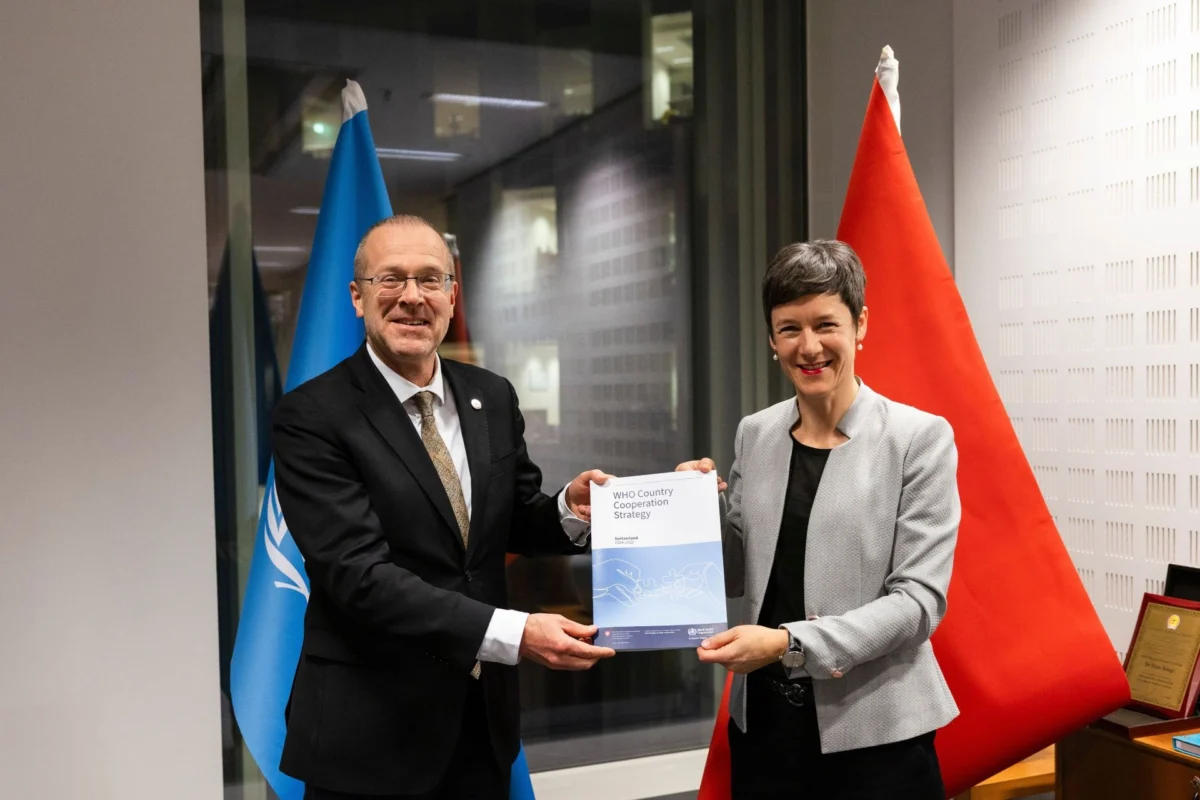
The longstanding strategic partnership between the World Health Organization (WHO) and Switzerland has been formally renewed, charting a comprehensive course for collaborative efforts in global health spanning the period from 2024 through 2028. This significant agreement underscores a shared commitment to advancing health security, strengthening healthcare systems, and promoting well-being across the European region and beyond. The official signing ceremony, which formalized the extension of this crucial country cooperation strategy, took place on March 4, 2025, at the WHO’s European Regional Office situated in Copenhagen, Denmark, with key representatives from both entities present to affirm their mutual dedication.
This particular collaboration holds unique significance within the global health landscape. A decade prior, in 2013, the alpine nation broke new ground by becoming the inaugural high-income country within the WHO European Region to embark on a structured bilateral cooperation framework with the global health body. Typically, Country Cooperation Strategies (CCSs) are designed primarily for developing nations to align national health priorities with WHO’s technical and operational support. Switzerland’s pioneering initiative demonstrated a novel approach, recognizing that even well-resourced nations could benefit from a formalized strategic dialogue with the WHO, contributing expertise, resources, and policy leadership to address shared global health challenges. This initial framework proved highly successful, setting a precedent for robust engagement between a Member State and the WHO that extends beyond traditional funding mechanisms to encompass shared strategic objectives and technical collaboration.
The decision to refresh and prolong this established collaboration was mutually recognized as imperative by both entities in 2022, following a period of unprecedented global health crises that underscored the interconnectedness of national and international health. The updated strategy, meticulously crafted over two years, reflects an evolved understanding of global health priorities, incorporating lessons learned from recent pandemics and acknowledging emerging threats. It aims to leverage Switzerland’s robust healthcare infrastructure, scientific expertise, and diplomatic influence to enhance WHO’s mandate, particularly within the European context, while also bolstering Switzerland’s own global health objectives. This renewed commitment is a testament to the enduring value placed on multilateralism and evidence-based health policy in an increasingly complex world.
The 2024-2028 cooperation strategy is built upon several core pillars, meticulously designed to address pressing health challenges and foster sustainable health outcomes. A primary focus remains on bolstering universal health coverage (UHC), striving to ensure that all individuals have access to the health services they need, without suffering financial hardship. This involves strengthening primary healthcare, improving access to essential medicines, and addressing health inequities. Furthermore, the strategy places a significant emphasis on enhancing preparedness and response capabilities for health emergencies, an area where recent global events have highlighted critical vulnerabilities. This includes improving surveillance systems, strengthening laboratory capacities, and developing rapid response mechanisms for outbreaks and other public health crises.
Beyond emergency response, the renewed framework also targets the growing burden of non-communicable diseases (NCDs) such as cardiovascular disease, cancer, diabetes, and chronic respiratory illnesses, along with mental health conditions. Collaborative efforts will focus on preventative strategies, early detection, and integrated care pathways. Environmental health, including the profound impacts of climate change on human health, forms another crucial component, seeking to develop resilient health systems that can adapt to environmental stressors. Digital health transformation, leveraging technology to improve health service delivery, data collection, and public health communication, is also central to the new strategy, aiming to harness innovation for more efficient and equitable health outcomes.

Switzerland’s distinctive position on the international stage, characterized by its historical neutrality, strong humanitarian tradition, and role as a host country for numerous international organizations, makes it an invaluable partner for the WHO. The nation’s commitment to multilateralism is reflected in its consistent financial contributions to global health initiatives and its proactive engagement in international health diplomacy. Moreover, Switzerland boasts a world-class research and development sector, particularly in pharmaceuticals and life sciences, which provides a rich source of scientific expertise and innovation directly applicable to WHO’s programmatic areas. This blend of diplomatic influence, scientific prowess, and humanitarian ethos allows Switzerland to serve as a bridge-builder and a facilitator of global health solutions, often providing a neutral platform for sensitive discussions and collaborative ventures.
A cornerstone of the intensified collaboration between Switzerland and the WHO is the Global BioHub System, an initiative of paramount importance for future pandemic preparedness. The Global BioHub is designed to facilitate the rapid, transparent, and safe sharing of novel pathogens and biological materials among countries. This mechanism allows scientists worldwide to access samples of newly identified viruses and bacteria, enabling them to study their characteristics, develop diagnostics, and accelerate the creation of vaccines and treatments. The lack of a universally accepted system for pathogen sharing was a significant hurdle during previous outbreaks, leading to delays and inequities in response. Switzerland has taken a leading role in this critical endeavor by hosting the Global BioHub facility in Spiez, within its high-security biosafety laboratories. This facility, operational since 2021, acts as a central repository, ensuring secure handling, standardized protocols, and equitable access to vital biological samples.
The Global BioHub’s establishment in Switzerland leverages the country’s stringent regulatory environment, advanced scientific infrastructure, and trusted international standing. Its operation is fundamentally linked to the International Health Regulations (IHR), aiming to create a more robust and equitable framework for global health security. By providing a neutral and secure platform, Switzerland and the WHO are addressing a fundamental gap in the global health architecture, transforming the landscape of pathogen sharing from a fragmented, ad hoc process into a systematic and collaborative one. This initiative not only enhances rapid response capabilities but also fosters greater trust and solidarity among nations in the face of emerging infectious disease threats, serving as a vital bulwark against future pandemics.
The formalization of this renewed strategy was presided over by Dr. Hans Henri P. Kluge, the WHO Regional Director for Europe, and Ambassador Barbara Schedler, Switzerland’s Ambassador for Global Health at the Federal Office of Public Health. Their joint agreement signifies the mutual high regard for this partnership and the collective vision for its future impact. Dr. Kluge, known for his emphasis on solidarity and regional cooperation, highlighted the exemplary nature of Switzerland’s engagement, noting its potential to inspire other high-income countries to deepen their strategic alignment with WHO. Ambassador Schedler, in turn, reiterated Switzerland’s unwavering commitment to multilateralism and its belief in the WHO’s central role in global health governance, emphasizing the strategic value of aligning national expertise with international health objectives.
This extended cooperation framework between Switzerland and the WHO represents more than just a continuation of an existing partnership; it signifies an adaptive, forward-looking alliance poised to tackle the complex health challenges of the 21st century. By reinforcing health systems, championing universal access, driving innovation, and fortifying global preparedness, the collaboration aims to foster a healthier, more secure future for populations worldwide. It serves as a compelling model for how nations, irrespective of their economic status, can actively contribute to and benefit from robust engagement with the World Health Organization, ultimately bolstering collective resilience against the myriad health threats that transcend national borders. The commitment articulated through this strategy is a powerful affirmation of the principle that global health is a shared responsibility, demanding concerted action and sustained partnership from all stakeholders.
About the Author