
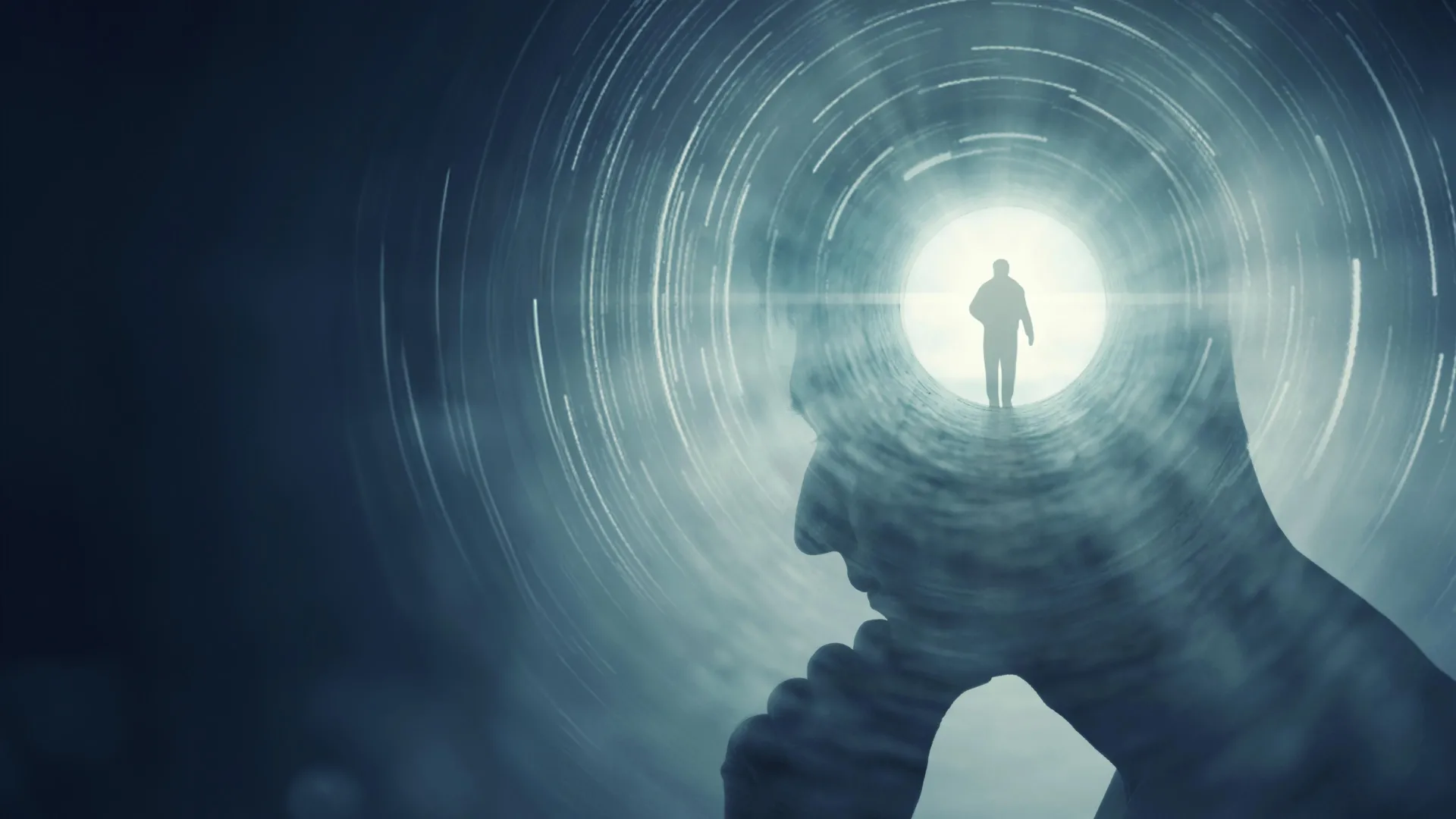
The fundamental question of whether the human brain is the sole generator of consciousness, or if it taps into a more rudimentary aspect of existence, was a central theme at the 15th "Behind and Beyond the Brain" Symposium, a forum dedicated to exploring the frontiers of neuroscience and philosophy. Prominent neuroscientist Christof Koch helmed discussions that challenged conventional understandings, suggesting that our subjective inner world might not be an exclusive product of neural computations. While science has made remarkable strides in mapping the intricate neural pathways and identifying specific brain regions that activate during sensory perception, emotional processing, memory retrieval, and decision-making, a profound chasm remains: the explanation for why these electrochemical processes should be accompanied by an internal, felt experience. Researchers can meticulously document the physical events occurring within the brain, yet the genesis of awareness, the very sensation of being, remains elusive.
This persistent enigma is often referred to by philosophers as the "hard problem" of consciousness, a term that encapsulates the profound difficulty in bridging the gap between objective physical activity – the firing of neurons, the release of neurotransmitters – and the subjective, qualitative nature of our lived experiences. A brain scan might vividly illustrate the neural cascade that occurs when an individual perceives the color red, detailing the wavelengths of light processed and the corresponding cortical activation, but it offers no insight into what it feels like to see red. This distinction highlights the limitations of a purely materialistic approach, which posits that all phenomena can ultimately be reduced to matter, energy, and the governing laws of physics. While materialism has been the bedrock of scientific inquiry, the nature of consciousness presents a formidable challenge to its explanatory power.
Koch’s ongoing research and his presentation at the symposium delve into three primary areas where current scientific paradigms face significant limitations and prompt a re-evaluation of our assumptions. The first concerns the inherent difficulty in wholly accounting for the richness of conscious experience through a purely physical reductionist lens. How do electrochemical signals coalesce into the feeling of joy, the pang of sadness, or the intricate tapestry of thoughts? The second area of inquiry draws from the evolving landscape of modern physics, which itself is grappling with fundamental questions about the nature of reality, prompting a reconsideration of what constitutes the "real" constituents of the universe. The third, and perhaps most intriguing, area involves the careful examination of anomalous human experiences that defy easy categorization within conventional scientific frameworks.
Among these unusual phenomena are near-death experiences (NDEs), profound mystical states, and the perplexing instances of terminal lucidity. Terminal lucidity, in particular, describes the unexpected and often dramatic return of mental clarity and communicative ability in individuals who were previously suffering from severe cognitive impairments, such as advanced dementia, shortly before their passing. While these extraordinary experiences do not definitively prove that consciousness can exist independently of a functioning brain, Koch argues that their persistent occurrence and the profound subjective impact they have on individuals warrant rigorous scientific investigation. They may serve as crucial empirical data points, exposing potential gaps in our current understanding of the mind-brain relationship and hinting at phenomena that lie beyond the scope of established scientific models.
In light of these persistent questions, Koch suggests that scientists may need to broaden their theoretical horizons and consider philosophical frameworks that have historically offered alternative perspectives on the nature of reality and mind. He advocates for a continued integration of these philosophical insights with the rigorous application of modern scientific methodologies. Concepts such as idealism, which posits that consciousness or mind is fundamental to the fabric of reality, and panpsychism, the idea that consciousness is a ubiquitous property of the universe, present compelling alternatives to the brain-centric view. Under these conceptual umbrellas, consciousness would not emerge ex nihilo from a sufficiently complex biological substrate but rather would be an intrinsic, perhaps even fundamental, characteristic of existence itself, present in varying degrees across all forms of matter and energy.
This perspective aligns with Koch’s long-standing support for Integrated Information Theory (IIT), a sophisticated theoretical framework that seeks to quantify consciousness mathematically. IIT proposes that subjective experience arises in any system that possesses a high degree of integrated information, meaning that the system’s components are both highly differentiated and powerfully interconnected. In essence, consciousness, according to IIT, is not merely about the quantity of information processed but about the quality of that integration. A system characterized by a substantial level of interconnectedness and informational unity could, therefore, exhibit some form of subjective awareness, irrespective of its biological origin. This theory offers a scientifically tractable avenue for exploring the possibility that consciousness might be a widespread phenomenon, extending beyond the confines of biological brains and potentially present in non-biological systems as well, a notion that resonates with the principles of panpsychism.
Koch’s distinguished career, marked by his tenure at prestigious institutions like MIT and Caltech and his current role at the Allen Institute for Brain Science, has positioned him as a pivotal figure in the contemporary scientific exploration of consciousness. His research has been instrumental in developing innovative methods for detecting subtle signs of awareness in individuals who are profoundly unresponsive, such as patients in vegetative or minimally conscious states. The ability to reliably identify residual consciousness in these challenging clinical scenarios is not merely an academic pursuit; it holds immense practical significance for diagnosis, the formulation of appropriate treatment plans, and critical ethical decisions regarding medical care and end-of-life interventions. By meticulously examining the boundaries of materialistic explanations, confronting the persistent unanswered questions in neuroscience, and thoughtfully considering anomalous human experiences, Christof Koch is not merely probing the mechanics of the brain; he is fundamentally questioning whether consciousness is an invention of the brain, or if it is, in fact, a more ancient and pervasive element woven into the very fabric of the cosmos.
About the Author












