The pursuit of core strength and a trimmer midsection remains a common health objective across all age groups, yet for individuals over the age of sixty, the approach to achieving these goals often requires nuanced consideration. Conventional abdominal exercises, while effective for some, can present unique challenges and even potential risks for older adults. A focused, accessible eight-minute seated routine, however, is gaining attention for its capacity to address deep abdominal fat and strengthen crucial core musculature more safely and efficiently than traditional methods, offering a strategic pathway to improved health and well-being.
Central to understanding the efficacy of this specialized regimen is differentiating between types of abdominal fat. The visible protrusion often referred to as a "belly pooch" typically comprises both subcutaneous fat, which lies just beneath the skin, and visceral fat, a more insidious type that surrounds vital organs deep within the abdominal cavity. While subcutaneous fat primarily poses aesthetic concerns, visceral fat is a significant health hazard. Its presence is strongly correlated with an elevated risk of numerous chronic conditions, including hypertension, cardiovascular disease, insulin resistance leading to type 2 diabetes, certain types of cancer, and even cognitive decline such as dementia. Therefore, targeting visceral fat is not merely about achieving a more desirable physique; it is a critical component of proactive health management, especially as individuals age.
Traditional abdominal exercises, such as standard crunches, predominantly engage the rectus abdominis—the superficial "six-pack" muscle. While strengthening this muscle can contribute to overall core definition, an overemphasis on it without adequate engagement of deeper core structures can, paradoxically, exert outward pressure on the abdominal wall. This can exacerbate the appearance of a distended abdomen if the underlying musculature is not sufficiently robust to contain the internal organs. Furthermore, for many older adults, performing exercises on the floor can introduce significant barriers. The act of repeatedly getting down onto and up from the ground can pose a fall risk, a critical concern given the prevalence of osteoporosis and balance issues in this demographic. Individuals suffering from osteoarthritis in the hips or knees may also experience considerable pain or discomfort during floor-based movements, rendering such routines impractical or impossible. Strain on the neck and lower back, common complaints during traditional crunches, also frequently deters consistent engagement.
This is precisely where the strategic advantage of seated core training emerges. By performing exercises from a stable, seated position, many of these common impediments are mitigated or entirely removed. A chair provides a consistent base of support for the spine, which not only enhances safety by eliminating fall risks but also facilitates better isolation of the intended core muscles. This stability allows individuals to concentrate on activating the deep core musculature without compensating with other body parts or straining vulnerable areas like the neck or lower back. For older adults, this means a more comfortable, safer, and ultimately more effective workout experience that can be consistently maintained.
The deep core system is a complex network of muscles essential for spinal stability, postural control, and efficient movement. Beyond the rectus abdominis, key players include the transverse abdominis (TVA), the pelvic floor muscles, and the internal obliques. The TVA, often likened to the body’s natural corset, wraps horizontally around the torso, pulling the abdominal wall inward when properly engaged. A strong TVA is fundamental for a flatter abdomen and for providing crucial support to the lumbar spine. Similarly, the internal obliques, positioned beneath the external obliques, contribute to trunk rotation and lateral flexion, working synergistically with the TVA to stabilize the core. The pelvic floor muscles, often overlooked, play a vital role in core stability, bladder control, and supporting pelvic organs, and their integration into core training is particularly beneficial for overall functional health. The eight-minute seated protocol is designed to specifically activate and strengthen these often-neglected deep core muscles.
This targeted regimen consists of four distinct exercises, each performed for 45 seconds, followed by a 15-second rest period. The entire circuit is repeated twice, culminating in an efficient eight-minute workout. Consistency is paramount, as regular engagement with these exercises fosters gradual but significant improvements in muscle strength, metabolic rate, and abdominal tone.
-
Seated Knee Tucks: This exercise primarily targets the lower abdominal region and hip flexors. While seated, maintaining an upright posture, individuals gently lift their knees towards their chest, engaging the lower abdominal muscles. The movement should be controlled, emphasizing the contraction of the core to initiate and sustain the lift, rather than relying solely on leg strength. This helps to strengthen the rectus abdominis while also involving the deeper core for stability.
-
Chair Marches with Overhead Hold: This dynamic exercise enhances core stability, coordination, and engages the upper body. While marching the feet, lifting one knee at a time towards the chest, individuals hold their arms extended overhead. The overhead arm position challenges the core to stabilize the trunk against the lever created by the arms, intensifying the engagement of the transverse abdominis and obliques as the body works to prevent excessive swaying or rotation.
-
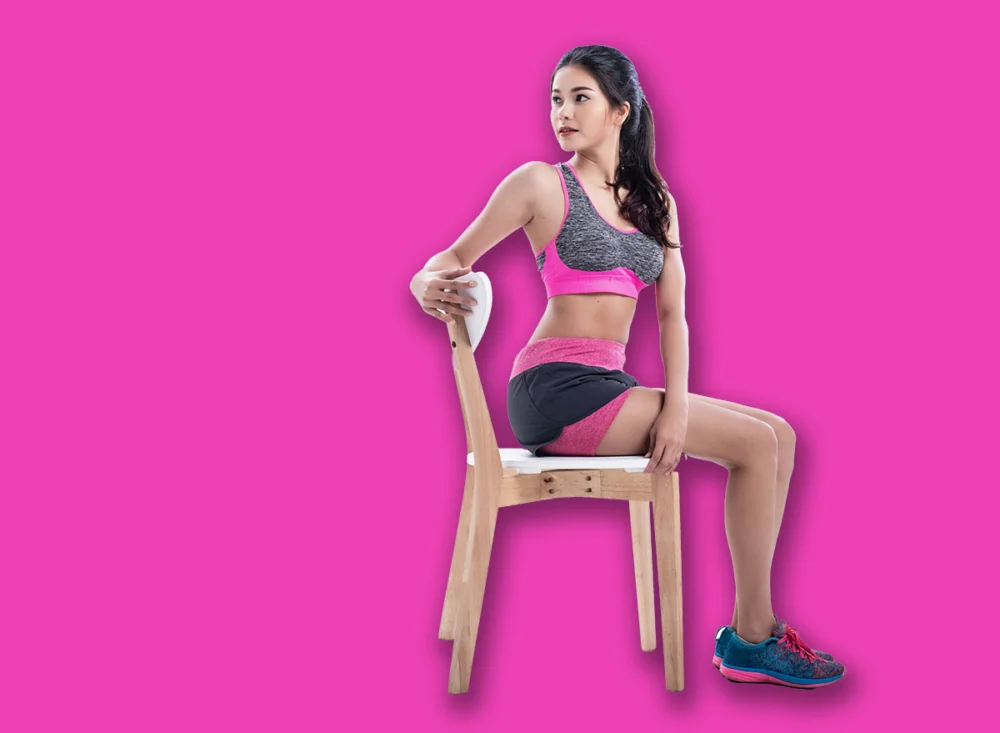
Seated Torso Rotations: Targeting the oblique muscles—both internal and external—this exercise promotes spinal mobility and rotational strength. From a seated position with a tall spine, individuals gently twist their torso from side to side, initiating the movement from the core rather than the neck or shoulders. The focus is on a controlled, deliberate rotation, imagining wringing out the midsection, which effectively engages the muscles responsible for side bending and twisting.
-
Seated Vacuum Hold: This exercise is a direct activator of the transverse abdominis, considered one of the most effective ways to strengthen this deep core muscle. While seated, individuals exhale completely, then draw their navel inward towards their spine as if trying to touch their belly button to their back. This inward pull is held for a specified duration, maintaining a normal breathing pattern as much as possible, which deeply engages the TVA and helps to create an internal "corset" effect.
While a dedicated exercise routine is foundational, achieving optimal abdominal health and fat reduction requires a holistic approach. Dietary choices play a pivotal role; prioritizing whole, unprocessed foods, lean proteins, ample fiber, and healthy fats can significantly contribute to visceral fat reduction. Adequate hydration, sufficient sleep, and effective stress management techniques are also crucial, as chronic stress can elevate cortisol levels, which in turn promotes abdominal fat storage. Consulting with a healthcare provider or a certified fitness professional before embarking on any new exercise program is always recommended, particularly for older adults or those with pre-existing health conditions, to ensure the routine is tailored to individual needs and capabilities.
In conclusion, for individuals over sixty seeking to improve core strength and reduce abdominal fat, a carefully designed eight-minute seated exercise protocol offers a safe, accessible, and highly effective alternative to more traditional methods. By specifically targeting the deep core muscles and mitigating common barriers to exercise, this routine empowers older adults to enhance their physical well-being, mitigate health risks associated with visceral fat, and cultivate a stronger, more stable core for improved quality of life. Consistent application of these principles, combined with a broader commitment to healthy lifestyle practices, paves the way for sustainable results and lasting vitality.
About the Author