
As global populations age, the emphasis on maintaining physical capabilities and independence throughout later life has become increasingly paramount. Central to this objective is the preservation of muscular strength, particularly in the upper body, which underpins a vast array of daily activities and contributes significantly to overall well-being. Among the myriad exercises available, the pushup stands out as a remarkably insightful and effective barometer of an individual’s relative strength and functional fitness, offering a window into their capacity for independent living and resilience against age-related decline. For individuals navigating their sixties and beyond, the ability to perform a certain number of pushups can serve as a compelling indicator of their upper body prowess compared to their contemporaries, signaling a robust physiological state that extends beyond mere muscle mass.
The natural progression of aging invariably brings with it a gradual yet persistent reduction in muscle strength and mass, a condition scientifically termed sarcopenia. This age-associated muscle atrophy is a multifaceted process influenced by several biological factors. Primarily, sarcopenia manifests as a decline in the quantity and quality of skeletal muscle tissue. Hormonal fluctuations, notably reduced levels of testosterone and human growth hormone, play a significant role in this physiological shift, impacting the body’s capacity for muscle protein synthesis and repair. Concurrently, chronic, low-grade inflammation, often subclinical, contributes to muscle degradation pathways. A crucial element of this decline involves the preferential loss of Type II muscle fibers, also known as fast-twitch fibers. These specific muscle fibers are instrumental for generating rapid, powerful, and explosive movements, which are essential for tasks requiring quick bursts of strength or reaction time. Their diminished presence directly impacts an individual’s capacity for swift, forceful actions, thereby increasing vulnerability in situations requiring immediate physical response. Steve Stonehouse, Vice President of Programming and Education at Body Fit Training (BFT), highlights the critical role of these fibers, stating their direct involvement in power and explosive movements, which are often the first to diminish with age.
The ramifications of reduced upper body strength extend far beyond the gymnasium, deeply impacting an individual’s autonomy and quality of life. The ability to perform everyday tasks, often taken for granted in younger years, becomes increasingly challenging. Simple actions like lifting grocery bags, navigating heavy doors, or maneuvering a vacuum cleaner can transform into formidable obstacles. More critically, compromised upper body strength poses a substantial risk in emergency scenarios. The instinctive ability to brace oneself during an unexpected fall or to push up from the ground after a tumble, both crucial for preventing serious injury, is severely hindered. Stonehouse further elucidates this by noting that even common actions such as rising from a deep armchair or exiting a bathtub necessitate a significant ‘push’ from the arms, a capability many only fully appreciate once it begins to wane. This erosion of functional strength can lead to a pervasive fear of falling, often resulting in reduced physical activity and social withdrawal, creating a detrimental cycle that accelerates further decline and diminishes overall independence.
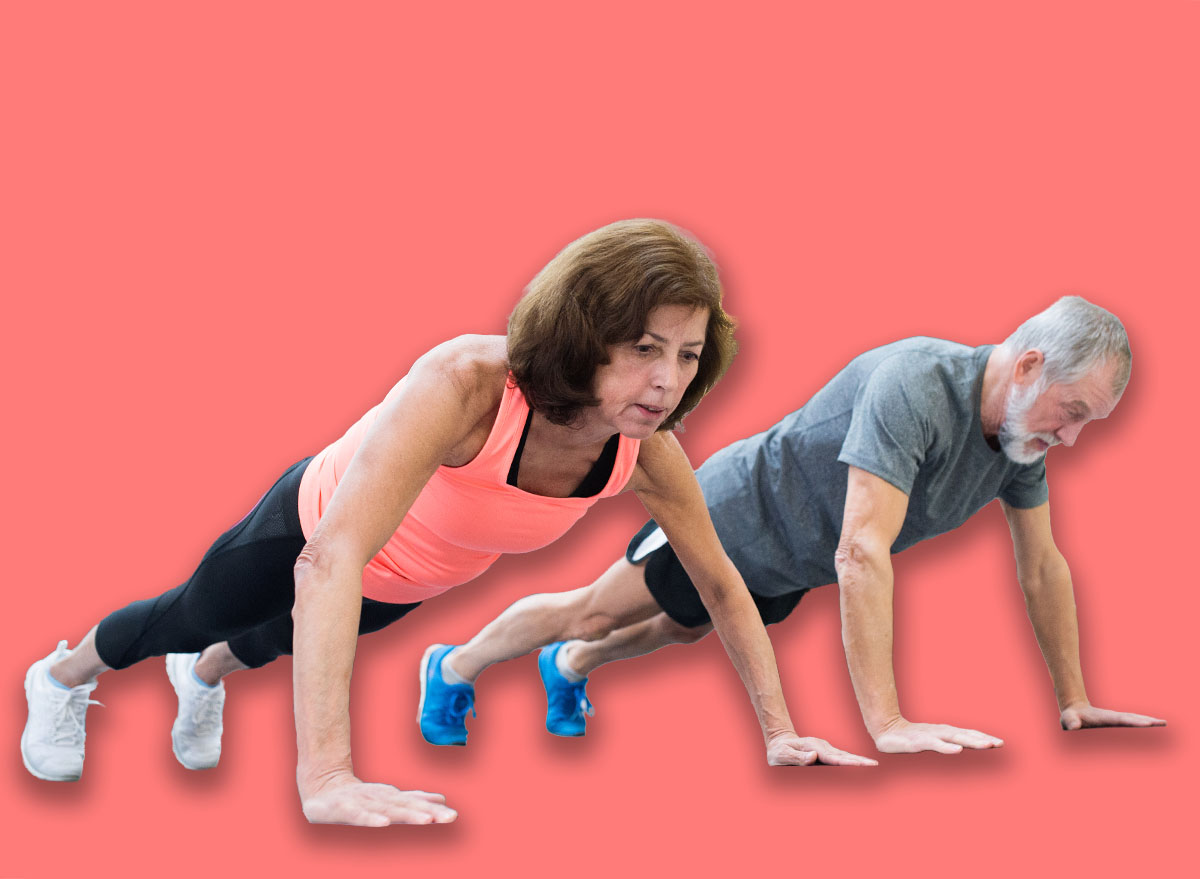
The pushup, a fundamental bodyweight exercise, distinguishes itself as a comprehensive measure and developer of strength due to its compound nature. Unlike isolation exercises that target a single muscle group, pushups engage a broad spectrum of muscles across the upper body and core in a synchronized fashion. The primary movers include the pectoralis major and minor (chest muscles), the anterior and medial deltoids (shoulder muscles), and the triceps brachii (muscles at the back of the upper arm). Beyond these prime movers, the exercise demands significant activation from the core musculature, encompassing the rectus abdominis, obliques, and erector spinae, all working to stabilize the torso and maintain a rigid, plank-like posture throughout the movement. This coordinated effort not only builds raw strength but also fosters robust neuromuscular coordination, ensuring that the nervous system, muscular system, and skeletal system operate in efficient harmony. The integrated recruitment of these muscle groups makes the pushup an excellent functional exercise, directly translating to improved capacity for real-world tasks that require pushing, stabilizing, and supporting one’s own body weight.
For older adults, the importance of incorporating exercises like the pushup into a regular fitness regimen cannot be overstated, given its multifaceted health benefits. Strengthening the muscles involved in a pushup creates what Stonehouse aptly describes as a "functional shield." Strong shoulders and triceps, for instance, significantly reduce the mechanical load on the actual shoulder joint, thereby mitigating the risk of common age-related issues such as rotator cuff injuries and chronic impingement. Beyond musculoskeletal health, the pushup serves as a robust proxy for overall physiological fitness. As a bodyweight exercise, it inherently measures an individual’s strength relative to their own body mass, providing a more holistic assessment than absolute strength measurements. Research has indicated a compelling correlation between the capacity to perform a higher volume of pushups and a reduced risk of cardiovascular disease events in men, suggesting that superior physical conditioning, as reflected by pushup performance, is a protective factor against cardiac ailments. Furthermore, the inherent demand for precise coordination and control throughout the pushup motion stimulates and reinforces neuromuscular pathways. For adults over 65, executing pushups with proper form signifies high levels of neuromuscular coordination, a vital component for maintaining balance, agility, and cognitive function as they age. This integrated approach to fitness helps preserve not just physical strength but also neurological health, contributing to a more resilient and functional aging process.

When considering benchmarks for upper body strength, particularly for individuals in their later years, specific guidelines can offer valuable insights. While precise fitness standards may exhibit variability across different sources and populations, Steve Stonehouse provides practical benchmarks for those aged 60 to 69, delineating categories from "above average" to "excellent" performance. For men in this age bracket, performing 10-14 pushups might be considered above average, while achieving 15 or more could be classified as excellent. For women, typically exhibiting different strength profiles, 6-9 pushups could signify above-average strength, with 10 or more indicating excellent performance. It is crucial to note that these benchmarks primarily pertain to "standard" pushups, executed with the body supported on the toes. Should an individual perform "modified" pushups, such as those on the knees or against an incline, the target numbers would generally be higher to reflect the reduced bodyweight load. These benchmarks serve as valuable reference points, not rigid requirements, emphasizing the importance of individual progression and consistent effort rather than merely hitting a specific number. The ultimate goal is to enhance functional capacity and overall health, irrespective of starting point.
Improving upper body strength and pushup capacity post-65 is an achievable goal through consistent and progressive training. For those new to the exercise or seeking to build foundational strength, various modifications can make the pushup accessible. Starting with wall pushups, where the body is angled against a wall, reduces the load significantly. Progressing to incline pushups, performed with hands on an elevated surface like a bench or sturdy table, gradually increases the challenge. Once these are mastered, knee pushups offer a stepping stone to full pushups, allowing individuals to build strength in the correct movement pattern. As strength improves, gradually increasing the number of repetitions or sets, or transitioning to more challenging variations, ensures continuous progress. Consistency is key, with regular training sessions several times a week. Furthermore, focusing on proper form—maintaining a straight line from head to heels, engaging the core, and ensuring a full range of motion—is paramount to prevent injury and maximize effectiveness. Integrating other forms of resistance training, cardiovascular exercise, and maintaining a nutrient-rich diet are also essential components of a holistic approach to healthy aging. Consulting with a healthcare professional or a certified fitness trainer before embarking on a new exercise program is always advisable, especially for older adults, to ensure safety and tailor routines to individual health needs.
In conclusion, the ability to perform pushups beyond the age of 65 is far more than a simple feat of strength; it is a profound indicator of an individual’s commitment to healthy aging and a testament to their functional capacity. The pushup, a versatile and revealing compound exercise, offers a direct measure of upper body strength, core stability, and neuromuscular coordination—all critical components for maintaining independence and quality of life as years advance. By actively engaging in exercises that counter sarcopenia and bolster muscular resilience, older adults can build a robust physiological defense against age-related decline. Embracing the pushup, in its various modified forms, can empower seniors to sustain their vitality, reduce the risk of falls and injuries, and continue navigating their daily lives with confidence and autonomy. It underscores the powerful message that age is not a barrier to strength, but rather an invitation to cultivate it.
About the Author