
Maintaining robust core strength becomes increasingly vital as individuals advance beyond their sixties, contributing significantly to balance, posture, and overall functional independence. While the pursuit of a visibly defined "six-pack" often captivates public attention, a more practical and health-oriented objective for older adults should center on cultivating a strong, stable midsection that supports daily activities and reduces the risk of injury. This comprehensive guide explores five chair-assisted exercises, providing an accessible pathway to fortify abdominal musculature and improve well-being, acknowledging that true physical transformation encompasses more than just a short-term routine.
The concept of achieving pronounced abdominal definition within a mere three weeks, particularly after the age of 60, is generally an ambitious aspiration for most individuals. The visibility of the rectus abdominis muscles, commonly referred to as a "six-pack," is contingent upon a confluence of factors extending far beyond specific core exercises. These elements include maintaining a sufficient volume of muscle tissue throughout the midsection, achieving a relatively low percentage of body fat, consistent adherence to a nutrient-dense dietary regimen, engaging in regular physical activity, and allowing adequate time for these integrated habits to collectively manifest their effects. Physiological changes associated with aging, such as a natural decline in metabolic rate and a tendency towards sarcopenia (age-related muscle loss), further underscore the complexity of this objective.
Nevertheless, establishing a focused 21-day routine offers substantial benefits. This concentrated period serves as an excellent catalyst for initiating a more consistent exercise schedule, refining nutritional choices, increasing daily movement patterns, and developing a heightened proprioceptive awareness of core muscle engagement. While a complete revelation of abdominal definition within this short window might be improbable for many, these three weeks can absolutely lay a crucial foundation for a firmer, more supported midsection and empower individuals to sustain healthier habits long-term.
Chair-supported exercises present an invaluable advantage for older adults, making fitness accessible and reducing barriers often associated with floor-based routines. By leveraging a chair for support, participants can engage their abdominal muscles from seated, assisted, or inclined positions, ensuring the workout remains challenging yet manageable. This approach effectively mitigates potential strain on sensitive joints such like the neck, back, or hips, which might otherwise be exacerbated by traditional exercises. The five chair-based movements detailed here are specifically designed to build foundational core strength, elevate heart rate modestly, and reinforce the sustainable habits essential for achieving realistic fitness goals.
Understanding Core Strength Beyond Aesthetics
For those over 60, a strong core translates directly into an improved quality of life. It enhances stability, making everyday tasks like walking, bending, lifting, and maintaining balance easier and safer. A well-conditioned core also plays a critical role in supporting the spine, alleviating lower back pain, and promoting better posture. These functional benefits far outweigh the aesthetic pursuit of visible abs, though improved muscle tone can certainly be a welcome byproduct of consistent effort.
1. Seated Bicycle Crunch: Dynamic Rotational Engagement
The seated bicycle crunch is an excellent exercise for targeting both the rectus abdominis (upper abs) and the obliques (side abdominal muscles) within a single, fluid motion. Executing this movement from a seated position significantly enhances control and reduces potential discomfort often experienced in the neck or lower back during traditional floor bicycle crunches, making it particularly suitable for older adults. This exercise involves a controlled rotation through the torso as one knee lifts towards the chest, effectively engaging the muscles responsible for shaping the front and sides of the waistline. The primary objective is a smooth, deliberate turn, allowing the abdominal muscles to initiate and control the movement.
- Execution: Sit tall on the edge of a sturdy chair with feet flat on the floor, hip-width apart. Place hands lightly behind your head or cross them over your chest. Engage your core as you exhale, gently twist your torso, bringing your right elbow towards your left knee as you lift the left knee towards your chest. Inhale as you return to the starting position, then repeat on the opposite side.
- Benefits for Older Adults: Improves spinal mobility, strengthens the obliques for rotational movements, and enhances core stability crucial for balance during dynamic activities.
- Muscles Engaged: Rectus Abdominis, Obliques, Hip Flexors.
- Recommended Parameters: Perform 2 to 3 sets of 8 to 12 repetitions per side.
- Form Tip: Focus on leading the movement with your chest and shoulders, not just your neck. Maintain a steady, controlled pace.
- Variations: For less intensity, reduce the range of motion or place hands across the chest. To increase challenge, slow down the movement for greater time under tension.
2. Chair Plank Knee Drive: Fortifying Anterior Core Stability

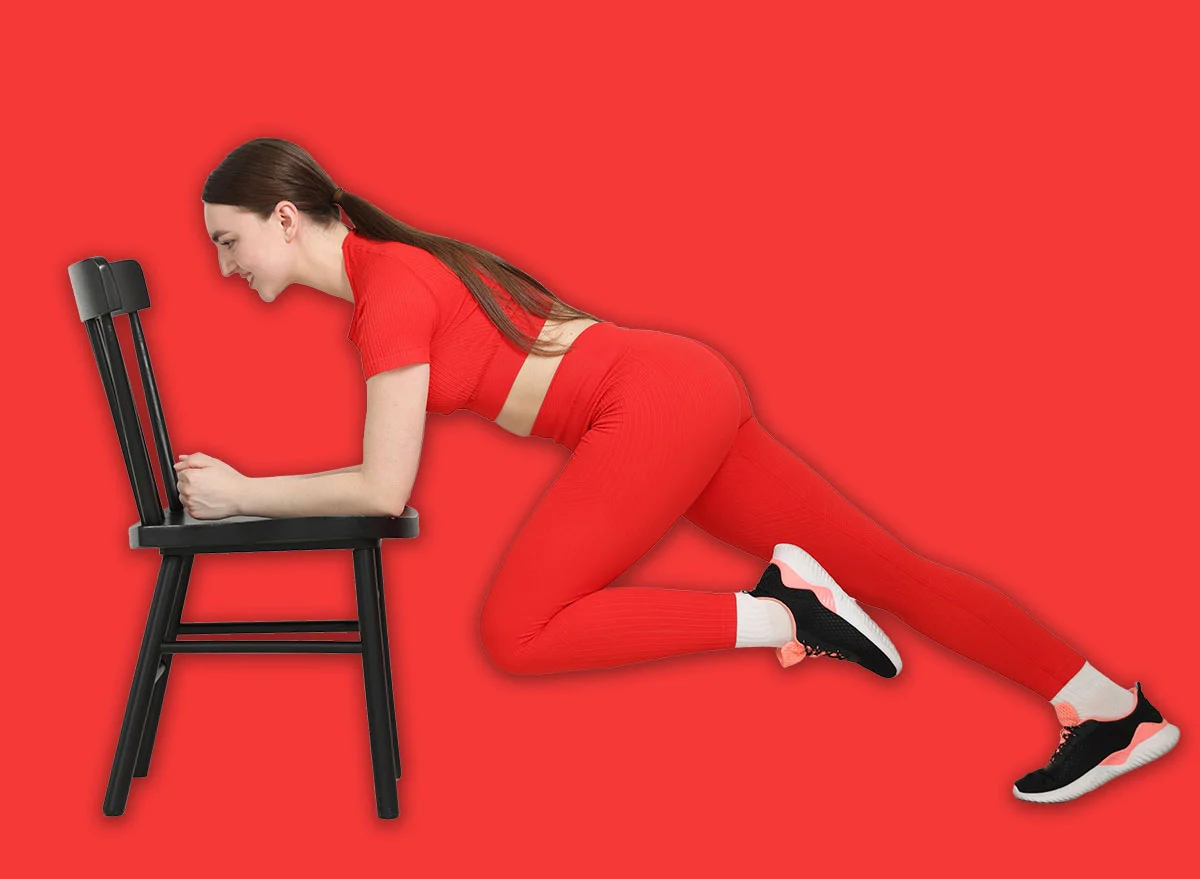
This exercise offers a more demanding engagement of the abdominal muscles compared to typical seated crunches. By positioning your hands on a chair, your entire core musculature is challenged to maintain a plank-like posture while you dynamically drive one knee towards your chest. This action is instrumental in developing the bracing strength essential for a firmer, more supported midsection. Furthermore, the inherent effort involved in this movement contributes to a greater caloric expenditure, which can be supportive of fat loss goals within a comprehensive 21-day program.
- Execution: Stand facing a sturdy chair, placing your hands shoulder-width apart on the seat. Step your feet back into a plank position, ensuring your body forms a straight line from head to heels. Keep your core tight and hips stable. From this elevated plank, exhale and slowly drive one knee towards your chest. Inhale as you return the leg to the plank position, then alternate to the other side.
- Benefits for Older Adults: Builds crucial bracing strength that supports the spine during everyday lifting and carrying tasks, improves posture, and strengthens the entire anterior kinetic chain.
- Muscles Engaged: Rectus Abdominis, Transverse Abdominis, Obliques, Hip Flexors, Shoulders, Chest, Glutes.
- Recommended Parameters: Perform 2 to 3 rounds, maintaining the plank position and performing knee drives for 20 to 30 seconds.
- Form Tip: Avoid letting your hips sag or rise too high; maintain a long, neutral spine throughout the movement.
- Variations: For a reduced challenge, bring your feet closer to the chair. To increase intensity, perform a cross-body knee drive, aiming the knee towards the opposite elbow.
3. Seated Straight-Leg Raise: Targeting Lower Abdominal Control
Focusing on the lower abdominal region becomes more precise when the legs are kept extended. The seated straight-leg raise demands that your core actively stabilize your torso while one leg is lifted and lowered with meticulous control. This exercise effectively builds strength in the lower midsection without requiring a floor-based position, which can be difficult for some. Beginning with single-leg lifts and a smaller range of motion is advisable, especially if hip flexor fatigue becomes a limiting factor.
- Execution: Sit tall and upright on the front edge of a sturdy chair, hands gripping the sides for support. Extend one leg straight out in front of you, with the heel lightly touching the floor. Engage your lower abdominal muscles and gently lift the extended leg a few inches off the floor, holding for a moment before slowly lowering it back down. Keep your torso still and avoid leaning back.
- Benefits for Older Adults: Strengthens the often-neglected lower abdominal muscles, improves hip flexor strength and control, and supports pelvic stability which is crucial for walking and balance.
- Muscles Engaged: Lower Rectus Abdominis, Hip Flexors, Quadriceps.
- Recommended Parameters: Perform 2 to 3 sets of 8 to 10 repetitions per side.
- Form Tip: Prioritize a tall, stable posture. The height of the leg lift is less important than maintaining core engagement and a controlled descent.
- Variations: For an easier option, perform a bent-knee leg raise. For a greater challenge, try alternating straight-leg raises without resting the foot between repetitions.
4. Chair-Supported Cross-Body March: Dynamic Core Activation and Calorie Burn
Achieving abdominal definition necessitates incorporating movements that contribute to energy expenditure, and the cross-body march delivers this without high-impact jumping. By holding onto the chair for stability, you can actively drive one knee towards the opposite side of your body, allowing your abdominal muscles and obliques to guide this dynamic motion. This exercise is highly effective within a 21-day program due to its relative simplicity, promoting consistent repetition while concurrently elevating your heart rate. The key is to move with a steady rhythm and maintain precise control over each knee drive.
- Execution: Stand behind a sturdy chair, placing both hands on the backrest for balance. Stand tall with feet hip-width apart. Engage your core, then lift one knee towards your chest, simultaneously twisting your torso slightly to bring the opposite elbow (or simply your shoulder) towards the rising knee. Return to the starting position and repeat on the other side in a marching rhythm.
- Benefits for Older Adults: Enhances coordination, dynamic balance, and cardiovascular health through low-impact movement. It also strengthens the obliques and improves functional movement patterns.
- Muscles Engaged: Rectus Abdominis, Obliques, Hip Flexors, Glutes, Quadriceps.
- Recommended Parameters: Perform 3 to 5 rounds, marching for 20 to 30 seconds.
- Form Tip: Maintain an upright posture throughout the movement. Focus on controlled, deliberate knee lifts rather than speed.
- Variations: For less challenge, reduce the height of the knee lift or decrease the cross-body rotation. For increased intensity, release one hand from the chair or increase the speed while maintaining control.
5. Chair Plank Shoulder Tap: Anti-Rotational Core Control
Shoulder taps are designed to cultivate exceptional core control, particularly in resisting small side-to-side shifts. Each instance one hand lifts from the chair, your abdominal muscles are compelled to prevent excessive body rotation, thereby reinforcing midsection stability. This makes the chair plank shoulder tap an excellent exercise for refining core strength, as it trains the abdominal region to remain firm and engaged even when the upper body is in motion. Execute the movement slowly, ensuring each hand is firmly placed back on the chair before initiating the next tap.
- Execution: Assume the elevated plank position with hands on the chair seat, as described in the Chair Plank Knee Drive. Ensure your body is in a straight line from head to heels, core tightly engaged. Keeping your hips as still as possible, gently lift one hand and tap the opposite shoulder. Return the hand to the chair, then repeat on the other side.
- Benefits for Older Adults: Develops anti-rotational core strength, which is vital for preventing instability during unilateral movements (e.g., reaching, walking). It also strengthens the shoulders, chest, and triceps.
- Muscles Engaged: Rectus Abdominis, Obliques, Transverse Abdominis, Shoulders, Chest, Triceps, Glutes.
- Recommended Parameters: Perform 2 to 3 sets of 6 to 10 taps per side.
- Form Tip: The primary goal is to minimize hip sway. Imagine a glass of water resting on your lower back that you don’t want to spill.
- Variations: For a simpler version, maintain the elevated plank without tapping. For greater difficulty, extend the arm further out or hold the tap for a longer duration.
Cultivating a Strong Midsection Post-60: A Holistic Perspective
While a dedicated chair-based core routine can significantly contribute to strengthening your abdominal muscles, the visible manifestation of a "six-pack" is truly the result of a comprehensive, integrated health strategy. To optimize outcomes, incorporate these exercises three to five days per week, and complement them with daily walks or other forms of cardiovascular activity whenever feasible. Crucially, prioritize dietary choices that support a gradual reduction in body fat over time, emphasizing whole, unprocessed foods, adequate protein intake, and controlled portion sizes.
The initial 21-day period should be viewed as a launchpad for establishing a robust and sustainable fitness journey, rather than a definitive endpoint for aesthetic transformation. The genuine achievements within this timeframe will be marked by enhanced consistency in your routine, improved form and strength during repetitions, and the cultivation of enduring healthy habits that you can continue to build upon for years to come. Ultimately, the most valuable "six-pack" is one that supports a vibrant, active, and independent life.
About the Author










