As individuals progress beyond their fifth decade, the maintenance of core strength and stability transcends mere aesthetic considerations, evolving into a critical pillar of overall health, functional independence, and quality of life. The muscles comprising the core—encompassing the rectus abdominis, obliques, transverse abdominis, and lower back musculature—serve as the body’s central powerhouse, dictating posture, facilitating efficient movement, and providing essential spinal support. With advancing age, natural physiological shifts, including sarcopenia (age-related muscle loss) and alterations in connective tissue, can diminish this foundational strength, potentially contributing to issues such as compromised balance, increased risk of falls, lower back discomfort, and a less taut abdominal appearance. Recognizing these age-related changes, strategic exercise regimens become paramount in counteracting decline and fostering resilience.
While numerous fitness modalities exist, a growing body of evidence, supported by experienced strength coaches working with an older demographic, highlights the distinctive advantages of standing core exercises over traditional machine-based routines. The fundamental difference lies in the body’s engagement with gravity and its environment. When performing exercises in an upright position, the entire kinetic chain, from the feet up, is activated to maintain equilibrium. This inherent demand for self-stabilization naturally recruits a wider array of synergistic muscles, including those in the hips and lower back, alongside the primary abdominal muscles. Unlike machines that often isolate muscle groups and provide external support, standing movements compel the core to operate as an integrated unit, precisely as it does during daily activities like walking, lifting, or reaching. This functional engagement translates into superior improvements in balance, coordination, and proprioception—the body’s awareness of its position in space—all vital attributes for healthy aging. By consistently challenging the core in an unsupported, multi-planar fashion, these exercises cultivate robust internal support for the trunk, enhancing both its structural integrity and its capacity to perform complex, real-world movements with greater ease and reduced risk of injury.
Incorporating a selection of standing, compound movements into a regular fitness routine can yield profound benefits for individuals aged 50 and above. These exercises are meticulously chosen to target various aspects of core function, including anti-rotation, anti-lateral flexion, hip-hinging power, and full-body coordination.
1. Pallof Press: Cultivating Anti-Rotational Strength
The Pallof press is an exemplary exercise for developing robust anti-rotational core strength, a often-overlooked yet critically important aspect of abdominal function. Rather than generating rotation, this movement trains the core to resist it, effectively engaging the deep stabilizing muscles of the abdomen, particularly the transverse abdominis and obliques. This resistance is crucial for protecting the spine from undue twisting forces during dynamic movements and for maintaining a stable trunk during daily activities. By requiring the body to remain rigid and stable while an external force attempts to rotate the torso, the Pallof press creates sustained tension across the entire midsection. Over time, this consistent engagement fortifies the abdominal wall, contributes to better postural alignment, and provides enhanced support for the lower back, which can alleviate common aches and pains.
- Functional Significance: Essential for activities like carrying groceries, turning to look behind you, or preventing injury during unexpected shifts in balance.
- Muscles Targeted: Primarily the transverse abdominis and obliques, with significant contributions from the rectus abdominis, hip flexors, and shoulder stabilizers.
- Execution Principle: Standing perpendicular to a cable machine or resistance band anchored at chest height, grasp the handle with both hands. Step away from the anchor point to create tension. Brace your core firmly, keeping your hips and shoulders square. Slowly press the handle straight out in front of your chest, resisting the pull that attempts to rotate your torso. Hold briefly, then slowly return to the starting position, maintaining complete control.
- Recommendations: Aim for 3 sets of 10-12 repetitions per side, allowing 45 seconds of rest between sets.
- Variations: Can be performed kneeling (tall-kneeling Pallof press for increased glute and core engagement), or with an overhead press component (overhead Pallof press) for added shoulder stability challenge.
- Key Focus: Maintain a rock-solid, unwavering torso throughout the movement. Avoid any leaning or twisting.
2. Suitcase Carry: Enhancing Lateral Stability and Grip Strength
The suitcase carry is a deceptively simple yet incredibly potent exercise for building unilateral core stability and fortifying the abdominal wall against lateral flexion. By holding a substantial weight in only one hand, the body is forced to actively resist the urge to lean or collapse toward the weighted side. This continuous struggle against imbalance intensely recruits the obliques and other lateral core stabilizers on the unweighted side, working to keep the torso upright and symmetrical. The prolonged isometric contraction created during this movement strengthens the deep abdominal muscles, improving overall trunk rigidity and resilience. Furthermore, the suitcase carry simultaneously develops formidable grip strength, which is a recognized biomarker for overall health and longevity, especially in older adults.
- Functional Significance: Directly translates to improved posture, better balance when carrying asymmetrical loads (e.g., a briefcase, shopping bag), and enhanced resistance to lateral falls.
- Muscles Targeted: Primarily the obliques and transverse abdominis for core stability, along with significant engagement of the forearms (grip), shoulders, and trapezius muscles.
- Execution Principle: Select a heavy dumbbell or kettlebell and hold it securely in one hand, standing tall with shoulders level and hips square. Resist any inclination to lean towards the weighted side or away from it. Walk a designated distance or for a set period, maintaining a stable, upright posture throughout.
- Recommendations: Perform 3 sets, walking for 30-40 seconds per side, with 45 seconds of rest between sets.
- Variations: Can be combined with a farmer’s carry (weight in both hands) for general strength, or a front rack carry (kettlebell held at shoulder level) for increased anterior core challenge.
- Key Focus: Keep your gaze forward, shoulders retracted and down, and actively prevent any leaning or tilting of the torso. Imagine a straight line running from your head through your spine.
3. Dumbbell Chops: Integrating Rotational Power and Spinal Stability
Dumbbell chops are dynamic, multi-joint movements that effectively train the core through a diagonal plane, closely mimicking many natural, powerful actions encountered in daily life. This exercise demands coordinated effort from the abs and obliques to both generate and control rotation, while simultaneously stabilizing the spine. The rotational component not only strengthens the muscles responsible for twisting motions but also improves the intricate coordination between the upper and lower body. By engaging the core in a functional, integrated manner, dumbbell chops contribute to a more resilient and responsive midsection, enhancing both power transfer and injury prevention.
- Functional Significance: Improves the ability to swing a golf club, throw an object, pivot quickly, or engage in activities requiring trunk rotation without strain.
- Muscles Targeted: Primarily the obliques and rectus abdominis, alongside the shoulders, hips, and glutes.
- Execution Principle: Stand with feet shoulder-width apart, holding a single dumbbell with both hands. Start with the dumbbell positioned above one shoulder (e.g., left shoulder). In a controlled, diagonal motion, "chop" the dumbbell downwards and across your body towards the opposite hip (e.g., right hip), allowing your torso to rotate naturally. Power the movement from your core and hips, maintaining control throughout. Reverse the motion to return to the starting position.
- Recommendations: Complete 3 sets of 10-12 repetitions per side, resting for 45 seconds between sets.
- Variations: Can be performed with a cable machine (cable chops) or resistance band (band chops) for consistent tension, or as "low-to-high" chops, reversing the diagonal path.
- Key Focus: Initiate the rotation from your core and hips, rather than just swinging your arms. Keep your movements controlled and deliberate.
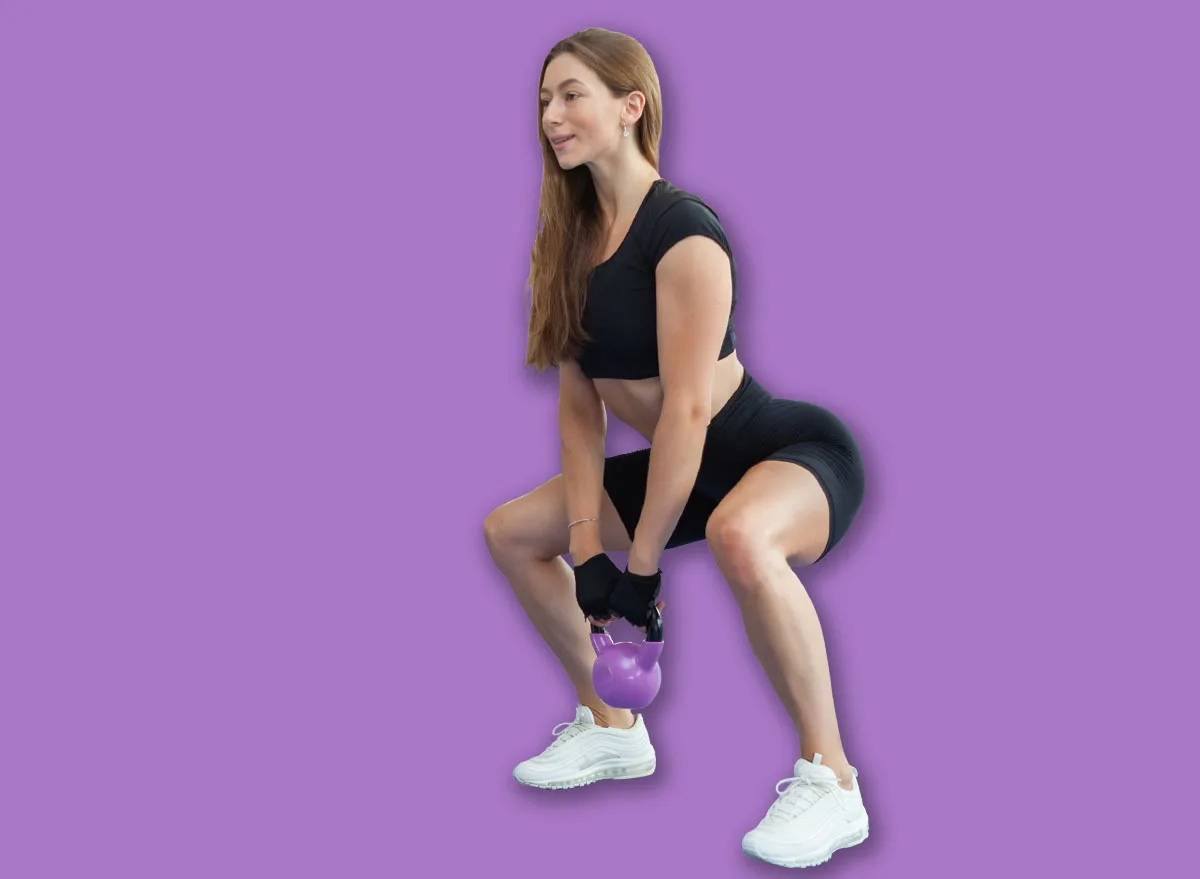
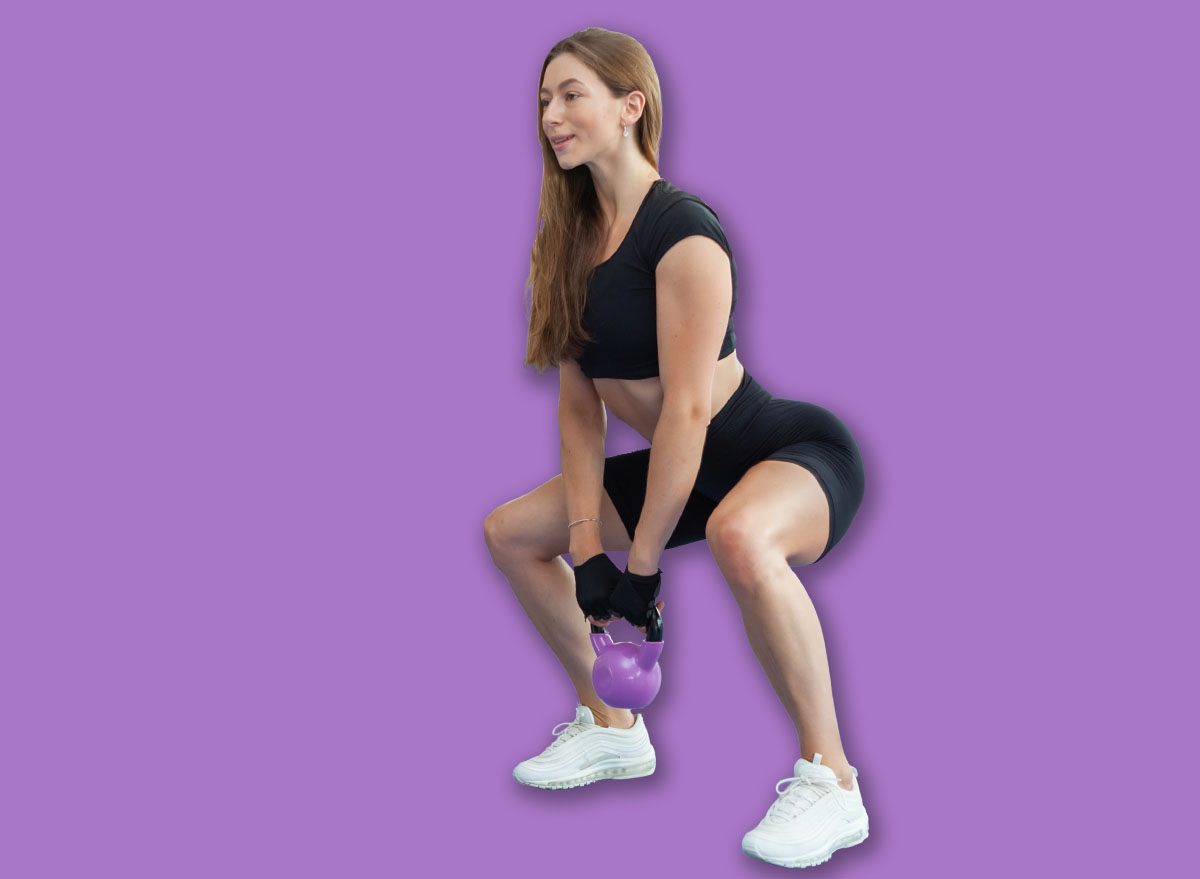
4. Kettlebell Swings: Developing Explosive Hip Power and Core Bracing
Kettlebell swings are a highly efficient, full-body exercise that predominantly targets the glutes and hamstrings while simultaneously demanding significant core engagement. This ballistic movement teaches the body to generate explosive power from the hips, a critical component of functional strength that often diminishes with age. Each swing necessitates a powerful bracing action from the abdominal muscles to stabilize the spine as the kettlebell accelerates forward and backward. This repetitive, dynamic core engagement builds remarkable strength and endurance across the entire midsection. Furthermore, the high-intensity nature of kettlebell swings elevates the heart rate, contributing to increased caloric expenditure and supporting fat loss efforts, which can impact abdominal definition. Consistent practice of kettlebell swings cultivates a more powerful, coordinated, and robust core.
- Functional Significance: Enhances explosive power for standing up from a chair, jumping, climbing stairs, or any activity requiring a strong, rapid hip extension. Also improves cardiovascular fitness.
- Muscles Targeted: Primarily glutes and hamstrings, with strong involvement from the core (rectus abdominis, obliques, transverse abdominis), lower back stabilizers, and shoulders.
- Execution Principle: Stand with feet slightly wider than shoulder-width apart, holding a kettlebell with both hands in front of you. Initiate the swing by hinging at the hips, allowing the kettlebell to swing back between your legs. Explosively drive your hips forward, contracting your glutes powerfully, to propel the kettlebell upwards to chest height. Allow gravity to bring the kettlebell back down, re-hinging at the hips. Maintain a rigid, braced core throughout the movement.
- Recommendations: Perform 3 sets of 12-15 repetitions, with 60 seconds of rest between sets.
- Variations: Can be performed with one arm (single-arm swing) for added unilateral core challenge, or alternating hands.
- Key Focus: The swing is a hip hinge, not a squat. Keep your back straight, core braced, and drive the power from your hips, not your arms.
5. Dumbbell Thrusters: A Comprehensive Full-Body Core Integrator
Dumbbell thrusters are a dynamic, compound exercise that seamlessly blends a squat with an overhead press, creating a powerful full-body movement that heavily recruits and integrates the core. As the body transitions from the bottom of the squat to an upright position and presses the dumbbells overhead, the abdominal muscles must work intensely to stabilize the spine and efficiently transfer force from the lower body to the upper body. This continuous, high-intensity core engagement not only strengthens the entire abdominal wall but also significantly enhances overall strength, power, and coordination. The thruster’s full-body nature also elevates the heart rate substantially, contributing to improved cardiovascular health and promoting a higher energy output, which supports both muscle development and the reduction of abdominal circumference.
- Functional Significance: Improves power for lifting objects from the floor to overhead, getting up from a low position, and overall functional strength required for daily tasks.
- Muscles Targeted: A comprehensive range including the quadriceps, glutes, hamstrings, shoulders, triceps, and the entire core musculature (rectus abdominis, obliques, transverse abdominis, lower back).
- Execution Principle: Hold a dumbbell in each hand at shoulder height, palms facing each other, elbows tucked. Squat down until your thighs are parallel to the floor or slightly below. As you drive upwards from the squat, use the momentum from your legs and hips to press the dumbbells overhead, fully extending your arms. Lower the dumbbells back to shoulder height as you descend into the next squat. Maintain a tight core throughout.
- Recommendations: Complete 3 sets of 8-10 repetitions, with 60 seconds of rest between sets.
- Variations: Can be performed with a single dumbbell (single-dumbbell thruster) for unilateral benefits, kettlebells (kettlebell thruster), or a goblet squat variation for the lower body component.
- Key Focus: Ensure your core is strongly braced throughout the entire movement, especially as you transition from the squat to the overhead press. The movement should be fluid and powerful.
Beyond the Exercises: A Holistic Approach to Core Health After Fifty
While these standing exercises form a robust foundation for enhancing core strength and stability, a comprehensive approach is vital for optimal results, particularly for individuals over 50. Consistent training is non-negotiable; regular engagement with these movements will progressively build the necessary muscular support for a firmer, more functional midsection. However, other lifestyle factors significantly influence abdominal health and overall well-being.
- Prioritize Hydration: Adequate water intake is fundamental for metabolic processes, nutrient transport, and maintaining satiety, which can indirectly support weight management and a leaner physique.
- Nutrient-Dense Diet: Focus on whole foods, lean proteins, healthy fats, and complex carbohydrates. Minimizing processed foods, excessive sugars, and unhealthy fats can help manage overall body composition and reduce visceral fat, which contributes to abdominal protrusion.
- Incorporate Cardiovascular Activity: Regular aerobic exercise complements strength training by improving cardiovascular health and increasing calorie expenditure, which assists in body fat reduction.
- Manage Stress and Sleep: Chronic stress can lead to increased cortisol levels, potentially influencing fat storage around the abdomen. Quality sleep is essential for muscle repair, hormone regulation, and overall recovery.
- Listen to Your Body: As we age, recovery times can lengthen, and individual responses to exercise may vary. Pay attention to signals of fatigue or discomfort and adjust intensity or volume as needed. Consulting with a healthcare professional or certified fitness expert before starting a new exercise regimen is always advisable, especially for individuals with pre-existing conditions.
By integrating these targeted standing core exercises with a mindful approach to nutrition, hydration, and overall well-being, individuals over 50 can effectively bolster their core strength, enhance functional movement capabilities, and contribute significantly to a more defined and resilient midsection, fostering long-term health and independence.
About the Author